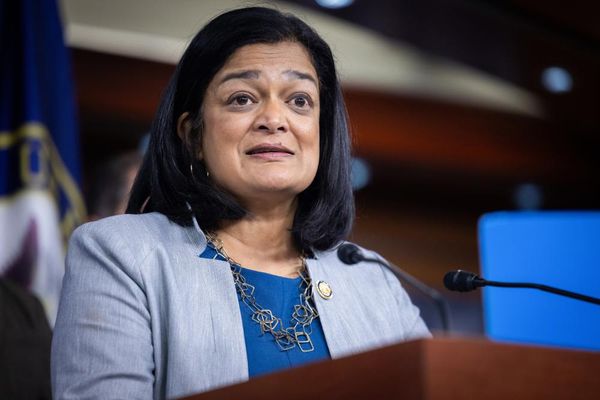
The French government has survived a high-risk confidence vote with a majority after prime minister Manuel Valls appealed to Socialist rebels to back him.
In spite of 31 abstentions from Socialist party MPs, a total of 269 MPs voted for the government and 244 against, giving Valls a clear mandate.
The result came as a relief to Valls and the beleaguered French president, François Hollande, whose popularity is at a record low, with recent polls showing up to two thirds of voters wanting him to go before the end of his term in 2017.
However, the abstentions and absences meant the Socialist government was 20 votes short of an absolute majority in the 577-seat Assemblée Nationale, the lower house of parliament.
Valls said afterwards: "If we – the president of the republic and I – have asked for confidence, it is to continue our work".
He said he hoped the vote would end the "incessant questions" over the Socialists' capacity to govern.
"Thanks to this vote, the government will continue its programme until the end of its five year term in office … I thank you for your confidence and I will live up to it."
Before the crucial vote, Valls, who had been received with applause from supporters and whistles from opponents, had outlined his government's programme.
He spoke of "an exceptional economic situation" with an absence of growth and inflation saying "nobody had anticipated this". He confirmed the government would reduce public spending by 50bn euro (£40bn) before the end of its term in office.
"Nothing must divert us from this promise. We have to control the growth of public spending," Valls told the house.
Parti Socialiste rebels from the left had threatened to derail the government in protest at what they see as its lurch to the right and submission to German-imposed austerity.
Among the rebels are the former finance minister, Arnaud Montebourg, former education minister, Benoît Hamon, and former culture minister, Aurélie Filippetti, of the Green party, who were sacked from the cabinet in August after publicly criticising the government.
In a nod to them, Valls said when it came to economic and budgetary decisions: "France will alone decide what she must do."
However, he added that the agreement between France and Germany was "indispensable for restarting growth and giving the European project its real ambition once again".
"Our common responsibility is historic," Valls said.
He also reassured the left wing by insisting his government would not abandon the 35-hour working week.
"Reforming doesn't mean breaking, or about going backwards. It's not about breaking our social model to which I'm attached.
"I invite you to defy fatalities, prognostics, received ideas that suggest our country is incapable of reforming itself. France is not condemned. France is a great country, she merits our respect and if we, public officials, aren't capable of defending her, who is?."
Christian Jacob, head of the opposition UMP parliamentary group, told Valls: "We're not in agreement with your remedies for getting France working again."
"You, like the president, are like old rope," Jacob said, adding that Valls had "neither the willingness nor the real political means to effect a real economic upturn."
"Monsieur prime minister, your days are numbered. If today your fate was in the hands of the French, you would have been sent packing."





.png?w=600)