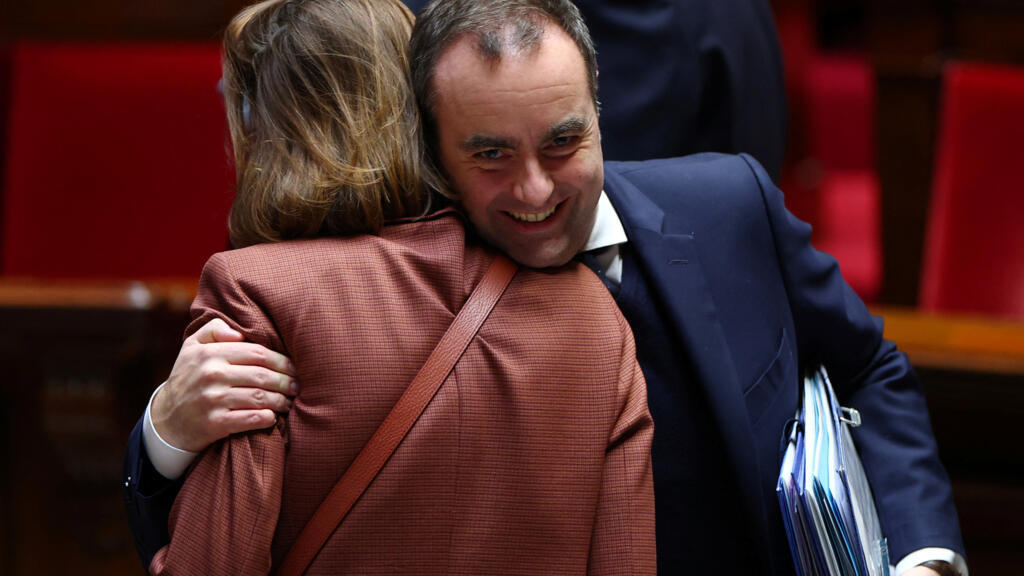
The government of Prime Minister Sebastien Lecornu has survived two no confidence motions triggered by his decision to force his contested budget through parliament without a vote.
Lecornu on Tuesday used a constitutional power to force the income part of the 2026 state budget through parliament without a vote, after making concessions to gain the backing of the Socialists.
The prime minister's move triggered two no confidence motions, filed by the hard-left France Unbowed (LFI) and far-right National Rally (RN).
MPs on Friday voted not to bring down the government. The first motion secured 269 votes and the second 142, out of the National Assembly's 577 lawmakers.
The Socialists, a key swing group, did not support either motion.
'Tool of last resort'
After surviving Friday's votes, Lecornu announced he was also officially pushing through the expense part of the 2026 state budget, causing LFI to declare it was filing another no confidence motion.
This will be examined on Tuesday, and is also expected to be rejected.
"When debate no longer allows a conclusion, someone has to take responsibility," he told the National Assembly just ahead of Friday's votes.
"Invoking the government's responsibility, in my view, should be neither an easy way out nor a shortcut. It is a tool of last resort," he added, in reference to using Article 49.3 of the constitution.
Lecornu promised last October to seek parliament's approval for the budget, in a bid to avoid the fate of predecessors Michel Barnier and François Bayrou, who were both ousted over budget negotiations.
But on Monday, Lecornu conceded with "a certain degree of regret and a bit of bitterness" that he had to invoke article 49.3.
After PM forces through finance bill, what's next in France's budget battle?
'Betrayal'
Marine Le Pen, leader of the RN group in parliament, declared the prime minister's use of the measure a "betrayal".
"Everything should have led you [Lecornu] to resign," she added, noting what she called the government's "powerlessness".
The left also appeared divided, with LFI, the Greens and the Communist party calling for Lecornu to be ousted, while the Socialists sided with government.
Ahead of Friday's vote, the Socialists signalled that the use of the measure was "the least bad solution" and the latest draft showed "progress".
Concessions included an increase in a top-up benefit for the lowest-paid employees, the rollout of €1 meals for students, and the maintenance of a surtax on France's wealthiest businesses.
French tax on high earners disappoints as wealthy find ways to shield income
If Lecornu survives the second attempt to topple him, the budget bill must then be reviewed by the Senate, the upper house, before returning to the National Assembly, the lower house, for final adoption.
Lecornu will have to use the same constitutional power to force the whole bill into law, which will likely lead to more no confidence votes.
(with newswires)