SEATTLE _ On Monday morning, the first two five-person teams filed into soundproof boxes, took a seat in front of custom-built computers, and began testing their reflexes and strategy in a quest for a cut of a $23 million prize pool.
In a darkened KeyArena around that stage, thousands of mostly young fans followed the action broadcast to the video screen above, with the fantasy-movie sounds of in-game clashes and live commentary blaring through the arena.
But before all that, a curious opening act: a few words from a burly, bearded man in his 50s.
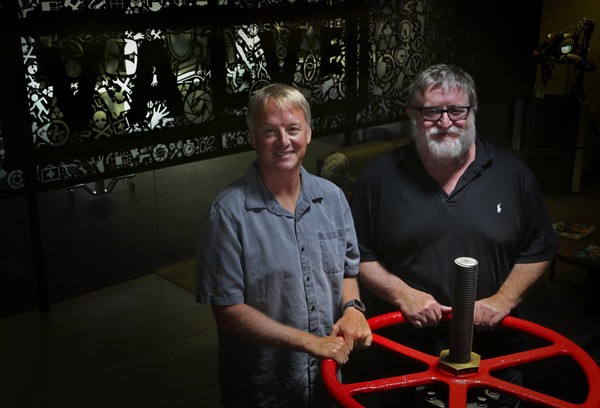
That would be Gabe Newell, one of the most powerful figures in video gaming.
Newell's company, Valve, builds "Dota 2," the video game whose signature tournament kicked off this week for its sixth year in Seattle. He typically takes the stage at the outset to thank fans for coming before acknowledging that they're not here to see him.
That bit of public humility is typical from a man who maintains he isn't the boss of the company he owns.

At Valve, based outside Seattle, there is no formal hierarchy, and no job titles. Workers vote with their time on what projects are worthwhile, wheeling their desk to a different corner of the office when they're ready for a new task.
Some former employees dispute the vision of a boss-less utopia, but there is no doubt the unusual corporate formula, however it works, has made Valve one of the most successful video-game companies in the world.
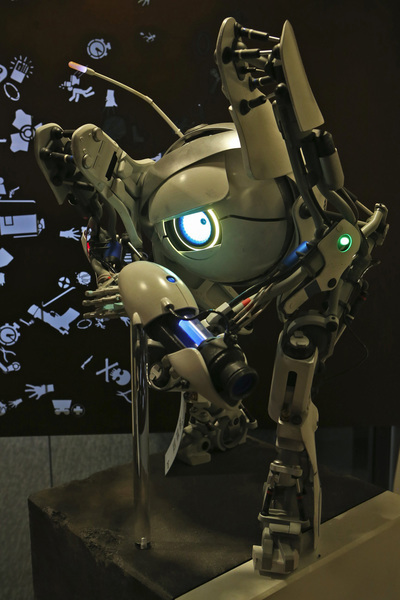
The maker of "Dota 2," "Counter-Strike" and "Half-Life," Valve also operates Steam, the main digital storefront for personal-computer games. That combination makes Valve the video-gaming equivalent of a movie studio like Universal Pictures, if Universal also happened to own Netflix.
"They have two successful and distinctly different businesses," said Michael Pachter, a video-game-industry analyst. "They're a game developer, and they're good at it. And they're a publisher, and they make a ton of money. Nobody that I can think of has been that good at both."