In today’s increasingly volatile economic environment, Thailand’s property sector is undergoing a structural shift. Developers are no longer relying solely on income generated from property sales, but are increasingly diversifying into recurring-income assets such as industrial facilities, logistics warehouses, offices, retail spaces and hospitality projects.
Against this backdrop, one company stands out for having anticipated this transformation long before it became an industry trend.
Frasers Property (Thailand) Public Company Limited (FPT) has established itself as Thailand’s first fully integrated real estate platform with a long-term multi-asset class strategy spanning residential, industrial and commercial mixed-use real estate.
While many developers only began expanding into new asset classes over the past few years, FPT has spent decades building expertise across multiple sectors — creating one of the country’s most diversified and resilient property portfolios.
THE FOUNDATION BEHIND FPT’S STRENGTH
The journey of FPT reflects the integration of two highly experienced real estate pioneers.
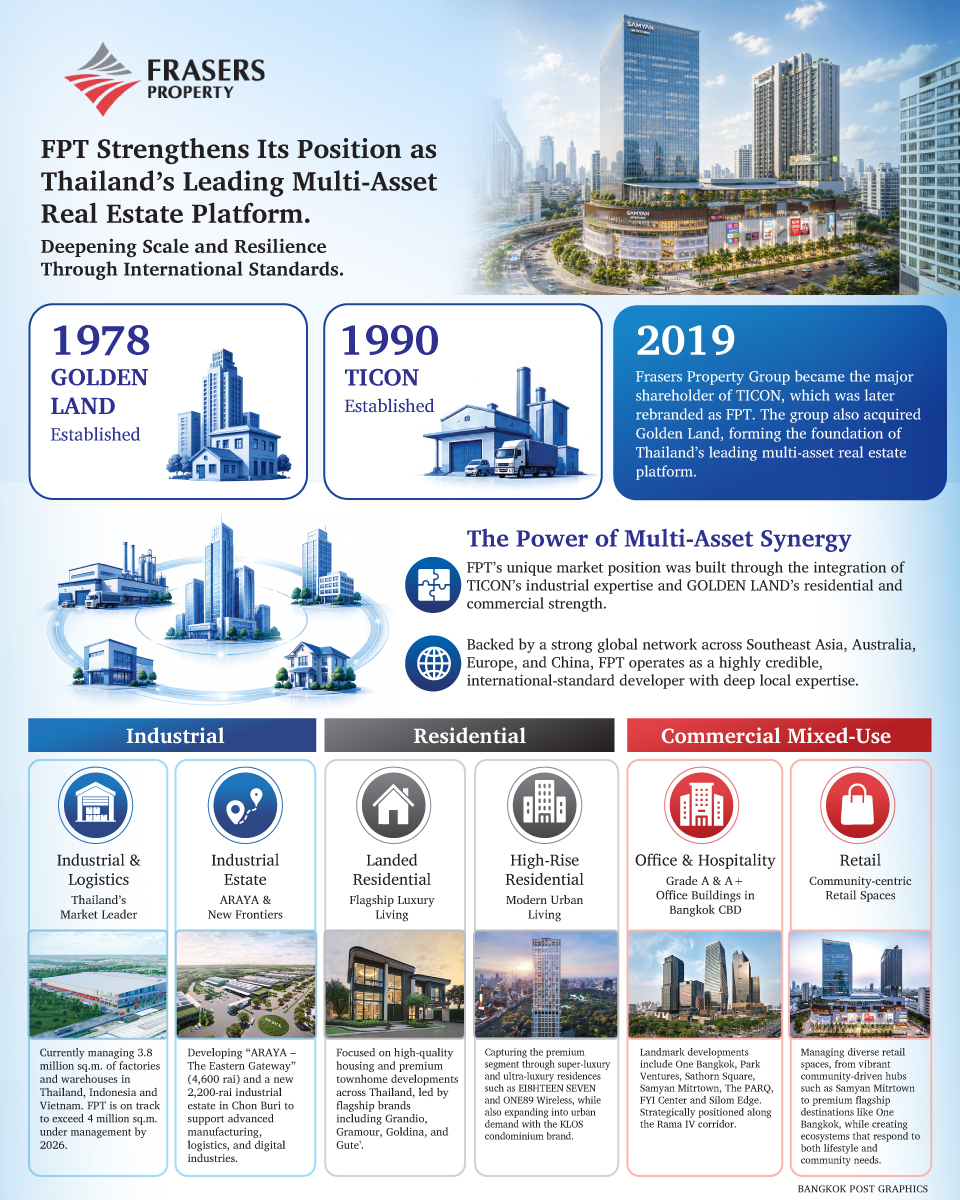
The company’s industrial roots trace back to TICON, founded in 1990 as one of Thailand’s leading developers of industrial factories and logistics warehouses. TICON played a major role in shaping Thailand’s industrial property landscape and became widely recognised for its expertise in ready-built factories and warehouses.
On the residential and commercial side, GOLDEN LAND, established in 1978, built a strong reputation through residential developments and commercial properties across Bangkok.
A defining milestone came in 2019, when Frasers Property Limited (FPL) from Singapore became the major shareholder of TICON, leading to the rebranding of the company as Frasers Property Thailand and the acquisition of GOLDEN LAND.
The integration created a powerful multi-asset platform that combined industrial expertise with residential and commercial strength under an internationally recognised property group.
Backed by FPL — a global integrated real estate group with operations across Southeast Asia, Australia, Europe and China — FPT gained access to international networks, global standards, operational know-how and cross-border customer relationships.
Today, this combination has become one of the company’s greatest competitive advantages.
MULTI-ASSET STRENGTH ACROSS SIX CORE BUSINESSES
What differentiates FPT is not only the diversity of its portfolio, but also the scale and depth of expertise within each business segment.
The company currently operates across six core businesses under three major asset categories: industrial, commercial mixed-use and residential.
FACTORY & WAREHOUSE: THAILAND’S MARKET LEADER
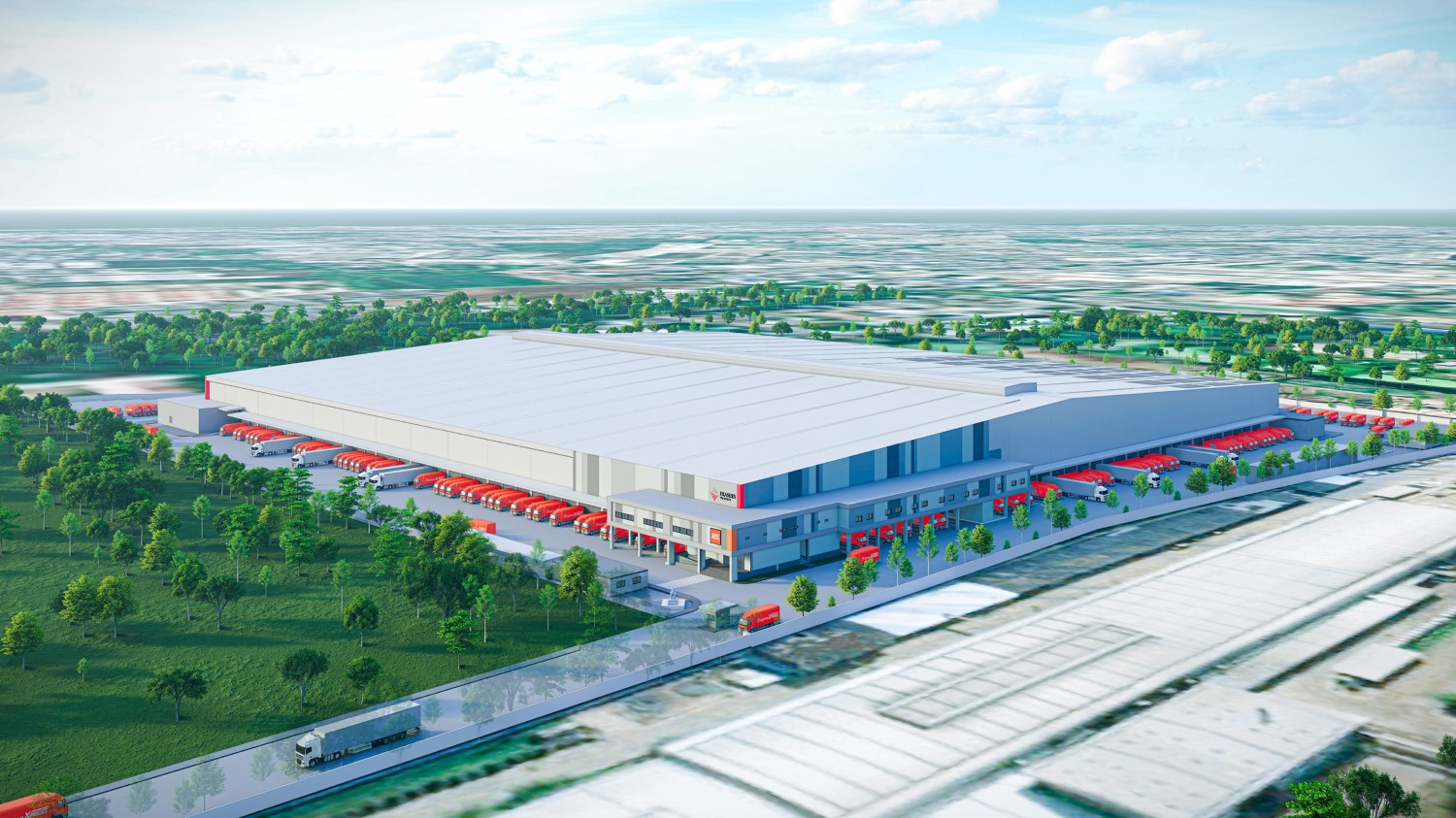
The factory and warehouse remain the cornerstone of FPT’s portfolio.
The company is currently Thailand’s market leader in industrial and logistics real estate, with more than 3.8 million square metres under management across Thailand, Vietnam and Indonesia.
Its portfolio includes ready-built factories, built-to-suit facilities and built-to-function developments strategically located in key industrial and logistics zones.
Beyond physical assets, FPT benefits from the global industrial network of FPL, enabling knowledge-sharing, customer connectivity and regional expansion opportunities that few local competitors can replicate.
In 2026, the company plans to deliver six additional projects totaling more than 188,000 sq m, pushing total managed industrial space to 4 million sq m.
As global manufacturers continue diversifying supply chains into Southeast Asia, Thailand’s industrial sector remains one of the country’s strongest long-term growth drivers — positioning FPT at the centre of this opportunity.
INDUSTRIAL ESTATE EXPANSION DRIVING THAILAND’S NEW ECONOMY
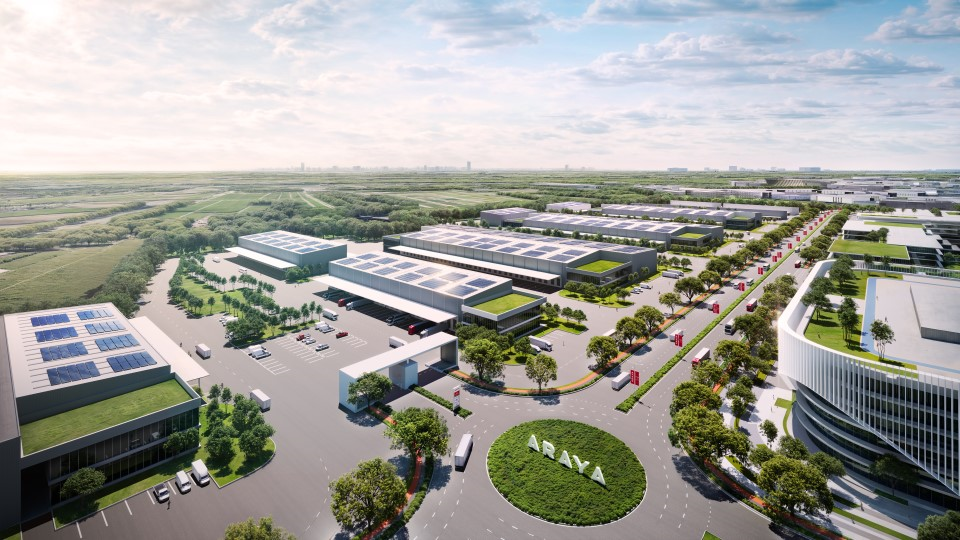
Another major growth engine is the company’s industrial estate business.
FPT, together with Rojana Industrial Park Public Company Limited and Asia Industrial Estate Company Limited, is developing “ARAYA – The Eastern Gateway”, Thailand’s first fully integrated industrial and innovation ecosystem.
Located on Bang Na-Trat Road KM.32, the project spans more than 4,600 rai and is designed to support next-generation industries including advanced manufacturing, logistics and supply chain businesses, digital technology and data-driven industries.
The company plans to expand its industrial estate footprint from 1,891 rai to 3,800 rai by 2026, while also developing a new industrial estate project in Chon Buri covering more than 2,200 rai.
These developments align closely with Thailand’s ambitions to attract future-focused investment industries and strengthen the country’s competitiveness in the regional economy.
COMMERCIAL PORTFOLIO REACHES NEW SCALE
FPT has also built one of Thailand’s most significant premium commercial portfolios, spanning office, retail and hospitality assets across Bangkok’s central business districts (CBD).
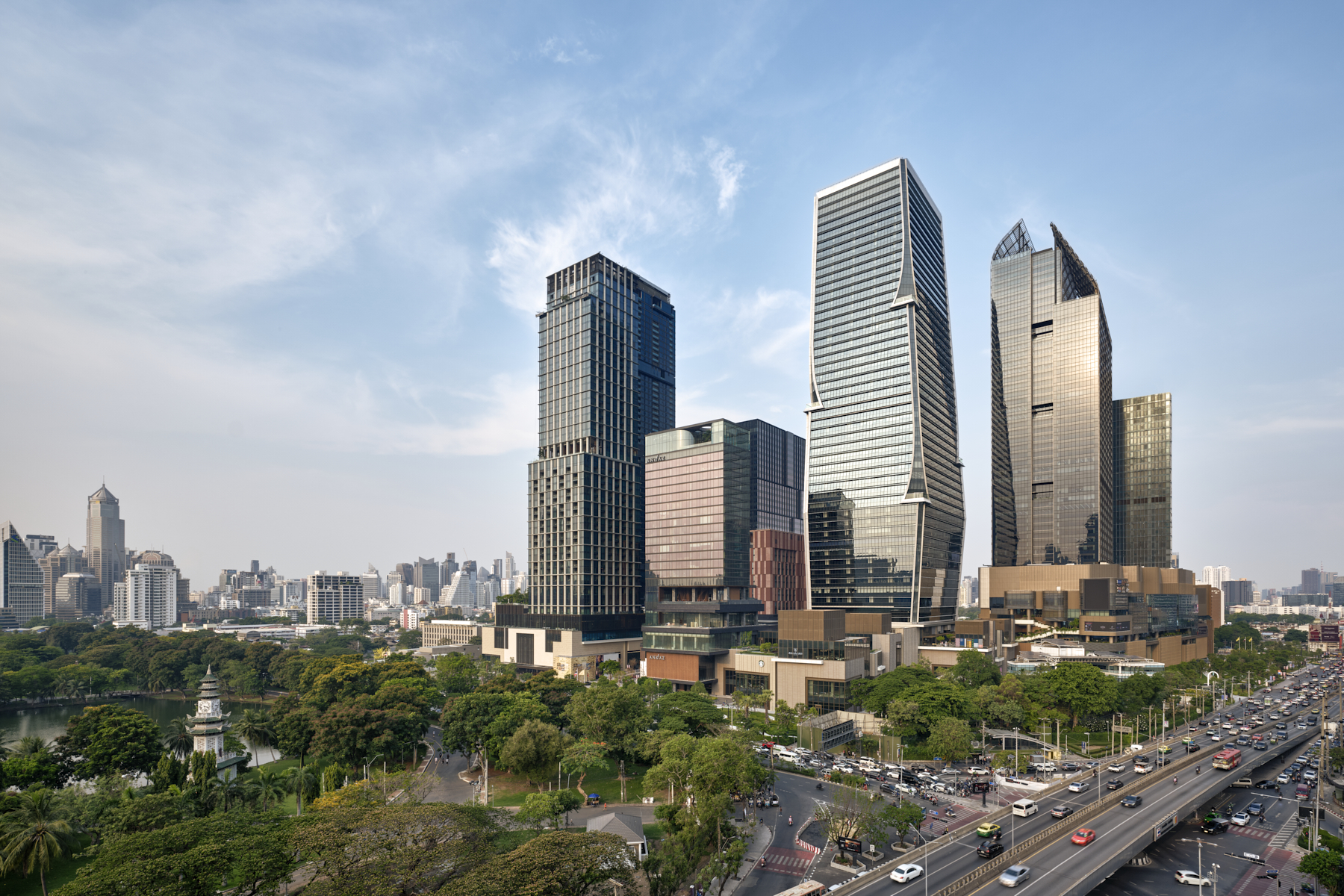
The company has played a major role in transforming Rama IV Road into one of Bangkok’s most dynamic commercial corridors through landmark mixed-use developments that integrate offices, retail destinations and lifestyle spaces designed around urban connectivity and evolving work-live-play behaviours.
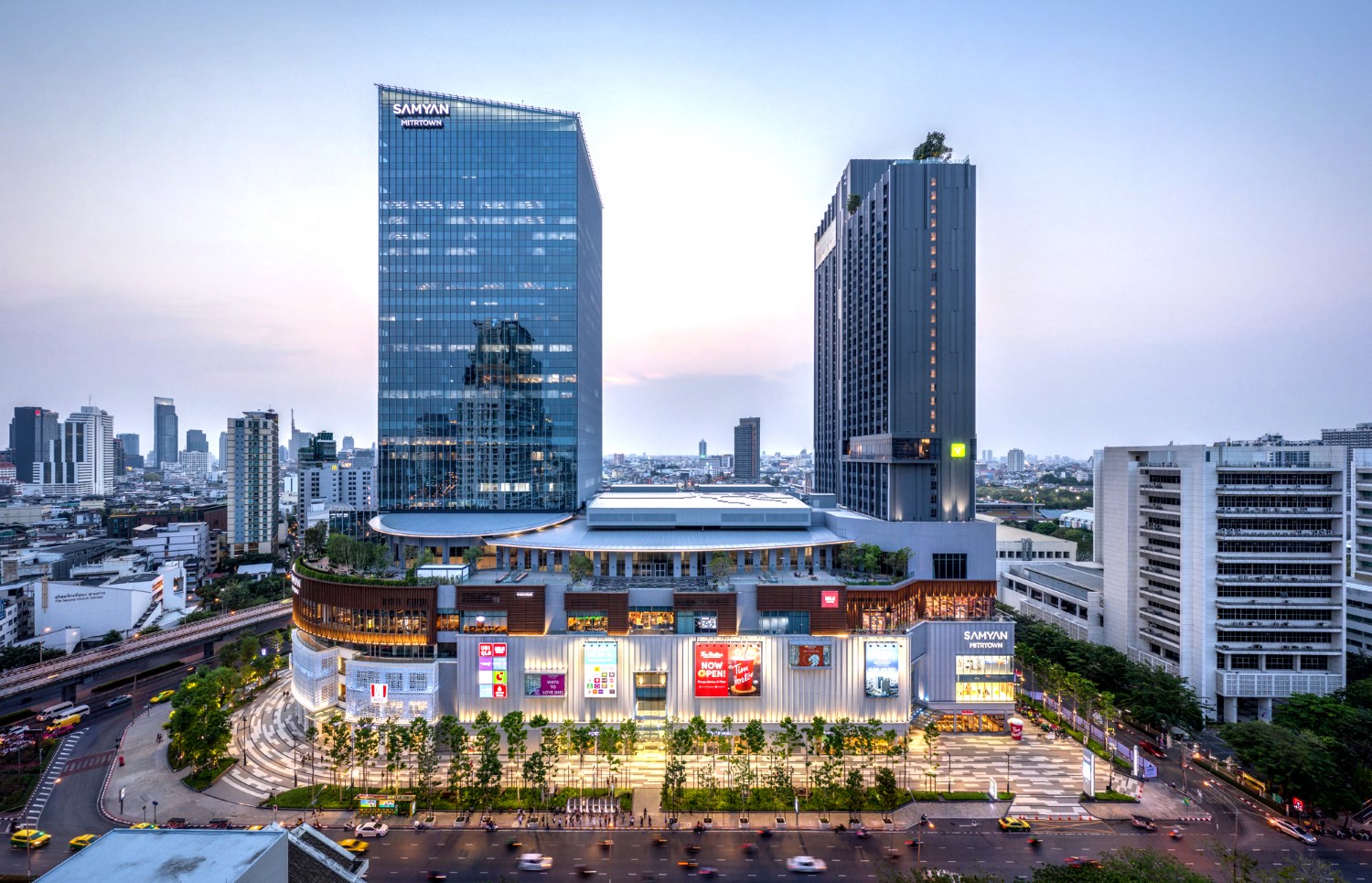
Its portfolio includes major projects such as One Bangkok, Park Ventures, Sathorn Square, Samyan Mitrtown, The PARQ, FYI Center and Silom Edge.
On the retail side, FPT focuses on creating spaces that are closely connected to surrounding communities and urban lifestyles.
The portfolio ranges from premium retail destinations such as One Bangkok to unique community-driven malls like Samyan Mitrtown, which has become known for its strong connection with students, office workers and local neighbourhood communities through its accessible and experiential approach.
Meanwhile, FPT’s office business strengthens the company’s position in Bangkok’s commercial real estate market through a portfolio of Grade A and A+ office buildings located in prime CBD locations with direct connectivity to BTS and MRT networks.
Following the operational integration with One Bangkok in 2026, FPT now oversees Thailand’s largest premium commercial real estate portfolio, with approximately 1.846 million sq m of office and retail space under management.
The company’s strength extends beyond development into leasing expertise, tenant relationship management and asset management capabilities, enabling stronger synergies across its commercial ecosystem while enhancing operational flexibility and tenant experience.
As workplace expectations continue evolving and businesses increasingly prioritise high-quality mixed-use environments, FPT remains well positioned to capture long-term demand across Bangkok’s premium office and retail sectors.
RESIDENTIAL BUSINESS CONTINUES STRATEGIC GROWTH
While industrial and commercial assets form the backbone of recurring income, residential development remains another important pillar of FPT’s platform.
The company’s landed housing development business spans 10 provinces nationwide, offering products across multiple price segments.
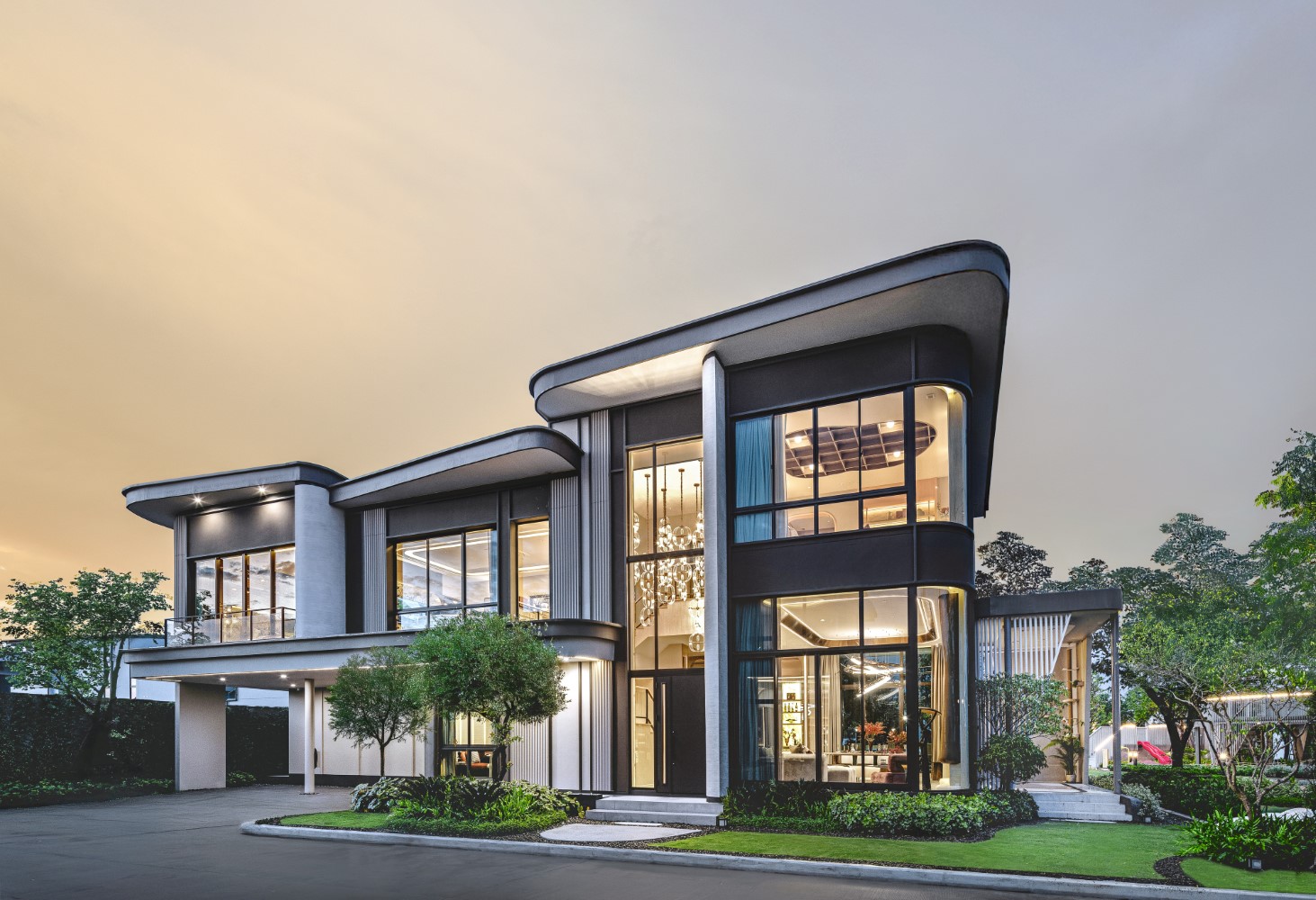
Its flagship brand, Grandio, continues to anchor the portfolio, while newer brands including Goldina, Gute’ and Gramour reflect the company’s strategy to expand into emerging customer segments.
In 2026, FPT plans to launch four new low-rise residential projects with a combined value of 7.3 billion baht.
Meanwhile, its high-rise residential portfolio continues expanding across multiple segments.
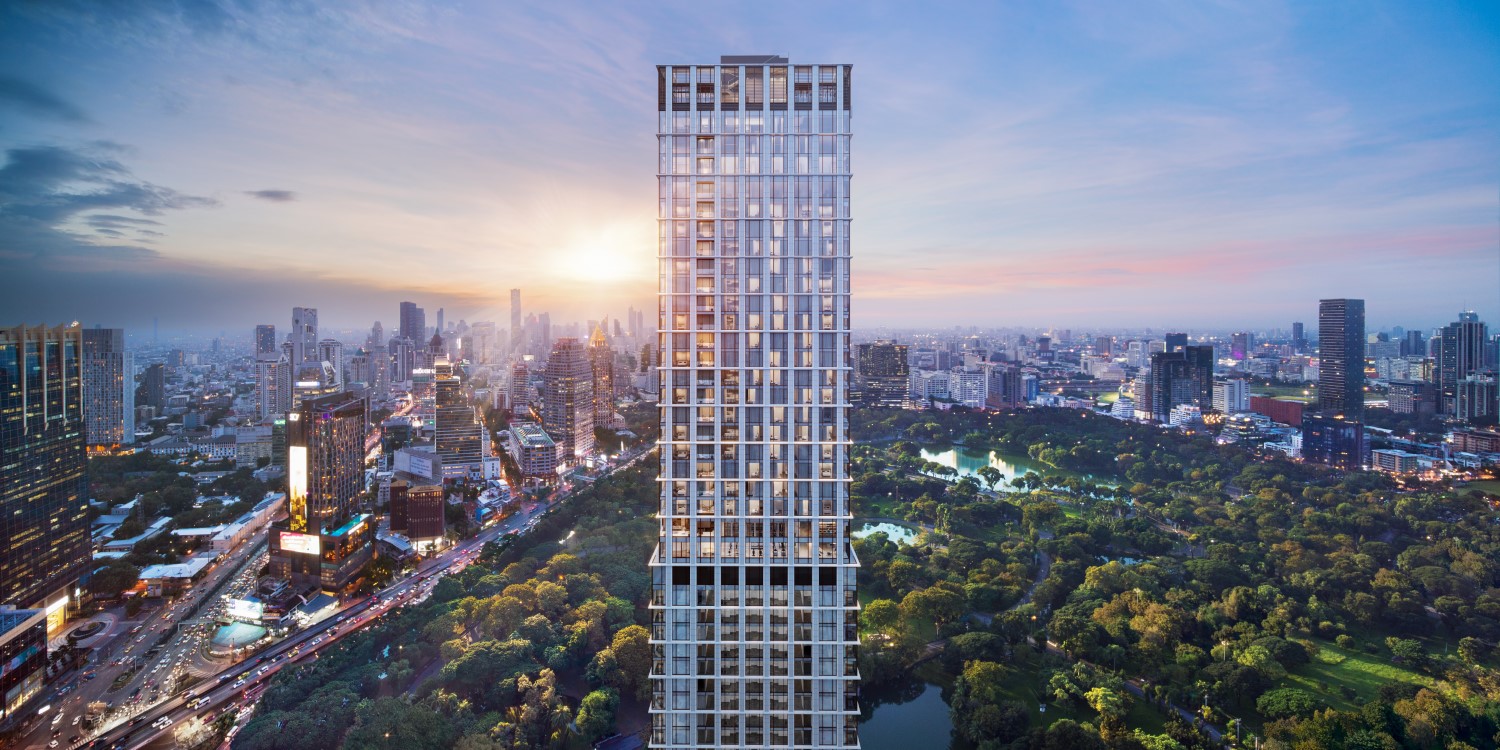
Beyond the KLOS condominium brand — including KLOS Ratchada 7 and KLOS Ramintra-Fashion — FPT is also strengthening its presence in Bangkok’s luxury residential market through premium developments such as EI8HTEEN SEVEN and ONE89 Wireless, reinforcing the company’s ability to cater to increasingly diverse urban lifestyles and evolving customer expectations.
FPT continues to broaden its residential platform while balancing accessibility, design and long-term value creation.
A LONG-TERM STRATEGY AHEAD OF THE MARKET
What makes FPT particularly distinctive is that its multi-asset strategy was not created in response to short-term market uncertainty.
Instead, the company has spent years building a diversified platform designed to balance cyclical risks while creating long-term resilience.
This structure allows different asset classes to complement one another across varying market conditions — industrial assets benefiting from manufacturing growth, commercial assets generating recurring urban income and residential projects responding to evolving lifestyle demand.
At a time when the real estate industry is increasingly seeking stability through diversification, FPT stands as one of the earliest and most established examples of how a true multi-asset platform can create sustainable growth.
More importantly, the company’s evolution reflects more than portfolio expansion. It represents the convergence of local expertise, international standards and long-term strategic vision.
As Thailand enters a new economic era shaped by industrial transformation, urban regeneration and changing consumer behaviour, FPT is positioning itself not simply as a property developer, but as one of the country’s most comprehensive real estate platforms for the future.