An adaptation of Frankenstein; or, The Modern Prometheus is a Best Picture nominee for the Oscars, for the first time ever. But in the two centuries since Mary Wollstonecraft Shelley wrote her magnum opus, countless plays, poems, novels, comics, PhDs, parodies, alongside many, many films, have been inspired by it. A podcast galore enables you to deep-dive into whichever aspect of this medley you like. Four examples:
The Director’s Cut – A DGA Podcast | In a conversation with Bradley Cooper, Guillermo del Toro says that he became a human being at age 7, when he went from church on a Sunday to seeing Boris Karloff crossing the threshold on TV. To be clear, Karloff iconically reprised the role of Frankenstein’s monster in three 1930s films, complete with bolts in the neck.
Then, at age 11, Guillermo read the novel, and thought, “Oh, that’s not the movie I saw.” He found Mary was “really brutal with the creature”. At age 61, he finally made his own movie. And now, you might think, oh that’s not the book Iread.
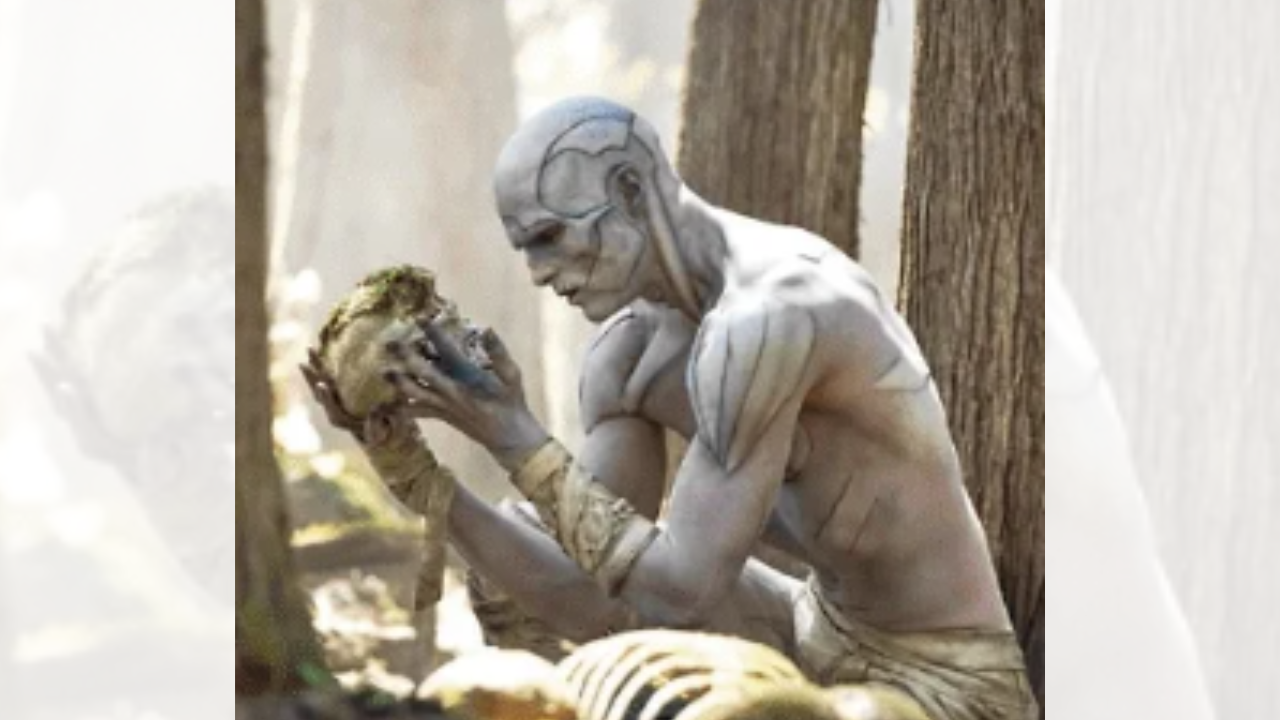
The Big Picture – A Ringer MoviesPodcast | Critics Sean Fennessey and Amanda Dobbins discuss how Guillermo’s whole movie career is about becoming increasingly fascinated by the idea that the monster is misunderstood, and must be looked at as just as human as you or I. That’s why, while Karloff is remembered for being terrifying, Jacob Elordi’s performance isn’t about that. It’s about interiority, “tall energy”, forgiving his “daddy”, and a superhero-ness.
Books in the Freezer – A Horror Fiction Podcast | Librarians Stephanie Gagnon and Jocelyn Codner note that Mary’s novel has been deeply injected into a popstream that isn’t always about high philosophy!
The 2024 romance-horror Lisa Frankenstein has a troubled teenager hooking up with a reanimated Victorian era corpse. The 1990 absolutely bonkers and campy Frankenhooker is about a medical school dropout resurrecting his fiance with the help of prostitutes’ body parts. The 2015 young adult novel The Dark Descent of Elizabeth Frankenstein is a retelling from the point of view of Frankenstein’s fiancee.
The 1986 Gothic is an origin-story film, psychologising the real-life episode where Mary, Percy Shelley, and John Polidori were stuck at Byron’s villa on Lake Geneva, and bet on who could write the scariest ghost story.
Science Fiction | Storyteller Damien Walter thinks of the four of them as a kind of goth band, with Mary as the lead singer. She is just 19 when she writes Frankenstein (in less than a year), and invents the mad scientist and his Other archetypes.
Her prolific later career would include The Last Man , which invents the apocalyptic novel, about the near-extinction of humanity by a global plague. Btw that Lake Geneva holiday also saw Polidori creating the short story The Vampyre , which too was the start of a genre that would grow and grow.
But, Walter argues, it is Frankenstein that is the new myth for the age of science, where humans are no longer thinking of themselves as made in God’s image, but as products of evolution, as machines of flesh and blood. Mary is writing for people whose world is being turned upside down by experiments in electricity and the factories of Industrial Revolution. And as science advances into AI, Frankenstein still remains the blueprint and warning. What have I done?