On a recent Sunday morning in my Illinois hometown, I saw a photographer wearing a T-shirt. On the front it asked: "Why did God make me black?"
When he turned, I saw the answer: "Because He knew I could take it _ like Jesus."
As I sat through the service at the all-black Baptist church I had attended in my youth, I thought about those words _ God making me black and this notion of black people "taking it."
I suppose the idea of God's hand in all this provides some noble, moral fuel of faith to deal with the things that come with being black in America and "taking it." But then, I could ask, "Why did God make white people white?" Is the answer: "Because He knew they could dish it out?"
That would be unfair because many whites don't "dish it out."
So it also goes that not all blacks can take it. But there should be no shame in not taking it. In fact, I would ask how many whites would trade places with us and "take it." And what is the "it" that would be taken? I could facetiously say to put an "sh" in front of "it," and capture the encompassing essence of it.
I suppose I just did.
Still, I find little solace in being morally superior to those who treat me like "it." My solace comes in getting them to stop "it."
So I ask another way: How many whites _ and other non-black Americans _ would be happy if you were treated the way blacks are in America?
Would you take it? Could you take it? Should you take it?
The police are but one element of "taking it." That said, it is not my wish to paint the police with one broad stroke. But just as our government authorities want Muslims to stop fellow Muslims from committing terrorism under the banner of Islam and denounce those who do, so we need our government authorities, namely police officers, to stop their fellow officers from committing terror behind the shield of law enforcement and to denounce them when they do.
Yet, each time another black is captured on video being killed, we receive excuses as to why they were justifiably killed. "If they had done this," "If they had not done that."
Our lives are in varying degrees of danger no matter what we do.
Police talk about making it home. But they are in the line of duty. They chose to put their lives in danger and I respect them for that. But the infinity of black people born in America since 1619 (when slaves first arrived) did not choose to put our lives in danger _ unless we cite our black mothers' choice to give birth to us in America as putting our lives in danger.
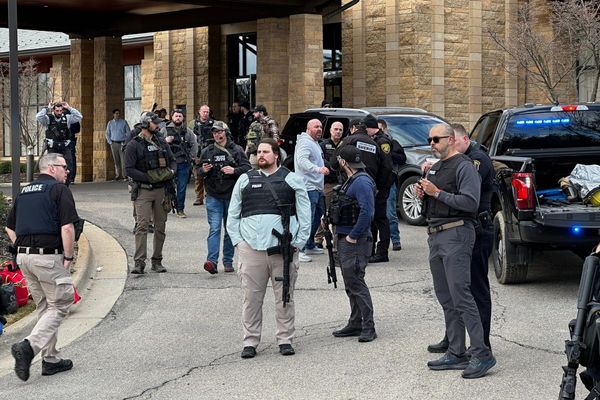
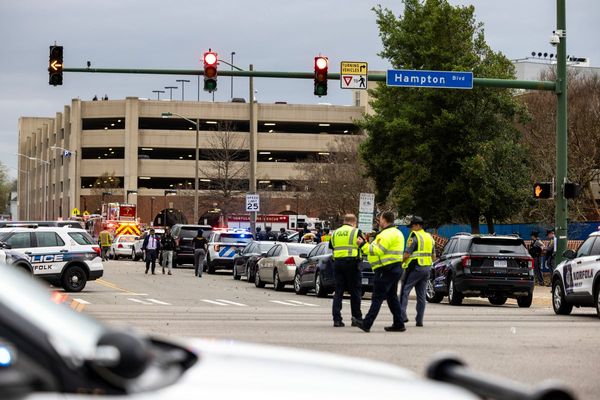
So we get Alton Sterling in Louisiana and Philando Castile in Minnesota killed by police officers on consecutive days. Add to this the five white officers killed in Dallas by Micah Johnson who, I surmise, saw the repeated killings of black men by white police, heard previous marchers' chants of "Hands up, don't shoot" and "Black Lives Matter," and saw, after everybody went home, too many cops kept shooting and showing black lives don't matter.
And contrary to that T-shirt I saw on that Sunday morning, he could not take it.
Not everyone accepts we were put on this Earth to take it. And of those who choose not to take it, not everyone will respond the same. Some will march. Some will pray. Some will write. Some will speak. Some will sing. Some will cry. Some will kill and willingly die.
And as tragic as the first two days were when two more black men were shown on video being killed by police, it was the third day, when the white police officers were shot and killed, that the whole conversation shifted and the nation began to mourn, which shows again that if all lives matter, certain lives matter more than others _ particularly white lives dressed in blue.
When will we ever learn?
ABOUT THE WRITER
Frank Harris III is a professor of journalism at Southern Connecticut State University in New Haven. He wrote this for the Hartford Courant. Readers may email him at frankharristhree@gmail.com.