The eye-popping and reality-bending buildings that made Frank Gehry the most famous architect of his time, such as the Walt Disney Concert Hall in Los Angeles and the Guggenheim Museum in Bilbao, Spain, did not make him an obvious fit to design the Dwight D. Eisenhower Memorial in Washington, D.C., which honors the 34th president and supreme allied forces commander during World War II.

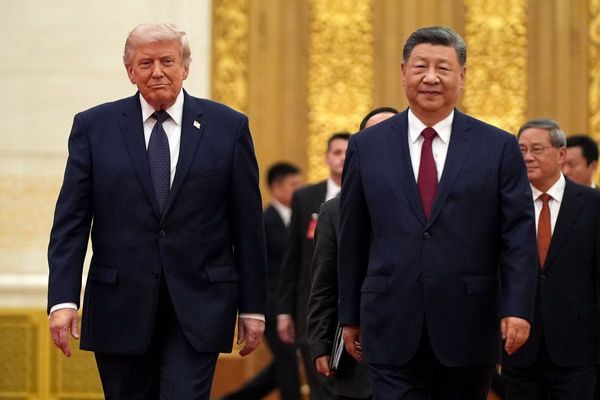
Still, for Gehry, who died Friday at the age of 96, the Eisenhower Memorial is his most enduring legacy in the nation’s capital, a place frequently at the center of debates over architecture, design and preservation, from the current ruckus over President Donald Trump’s destruction of the East Wing of the White House and his proposed White House ballroom to replace it to whether the Housing and Urban Development Department’s Weaver Building is “the ugliest building in D.C.”
The memorial, first approved by Congress in 1999, went through a two-decade planning and construction process, one in which Gehry was not even selected until 2009. Gehry’s initial design got pushback from fellow architects, members of Congress (including those with influence over the appropriations for the project) and even members of the Eisenhower family, over everything from its tapestries to depictions of the president’s bare feet. After years of fits and starts, withheld funding, public squabbles in congressional hearings, memorial commission resignations and the COVID-19 pandemic, Gehry largely got his vision through, and the memorial opened to the public on Sept. 18, 2020.

“We needed to find a design element that created a backdrop to the core of the memorial, one that softened the urban elements surrounding the site, and one that prepared the visitor for the gravity of the topic. That’s how we came to the tapestry. Tapestries have been used throughout time to tell the story of cultures in war and peace. It seemed to fit,” he told Architectural Digest.

Memorials and big public buildings tend to age well. The Eiffel Tower in Paris was decried during its construction in the 1880s as “this infundibuliform chicken wire.” Maya Lin’s Vietnam Veterans Memorial, opened to the public in 1982, was blasted as “The Black Gash of Shame.”
People eventually came around.
The post Frank Gehry’s Washington legacy: The Eisenhower Memorial appeared first on Roll Call.