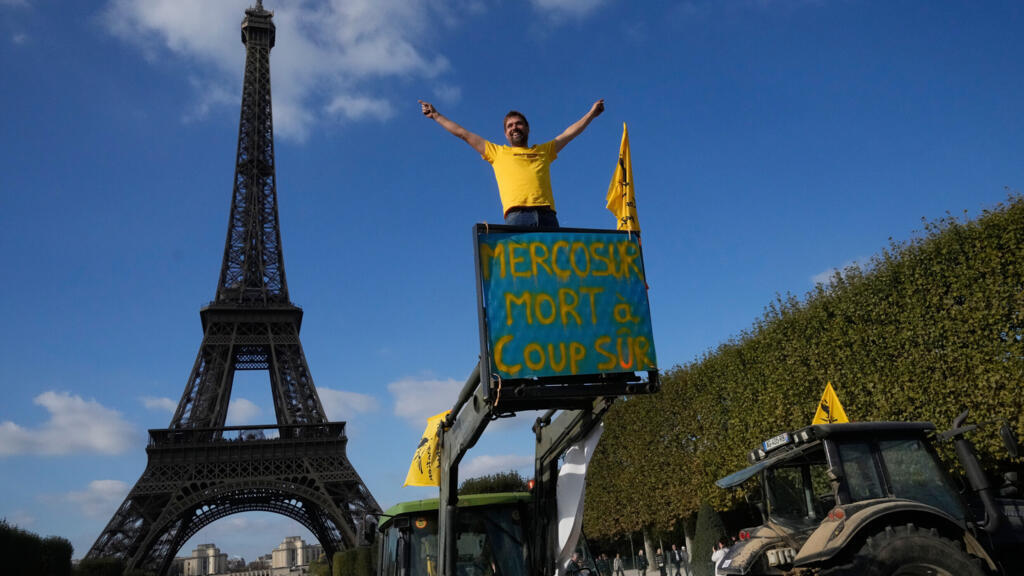
The French government has said it is tightening checks on around a dozen food imports in a bid to ease concerns of farmers who have been protesting at what they say is unfair competition from countries with looser regulations.
French farmers have been protesting over a planned European trade deal with the South American Mercosur bloc, and other issues including measures to contain outbreaks of lumpy skin disease which have led to the culling of livestock.
Agriculture Minister Annie Genevard said Sunday that the tighter checks would make sure food coming from outside the EU did not include substances banned in food produced in the bloc.
A decree would be issued soon announcing the suspension of imports of some food products already known to contain those substances, she added.
"Imports, regardless of from where they come in the world, must comply with our standards. France is setting an example in Europe by issuing this unprecedented decree that concerns more than a dozen food products," wrote Genevard on X.
"Melons, apples, apricots, cherries, strawberries, grapes, potatoes: they will only be on sale in France if they show no residue of these substances banned in our country. Other products from South America such as avocados, mangos, guavas, or certain citrus fruits from elsewhere will only be allowed in if they comply with our standards," she added.
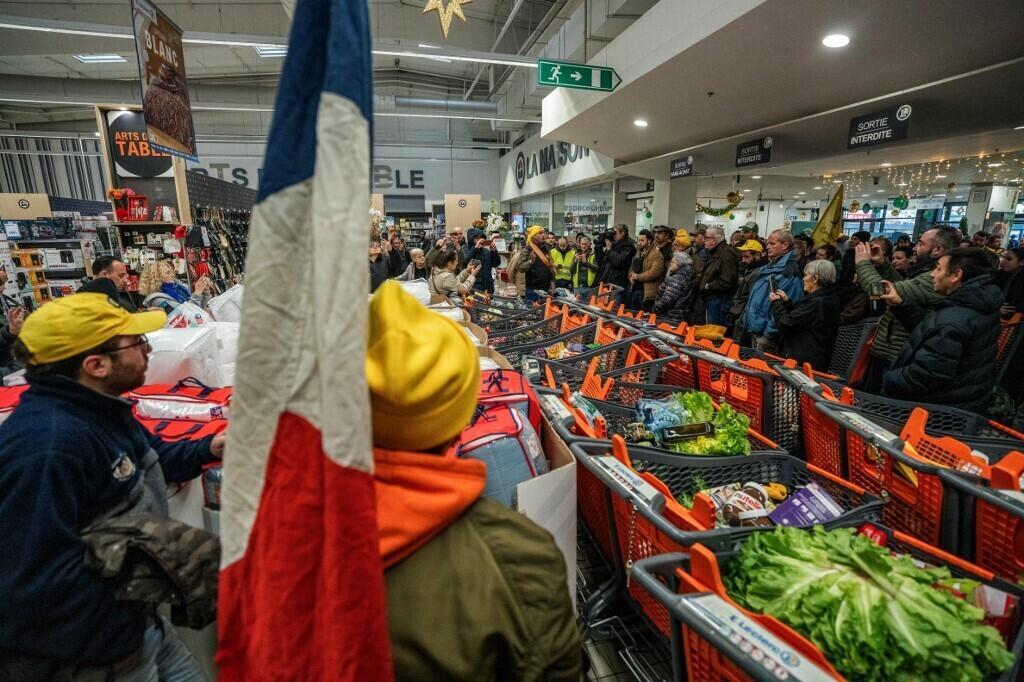
What to know about the EU-Mercosur deal
'Protecting' French farmers
Prime Minister Sebastien Lecornu said earlier that any imported product showing traces of these weed and fungus killers – namely mancozeb, glufosinate, thiophanate-methyl, and carbendazim which are banned in Europe – will not be allowed in France.
The deal between the 27-member European Union and Mercosur countries Brazil, Argentina, Paraguay and Uruguay was agreed on in 2019, but has stalled as it moves through approval votes in individual countries.
Germany and Spain back the deal, but opponents in France say the trade arrangement would lead to cheap imports of South American commodities, notably beef, that do not meet the European Union's environmental and food safety standards.
"Protecting our farmers, guaranteeing the health of French people and standing up to any form of unfair competition while making sure our rules are respected – this is non-negotiable. It is up to the European Commission to make sure this is generalised across the board. If necessary, we will do it again," added Genevard.
A number of diplomats in Brussels have told reporters that the EU is working towards signing the Mercosur deal on 12 January in Paraguay, which is set to take over leadership of Mercosur from Brazil.
(with newswires)