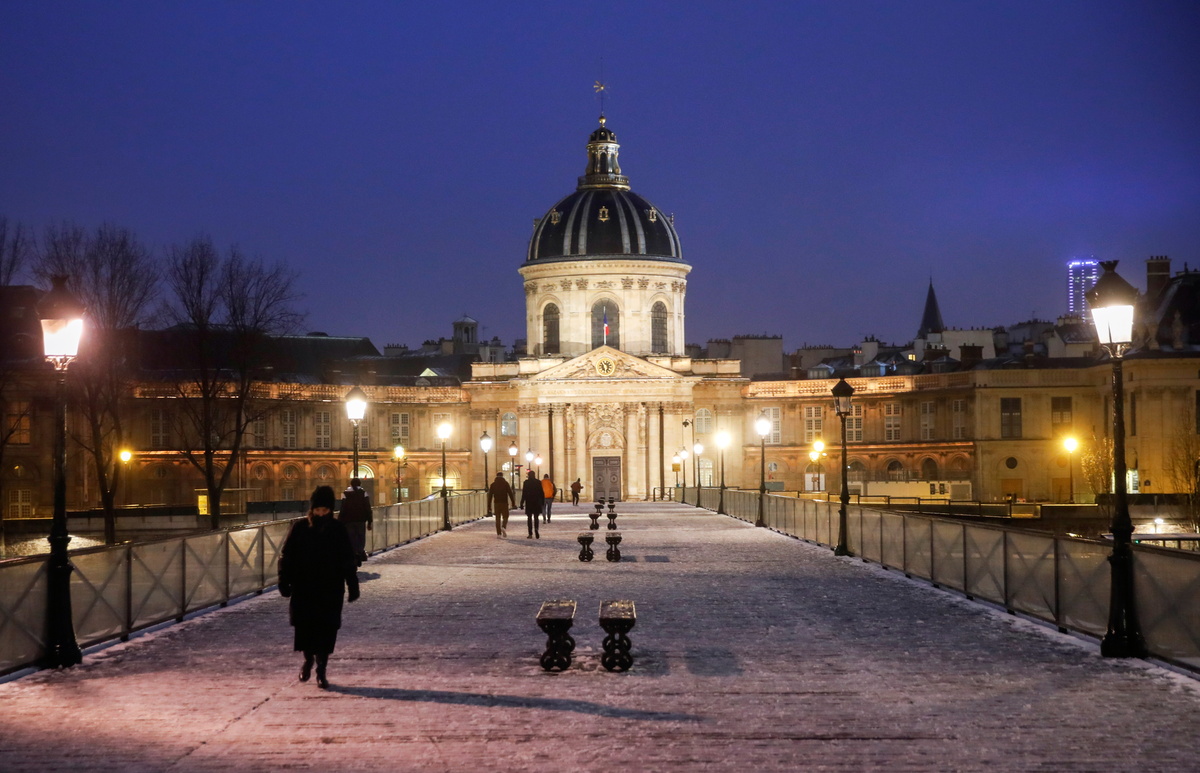
Cities, towns and villages across France were practically empty on Saturday as residents stayed home and businesses shut to observe a nationwide curfew intended to help stem the spread of coronavirus, especially a more infectious variant.
The virus has killed 70,000 people in France, the seventh highest toll in the world, and the government is particularly worried by the more transmissible variant first detected in Britain, which now accounts for about 1% of new cases.
The curfew was brought forward two hours to 6 p.m. and will run until 6 a.m. In addition, from Monday anyone travelling to France from outside the European Union will have to show a negative test result and self-isolate for a week upon arrival.
"These measures were necessary given the situation. While worsening, it remains relatively better than many countries around us, but I took them because the context, notably with the evolution of the virus, means we have to have utmost vigilance," Prime Minister Jean Castex said in a speech.
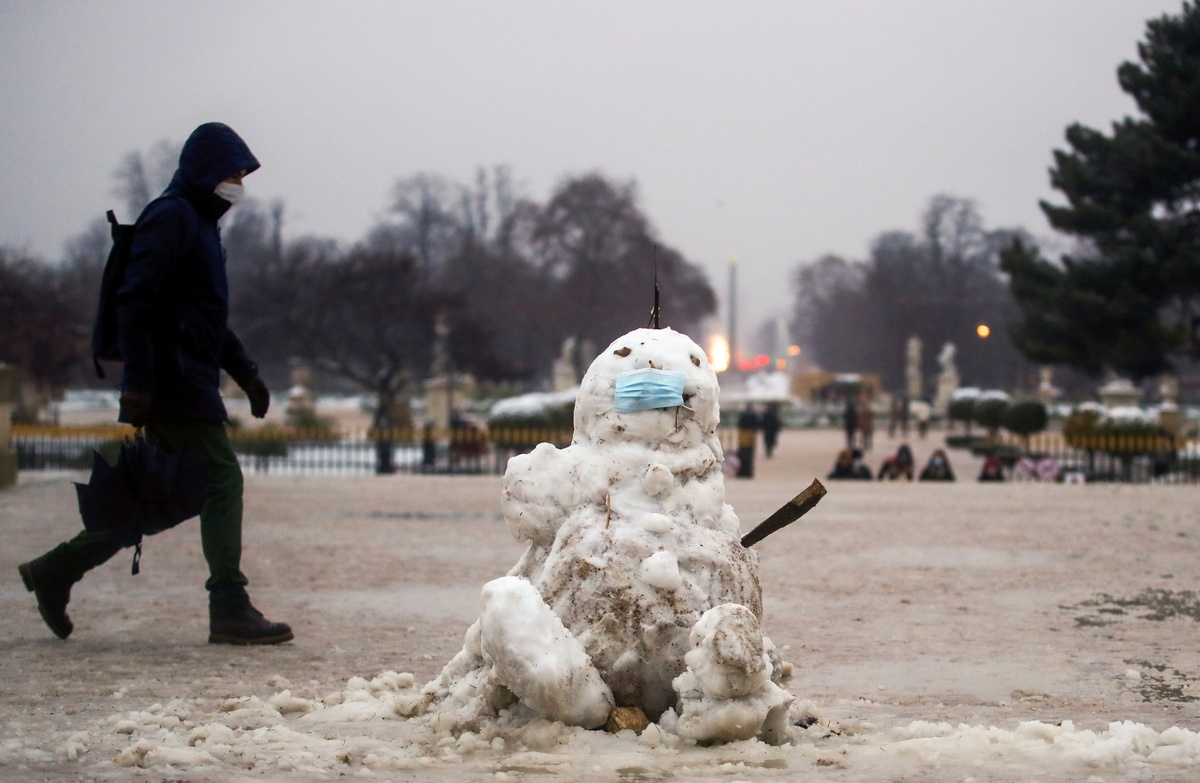
Shops and businesses sought to mitigate the potential losses of the curfew by opening as early as 7:30 a.m. on Saturday. While snow showers hit large parts of the country, people adjusted to the new hours to make sure streets were empty by early evening.
"The weekend is less problematic, but during the week people leave the office around 6 p.m. and it's a popular time to get optic wear," Mickael Levy, 45, founder of Win Optic, told Reuters TV. "It's another restriction so let's hope it does something because once again it's more economic loss for us."
New daily infections has hit a plateau at around 20,000, but the number of people being admitted to hospital and requiring intensive care treatment is still rising. The government has also been criticised for the slow pace of France's vaccine rollout.
Renaud Piarroux, an epidemiologist at the Pitié-Salpêtrière hospital in Paris, said the curfew would have little impact in curtailing the new variants, which he believed would predominate within six weeks.
"We will have to make big efforts like the English and even the Germans. I think it's best to toughen things up now rather than later," he told BFM TV. "We have to anticipate. I think a new lockdown is inevitable."
(Additional reporting by Yonathan Van der Voort; Editing by Kevin Liffey and Mike Harrison)