Domestic violence is rising in France and children have been recognised in law as victims in their own right since 2022. As the world marked International Day for the Elimination of Violence Against Women on Tuesday, RFI visited the country’s only centre supporting children as they try to recover.
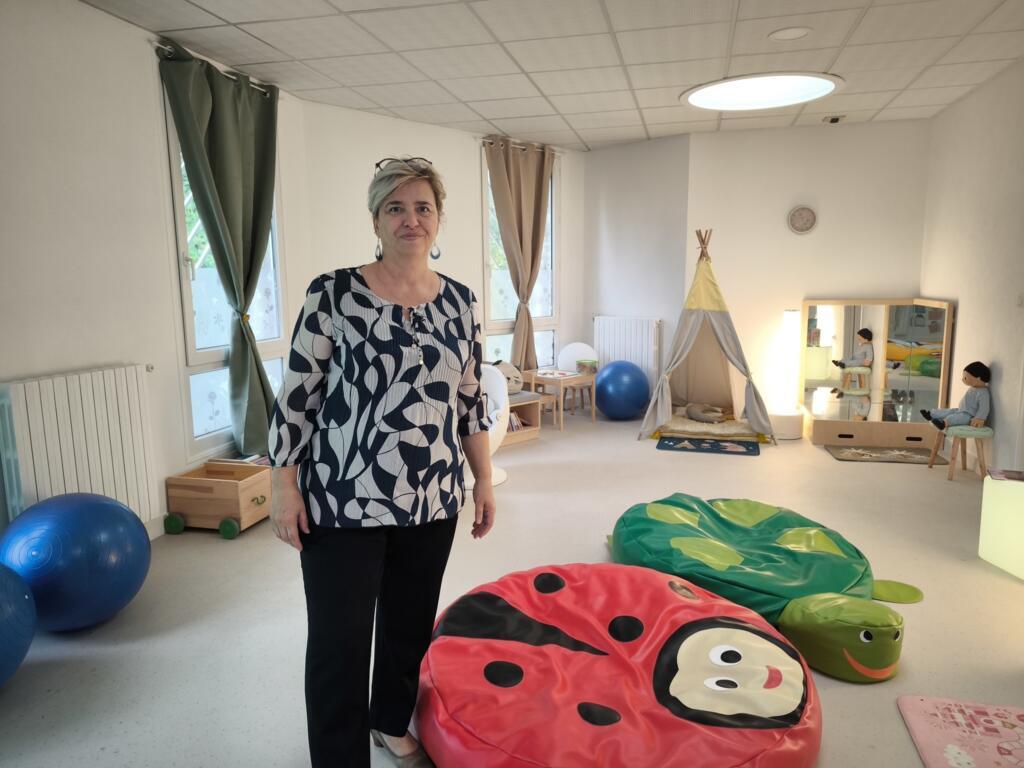
With dolls and toys on the shelves, books and balls and ladybird-shaped beanbags, the Une main pour 2main ("A hand for tomorrow") centre in Domont, north of Paris, has been designed to be as welcoming as possible for children.
"When you live in a violent environment, you don't play anymore. You don't make any noise. Children try to make themselves invisible," says Catherine Goujart-Delambre, the centre's director.
This is the only centre in France dedicated to helping children rebuild after living through domestic violence, which continues to increase despite measures meant to stop it.
On Monday, France's Gender Equality Minister Aurore Bergé unveiled a new bill of 53 measures to curb rising violence against women, which also extends to violence against children.
Rising domestic violence in France prompts sweeping bill to protect women
Letting children be children
On Wednesdays, Saturdays and some days during school holidays, the centre welcomes children aged four to 17 for free workshops.
"We wanted to give them back their place as children for an hour, so they no longer have to be either witnesses to violence, or carers of the parent who is a victim," says Goujart-Delambre.
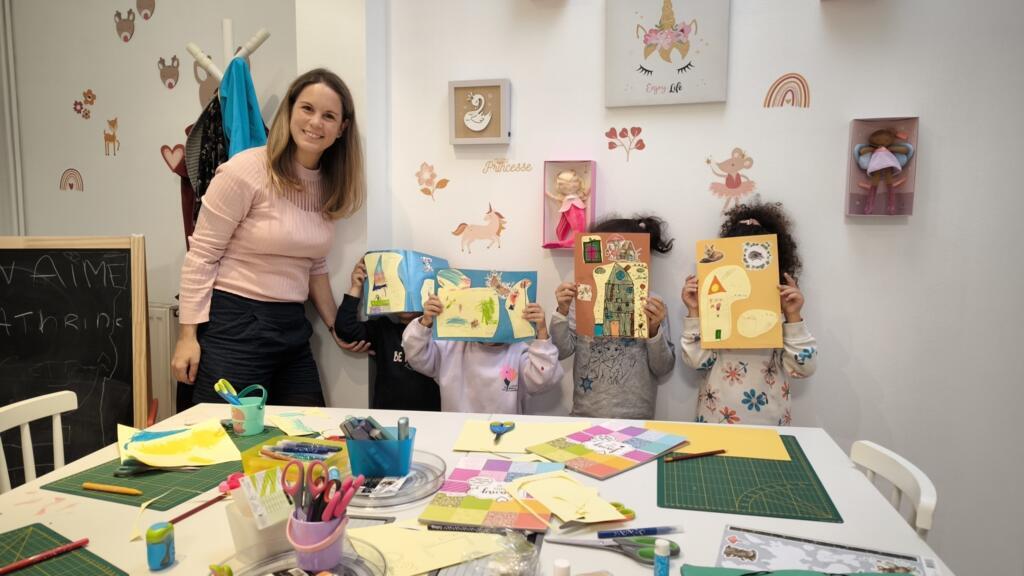
In the arts and crafts room, older children are making Christmas tree ornaments
"While they are making crafts, they don’t think about anything else," Goujart-Delambre explains. It is a small but important step in rebuilding their self-confidence.
The youngest children are looked after by Laetitia Via, an author of children's books, who works with them on "expressing emotions" through reading, singing and drawing. "The important thing is that we give them the space to talk," she says.
Each room in the centre has a name, and the music and drama room is called "Anaïs and Lola", after Goujart-Delambre’s daughter and granddaughter. It was their experiences that led her to set up an organisation to help victims of domestic violence in 2014.
Lola, now 10, was three weeks old when her mother, Anaïs, called Goujart-Delambre for help after being beaten by her partner.
A few months later, Goujart-Delambre’s best friend, Katie Salvador, also became a victim of domestic violence. Shortly afterwards, the two women set up Mon Âme Soeur ("Soul sister") to help other women in the same situation.
Its success then led them to create Une main pour 2main to help children specifically.
Thousands march in France to demand action on violence against women
Victims in their own right
According to France’s High Council for Equality Between Women and Men (HCE), 398,000 children were "co-victims" of violence against women in 2019.
And since 2022, children exposed to domestic violence have been recognised as victims in their own right, even if they were not physically harmed.
This status gives them access to support, including psychological assistance. But in practice, Salvador says, very little is actually available.
The centre does not have its own dedicated in-house psychologist – Laurianne Chaine intervenes in emergencies.
She explains that children exposed to domestic violence can develop symptoms of post-traumatic stress disorder, including sleep disturbance, anxiety, anger, frustration and a constant sense of being on alert. "In the context of domestic violence, it's their sense of safety that is affected."
"It feels good after everything we've been through," says Samia (not her real name), a mother who is bringing her children here for the second time. "They're very happy to come."
Council of Europe demands action on sexual violence against women in France
Long-term consequences
For Goujart-Delambre, helping these children is also a matter of prevention. From her years of helping adult victims, she says many were also exposed to violence as children.
"Every time, we ask if there was a history of violence in childhood, on one side or the other. In most cases, the answer is yes," she says.
A report from the HCE also found that 40 to 60 percent of violent men had witnessed domestic violence as children.
However Chaine says this cycle is not inevitable. "Just because a child has witnessed violence, does not mean that they will become violent themselves. But they may be vulnerable as adults, and may reproduce the same patterns, with their own children becoming victims of bullying, for example."
Immediate psychological support can help prevent trauma from becoming entrenched and causing long-term consequences.
Juliette (not her real name) left her partner in July. Social services referred her to the centre, she explains, sitting on one of the sofas in the reception area. "My four-year-old son has terrible tantrums. I don't really know how to react. He hits me and kicks me, and I feel that they resent me for the separation."
"Anger is often an expression of deep sadness," explains Chaine gently.
For Goujart-Delambre, one of the major obstacles to helping these children is that an abusive parent often retains parental authority, and will often refuse to approve psychological treatment.
A law passed in March 2024 aimed at strengthening child protection made it easier to remove parental authority, but in practice such decisions remain extremely rare.
"There is a beginning of awareness," says Goujart-Delambre. "We recognise the children as victims, but what are we doing about it?"
This article was adapted from the original version in French by Aurore Lartigue.