French astronaut Sophie Adenot is preparing for her first mission to the International Space Station in February 2026, a trip that will make her the first Frenchwoman in space since 2001. During her eight-month stay, she will conduct nearly 200 scientific experiments in microgravity.
"The countdown has officially begun, everything is going perfectly."
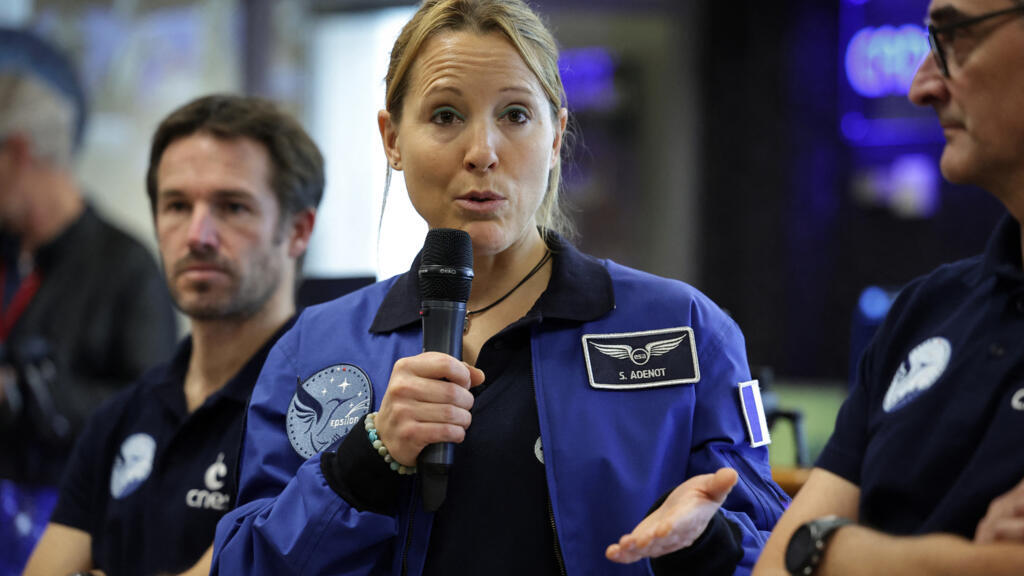
Adenot was all smiles as she greeted journalists in Toulouse on Monday to discuss the Epsilon mission to the International Space Station (ISS), scheduled for next February, in one of her last public appearances before her departure.
An engineer by training and a helicopter test pilot for the French Air and Space Force, Adenot is France's first female astronaut since Claudie Haigneré 25 years ago.
The 43-year-old was selected to represent the next generation of European Space Agency (ESA) astronauts in April 2022.
Aiming for the stars lands French astronaut Sophie Adenot a ticket to ISS
To prepare herself, she says can rely on the experience of former astronauts, whom she consults whenever necessary.
"We have everything we need to stay calm because our training is designed by engineers who have been familiar with the ISS operations for over 20 years," she explained.
"But I’m human," she went on. "At some point, this serenity will be challenged, but I don’t know when or how. That’s a source of curiosity, in a way."
Medical research
If all goes to plan, on 15 February she will take her place aboard a SpaceX rocket on the launch pad at Cape Canaveral, Florida, in the United States, which will take her to the ISS.
Hundreds of scientific experiments are planned for the 240-day mission, around 10 of which were developed by France through the National Centre for Space Studies (CNES).
Her mission will serve three purposes: to improve scientific and medical knowledge, to prepare for the future of space missions and to involve young people.
EU reveals ambitious project to build and print objects in space
Adenot admits that the experiments in the field of health are the ones that most pique her curiosity. "I am intrigued and interested in this type of experiment, because they could have a direct and concrete impact on our everyday lives."
Adenot will be analysing the effects of weightlessness on astronauts' organs using medical imaging. Since CT scanner or MRI machines are too bulky to be taken aboard the ISS, she'll be using ultrasound.
For 40 years, CNES has used its expertise in ultrasound analysis in space, with astronaut Thomas Pesquet employing it during his two previous missions aboard the ISS.
The ultrasound device that Adenot will be testing, called EchoFinder, is revolutionary. It will allow for autonomous ultrasound scans, without prior medical training or ground assistance.
Aristée Thevenon, an engineer at the Institute of Space Medicine and Physiology (MEDES), a CNES partner, explains that astronauts will be aided by augmented reality and artificial intelligence displayed on a screen.
"The idea is to place virtual spheres representing the probe’s position into virtual cubes representing the ideal probe position. When we manage to place our spheres into our cubes, it turns green, which means we have found the ideal probe position," he told RFI.
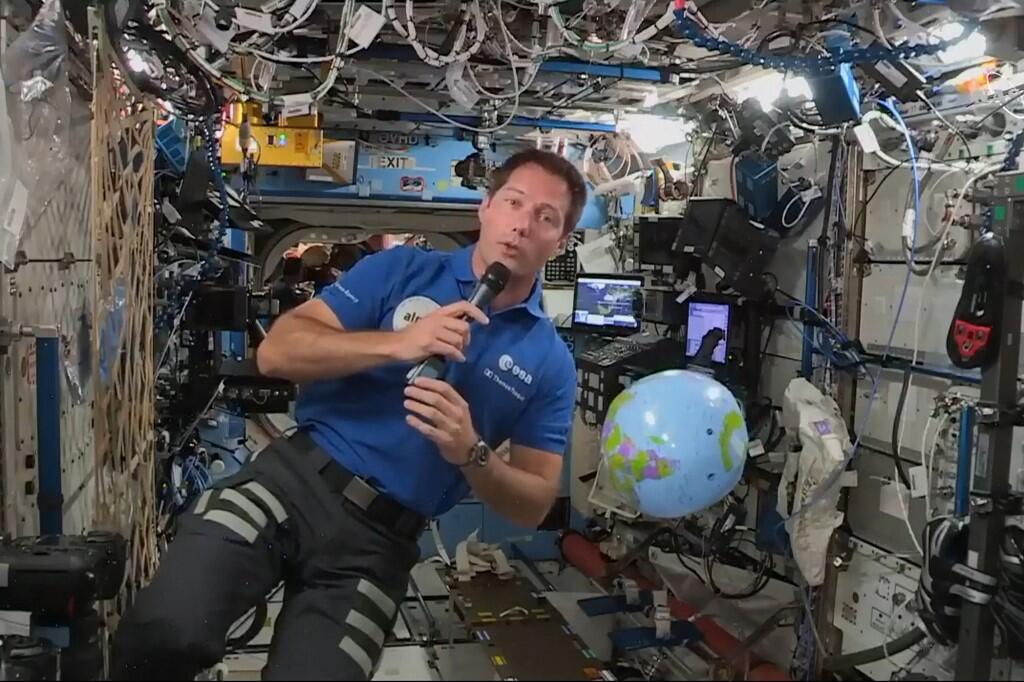
The experiment will help prepare for future space missions to the Moon and Mars, "where communication delays, sometimes of just a few minutes, will make any real-time guidance from Earth impossible," Thevenon says.
Back on the ground, the technology could also help improve access for patients in remote areas, where ultrasounds are not necessarily available due to a lack of technical expertise.
"We can also imagine a version for submarines, which are confined environments quite similar to those of the International Space Station," he added.
Human 'guinea pigs'
Rémi Canton, head of human spaceflight at CNES says that with EchoFinder, Adenot will play a dual role, both testing the equipment on herself and on fellow crew members.
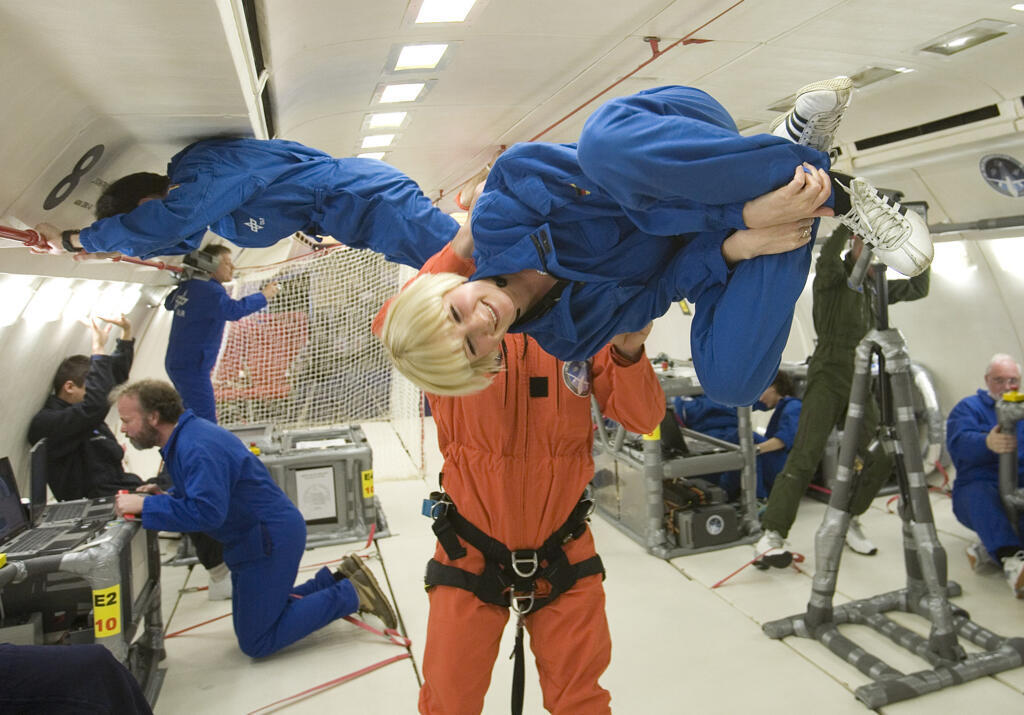
For eight months, Adenot will become a kind of guinea pig to make it possible to observe physiological phenomena that are unobservable on Earth due to gravity.
This will be the case with PhysioTool, a scientific experiment designed to measure several physiological parameters, including cardiovascular ones, using sensors.
Marc-Antoine Custaud, a researcher at the University of Angers and sponsor of this study explains that in the absence of gravity, blood circulation slows down.
"This is what we call cardiovascular deconditioning," he explains. "Our goal is to understand how the cardiovascular system becomes unadapted to gravity, what needs to be done to make it adapt to microgravity, and how to readjust it upon returning to Earth."
Bacteria under the super-microscope
When it comes to health and wellbeing, cleanliness is a crucial issue for astronauts: 10 percent of their mission time is spent on cleaning.
Sébastien Rouquette is an engineer and head of the Matisse-4 experiment for CNES, which will collect bacteria and bring back samples to Earth in order to analyse them in detail using a super-microscope.
His team wants to understand how micro-organisms associate with each other and settle on the surfaces of the ISS.
"The goal is to develop innovative surfaces with coatings that limit or prevent bacterial growth," he tells RFI.
These new antibacterial coatings would offer several advantages: they would limit the use of toxic bactericides on board and allow astronauts to save time, a precious resource on board the ISS.
The research could be useful on Earth too. "I'm thinking of door handles, handrails in the subway or on buses and hospitals. We're starting to have some pretty serious leads on concrete applications within a few years," Rouquette says.
How fungi and bacteria could help build habitats on Mars
The next generation
During her mission, Adenot will also conduct an educational experiment called ChlorISS, in partnership with 4,500 French schools.
The idea is to simultaneously germinate Arabidopsis thaliana and Brassica rapa japonica ("Minuza") seeds in microgravity, both on the ISS and on Earth, in order to observe the effects of gravity and light on the growth of these two plants.
Marie Fesuick, who is in charge of the ChlorISS experiment, says it will last 10 days.
"Every day, Adenot will photograph the progress of germination, then she will send the photos to schools. Students will be able to compare these photos with the observations they make in their classrooms and observe any differences," she explains.
French astronaut Thomas Pesquet sets his sights on the Moon after ISS success
Involving young people with experiments on the ISS has become an integral part of space missions.
In 2021, during his second mission, Pesquet conducted a similar experiment with the "blob", a yellow single-celled creature, neither animal nor plant.
"We hope to inspire some young people, to spark vocations, not necessarily in space, but in science in general," explains Fesuick.
Adenot agrees: "It's important that young people identify with [these] career paths. I will be as generous as possible in sharing my experience with them, as much as time allows."
A new spacesuit
She will also have the opportunity to test a new space suit, known as the "EuroSuit".
In development since 2023, it is designed to be worn by the astronaut inside the spacecraft during take-off and docking phases, and in case of emergency.
It was developed as part of a partnership between CNES, the French start-up Spartan Space, the Institute of Space Medicine and Physiology and the innovation branch of the Decathlon sporting goods company.
According to Decathlon, the suit can be "donned or doffed in less than two minutes and completely autonomously".
Adenot will test the prototype during her mission to validate its ergonomics in microgravity conditions, in conjunction with further tests on the ground.
She has a packed schedule between now and the launch date. She still has to undergo several tests to collect baseline medical data. "We'll take them aboard the ISS and then compare them with the data I collect when I return to Earth," she explains.
And she still needs to familiarise herself with handling the SpaceX Crew Dragon capsule, which will take her to the ISS.
"We rehearse the standard procedures and emergency procedures extensively, to be prepared for any eventuality."
This article was adapted from the original version in French by Baptiste Coulon.