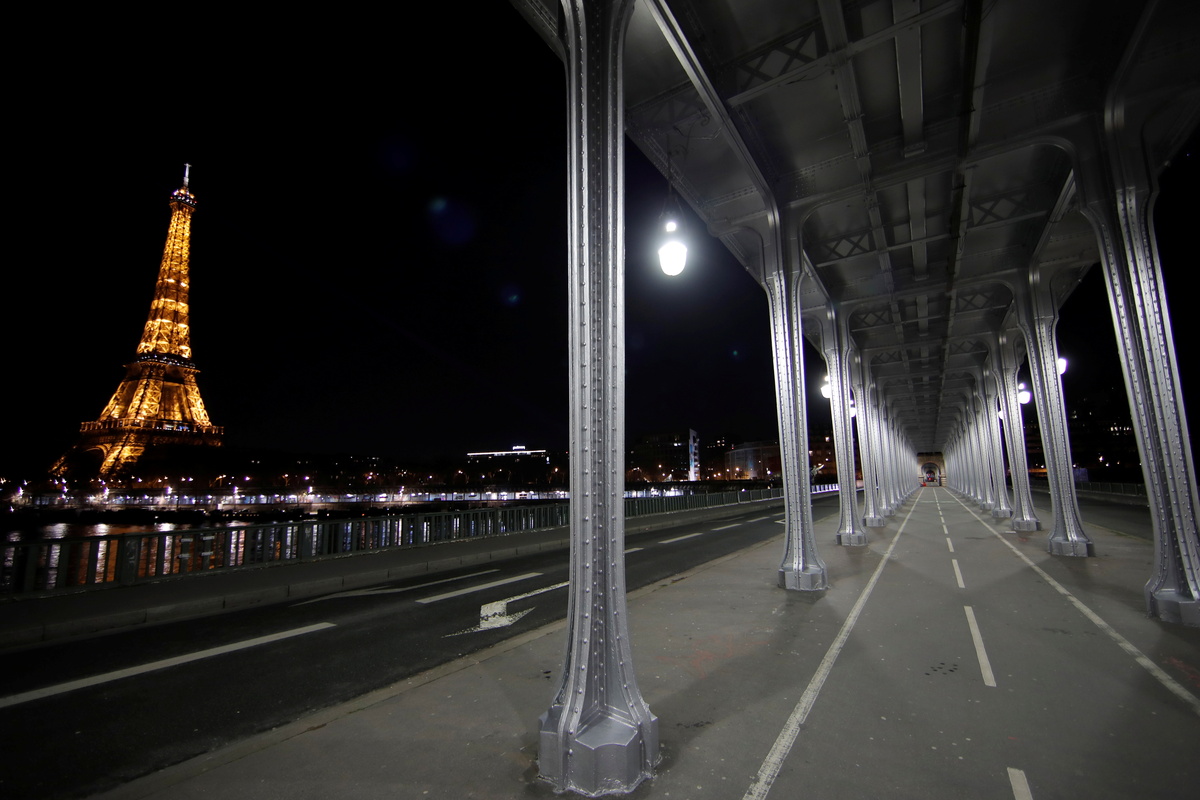
France's nightly curfew is failing to slow the spread of coronavirus infections and authorities are discussing the possibility of tighter curbs, government spokesman Gabriel Attal said on Wednesday.
A curfew runs from 6 pm until 6 am every night but President Emmanuel Macron is under pressure to impose a third national lockdown since the crisis began almost a year ago as data shows another increase in hospitalisations and deaths.
"The data shows that at this time the curfew is not putting enough of a brake on the spread of the virus," Attal told a news conference.
The different scenarios under discussion range from maintaining the status quo to a very strict lockdown, Attal said.
Restaurants, bars, museums and ski resorts are already closed in France but schools are still open. Shops remain open too but with restrictions on the numbers allowed inside.
Macron is likely to wait until Saturday, two weeks after the curfew was lengthened, before deciding on the next step and is concerned that more curbs on public freedoms may trigger acts of civil disobedience, a government official said.
During its first lockdown last spring, France closed all schools and universities and prohibited citizens from leaving their homes other than to buy groceries, carry out essential work, seek medical attention or exercise. Schools remained open during a less stringent confinement in the autumn.
The government's top scientific adviser, Jean-Francois Delfraissy, said on Sunday a new lockdown was necessary but that it was for politicians to decide how tough to make it.
Failure to impose another lockdown would result in a very difficult March as a more contagious variant first detected in Britain becomes increasingly prevalent in France, Delfraissy said.
(Reporting by Sudip Kar-Gupta and Benoit Van Overstraeten; ; editing by John Stonestreet and Gareth Jones)