Scorching heat continued to spread across most of mainland France on Wednesday, as the Ministry for Ecological Transition met to take stock of the effects of a drought that has been steadily worsening since May.
Seventy-eight departments across mainland France have been placed on orange heatwave alert from midday.
"On Wednesday the heat intensifies further and heatwave conditions continue to gain ground: maximum temperatures will range from 36°C to 39°C in the departments on orange alert," national forecaster Météo-France said in its 6am bulletin.
Only a sliver of the north-east and a few high-altitude areas will be spared.

On Thursday, the number of departments on orange alert will rise to 80, with temperatures above 35°C, and every remaining department on yellow alert as the warning zone extends to the north of the country.
"From the Centre-Val de Loire to Nouvelle-Aquitaine, temperatures will range between 38°C and 40°C. In the Île-de-France region they will be close to 38°C," Météo-France said.
Skies will be largely clear on Wednesday evening, offering perfect conditions to watch the first total solar eclipse visible in Europe since 1999.
As the sun is briefly obscured by the moon, the mercury is still expected to show "very high values across many regions, particularly in the west, often between 30°C and 35°C, and between 25°C and 28°C along the Channel coast," the national forecaster said.

'Windows shut, in the dark'
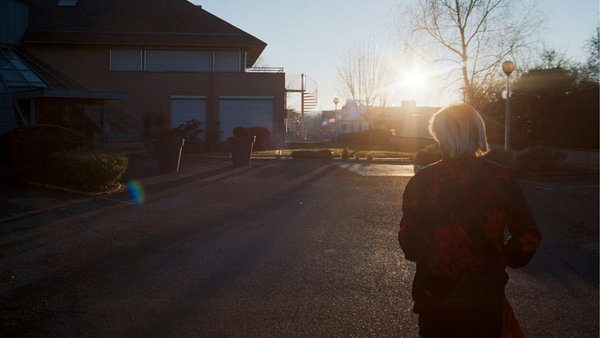
"Once again we're living with the windows shut, in the dark, and we can't even air the place at night because it's so hot," said Romain Vandepitterie, a Bordeaux-based entrepreneur who works from home.
The current episode is the third heatwave of the summer, following an exceptionally intense spell in late June and another from 4 to 19 July – among the longest the country has ever experienced. An unusually early bout of extreme heat had already struck in late May.
Against the backdrop of global warming driven by human activity, such periods of extreme heat are becoming more frequent, more intense and spread across more of the year.
"You need to stay hydrated, salt your food properly, and not neglect fruit and vegetables," advised Raphaële, a dietician in Rennes, who recommends eating food "served cold, so as not to heat up the body or the home" and taking a cool shower before going to sleep.
No respite is expected before the weekend.
Water restrictions
Drought in France has been worsening steadily since May, as a consequence of the soaring temperatures and lack of rain.
As of 6 August, soil dryness remained at record levels nationwide and had spread across the entire country, according to Météo-France.
The state of France's smaller rivers and streams is "the most critical ever recorded at this time" of year, according to the French Biodiversity Office.
On Tuesday, restrictions on drinking water applied to areas that are home to 62 million people – 94 percent of the mainland population – according to AFP calculations based on data from the VigiEau monitoring service.
In early August, nearly two-thirds of the country's groundwater tables, its main water reserves, were below normal levels.

Faced with the crisis, the Ministry for Ecological Transition is convening the country's hydrological monitoring committee on Wednesday, together with regional prefectures.
On the agenda is a stocktake of the drought and its consequences for agriculture and biodiversity, as well as a sharing of lessons learned on measures to strengthen anticipation and resilience in areas facing tensions over water.
Prime Minister Sébastien Lecornu on Wednesday also tasked four MPs and three senators with proposing new measures against forest fires – fuelled by climate change and drought – to feed into a forthcoming bill on modernising France's civil security system.
(with newswires)