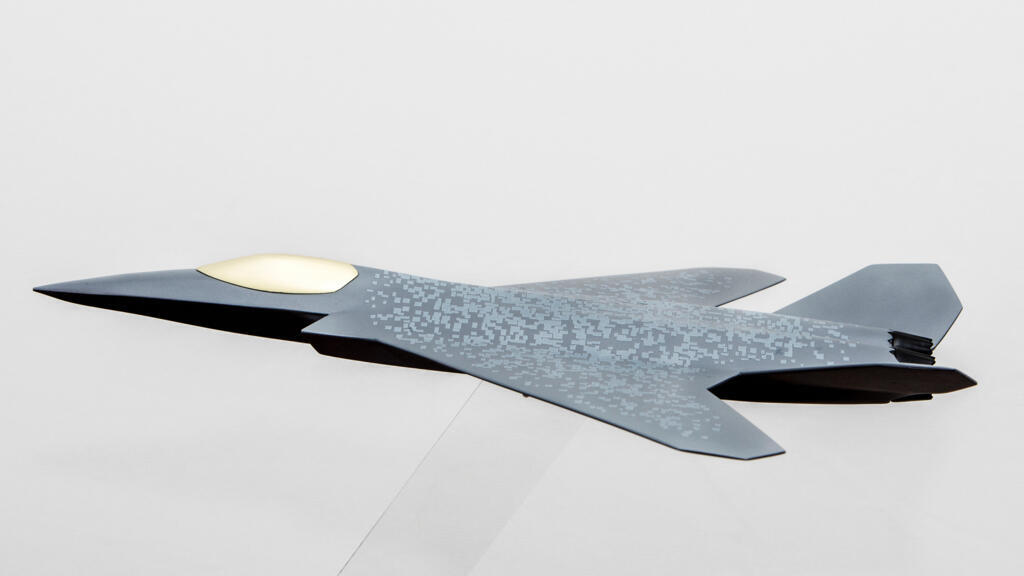
France and Germany will continue to work on the contentious joint Franco-German FCAS fighter jet project, officials confirmed on Friday, after doubt was cast over the future of Europe's largest defence initiative.
Plans to develop the joint Future Combat Air System (FCAS), together with Spain, have been hanging by a thread amid a public dispute over control between France's Dassault Aviation and Airbus SE, which represents both Germany and Spain in the €100 billion programme.
On Wednesday, France and Germany's defence ministers had given differing timelines for a decision on the programme, with one saying the two countries' leaders would decide soon and the other saying mediators had sought more time to discuss the matter.
Asked on Friday whether FCAS was dead, France's President Emmanuel Macron said "No, not at all", adding he had just discussed the issue with German Chancellor Friedrich Merz on the margins of an EU Council summit in Cyprus.
"We had a good discussion this morning with the Chancellor, and we gave a mandate to our defence ministries to work precisely on several areas, on a range of different issues," he said. "Not just the future combat aircraft, but various levers of cooperation between our two countries."
A German government spokeswoman confirmed the discussion between the two leaders.
"The Chancellor and the President instructed their defence ministers to continue working on various areas of cooperation and to agree on the next steps. This work will be completed in the coming weeks," she said.
As Europe pours money into defence, reliance on US remains a sticking point
Drones and digital systems
German newspaper Handelsblatt reported that Germany and France had tasked the former head of tank manufacturer KMW (now KNDS,) Frank Haun, and Laurent Collet-Billon, former head of France's defence procurement agency DGA, with find ways of salvaging the project at the end of March.
Their talks with the industrial players are focused on three axes: intellectual property, work share, and export rights.
But according to Handelsblatt, the two negotiators could not reach an agreement and even produced two different reports.
Investment advisors Delfineo added that the CEOs of Airbus Defence & Space and Dassault Aviation "haven't spoken to each other for months".
While the programme officially aims to develop a fully integrated air combat system, insiders suggest a possible compromise could see cooperation continue on drones and digital systems, while the core fighter jet component may be scaled back or restructured.
That potential shift would be politically sensitive for Paris, where the project is seen as a flagship of European defence integration.
(with newswires)