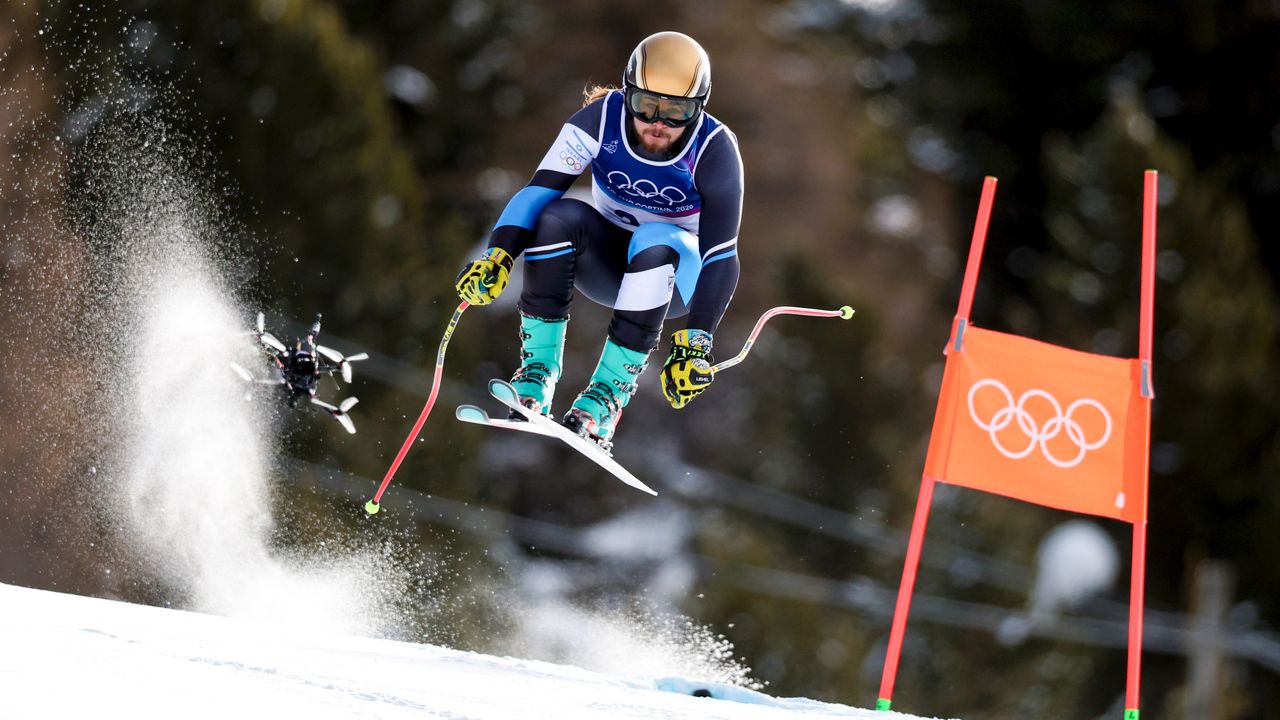
Drones are taking center stage at this year's Winter Olympics, which opened in Italy this weekend. For the first time, broadcasters are making wide use of FPV drones to follow competitors' every move as they hurtle down the slopes, or race round the icy tracks.
This is exactly the sort of task that is perfectly made for this type of first-person video drone – quite literally giving a TV audience a view of just what it looks like to ski down the iconic Olimpia delle Tofane course from the comfort of their armchairs.
But as the FPV drones tail the competitors, it is not just the images that you get from these cameras. The buzzing sound of their high-pitched rotor motors has become a new acoustic backdrop for the events. This type of quadcopters are known as cinewhoops by enthusiasts precisely because of this whooping whine that the propellers make as they fly.
This whirring sound was particularly noticeable in the Big Air snowboarding events over the weekend. As the young boarders performed their tricks off the 75-foot ramp, you could hear and see their miniature mechanized companions track their somersaults as the TV showed coverage from the more traditional fixed-position cameras.
Safety when using FPV drones at these major spectator events is a major concern. In 2015, the international ski federation banned the use of drones when one crashed during a competition just missing slalom champion Marcel Hirscher during a race. They did not return to the alpine sport's World Cup circuit until the 2023-24 season.
The drones are flown by a skilled pilot wearing goggles, who can skillfully control the distance of the UAV from the competitor, anticipating the path of the course and the athlete. A second operator is typically used to control the FPV camera itself.
“Every athlete accelerates and flies differently. If you don’t understand those subtleties, you miss the moment or outrun them,” says OBS FPV drone operator Jonas Sandell, who was a ski jumper on Norway's national team before becoming a pilot.
The skill of these pilots is particularly highlighted during coverage of the luge where the drone must navigate some of the tight, narrow curves of the Cortina Siding Center's 1,445m / 1,580 yd run at speeds of up to 90mph / 140km/h.
The drones do not follow the competitor down the whole of the run... instead confining their coverage to sections where there are few spectators.
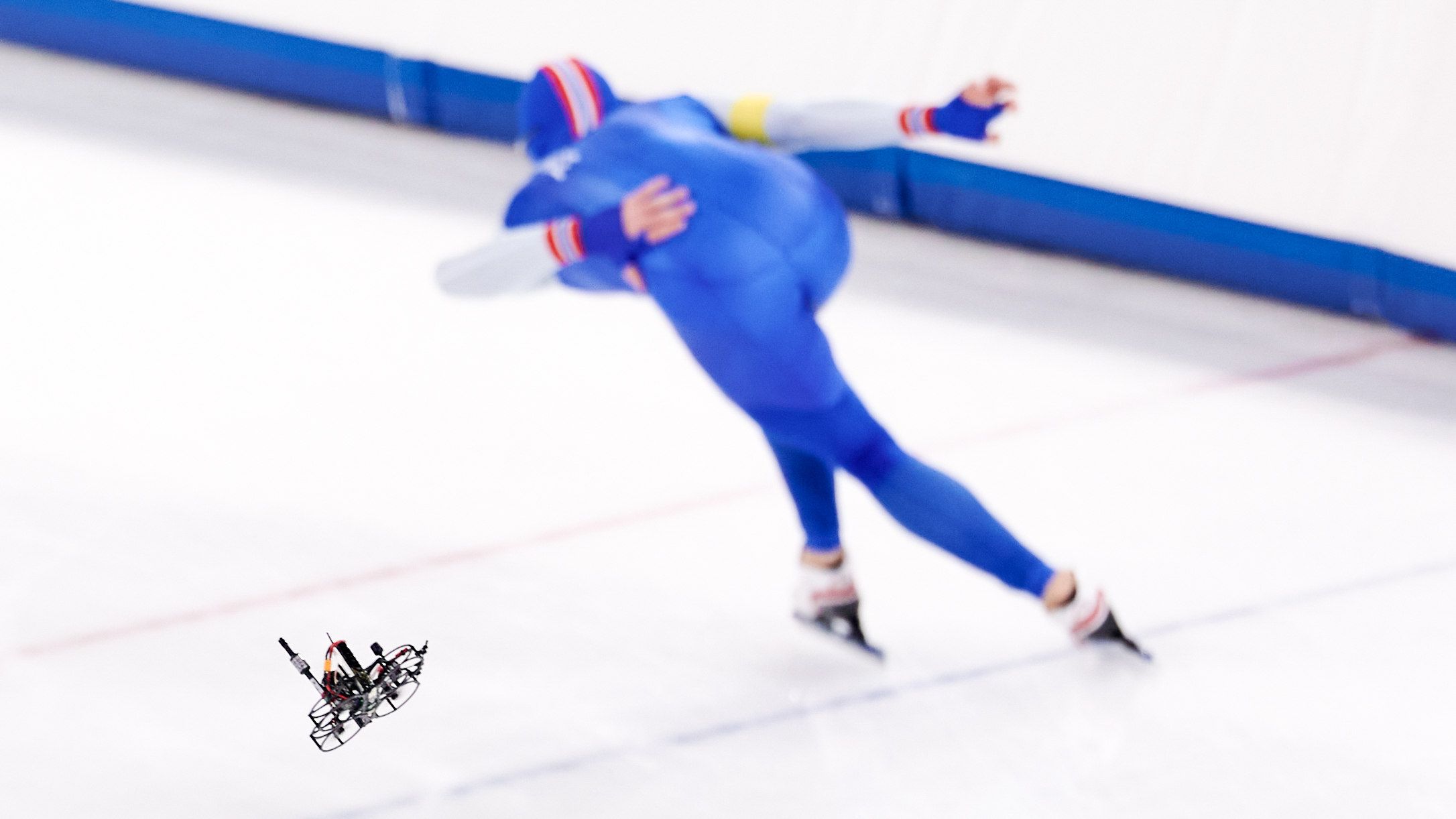
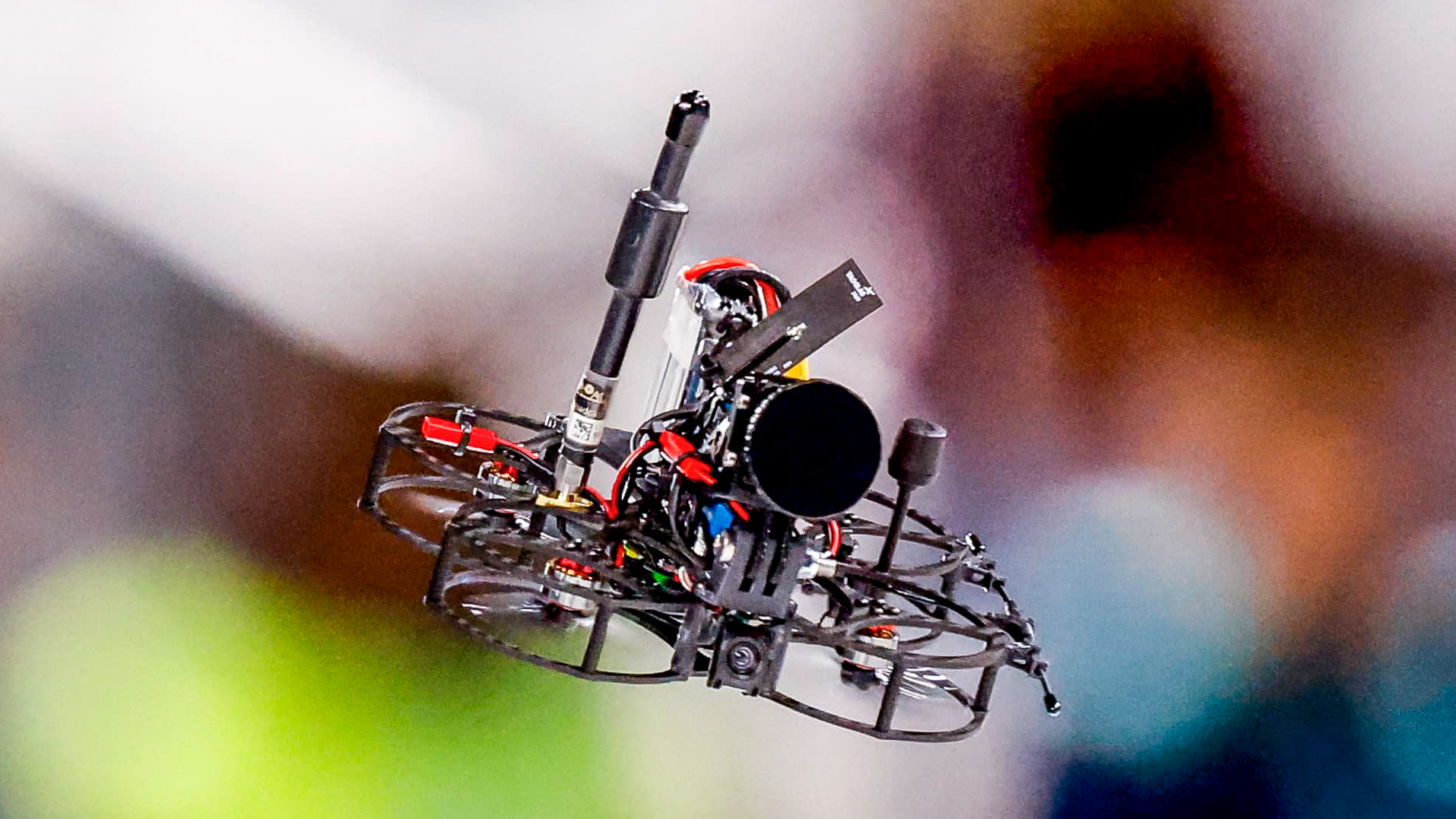
The FPV drones are custom-built with an inverted blade design, with propellers mounted beneath rather than above in order to enhance aerodynamic efficiency and enable smoother flight curves. The batteries are engineered for rapid replacement, typically lasting for two athlete runs in the freezing temperatures before needing to be swapped.
The Olympic Broadcasting Services says that it is using over 800 camera systems to cover the 2026 Games, including the use of 25 drones. The OBS used FPV drones for the first time at the Paris Olympics for the mountain bike events.
"Traditional coverage has relied on two primary dimensions: fixed or semi-fixed cameras that provide stable, ground-level perspectives, and cable cameras, cranes, or helicopters that deliver smooth, linear tracking shots. FPV drones bring a true “third dimension,” the broadcaster explains.
Check out our guides to the best FPV drones and to the best camera drones that you can buy ready-made