Foxconn founder Terry Gou — who earlier this month announced plans to run in Taiwan’s next top leadership election — understands local politics very well and is shrewd in dealing with officials on the Chinese mainland.
Any project involving his company Hon Hai Precision Industry Co. Ltd. — which trades as Foxconn — is usually too important an opportunity to pass up for local government officials hoping to attract investment and create manufacturing jobs that could be vital to their political career.
When looking for potential investment opportunities, the billionaire tycoon usually reaches out to more than one local government, ensuring they compete with each other for the business.
One such case occurred in 2010 when Foxconn wanted to move some of its manufacturing activity further inland from coastal areas where costs were rising.
So, it sent a fact-finding team to Zhengzhou in Central China’s Henan province. Throughout the tour, the team met government officials but signaled no intention of investing in the city. The unexpected visit, however, caught the attention of Guo Gengmao, then governor of the populous province, who arranged a one-on-one meeting with Gou.
In fear of missing out on the Foxconn opportunity, provincial administrators ensured that nearly all red tape was streamlined for the company, including offering a 5-year tax-free holiday and a series of other favorable concessions.
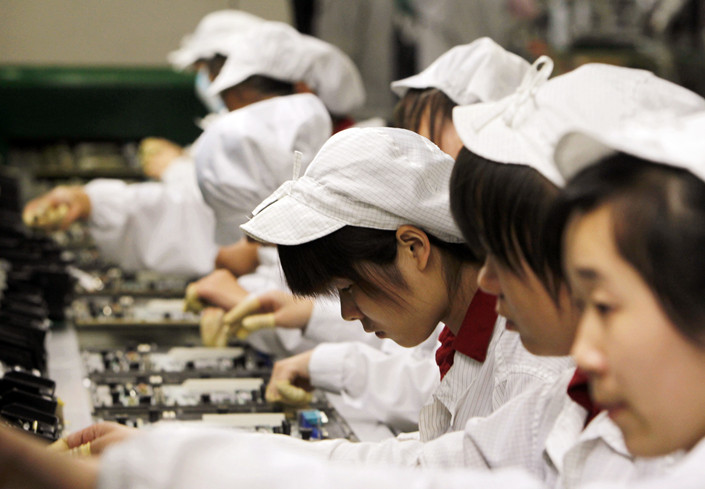
Within just one month, a factory assembling smartphones was set up and had started operating in Zhengzhou. The investment was as much a huge benefit to the host city as it was to Foxconn. By 2011, the company employed more than 100,000 people in the provincial capital.
Another reason that local governments don’t want to miss out on Foxconn deals is that the manufacturing giant’s presence is usually a huge stimulant to the development of related industries.
In 2017, for example, Foxconn announced a 61 billion yuan ($9 billion) investment in a project to make 10.5-generation high-resolution display panels in the southern metropolis of Guangzhou. In addition to the core business, the project attracted to the city another 70 firms across the relevant industry chain.
Once the many benefits became apparent, green lights started flashing from nearly all the city’s related government departments. Approval times for the project have been halved, according to one source familiar with the negotiating process.
Contact reporter Mo Yelin (yelinmo@caixin.com)