The end of a century should be a time for a sharpening of perspectives, even if things do get a bit blurred around the edges come the next New Year's Eve. Never was there a more opportune moment to pause and take stock.
But not, apparently, in te world of professional football where, to judge from its first full week, the last year of the 1900s will be distinguished only by more evidence of insanity than usual.
Take Sepp Blatter - preferably on the first sponsored walk across the Sea of Tranquillity. Last summer the Football Association switched its vote for the Fifa presidency from Lennart Johansson to Blatter, who was duly elected. This week the FA must have experienced the sinking feeling of Dr Frasier Crane, whose choice of candidate in a local election turned out to have been abducted by aliens. But at least he lost.
The suggestion that the World Cup should be played every two years is bizarre even by Blatter's standards. There are numerous reasons why the idea is not on: it would throw the global sporting calendar out of kilter; it would cut across the international tournaments of Europe, Africa and South America; and it would bring football into conflict with the Olympics.
Poor old Blatter has never been quite the same since Sophia Loren fondled his plastic balls before he made the draw for the 1990 World Cup. Elsewhere this week there has been less excuse for the game's eccentricities.
For example Phil Don, the Premier League's referees' officer, believes that fitting match officials with three-way head-sets will improve control of games because communication will be made easier. The Premier League has already installed buzzers in linesmen's flags and equipped referees with armbands which vibrate if their attention is needed.
That would explain the Dr Strangelove approach to refereeing adopted by a number of officials this season: the involuntary jerk of the right arm as it flourishes yellow and red cards. Turning officials into radio hams is unlikely to make them better referees or curb the rising tide of dissent on the field. But it might be fun if the sort of fan who brings a whistle into the ground turns up with a walkie-talkie instead.
Not that the Kop ever needed artificial means to express its views, and the average Liverpool supporter may take a wry view of Robbie Fowler needing time to consider an offer of a new contract worth £33,000 a week for the next 5 1/2 years. After all, this is the club that employed Billy Liddell, Roger Hunt, John Toshack, Kevin Keegan, Ian Rush et al for rather less.
But Fowler is a creature of his time and can hardly be blamed for milking football's boom - or baby boom in the case of Jermaine Pennant, the 15-year-old prodigy at Notts County who has signed for Arsenal within 24 hours of being priced at £2 million by the Second Division club. The amount may be compensation for the sum County invested in the youngster's development but a seven-figure fee is still a seven-figure fee and Arsenal paid Paris St-Germain only £500,000 to buy out the contract of the 17-year-old Nicolas Anelka.
Pennant, like West Ham United's Joe Cole, is clearly an outstanding prospect but careers which start out amid such distorted values surely run a greater risk of going wrong. At least Pennant is unlikely to suffer the experience of the 15-year-old Len Shackleton, who after 10 months at Highbury was told by the Arsenal manager George Allison that he would never make it as a professional player.
To soften the blow Allison allowed Shack a glimpse of Highbury's latest acquisition - a television set. Thereafter Shackleton reserved some of his best performances for matches against Arsenal, never allowing them to forget the talent they had let go.
All memories are selective, and highly selective in the case of the 2,000-odd people recently polled by a football magazine and a daily broadsheet to pick the greatest match of all time. Many of the games in the top 50 were worthy of mention but by giving first place to England's 4-2 defeat of West Germany in the 1966 World Cup final the voters did not appear to be sure about exactly what they were voting for - the results or the performances.
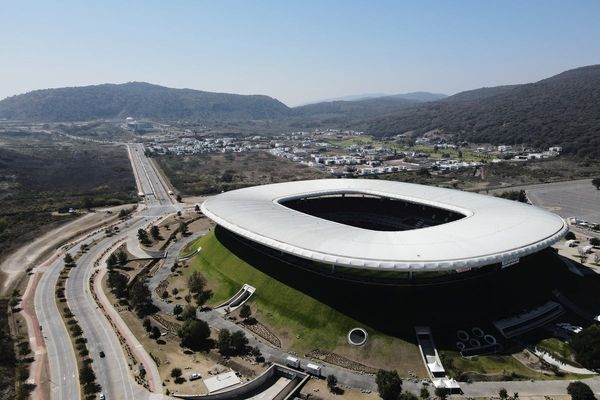
The 1966 triumph was England's greatest achievement. Come to that, it is England's only achievement. But their 2-1 victory over Portugal in the semi-finals was a superior game and the 1-0 defeat by Brazil in Guadalajara four years later remains the most distinguished match involving an England team. In this poll it only came 20th.
Blackpool's 4-3 victory over Bolton Wanderers in the 1953 FA Cup final, the Stanley Matthews final, came ninth but it was a bad game redeemed by a memorable climax. Wembley had witnessed a more memorable exhibition of football three weeks earlier when Pegasus beat Harwich and Parkeston 6-0 to win the FA Amateur Cup.
Personally it is hard to recall a better match than the 1976 European Championship semi-final in Belgrade when West Germany came from 2-0 down to beat Yugoslavia 4-2 after Dieter Muller had come off the bench to complete a hat-trick in extra-time.
Perhaps Sky are more sensible when it comes to superlatives. For them the greatest match of all time is their next. And eventually they may be right.