
What time is it? What do I need to pick up on my way home? Whenever I have a question, the first thing I do is pick up my phone, and I’m not alone.
Today, the way we engage with our phones is like a Pavlovian-conditioned response; you have it with you all the time and it’s so difficult to ignore. According the Pew Internet and American Life project, the average adult looks at their phone 41.5 times a day. For young adults between 18 and 24, this jumps to 109 times each day.
We’re always connected, but the device we use changes based on the time of day. People use desktops more during the workday and switch to tablets in the evenings after work. Smartphones, however, have proven to be an always-on medium regardless of time of day. People not only engage often, but also multitask across multiple apps and sites. Last year, smartphone and tablet use accounted for more than 60% of consumer’s digital time.
While mobile is now where we spend the majority of our digital time, few marketers, according to Forrester, are making the most out of the data insights that mobile provides about customers.
Here are the four factors of successful mobile advertising.
Context
Differences in time, day, weather and locale all come into play. It’s also about information on where people are: are they at home in the suburbs, working in a city or travelling for leisure?
Understanding where people are and where they’ve been gives a level of relevance based on time and place. Using dynamic creative in ads provides the exact location relative to where the person is. When someone’s searching for a coffee place, knowing that Starbucks is around the corner makes it convenient and relevant to your consumer. That same ad in the country 50 miles from the nearest coffee spot isn’t as useful in the moment.
Measurement
When you have a great mobile advertisement, users will let you know by going beyond the click and exploring your business or brand at a more meaningful level, by interacting with reviews, downloading maps and driving directions, or clicking to call you directly. These metrics are often referred to as “secondary actions” – what happens beyond the click that drives more meaningful customer engagement.
Format
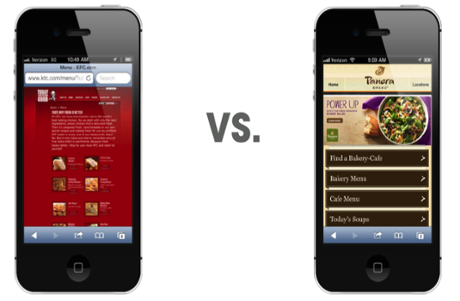
It is essential that all customer-facing marketing creative render in mobile-optimised formats, from landing pages readable without pinch and zoom, to ad creative that’s both visible and relevant.
Why does this matter? Because your customers say so: six out of 10 consumers expect their web experience to be of the same quality, if not better, on mobile devices. Is your website optimised for mobile users on both smartphones and tablets?
Mobile users are often focused on fulfilling a need: for example, finding a place to go for lunch, determining whether the shirt they want is in stock, or whether they can test drive a new model vehicle, all depending on the category. A mobile-optimised site doesn’t just fit the right screen size, but it also makes the information that mobile users want easy to find.
Content
To create mobile advertisements that consumers actually want, here are the three things to consider: put key info upfront and keep it simple and uncluttered. Mobile customers utilise their devices as tools of convenience and therefore want to quickly find information relevant to their current needs. When mobile users evaluate advertising as part of their purchase consideration, they look for location, pricing and reviews.
Regardless of locale or time of day, smartphones have become a preferred information source for many consumers, even rivalling laptop or desktop. According to the xAd/Telmetrics and Nielsen 2014 Mobile Path to Purchase report, more than 40% of mobile users consider their smartphone the most important information source.
In just a few years time, it will be the first screen for the majority of people around the world. So if you haven’t moved to mobile advertising yet, now you have the four factors you need to consider not just how to do mobile advertising, but do it well.
To find out more about the potential of location marketing, get in touch with the xAd team at contactus@xad.com
This advertisement feature is brought to you by xAd, sponsors of the Guardian Media Network’s Future of advertising hub.