Japan sends in troops after deadly typhoon floods towns, threatens more damage
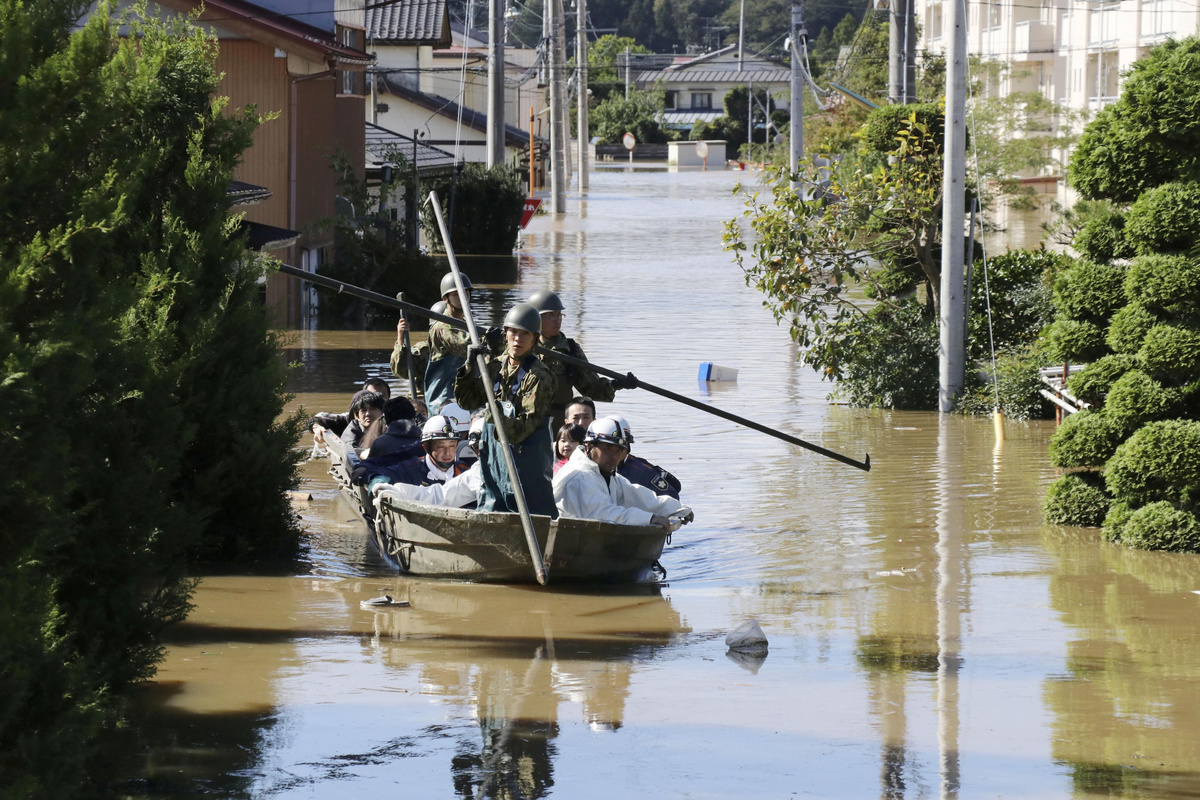
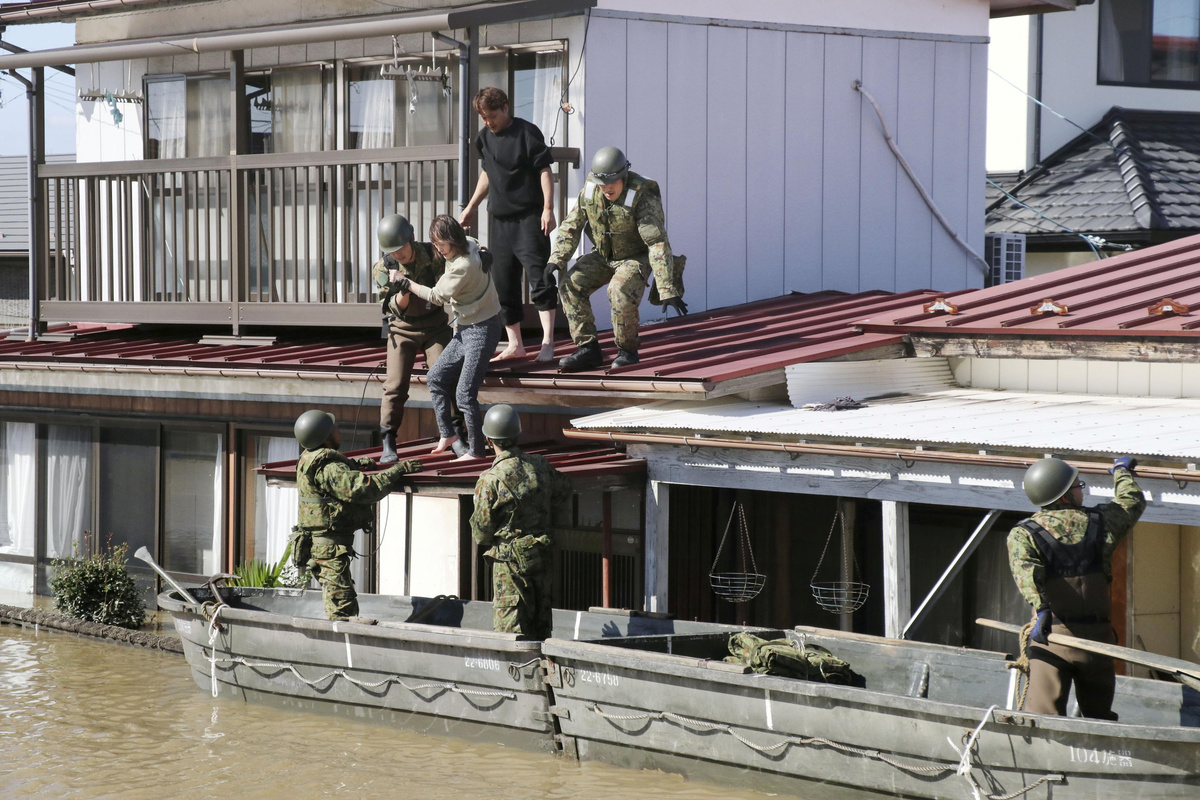
Local residents are rescued by Japapnese Defence-Force soldiers from a flooded area caused by Typhoon Hagibis in Kakuda, Miyagi prefecture, Japan, October 13, 2019, in this photo taken by Kyodo. Mandatory credit Kyodo/via REUTERS
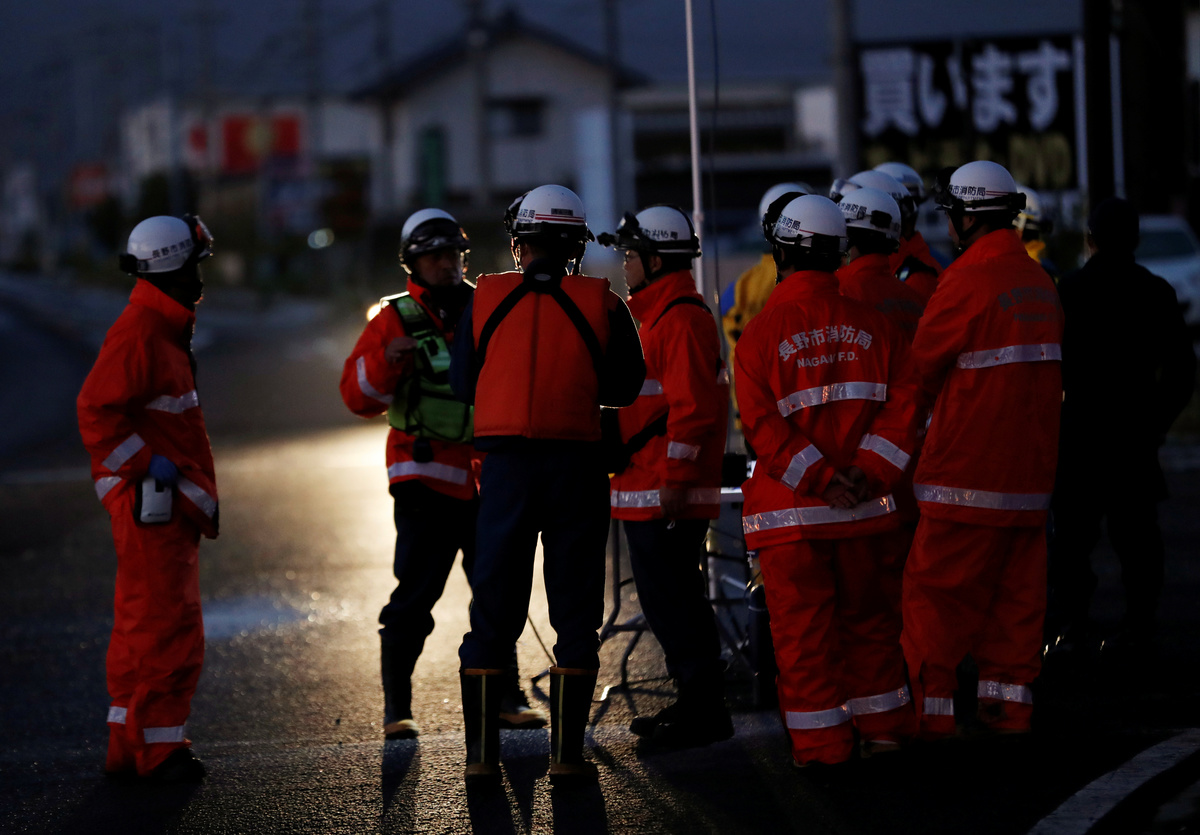
NAGANO, Japan (Reuters) - Japan sent tens of thousands of troops and rescue workers on Sunday to save stranded residents and fight floods caused by one of the worst typhoons to hit the country in recent history.
At least 30 people were killed in the typhoon that left vast sections of towns under water, public broadcaster NHK said. Another 15 were missing and 177 injured by Typhoon Hagibis, which paralyzed Tokyo on Saturday and dumped record levels of rain around Japan. About 100,000 homes were left without power.
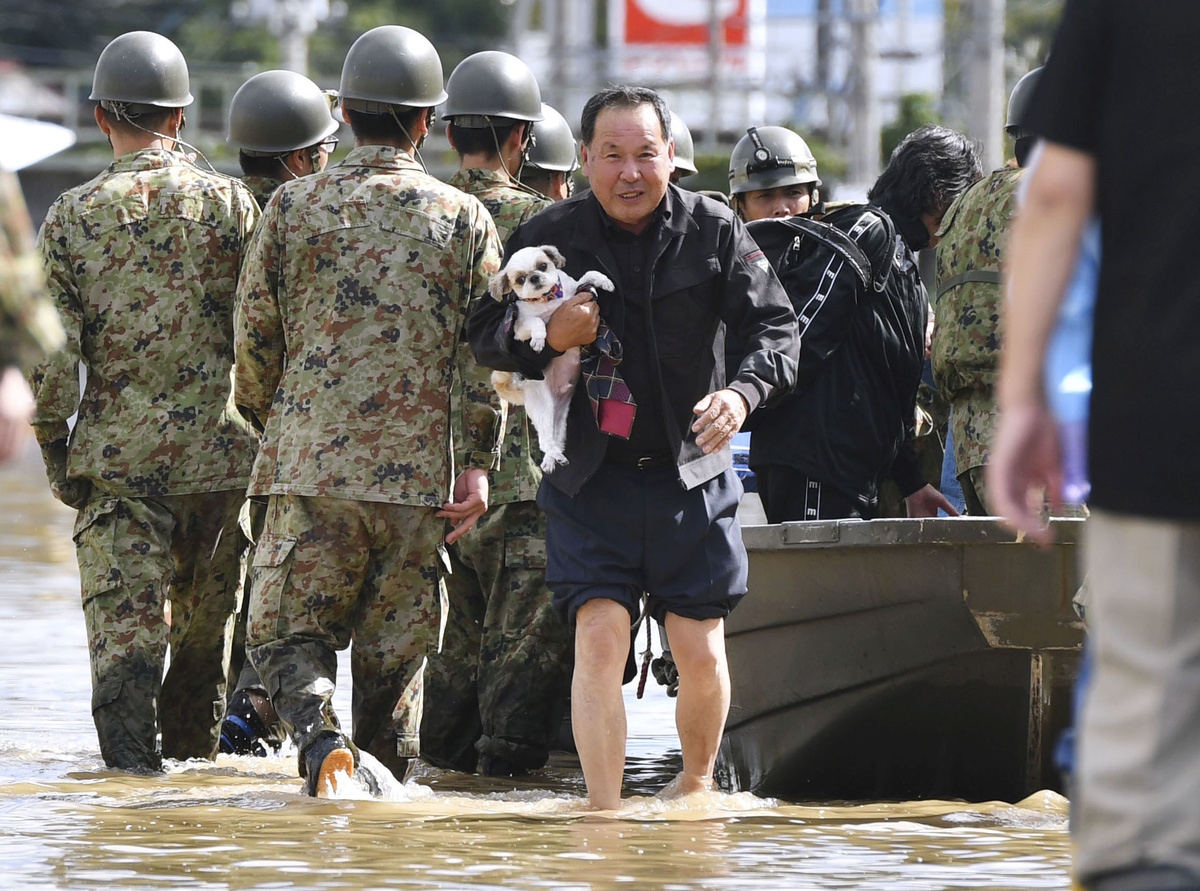
A local resident carrying his pet dog evacuates from an area flooded by the Abukuma river, caused by Typhoon Hagibis, in Motomiya, Fukushima prefecture, Japan, October 13, 2019, in this photo taken by Kyodo. Mandatory credit Kyodo/via REUTERS
Rescue efforts were hindered after more than 20 rivers in central and northeastern Japan burst their banks and dozens more overflowed although their banks were still in tact, NHK said, adding that flooding rivers could cause more damage.
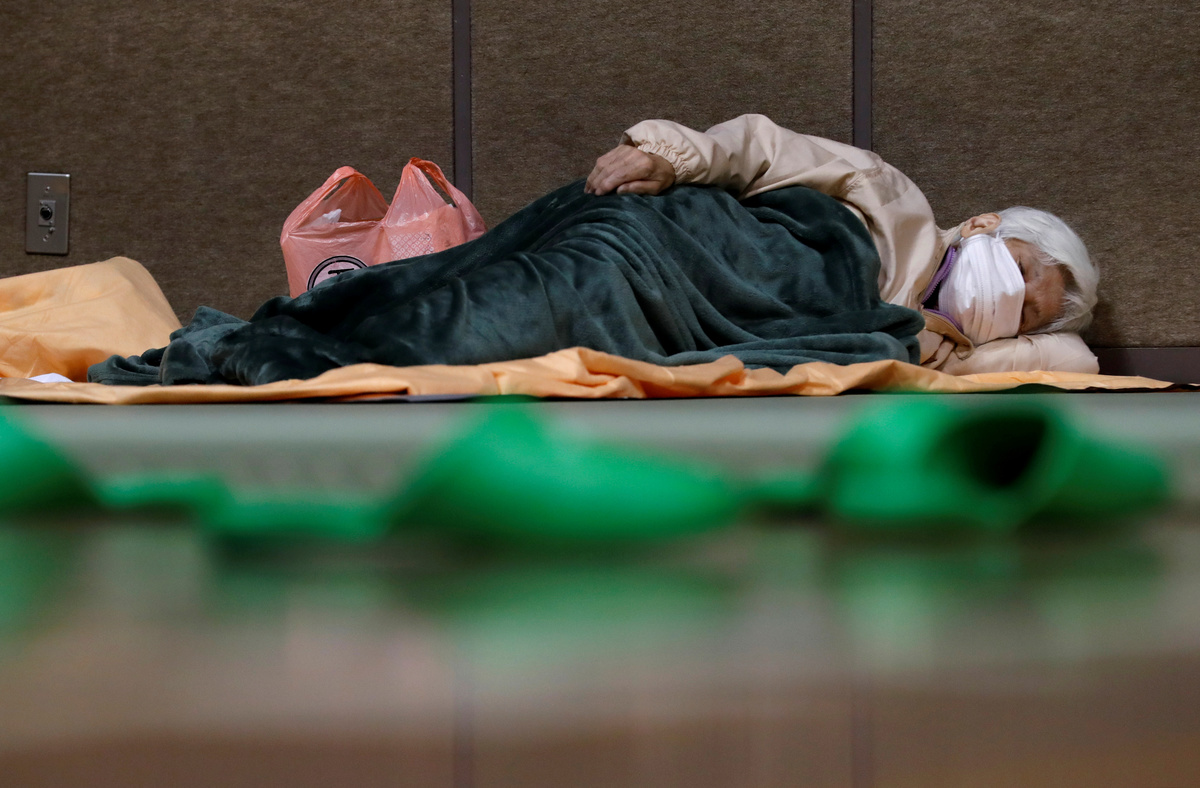
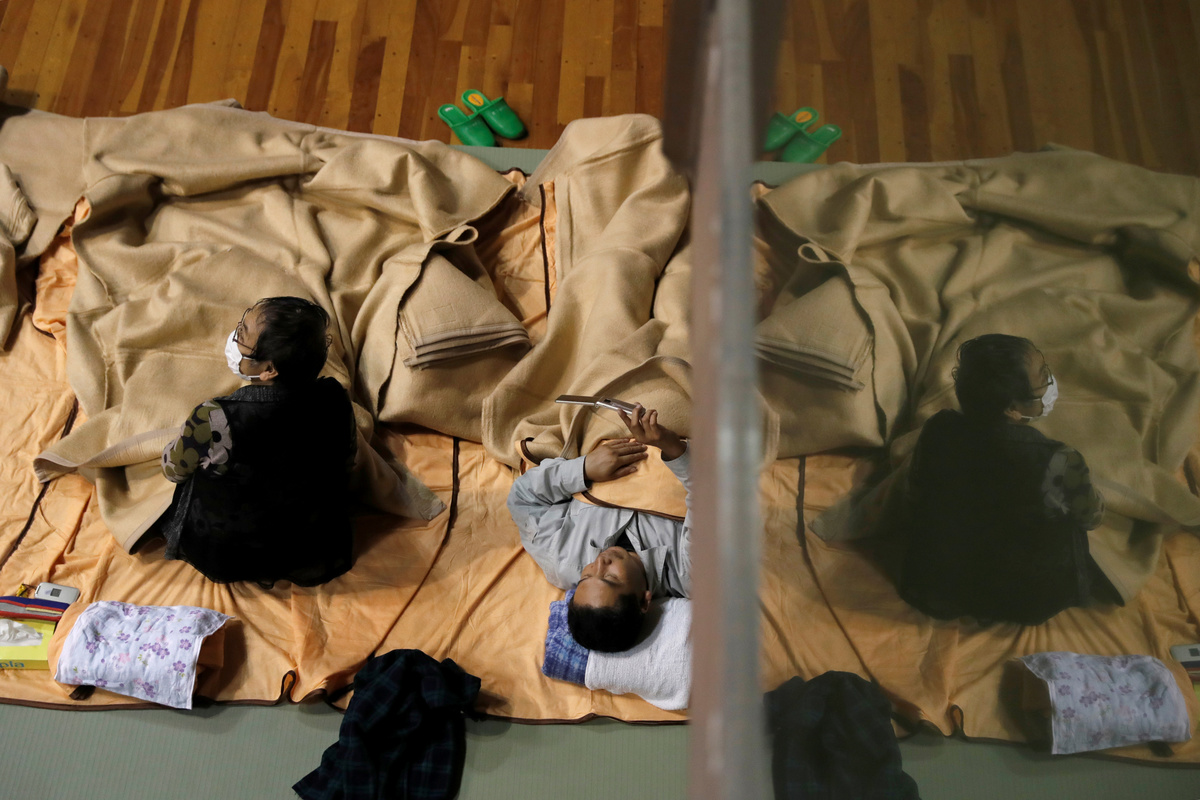
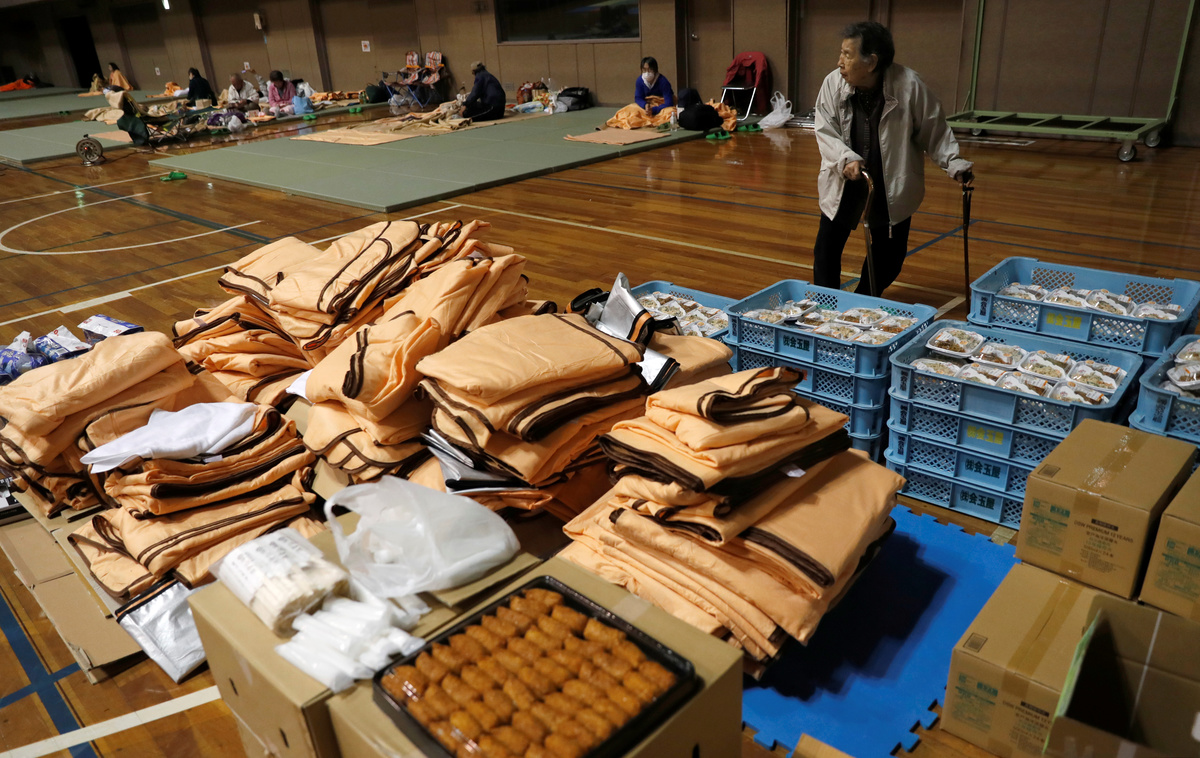
Evacuation centers filled with residents, while some people perished as they sought shelter, NHK said, adding a 77-year-old woman fell about 40 meters to her death during an airlift.
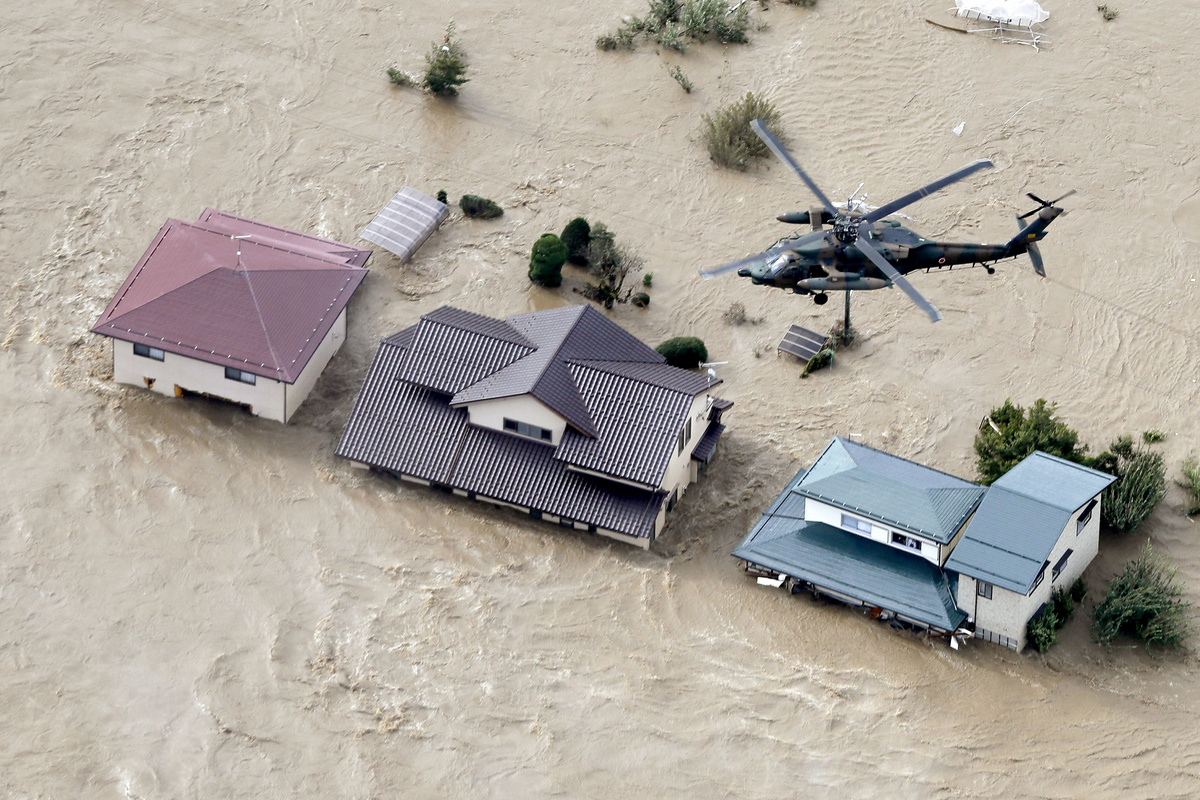
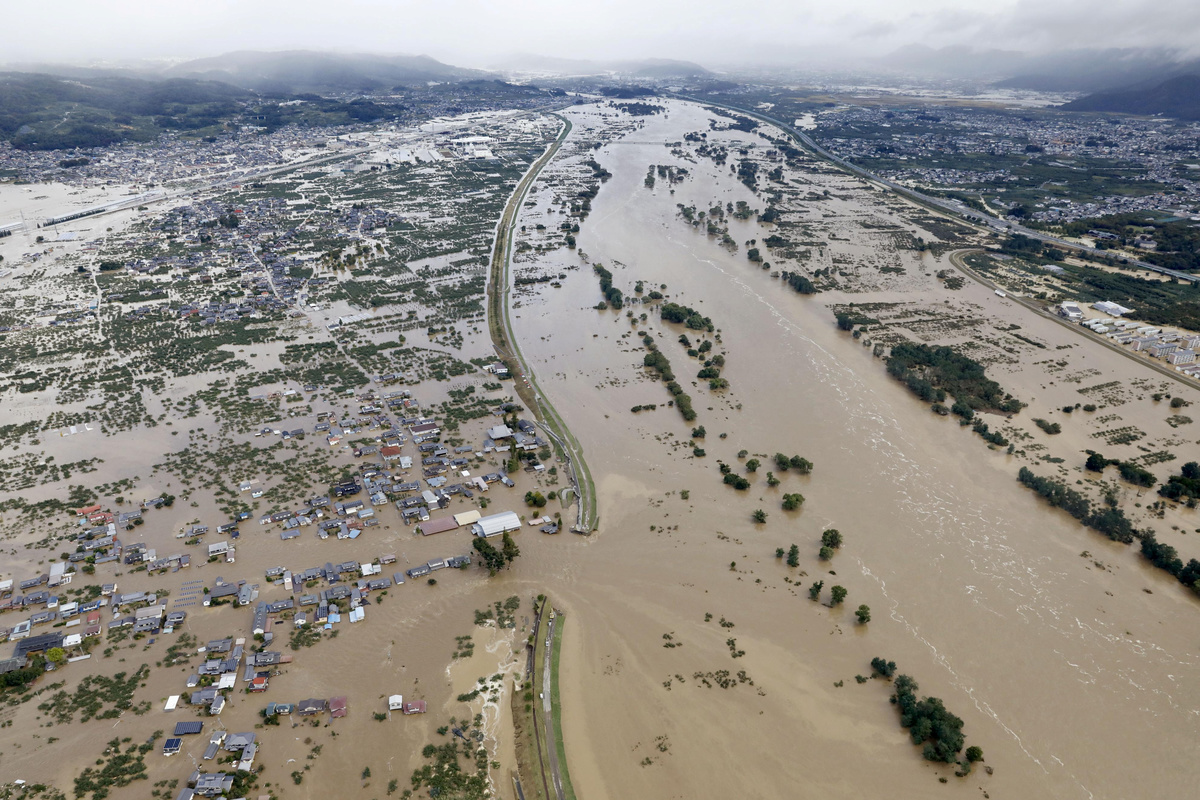
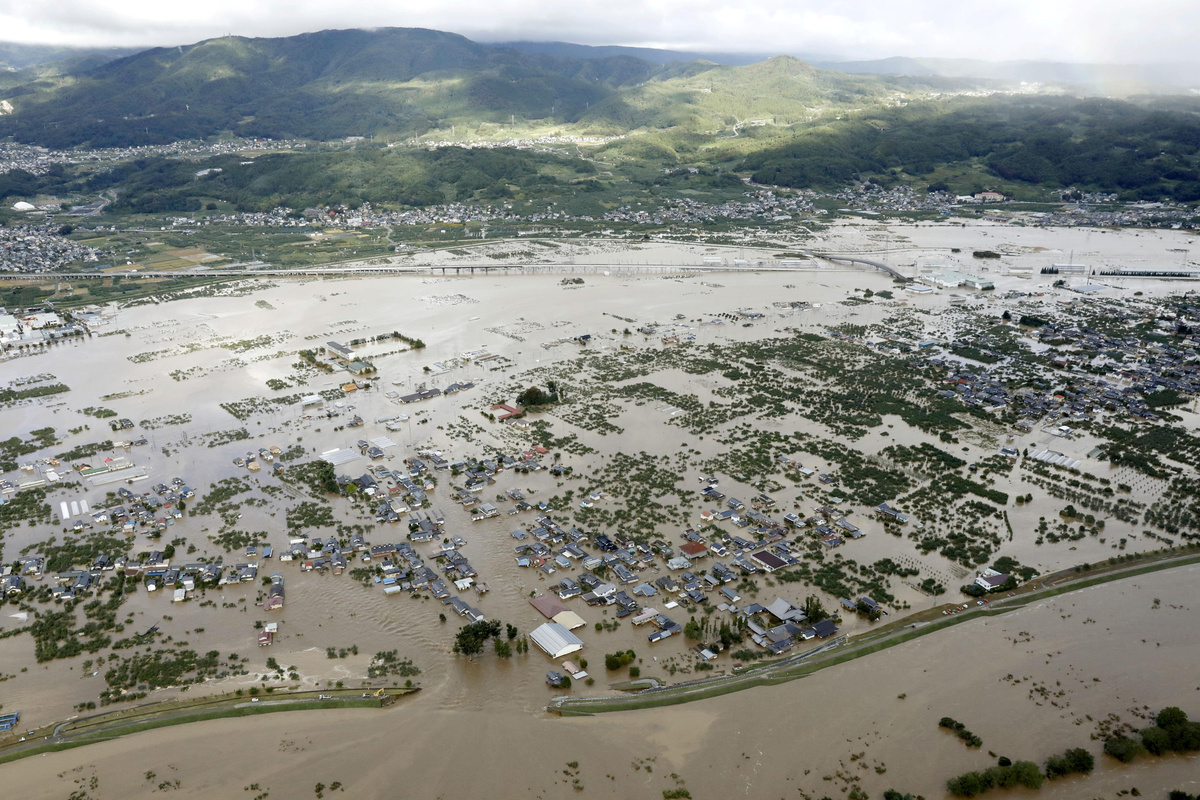
Some of the worst damage hit the central Japanese city of Nagano, where the Chikuma River inundated swaths of land and forced military helicopters to airlift people from homes.
Local residents are rescued by Japapnese Defence-Force soldiers from a flooded area caused by Typhoon Hagibis in Kakuda, Miyagi prefecture, Japan, October 13, 2019, in this photo taken by Kyodo. Mandatory credit Kyodo/via REUTERS
Kiyokazu Shimokawa, 71, speaking at an evacuation center, said he had waited all night with his wife and mother until they were finally rescued around 3 p.m. (0600 GMT) on Sunday.
"I made the mistake of figuring that as long as we were on the second floor of the house, we’d be fine," he told Reuters. "When we realized that maybe we should evacuate, it was too late – the water rose very quickly."
Rie Hasegawa, a woman in her 30s, said she never imagined her landlocked town would be inundated. "The force of the water was incredible. It was dark, frightening, and I thought this might be the end," she said.
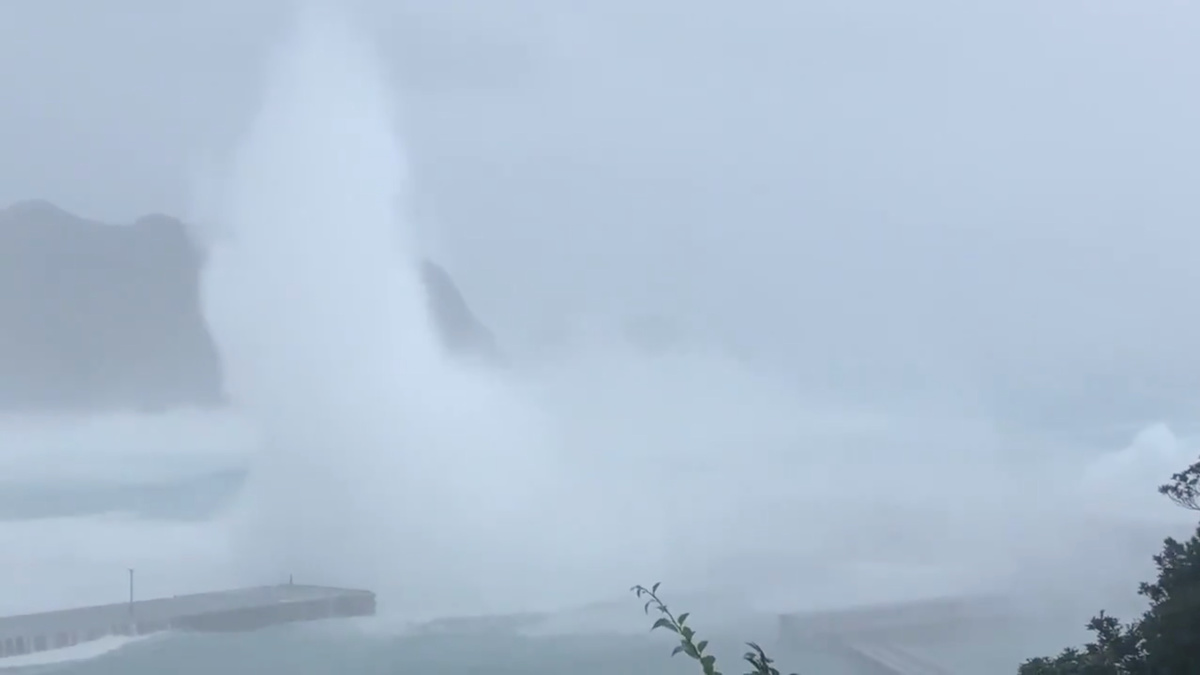
A massive wave pushed by winds is seen during Typhoon Hagibis in Kozu Island, Japan, October 12, 2019 in this picture obtained from social media. Picture taken October 12, 2019. Mandatory credit Yosuke Nagasawa/via REUTERS
Typhoon Hagibis, which means "speed" in the Philippine language Tagalog, made landfall on Japan's main island of Honshu on Saturday evening and headed out to sea early on Sunday.
HELP PROMISED
A local resident is rescued by a Japan Self-Defence Force helicopter from residential areas flooded by the Chikuma river, caused by Typhoon Hagibis in Nagano, central Japan, October 13, 2019, in this photo taken by Kyodo. Mandatory credit Kyodo/via REUTERS
The storm sank a Panama-registered cargo ship that had anchored near Tokyo. The sunken ship was located early on Sunday. A newspaper reported that at least five of the 12 crew were dead and three were missing.
Prime Minister Shinzo Abe held an emergency ministerial meeting and sent the minister in charge of disaster management to affected areas. The government also set up a task force to deal with the damage.
"The government will do everything in its power to cooperate with relevant agencies and operators working to restore services as soon as possible," the prime minister said.
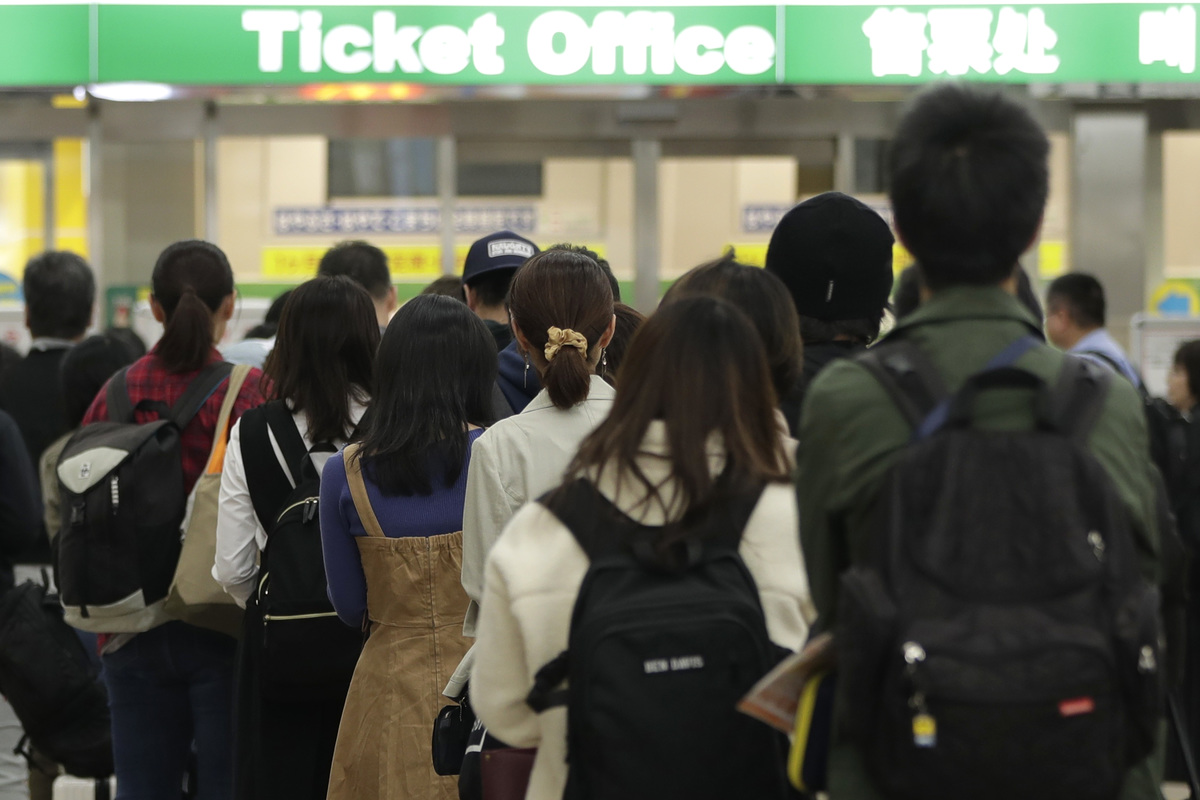
People queue at a train station after Rugby World Cup match between Canada and Namibia was cancelled after flooding and landslides caused by Typhoon Hagibis, in Morioka, Japan October 13, 2019. REUTERS/Kiyoshi Ota
NHK said overflowing rivers could inflict more damage as waters had reached dangerously high levels.
With thousands of homes without power, Japanese feared a repeat of the weeks-long power outages after last month's typhoon that hit east of Tokyo.
In Fukushima, north of the capital, Tokyo Electric Power Co <9501.T> reported irregular readings from sensors monitoring water in its Fukushima Daiichi nuclear plant overnight. The plant was crippled by a 2011 earthquake and tsunami.
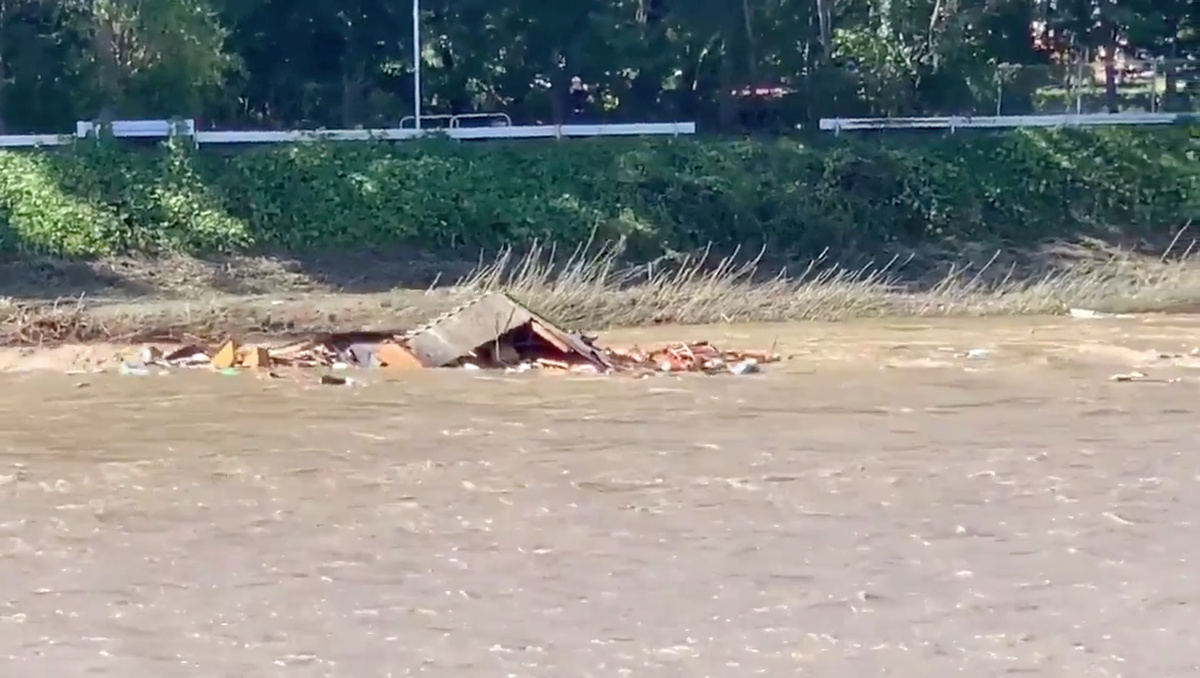
The roof of a collapsed house floats down a river in the aftermath of Typhoon Hagibis in Saku City, Nagano Prefecture, Japan October 13, 2019, in this picture obtained from social media. Mandatory credit TWITTER @A37CANDY /via REUTERS
Landing restrictions at Tokyo's Narita and Haneda airports were lifted but more than 800 flights were canceled for the day, NHK said. Some Shinkansen bullet train services to the worst-hit areas were also disrupted.
The Rugby World Cup match between Namibia and Canada scheduled for Sunday in Kamaishi, northeastern Japan, was canceled, but the Japan-Scotland match in Yokohama, south of Tokyo, went ahead. Japan won their clash.
Canada's players volunteered to help clean up Kamaishi.
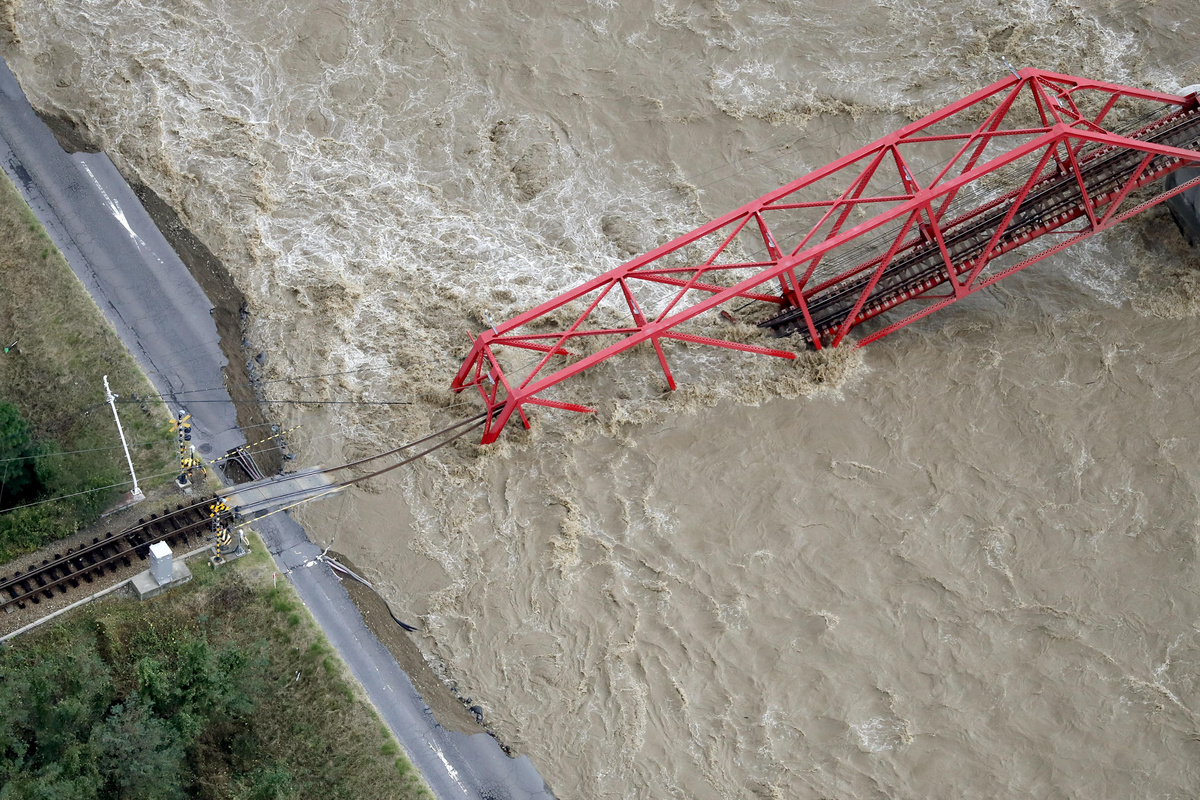
A collapsed railway bridge is seen over Chikuma river swollen by Typhoon Hagibis in Ueda, central Japan, October 13, 2019, in this photo taken by Kyodo. Mandatory credit Kyodo/via REUTERS
(Reporting by Kwiyeon Ha and Kyung Hoon Kim in Nagano, Antoni Slodkowski and Chang-Ran Kim in Tokyo; Writing by Chang-Ran Kim, Editing by Paul Tait and Edmund Blair)
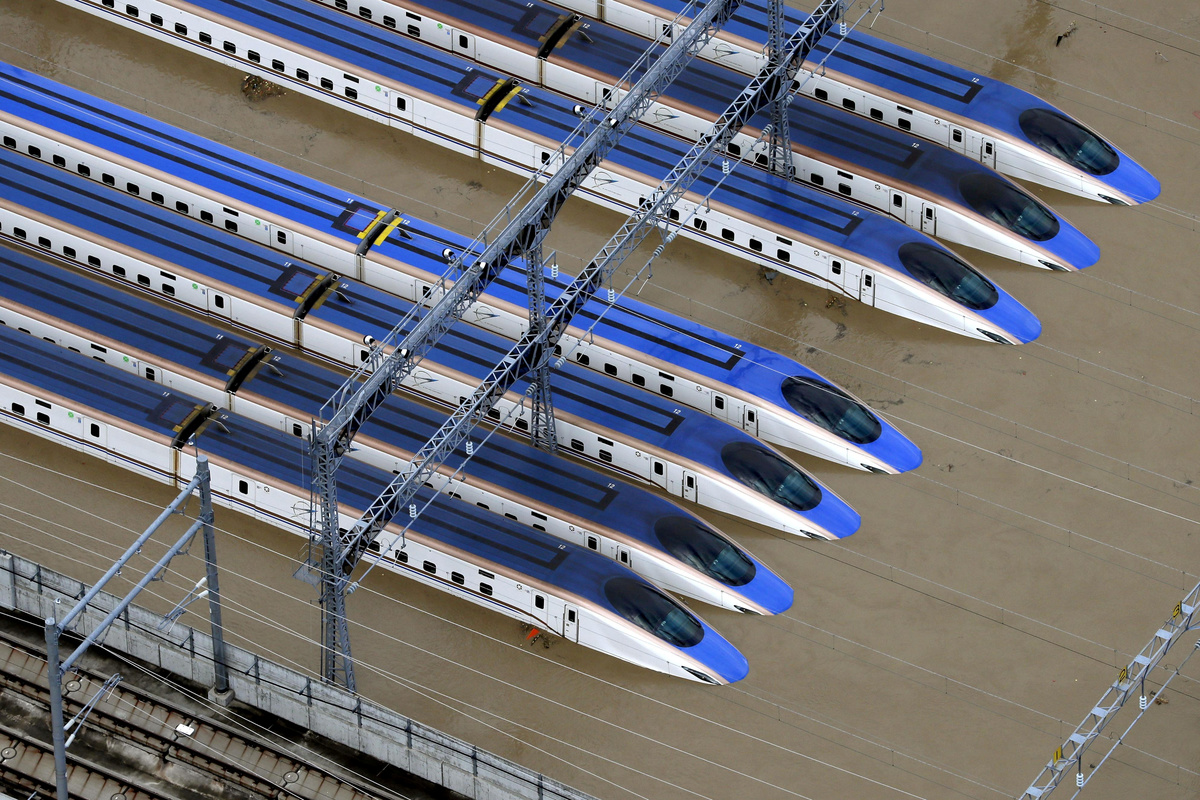
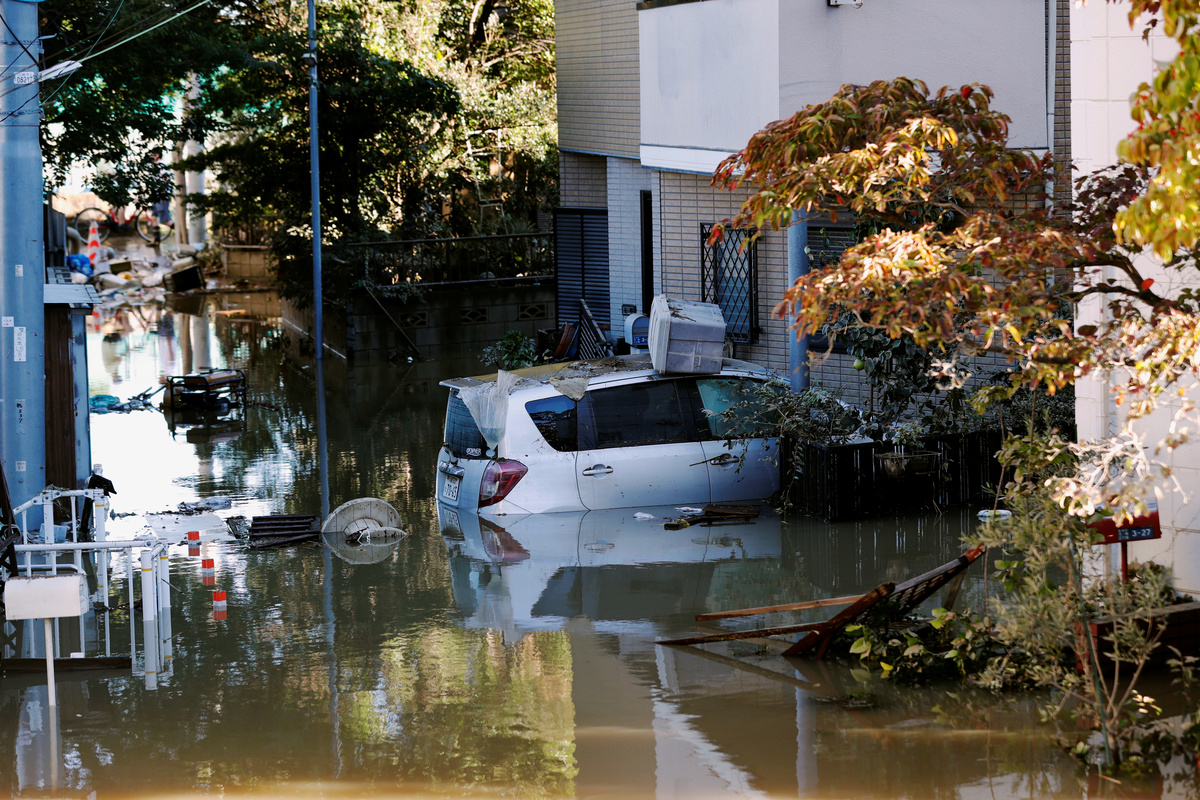
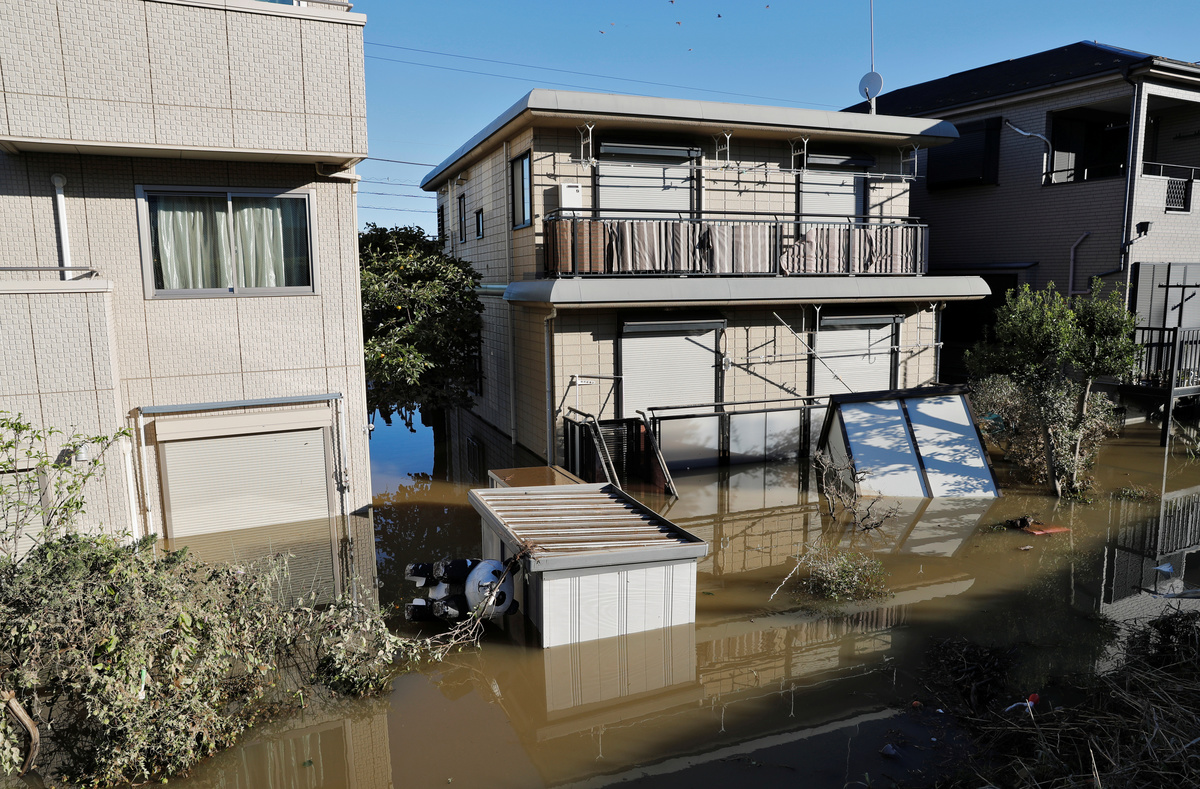
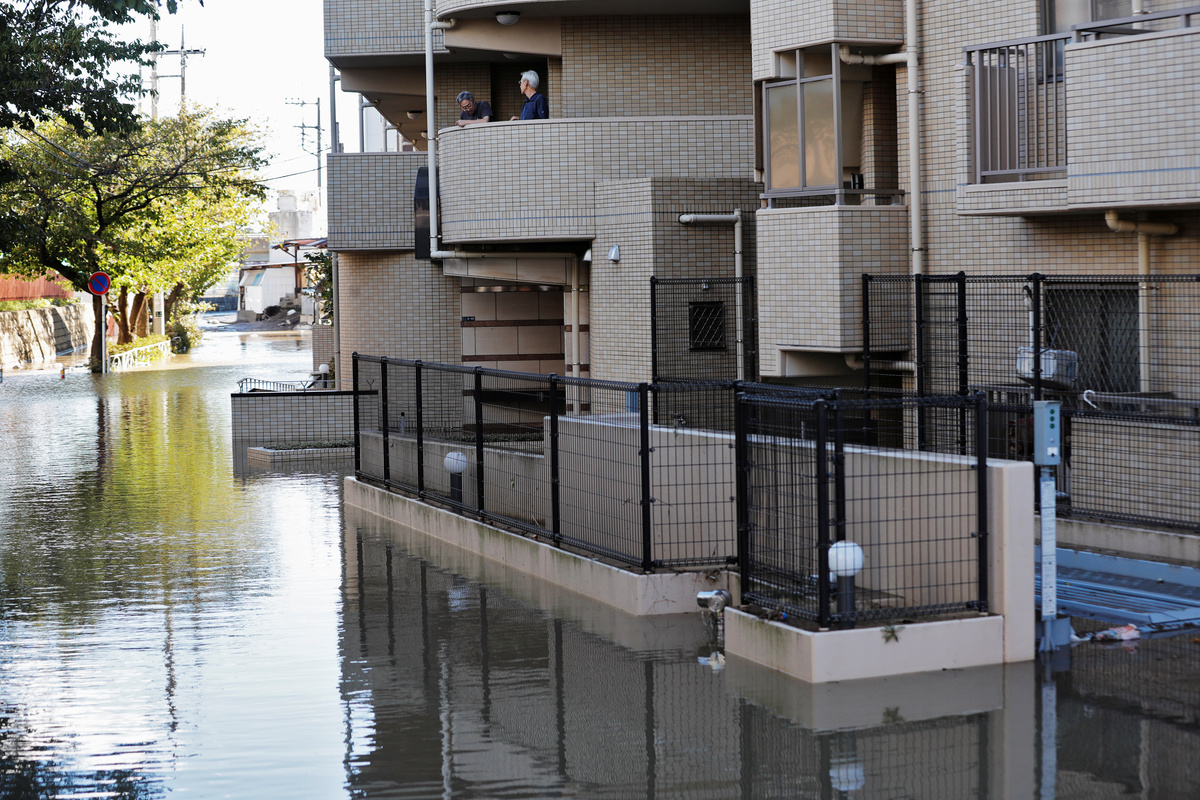
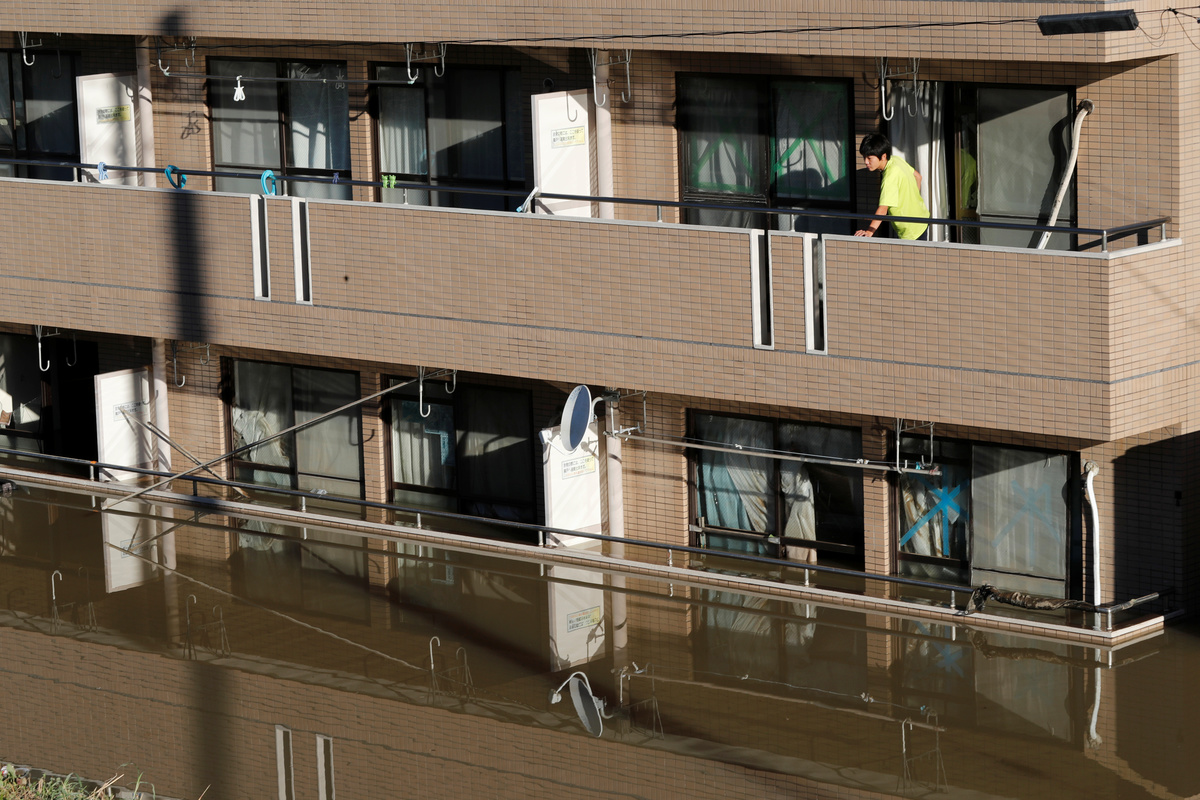
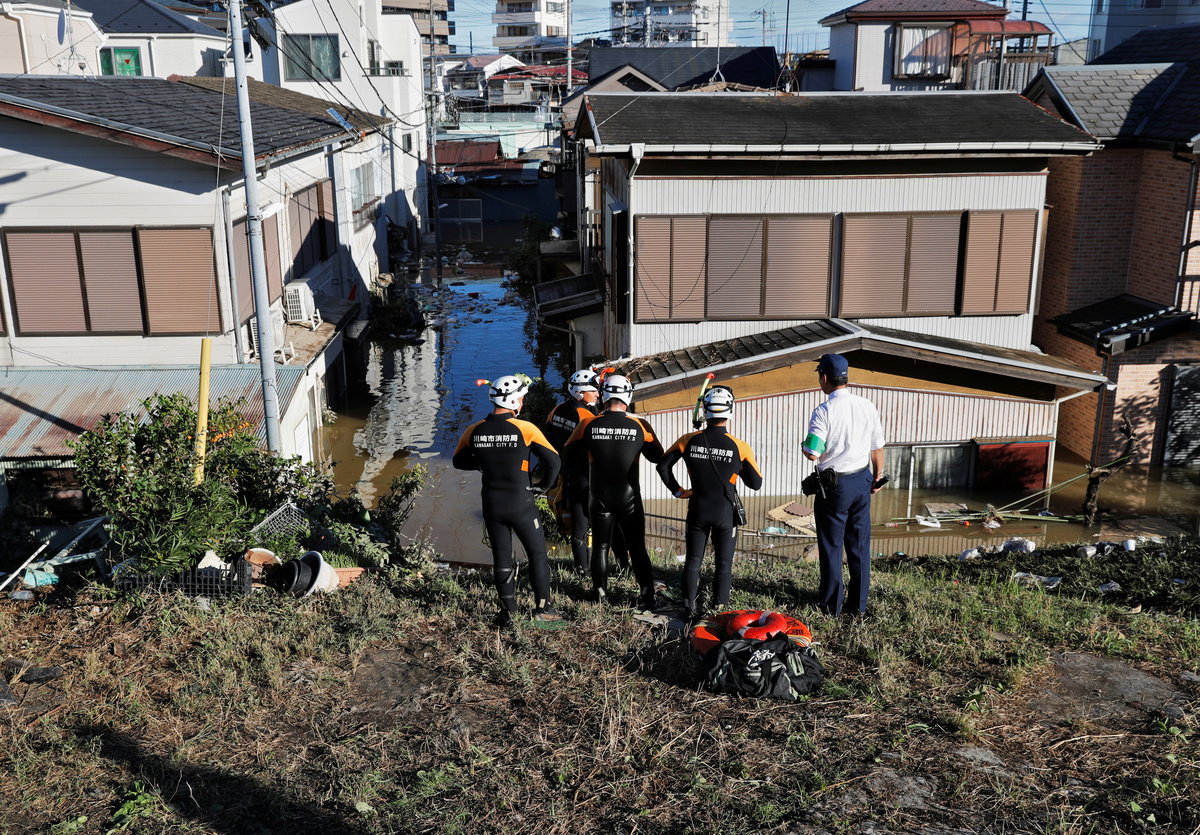
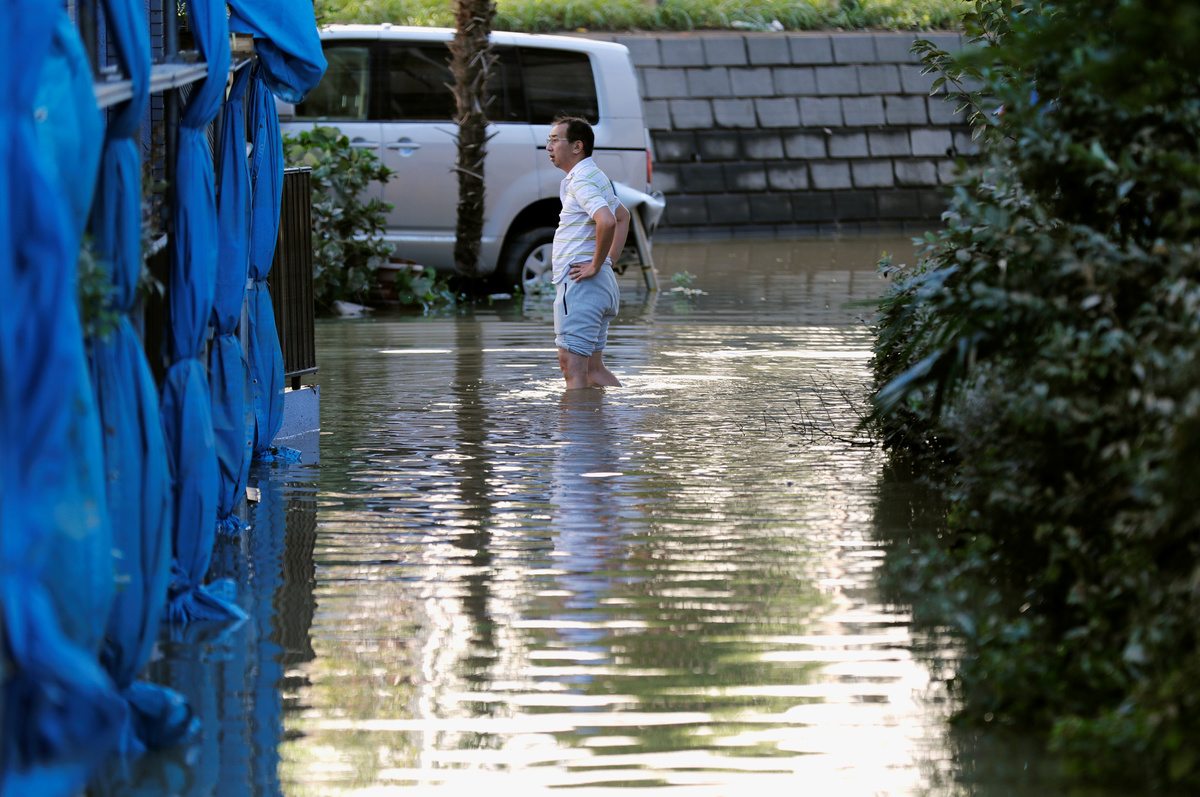
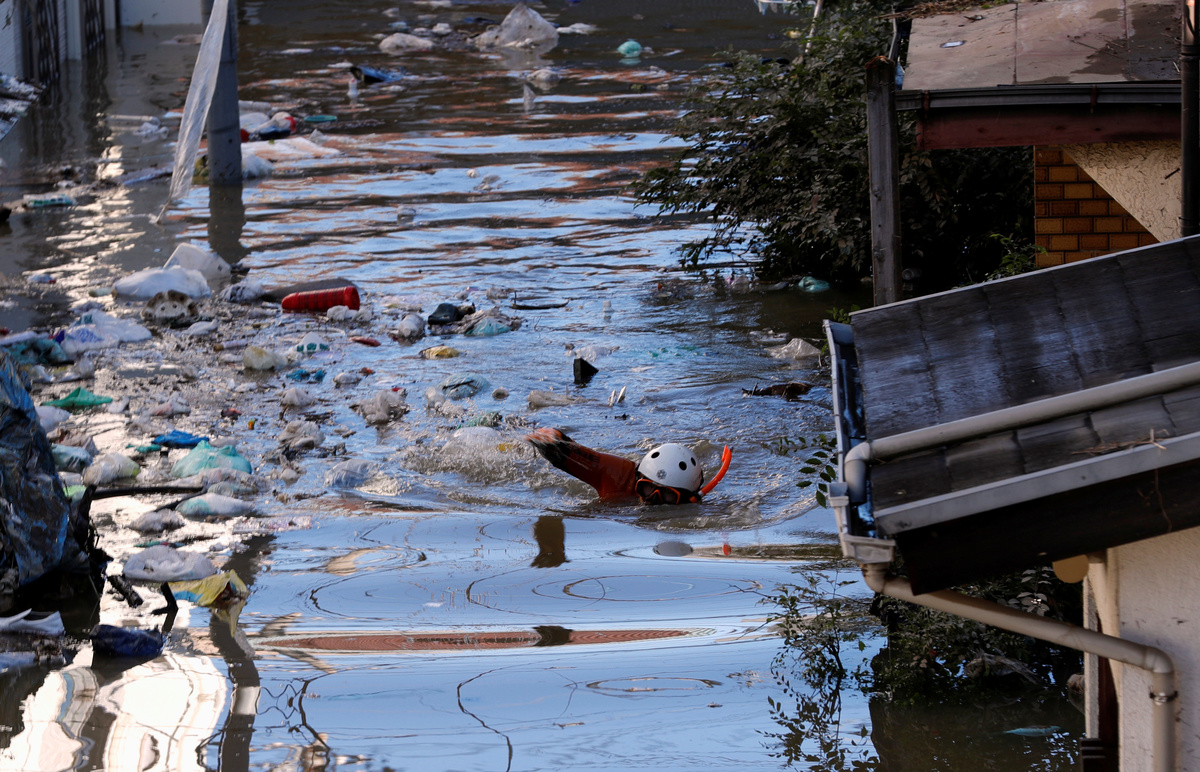
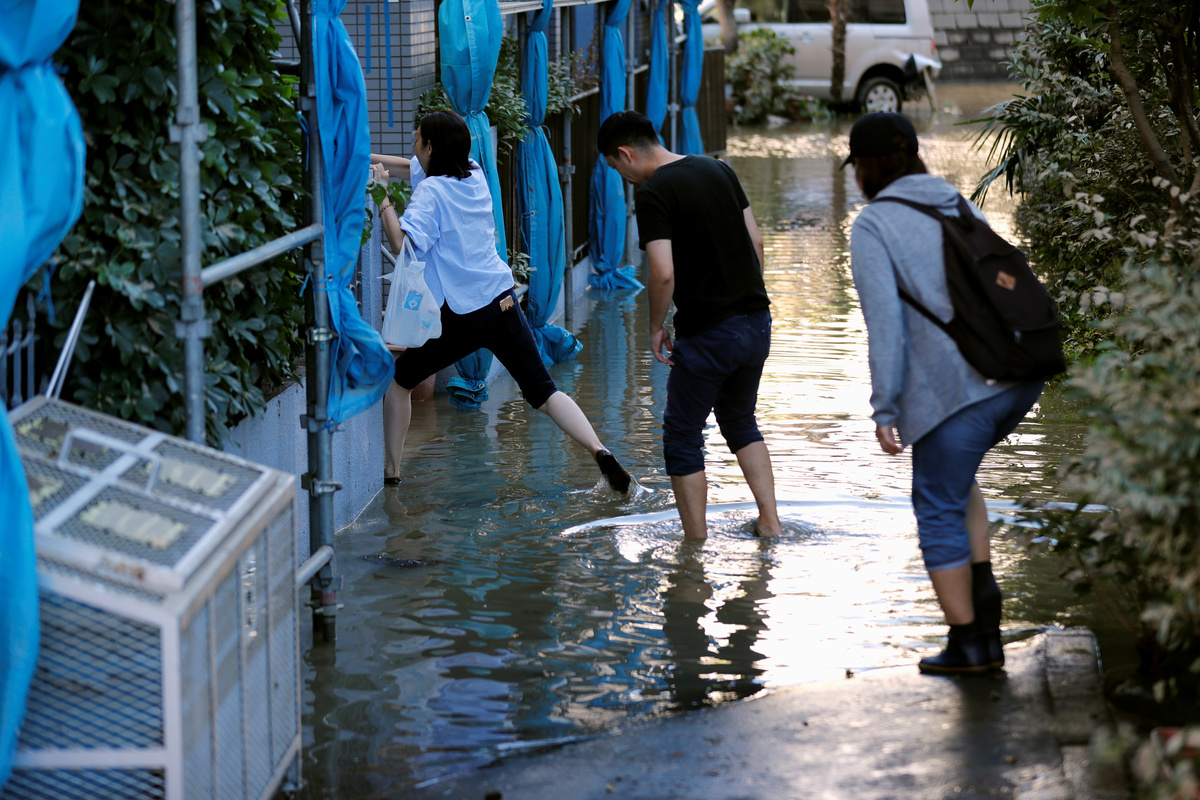
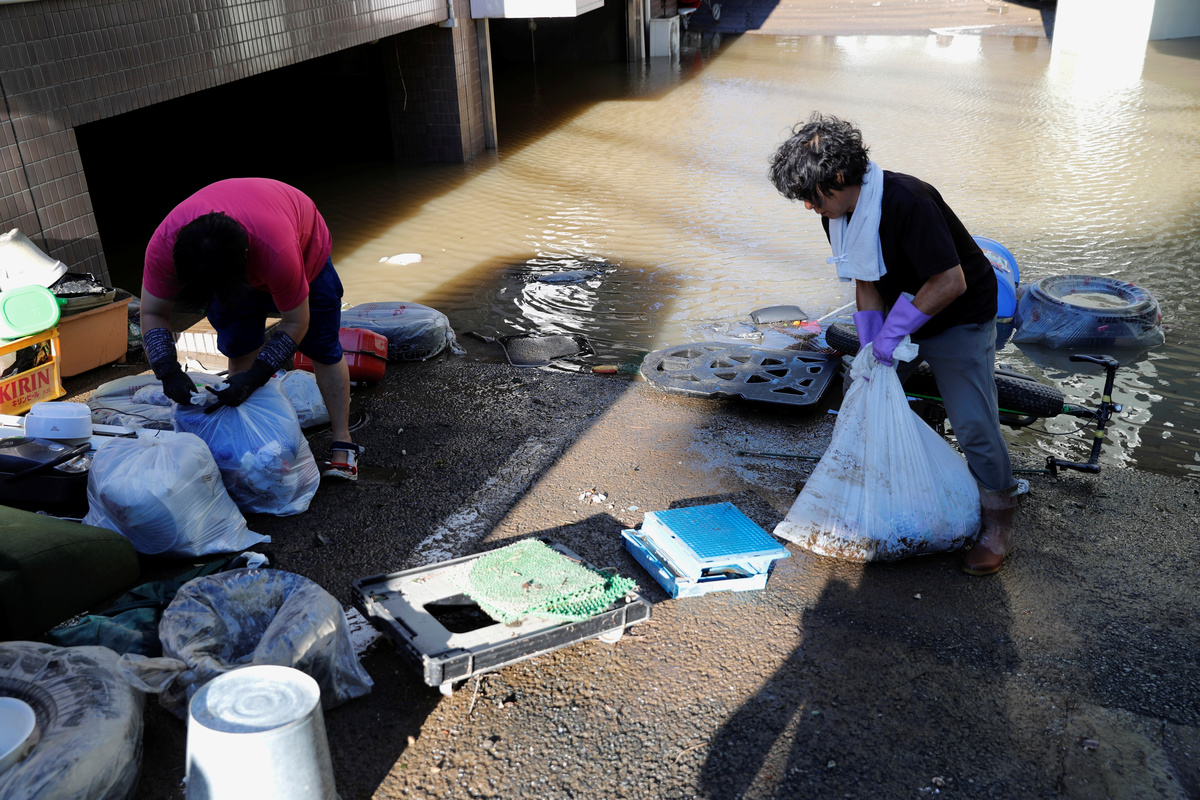
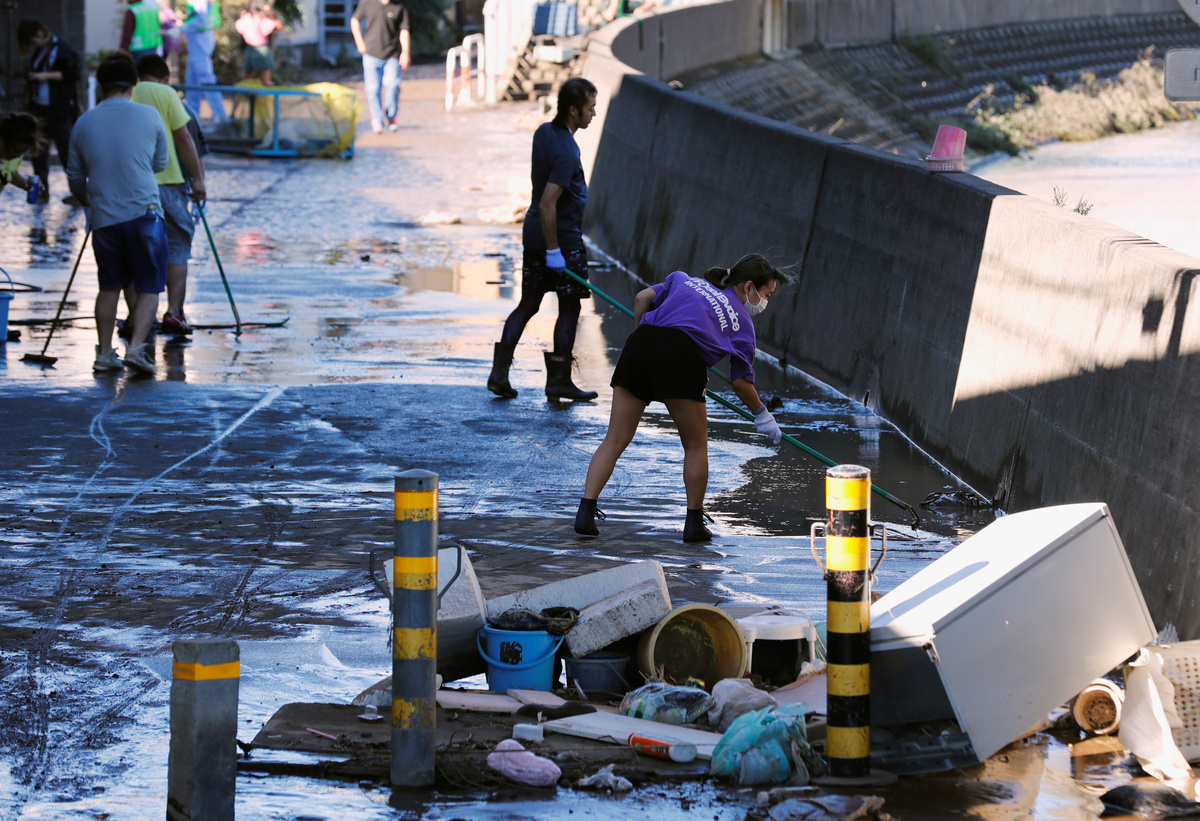
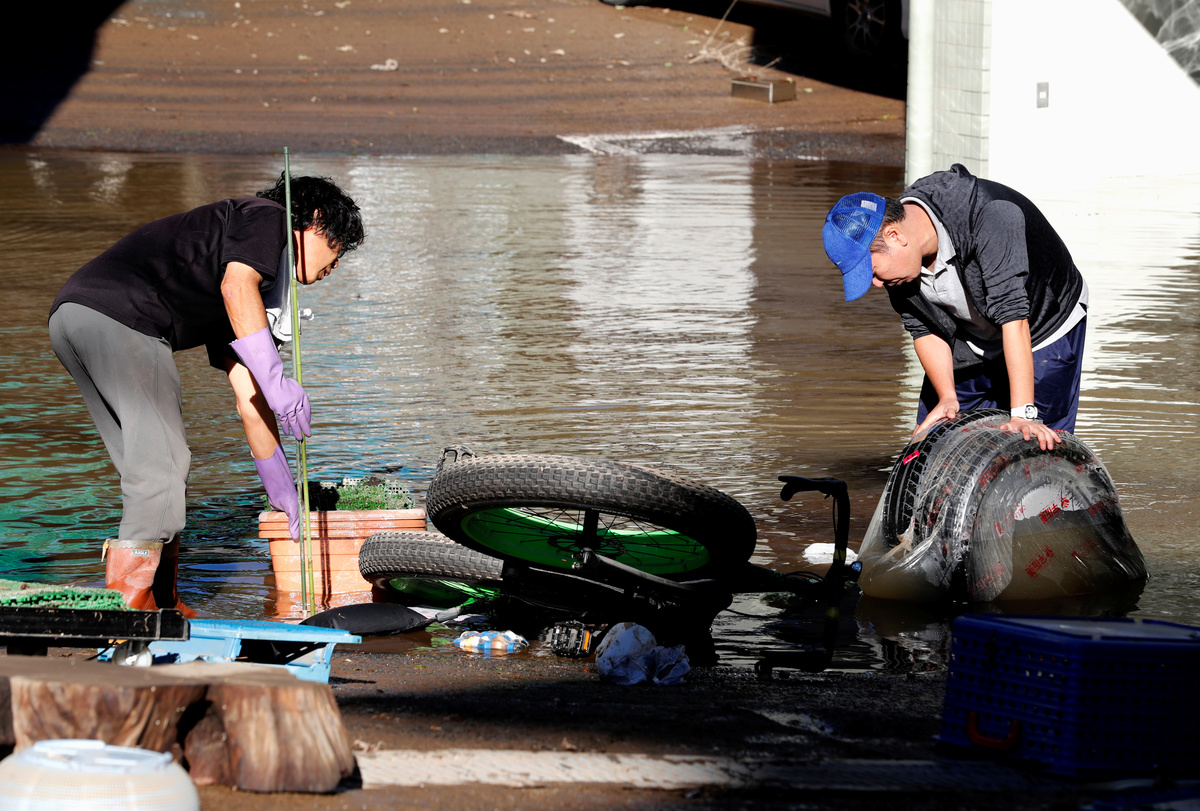
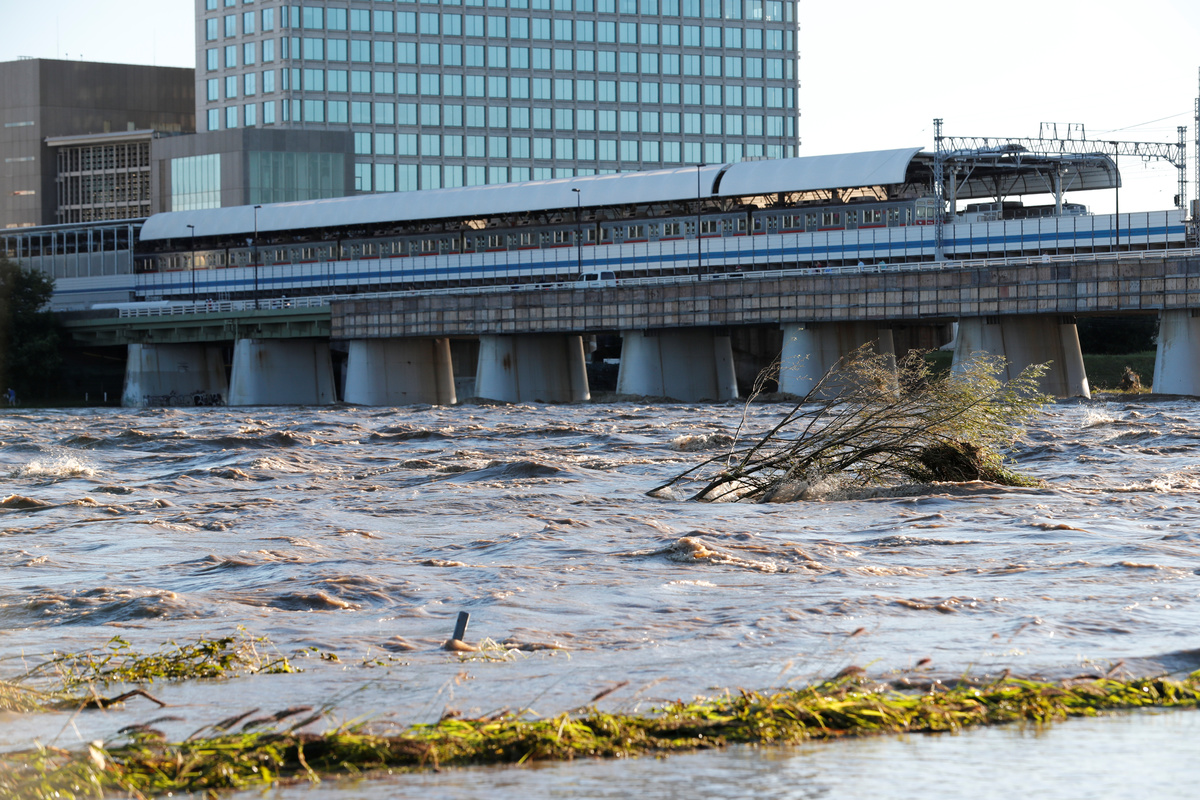
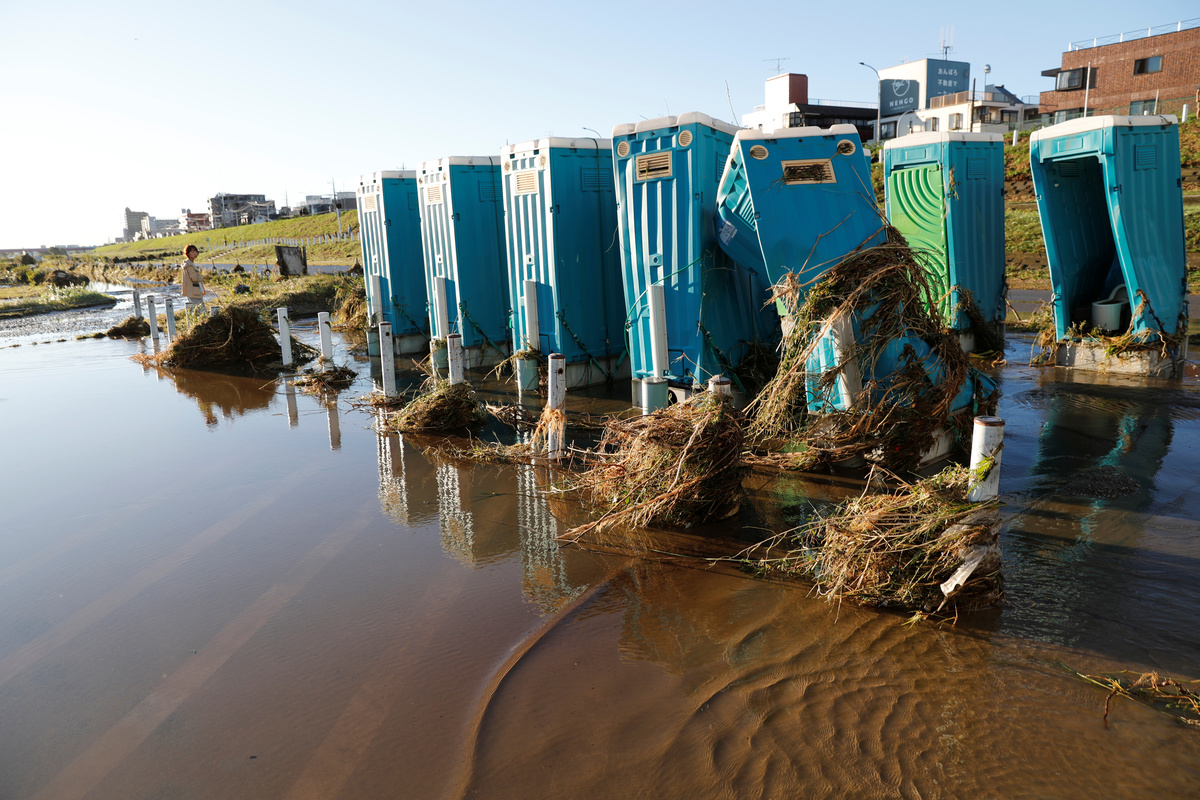
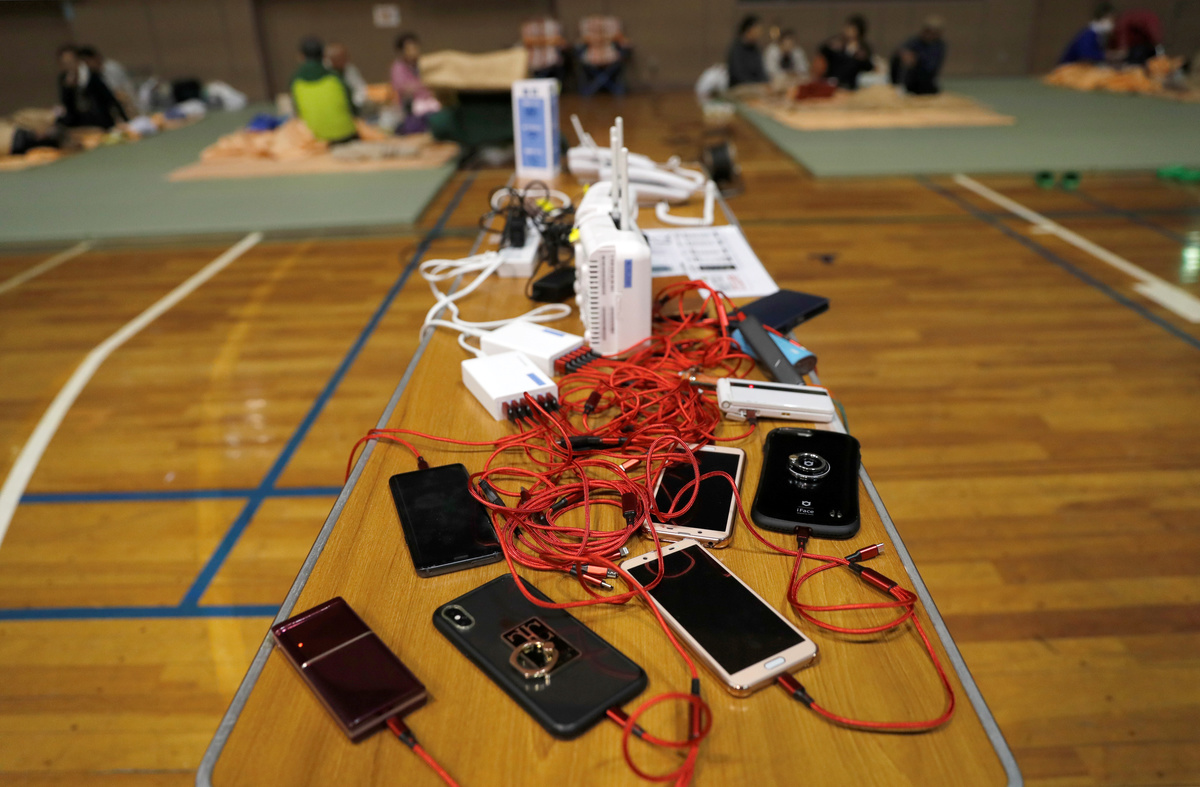
A Shinkansen bullet train rail yard is seen flooded due to heavy rains caused by Typhoon Hagibis in Nagano, central Japan, October 13, 2019, in this photo taken by Kyodo. Mandatory credit Kyodo/via REUTERSAn aerial view shows a Japan Self-Defence Force helicopter flying over residential areas flooded by the Chikuma river following Typhoon Hagibis in Nagano, central Japan, October 13, 2019, in this photo taken by Kyodo. Mandatory credit Kyodo/via REUTERS An aerial view shows residential areas flooded by the Chikuma river following Typhoon Hagibis in Nagano, central Japan, October 13, 2019, in this photo taken by Kyodo. Mandatory credit Kyodo/via REUTERSAn aerial view shows residential areas flooded by the Chikuma river, caused by Typhoon Hagibis in Nagano, central Japan, October 13, 2019, in this photo taken by Kyodo Mandatory credit Kyodo/via REUTERSA car is seen partially submerged in a flooded residential area due to Typhoon Hagibis, near the Tama River in Kawasaki, Japan, October 13, 2019. REUTERS/Kim Kyung-HoonA view of houses in a flooded residential area due to Typhoon Hagibis, near the Tama River in Kawasaki, Japan, October 13, 2019. REUTERS/Kim Kyung-HoonResidents look on from their home in a flooded residential area due to Typhoon Hagibis, in Kawasaki, Japan, October 13, 2019. REUTERS/Kim Kyung-HoonA man looks out from an apartment with the first floor flooded from heavy rains last night due to Typhoon Hagibis, near the Tama River in Kawasaki, Japan, October 13, 2019. REUTERS/Kim Kyung-HoonRescue workers from the Kawasaki City Fire Department look at a flooded residential area due to Typhoon Hagibis, near the Tama River in Kawasaki, Japan, October 13, 2019. REUTERS/Kim Kyung-HoonA man stands in a flooded residential area due to Typhoon Hagibis, in Kawasaki, Japan, October 13, 2019. REUTERS/Kim Kyung-HoonRescue personnel from the fire station checks around a flooded residential area due to Typhoon Hagibis, near the Tama River in Kawasaki, Japan, October 13, 2019. REUTERS/Kim Kyung-HoonResidents try to get into their homes at a flooded residential area due to Typhoon Hagibis, in Kawasaki, Japan, October 13, 2019. REUTERS/Kim Kyung-HoonPeople clean up debris in a flooded residential area due to Typhoon Hagibis, in Kawasaki, Japan, October 13, 2019. REUTERS/Kim Kyung-HoonPeople clean up debris after floodwaters caused by Typhoon Hagibis receded in a residential area, in Kawasaki, Japan, October 13, 2019. REUTERS/Kim Kyung-HoonPeople clean up debris in a flooded residential area due to Typhoon Hagibis, in Kawasaki, Japan, October 13, 2019. REUTERS/Kim Kyung-HoonA view of Tama river, which reached flood risk level last night caused by Typhoon Hagibis, in Tokyo, Japan, October 13, 2019. REUTERS/Kim Kyung-HoonPublic toilets are seen damaged after the Tama river overflowed due to Typhoon Hagibis, in Tokyo, Japan, October 13, 2019. REUTERS/Kim Kyung-HoonA woman sleeps in the evacuation centre for affected by the flood after Typhoon Hagibis in Nagano, Nagano Prefecture, Japan, October 13, 2019. REUTERS/Kim Kyung-HoonPeople rest in the evacuation centre for affected by the flood after Typhoon Hagibis in Nagano, Nagano Prefecture, Japan, October 13, 2019. REUTERS/Kim Kyung-HoonA person walks past goods provided in the evacuation centre for affected by the flood after Typhoon Hagibis in Nagano, Nagano Prefecture, Japan, October 13, 2019. REUTERS/Kim Kyung-HoonMobile phones are being charged in the evacuation centre for affected by the flood after Typhoon Hagibis in Nagano, Nagano Prefecture, Japan, October 13, 2019. REUTERS/Kim Kyung-HoonRescue workers are seen in the flooded area after Typhoon Hagibis in Nagano, Nagano Prefecture, Japan, October 13, 2019. REUTERS/Kim Kyung-Hoon
Sign up to read this article
Read news from 100’s of titles, curated specifically for you.