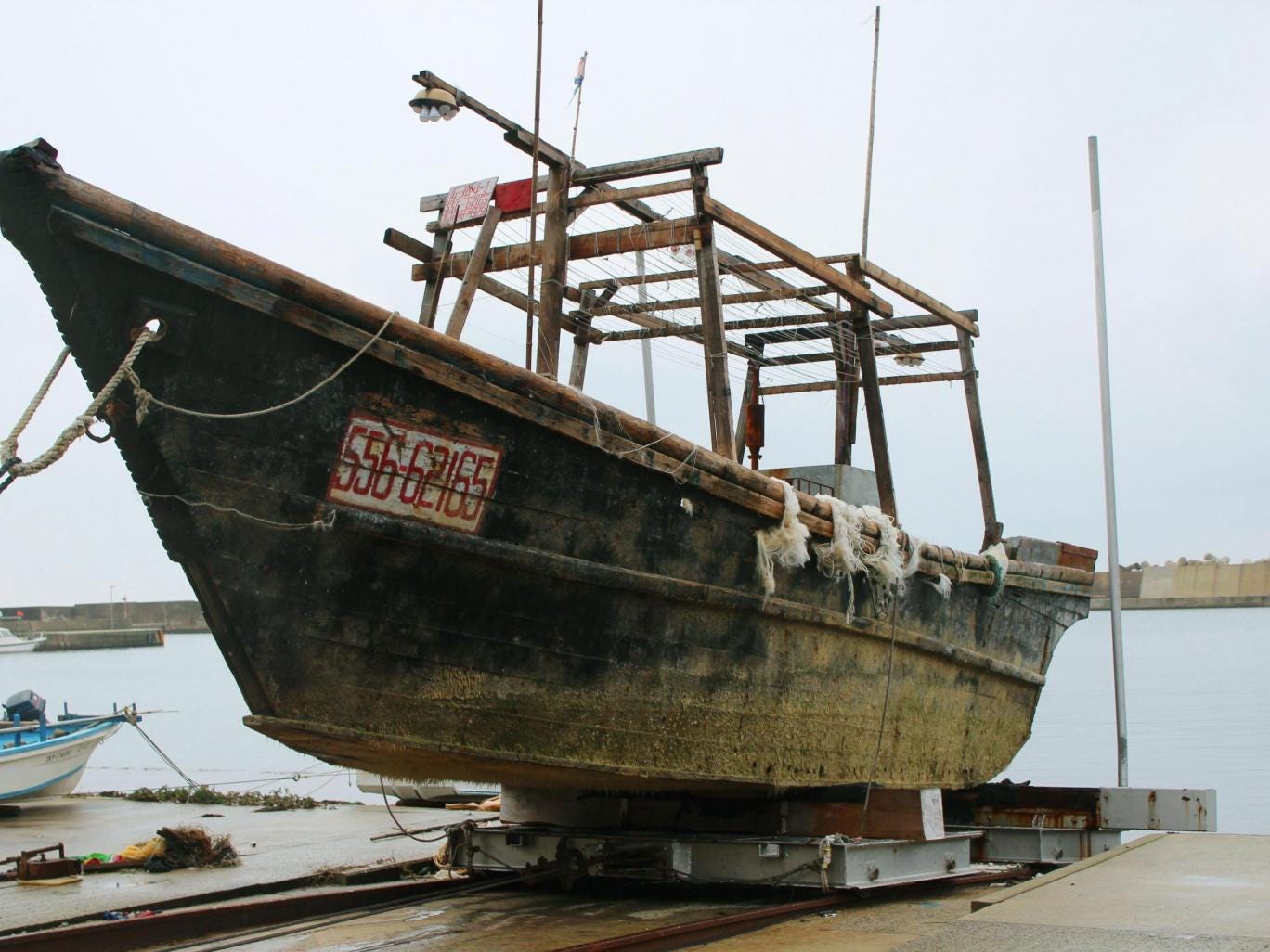
Four bodies have been found inside a crew-less boat floating off the north coast of Japan - the latest in a number of “ghost ships” found in recent weeks.
The 12.5 metre-long boat was discovered on Sunday around six miles from the Ushitaki fishing port in Sai Village, Aomori, an Aomori Coast Guard spokesman told CNN.
The boat appeared to feature Korean "Hangul" markings on its hull, while its dilapidated condition suggested it had been drifting for some time, said the spokesman.
At least 12 wooden boats have been found drifting along Japan’s coastline in last two months, holding the decaying bodies of 22 people, the police and Japan’s coast guard told Reuters.
All of the bodies were “partially skeletised”, two were headless and one boat contained six skulls, according to the coast guard.
Officials have suggested the boats have come from North Korea, after Korean lettering was found on the hull of one of the boats containing 10 decomposing bodies, found adrift off the city of Wajima, west Japan on 20 November.
The lettering read “Korean’s People’s Army” - the name of North Korea’s military defence force.
A scrap of cloth resembling the North Korean national flag was also found in one of the boats, Japan’s NHK reported.
At least 80 ships drifted ashore in 2013, 65 in 2014 and 34 as of 27 November this year, according to The Japan Times.
The vessels often carry the bodies which appear to have succumb to starvation, however the victims' identities remain unclear.
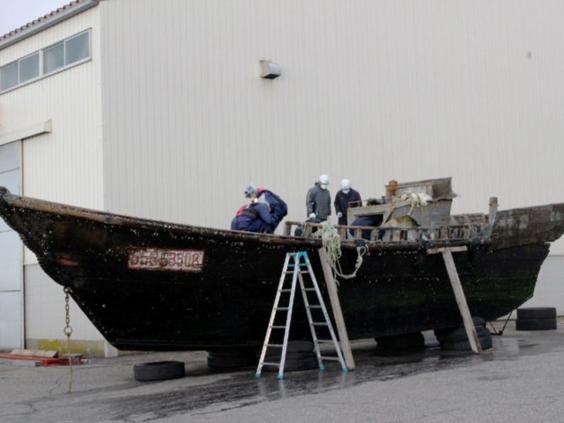
Japanese authorities believe the bodies are most likely North Korean fishermen who strayed from their ports in order to increase their catch, according to the South China Morning Post.
Robert Dujarric, director of the Institute of Contemporary Asian Studies at Temple University’s Japanese campus, told the South China Morning Post: “We know that the regime in North Korea is pushing its farmers and fishermen to produce greater amounts of food.
“To my mind, the most likely explanation is that these were simply fishermen who were trying to fulfill large quotas and simply ran out of fuel too far out at sea to get home.”