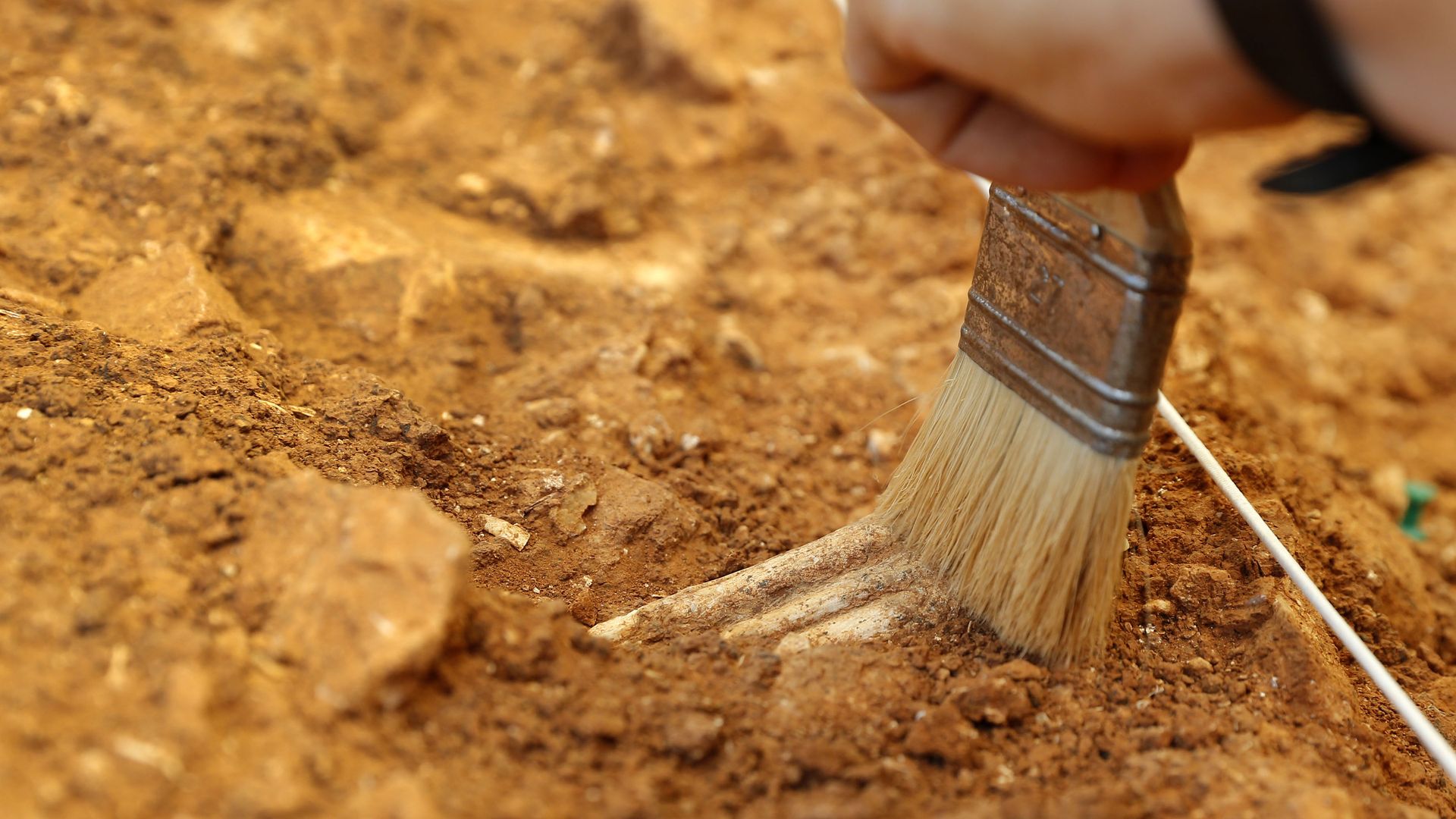
In a report published on Wednesday in the journal Nature, scientists report that a deposit of teeth and bones, recently discovered in an island cave in the Philippines, may have belonged to a newly identified species closely related to humans and "unknown previously to science," per the Washington Post.
Details: The newly named and uncovered Homo luzonensis fossils found in the Callao Cave of Luzon Island date back to the Pleistocene epoch, between 2.6 million and 11,700 years ago. This is the fourth extinct human species discovered within the last century, showcasing that evolution was less linear than previously thought. The remains would suggest that these individuals lived during the time that Homo sapiens spread from Africa elsewhere around the world. To date, efforts to draw DNA from the remains have been unsuccessful.
What they're saying: ″We continue to realize that [for] thousands of years back in time, H. sapiens was definitely not alone on Earth,” said the author of the report Florent Detriot, a paleoanthropologist with the National Museum of Natural History in Paris.
But but but: The study authors “don’t have any heads,” according to New York University anthropologist Susan Anton, who is dubious about the results of the report.