
FORWARD, Pa. _ A rugged ravine in southern Allegheny County has been tapped by the state as a model of sustainable land management.
Once clear cut, inefficiently farmed, plagued by invasive species and neglected for decades, the 110-acre tract in the Monongahela River watershed is being revitalized through a comprehensive management plan that protects the habitat of two delicate native flower species while developing a commercially viable timber stand.
This month, the Department of Conservation and Natural Resources designated Beckets Run Woodlands in Forward a Wild Plant Sanctuary. Last year, owners Janet Sred and Raul Chiesa were lauded with a nationwide distinction, National Outstanding Tree Farm of the Year, by the American Tree Farm System. The award is given annually for exceptional forest management and promotion of sustainable forestry.
"It's part of a pretty ambitious management plan where we restored this damaged part of the ecosystem," said Chiesa. "We want to include all components of this _ plants, birds, wildlife, air, water. We thought, what is the best thing to do with property like that, and recognized the need for conserving the health of the forest for the sake of all of us."
The Beckets Run Woodlands Wild Plant Sanctuary is not a public park. It is private property managed under a sophisticated plan designed to maximize the land's overall health and ecologically sustainable commercial use, and provide an example for other landowners to follow.
Steep hillsides on part of the tract kept developers at bay for decades, and the ravine's orientation protected it from air pollution, including the historic 1948 Donora smog incident in which a visible wall of toxic industrial gases killed 20 people and sickened another 7,000 in the nearby mill town.
"It devastated the vegetation throughout the region and the rest of the property was damaged, but these 20 acres were protected from the winds and did not suffer from the Donora event," Chiesa said.
The ravine's north-facing aspect provides ideal habitat for two state-listed ephemeral spring wildflowers. The snow trillium (a proposed threatened species) and white trout-lily (a proposed rare species) are indigenous to the Beckets Run Woodlands "biodiversity area," which includes adjacent properties and much of the land that has been in Sred's family for generations. The management plan has been in place since 2011.
The area's last known snow trillium population was strategically purchased from a neighbor and protected by a 100-year conservation easement. While the white trout-lily was historically documented on the land and its habitat remains, the plant hasn't been seen in recent years.
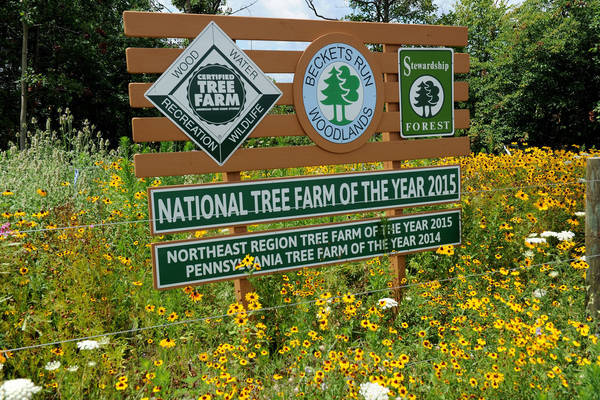
The state Wild Plant Sanctuary Program was organized through the 1982 Wild Resource Conservation Act to create a statewide network of volunteer landowners managing their properties in ways that conserve rare native plants.
"Seventy-percent of the forests in Pennsylvania are privately owned," said Chiesa. "The most common model for profiting from them is to sell to developers. If we are going to improve the health and quantity of forests, we have to find a way to use them that competes financially with development."
The answer, he says, is conservation-minded sustainable forestry in which relatively fast-growing trees _ such as yellow poplar, aspen and spruce _ are selectively harvested for the production of wood pulp.
For the regeneration of trees and plants to succeed, their sprouts must be protected from white-tailed deer. Each year, a single deer eats about 1 ton of the shoots, twigs, leaves, weeds and grasses that would otherwise be used by every other animal in the forest.
"Deer pressure here is 30 per square mile," said Chiesa. "It should be five to seven deer. We need to get that down, and the only efficient way to do that is through hunting."
Public hunting would invite strangers to walk over rare plant habitats, so a hunting lease program was set up in which two groups of hunters known and trusted by the owners pay a yearly fee for exclusive hunting access. Because money was exchanged for hunting privileges, the state Recreational Use of Land and Water Act does not protect Chiesa and Sred from liability. They purchased hunting insurance.
Some 600 acres of adjacent properties owned by neighbors are enrolled in a Game Commission landowner program in which the state makes habitat improvements, provides trespassing enforcement and manages a controlled hunt that issues free permits to 135 hunters per year.
"We're using recreational hunting to manage the wildlife to sustain habitats for plant life that are managed for sustainable commercial use and ecological health," said Chiesa. "It's working pretty well, so far."
Read more about Beckets Run at www.facebook.com/BecketsRunWoodlands.