When the Biden administration last month decided to deport thousands of Haitian migrants living underneath a bridge in Del Rio, Texas, along the U.S.-Mexico border, the man who was supposed to be in charge of all U.S. things related to Haiti was not even consulted.
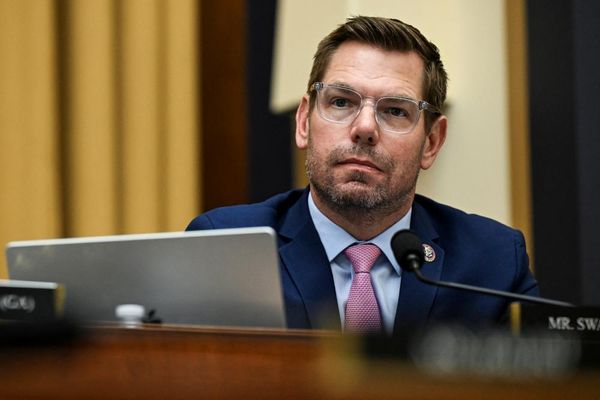
“No one asked me about the deportations. I found out about it on the news just like the rest of us,” former U.S. special envoy Daniel Foote told members of the House Foreign Affairs Committee during a public briefing Thursday. “I thought I was the special envoy, so maybe when we’re making policy decisions, someone would come to me and say ‘Is this good? Is this bad?’ But it didn’t happen.“
Foote, who was appointed to the role after pressure from Congress and after the shocking July 7 assassination of Haitian President Jovenel Moïse, resigned last month after only two months on the job. In his strongly worded resignation letter, he harshly criticized what he called the United States’ “inhumane” treatment of Haitian migrants and cited “irreconcilable policy differences” with the Biden administration on Haiti.
House Foreign Affairs Committee Chairman Gregory Meeks later told the Miami Herald that he found it “disconcerting” that the envoy he and 67 others first pushed for in April was blindsided. On Thursday, Senate Foreign Relations Committee Chairman Bob Menendez, a New Jersey Democrat, called for “the immediate appointment of a new Special Envoy for Haiti as the country reels from natural disaster, gang violence, COVID-19, and political crisis in the wake of the assassination of President Jovenel Moïse.”
Menendez made the request in a letter to Department of Homeland Security Secretary Alejandro Mayorkas and Secretary of State Antony Blinken. He and 14 other Senate Democrats expressed their disappointment over the “United States’ inhumane treatment of Haitian migrants at the southern border” and urged the administration to support long-term stability in Haiti. The State Department had previously said it did not think another special envoy for Haiti is needed.
Foote’s resignation has set off a debate over the U.S. policy toward Haiti, and has added pressure on the Biden administration, which was already facing questions over its approach to a series of crises in the volatile Caribbean country.
Foote has accused the U.S. and international community of propping up Prime Minister Ariel Henry and told members of the House Foreign Affairs Committee that absent U.S. support for Henry, he believes he would not survive.
“I think the risk of changing governments in a country like Haiti makes us nervous,” Foote said.
In a call with reporters Thursday before Foote’s briefing with lawmakers, a senior administration official said the administration was trying to avoid the impression that it was putting its “thumbs on the scale” in favor of one political figure over another.
“The situation with regard to the elections, the political dynamics and the security situation are all intertwined, and so we see our role as one where we’re going to be taking the long view on Haiti, and figuring out how we can be most effective at supporting Haitian-led solutions to Haiti’s challenges,” the senior official said.
“What that means on the political side is not putting our thumbs on the scale on the side of any one particular actor,” the official continued, “but rather being seen as supporting this broad dialogue while we engage with the interim prime minister, Ariel Henry, on delivering vaccines, making sure we’re providing robust support for those who are being repatriated.”
While pressure continued to build Thursday for the administration to stop its support for Henry, the Haitian leader has also been encouraged by senior Biden administration officials and others in the international community to continue to pursue a political accord he has forged with the goal of changing his government and holding elections and a vote on a new constitution next year.
However, his appointment has been controversial. Henry was tapped by Moïse just days before his death, but had not yet been officially installed, following pressure on Moïse by the international community to appoint a new prime minister who could lead a new consensus government that could take Haiti to presidential and long overdue legislative elections.
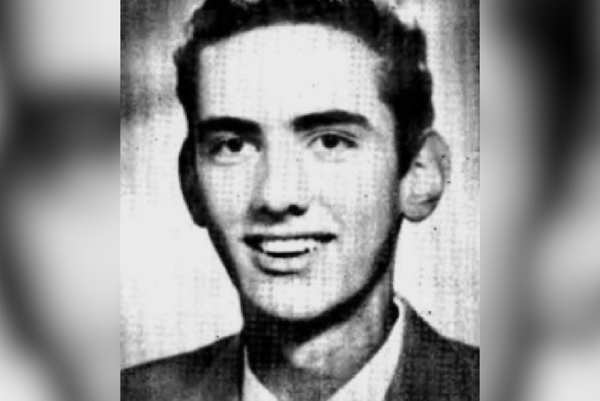
A 71-year-old neurosurgeon, Henry previously served in the cabinets of former president René Préval and Michel Martelly, and in 2004 was among a council of advisers who chose the prime minister to lead Haiti through a two-year transition after the ouster of President Jean-Bertrand Aristide. Though Henry has said he has no intentions on holding onto power, he remains a target of both those loyal to Moïse, who are opposed to his outreach to opposition groups, and members of civil society pushing their own governance accord.
“The reality is our current policy toward Haiti is a holdover from the previous administration and is in desperate need of fresh faces and perspectives,” Meeks, a New York Democrat, said at the start of the meeting. “I am concerned that using business-as-usual diplomacy is counterproductive in a country which is demanding closer ties and an ear toward the recommendation of civil society and grassroots groups.”
He said the plan is to continue talking and he will take back what they have learned to the Biden administration.
“We want to make sure there is an open dialogue where we are listening to the Haitian people,” Meeks said. “We are not picking winners and losers. We are creating an atmosphere so that the Haitian people can pick their own.”
At the time of Foote’s resignation, State Department spokesman Ned Price said that some of Foote’s policy proposals on Haiti “were determined to be harmful to our commitment to the promotion of democracy in Haiti and were rejected during the policy process.”
The senior official, in his call with reporters, said the Biden administration first learned of the outgoing envoy’s concerns with the handling of the crisis in Del Rio from his resignation letter. The White House has said in the days since his resignation that border policy was not in Foote’s portfolio.
“I’m not going to get into the particulars,” the official said. “We ran a very robust process, so every issue he put on the table was considered at my level, at the deputies’ level and the principals’ level to make sure that we came out with the best policy outcomes and the best recommendations possible for the president.”
During the 90-minute virtual public briefing before the House committee Thursday, Democratic and Republican lawmakers asked Foote about his resignation, his assessments of Haiti and U.S. policy, and why the ongoing deportations of Haitians forced his decision to leave the job. They also wanted to know more about his security concerns, which he cited as not just a factor in Haiti’s lack of readiness to hold elections but the repatriations of migrants.
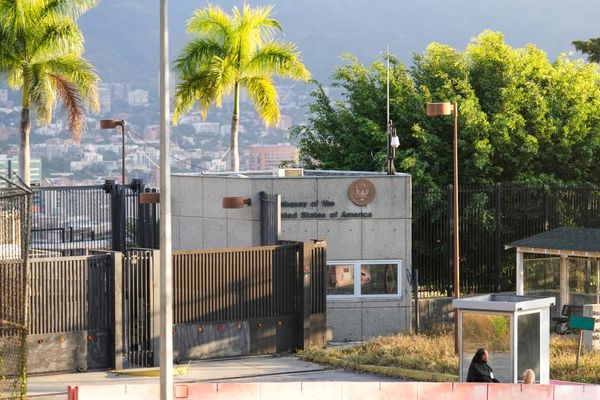
“Deportation back to Haiti is not the answer right now,” Foote said. “Haiti is too dangerous; our own diplomats cannot leave our compound in Port-au-Prince without armed guards. Deportation in the short term is not going to make Haiti more stable. In fact it’s going to make it worse.”
The repatriations carry strong implications for Haiti as it is still reeling from the assassination of the president, followed by a deadly magnitude 7.2 earthquake a month later in the midst of spiraling gang violence. Committee members said the heartbreaking repatriations from Del Rio, on top of the president’s murder and an earthquake in August, are only exacerbating Haiti’s crises.
Haiti, Foote said, needs assistance with security. While Deputy Secretary of State Wendy Sherman had told the McClatchy Washington Bureau that Foote wanted to send U.S. troops to Haiti, he told committee members that his recommendation was for the Haiti National Police to establish an anti-gang task force with several components, including commandos and intelligence.
“The gangs run Port-au-Prince. It is in their control, it is in their hands; they are better equipped and better armed than the police. They control the main highways and transit routes not only across Port-au-Prince but across the country and they are now moving out of the slum areas and have been in areas of Petionville where there has never been gang violence,” Foote said. “There were 20 kidnappings last Saturday, in one day in Port-au-Prince.”
Foote, who met only once with Henry, according to Haitian government sources, made no secret of where he stood: On the side of civil society, which has forged one of the three political accords circulating on moving the country forward.
Among the provisions Foote said he supports is banning any senior member of the current regime from running in the next elections.
“I don’t have anything personal against Dr. Henry,” Foote said, adding that there is consensus in Haiti that “the ruling party, PHTK, put Haiti where it is today and probably doesn’t deserve to be part of the solution.”
PHTK was founded by Martelly, a musician-turned-president, who later handpicked Moïse to be his successor.
“We sort of chose Martelly because there was a lot of controversy over runoffs back then in 2011, and the same thing with Moïse. We can’t do that again. We need to let the Haitians select their own presidents,” Foote said.
“Some of the previous presidents and prime ministers in Haiti, particularly in recent administrations, have had their bite at the apples and Haiti probably doesn’t need them back again,” Foote added without naming names, but referring to Martelly and one of his prime ministers, Laurent Lamothe. “Haiti doesn’t need the same old politicians, the ones that are in Pandora Papers, that’s corrupt. They need people that are looking for Haiti’s best interests and the Haitian people.”