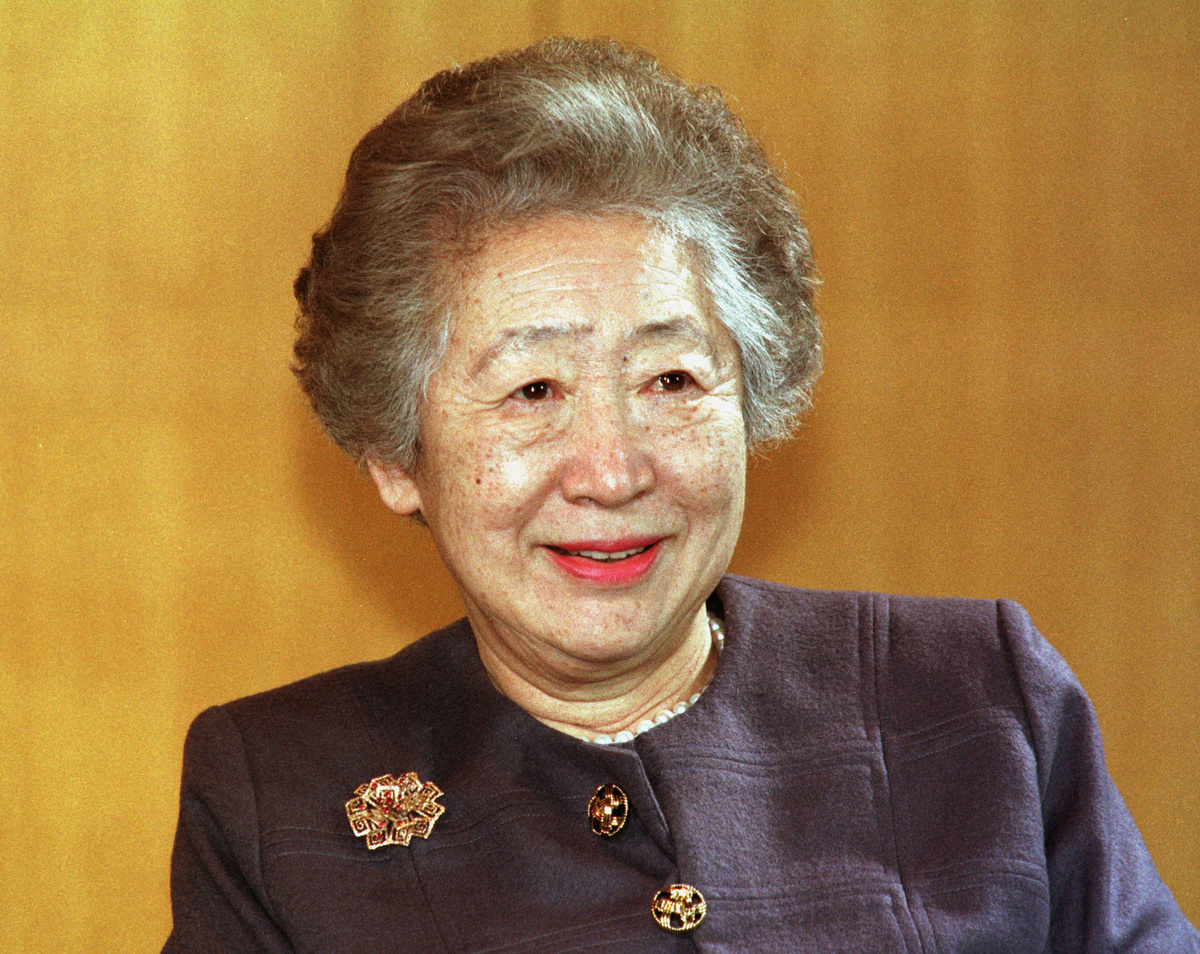
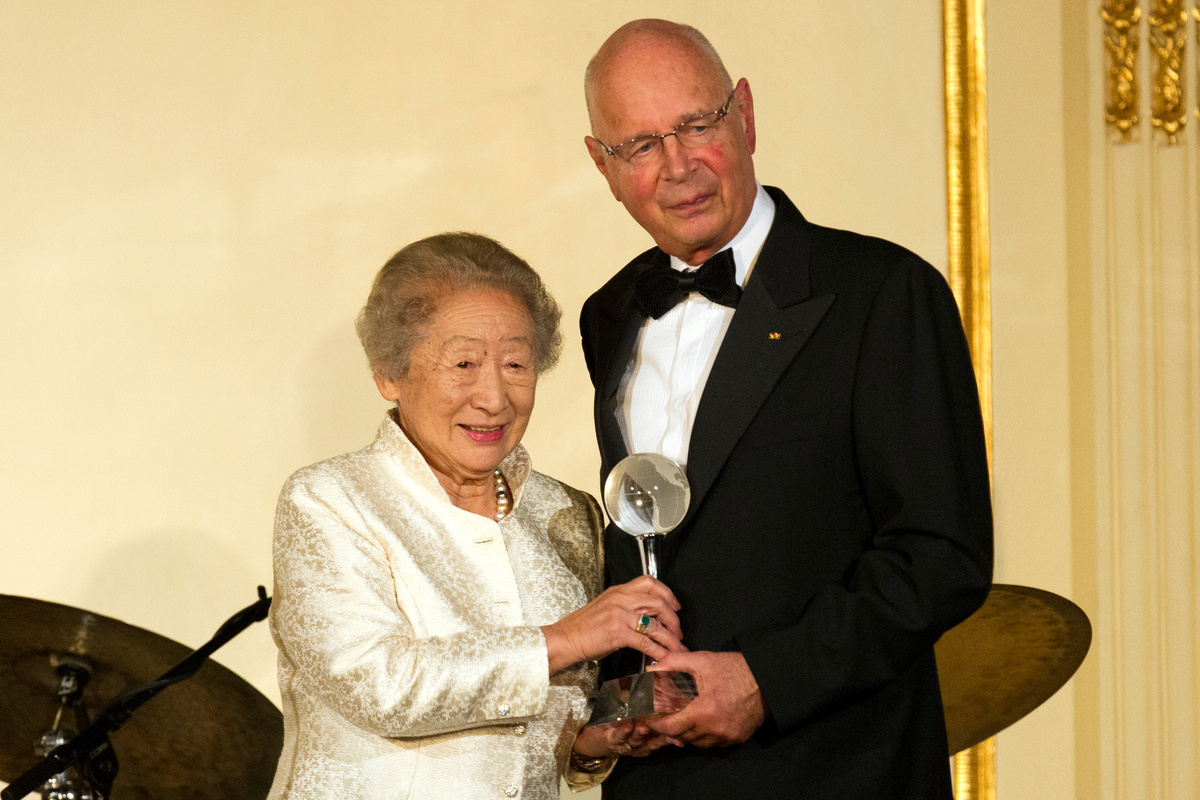
TOKYO (Reuters) - Sadako Ogata, a former top United Nations official who was the first and only woman to serve as the U.N. High Commissioner for Refugees and became known for donning a helmet and flak jacket on trips into the field, has died, aged 92.
Japanese government officials said Ogata had died on Oct. 22 but they only announced her death on Tuesday. They did not give the cause of her death.
"She was always showing compassion to those who were suffering," Japanese Prime Minister Shinzo Abe said.
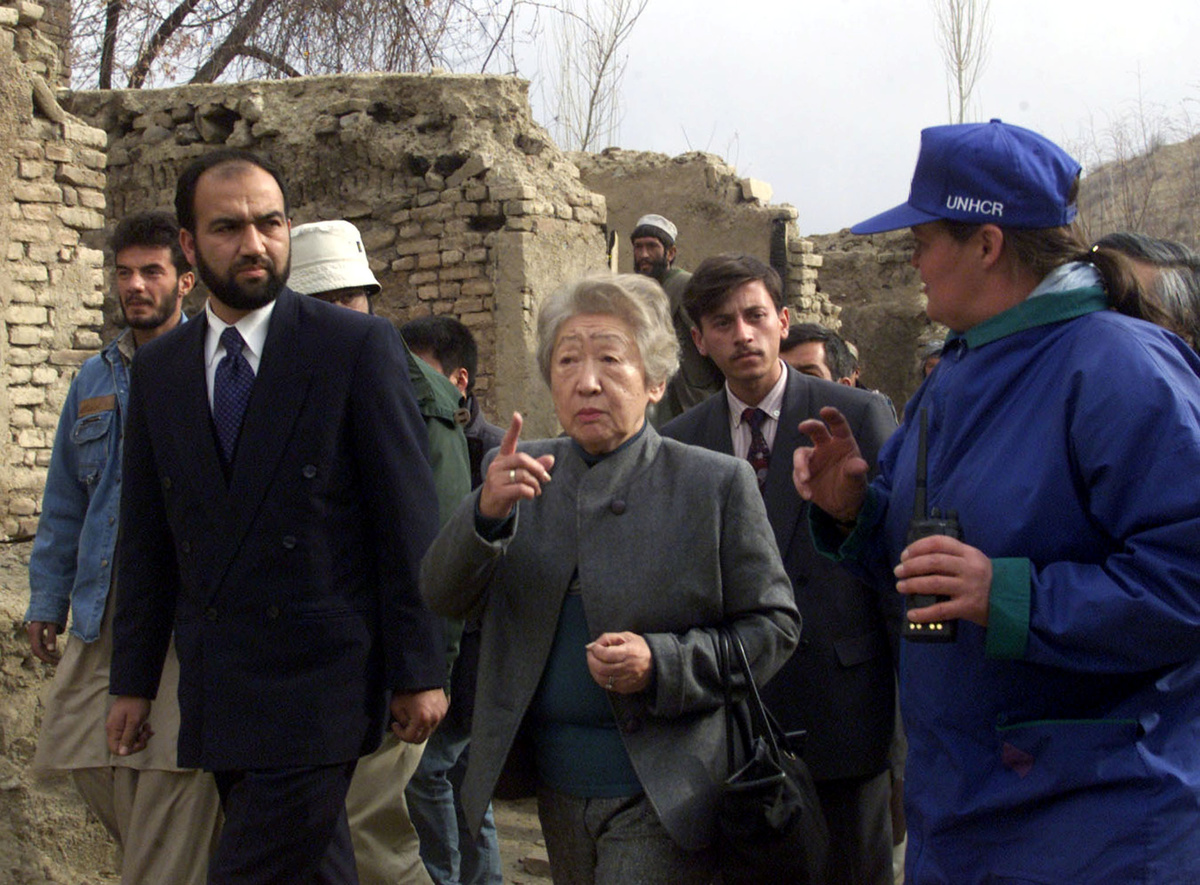
Her tenure as U.N. High Commissioner for Refugees during the 1990s coincided with a genocide in Rwanda and ethnic conflict in the former Yugoslavia.
"She stood on the front lines of humanitarian issues such as poverty, refugees and conflicts, where she demonstrated outstanding leadership," chief cabinet secretary Yoshihide Suga told a news conference on Tuesday.
"Her thinking, such as guaranteeing human security and emphasising work in the field, is even now the basis for humanitarian aid efforts both in Japan and overseas," he added.
"We would like to express our deepest respect and pray for the repose of her soul."
The great-grand daughter of a pre-World War Two prime minister, Tsuyoshi Inukai, Ogata earned a doctoral degree in political science from the University of California, Berkeley, and later served as Japan's special representative on Afghan reconstruction.
In an interview with Reuters in 2015, she urged Japan to show more leadership on issues regarding refugees.
"Japan has to set up a situation to welcome people ... not to welcome everybody, but those who are in need, in serious need and who are willing to come, or would like to come," Ogata said. "I think we should be open to bringing them in."
Japan, where many pride themselves on their country's cultural and ethnic homogeneity, accepted just 42 refugees last year, from more than 10,000 applicants.
"If refugees come in millions, that's a different story, but the arrival rate is not that huge and (to say) Japan does not have resources, that's nonsense," she said in the interview.
Filippo Grandi, the current UNHCR, praised Ogata for her work.
"Mrs. Ogata was a visionary leader who steered UNHCR through one of the most momentous decades in its history, transforming the lives of millions of refugees and others devastated by war, ethnic cleansing and genocide, and helping redefine humanitarian action in a fast evolving geopolitical landscape," he said in a statement.
(Reporting by Elaine Lies, Linda Sieg and Kiyoshi Takenaka; Editing by Clarence Fernandez and Gareth Jones)