He's a former British spy, a man used to operating in the shadows. Now he is dramatically, and uncomfortably, in the spotlight.
Christopher Steele has been identified in news reports as the author of a dossier suggesting that Russian officials had gathered compromising information about President-elect Donald Trump that could be used to blackmail him.
The dossier's existence was widely known among journalists and politicians in Washington since the fall, but the allegations about the incoming president's activities in Russia and his personal life were unverified and remained unknown to the general public. But this month the file, salacious allegations and all, was published by BuzzFeed News.
Trump has castigated the dossier as "fake news," and blamed U.S. intelligence agencies for leaking it _ an accusation that heightened the already testy relationship between the president-elect and intelligence community. Later, the Wall Street Journal identified Steele as the dossier's author.
Without naming Steele, Trump alluded to him on social media as a "failed spy afraid of being sued."
But that's not accurate to some.
"I know him as a very competent, professional operator who left the secret service and is now operating his own private company," Andrew Wood, a former British ambassador to Russia, told the BBC last week. "I do not think he would make things up. I don't think he would, necessarily, always draw correct judgment, but that's not the same thing."
Toward the end of the Cold War, Steele, 52, was in the MI6, an intelligence agency created in the early 1900s so secretive that the British government didn't acknowledge its existence until the 1990s. Steele began working for MI6 that same decade, with postings in in Moscow and then Paris.
According to British news reports, he was a Russia specialist and worked on the investigation into the murder of Alexander Litvinenko, the former Russian spy who was poisoned with radioactive polonium-210, which was slipped into his tea during a meeting in London with two Russian agents.
Litvinenko, who sought asylum in Britain in 2000, was a harsh critic of Russian President Vladimir Putin, and last year a British inquiry found that Putin "probably approved" the scheme to poison him.
Steele left the intelligence agency in 2009 and founded Orbis Business Intelligence. The London-based company specializes in investigations and intelligence-gathering, noting on its website "real-time source reporting on business and politics at all levels."
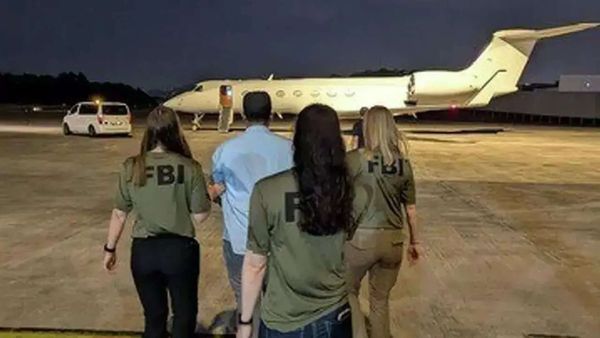
Some of Steele's work included gathering information for the U.S. Justice Department in a 2015 corruption investigation of FIFA, the international governing body of soccer, according to Britain's Telegraph newspaper. Several members of FIFA's ruling executive committee were indicted on bribery charges as part of a widening corruption investigation headed by the FBI and the Justice Department.
John Sipher, a former CIA official who spent 28 years at the agency _ including stints in Russia _ did not work specifically with Steele, but said that within the intelligence community, Steele was a "credible guy."
"He knows his stuff," said Sipher, who retired from the CIA in 2014 and now works at a Washington-based technology firm. "That was widely known."
Sipher credited much of the uproar over Steele's dossier to the fact that "no one truly knows his sources."
Journalists and government officials have called the allegations in the dossier unverified. Misspellings appear throughout it. For example, it refers to Alfa Group, a privately owned Russian-based financial investment firm, as "Alpha Group." Such errors seem at odds with comments from intelligence professionals who have described Steele as meticulous.
Russian officials have dismissed the memo as false.
"This is an absolute canard, an absolute fabrication, and it's complete nonsense," said Dmitry Peskov, a spokesman for Putin.
He added, "The Kremlin does not engage in collecting kompromat," using the Russian term for compromising material.
"Its content was like a parody of poorly constructed kompromat," said the television station Russia 24.
Sean Spicer, who is set to be Trump's White House press secretary, offered a forceful condemnation of the report at a news conference last week.
"The report is not an intelligence report, plain and simple," Spicer said, adding that it's "flat-out false."
Steele has not commented publicly about the dossier.
Steele's company website does not include a biography of him or anyone else, but it does note that it still welcomes resumes from job applicants who "possess excellent research, analytical and writing skills, and thrive on unraveling complex issues in a diverse range of industries and regions."
Steele lives in Surrey, a suburb of London, the Telegraph reported.