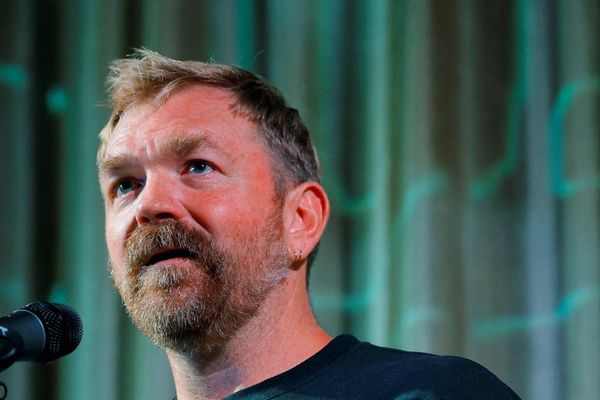
A former senior Northern Ireland police officer has reflected on his role helping to put bobbies back on the beat in Iraq ahead of events to mark the end of Operation Telic.
Stephen White served in the Royal Ulster Constabulary (RUC) before continuing to the Police Service of Northern Ireland (PSNI) in 2001, rising to the rank of assistant chief constable.
But in 2003 his life took a very different turn when he responded to an ad from the government for a senior police officer prepared to go to Iraq and rebuild the country’s police service.

He served as director of law and order for the whole of Southern Iraq, and oversaw the setting up of the first police academies since former president Saddam Hussein was toppled.
He said he felt he stood out for the role having worked closely with the Army in Northern Ireland across the Troubles, from south Armagh to the Drumcree stand off, as well as implementing the Patten policing reforms.
Speaking ahead of events organised by the Royal British Legion to remember the service of military and police in Operatic Telic, a term which covers the UK’s military operations in Iraq from 2003 to 2011, Mr White recalled arriving in Basra in July 2003 to find just two police officers.
“The job advertised was to be the head of the international police task force with 1,500 officers, so the biggest feeling for me was one of absolute frustration when I arrived in Iraq and was told that I would have two police officers. It was almost farcical,” he told the Press Association.
“I arrived there full of ambition and keenness, I was still quite young, I was in my 40s, I was energetic, I was wanting to get involved, and the frustration was that I didn’t have the troops.”
He described the early days being transported in army jeeps with close protection, going to incidents and visiting police stations and prisons being built.
“After three months, I think I had two British military police, about 12 Danish police, one prison expert, and one human rights lawyer, despite being promised a staff of about 2,000 in total.”
Their operations base was an old derelict electricity station with cardboard boxes taping up the windows to stop the heat and sunlight coming through, and no proper showers and basic toilet facilities.
He also recalled violence and tragedy, including one of those he had worked with for the first month, Major Matt Titchener from the Royal Military Police, being killed.
“I was waiting outside my building for him to drive a few 100 yards to come and pick me up, and he was killed, along with two of his corporals,” he said.
“A pickup truck pulled up beside their jeep, and the gunman in the back of the pickup truck shot the three of them dead, and that was a dose of reality for me, having lost a lot of colleagues in Northern Ireland, that brought back bad memories.”
Mr White said the incident also served as evidence for those who argued against sending civilian police officers to Iraq when he felt police and army could work together in Iraq as they had done in Northern Ireland.

He said a television documentary he appeared in during which he described being professionally embarrassed with the lack of resources earned him the reputation as a “thorn in Number 10’s side”.
But he said ultimately he had caught the attention of then foreign secretary Jack Straw, and during a visit he was convinced by Mr White’s argument of the potential to build a police academy and train police.
“25 British police officers were deployed. I think in December, but eventually British policing did put presence into Basra, and I was their commander for the rest of my tour,” he said.
“It was a very enjoyable time, despite a lot of tragedy.
“My own vehicle, we were in a convey of three vehicles, we were hit with an IED outside Basra courthouse, and although I didn’t have a scratch on me, my bodyguard, who was looking after me, got very badly injured, lost part of his leg.
“As always, it’s the moral, it’s the comradeship, it’s the good humour, it’s all the warm sides that keep you going, despite all the challenges.
“But it was a very deadly and dangerous place, and I’m conscious that a lot of people lost their lives there.”
After his initial six-month posting, Mr White later returned to Iraq for five years as the European Union head of mission.
He currently runs the RUC Foundation which remembers police officers who lost their lives in Northern Ireland’s Troubles.
He added on his time in Iraq: “Hundreds of people lost their lives during my time there.
“It’s never easy when you survive and you lose your colleagues.
“There’s that guilt of why them and not me, but we were all doing our best in very difficult and dangerous circumstances.
“Remembrance is very important – for widows, for mothers and fathers, brothers and sisters who lost soldiers and police officers out there.
“It was a terrible time, but thankfully no serving British police officers lost their lives in Iraq.”
The Royal British Legion’s service at the National Memorial Arboretum starts at 12pm on Friday, and with around 1,500 members of the Armed Forces community expected to attend.
Later an event will be held at Parliament Buildings, Stormont in Belfast from 7.30pm.