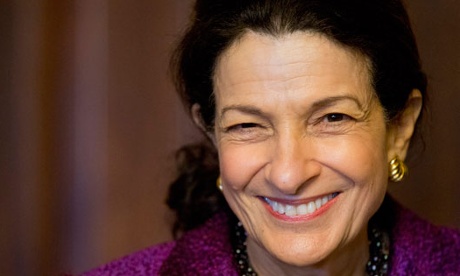
In February 2012, Senator Olympia Snowe shocked her colleagues when she announced she was not going to run for re-election.
The Maine lawmaker was tired; not of fighting for her constituents, but of the petty infighting in Congress. In the statement announcing her decision, Snowe said she found it frustrating that “an atmosphere of polarization and ‘my way or the highway’ ideologies has become pervasive in campaigns and in our governing institutions”.
“Unfortunately, I do not realistically expect the partisanship of recent years in the Senate to change over the short-term,” she continued.
Snowe was prescient. Two and a half years later, little has changed. With an approval rating as low as 14%, Congress has struggled to pass the bills aimed at helping regular Americans. Bills focused on raising minimum wage, equal pay or assisting Americans refinance their students loans are either stuck in gridlock or have failed to pass.
Tired of the bipartisanship that has swept the nation, Snowe has launched Olympia’s List. The organization focuses on identifying candidates who can work across the aisle. The nation needs moderates not unlike herself back when she served in the Senate. Snowe refers to these candidates as “bridge-builders”, politicians who can build bridges across the aisle and actually get things done.
We caught up with Snowe to talk about the issues that matter to average Americans and small businesses as well as the current state of the US politics. Below is an edited transcript of our conversation.
Since leaving Congress, you have been traveling across the US talking with average Americans. What are you hearing from them? What are some of their main concerns?
The state of the US economy is definitely affecting Americans’ pocketbooks. If you look at all the polling data, people are feeling pessimistic about their future and the country’s future.
People still believe that we are in the recession. People understand the direct correlation between the hyper-partisanship in Washington and their economic well being, which has been neglected and put in jeopardy. I don’t think there’s any question about how people feel about it, because they are not seeing strong rebound that our economy should have been experiencing by now by leaps and bounds.
You look at all of these statistics – and people’s wages – they have fallen so much behind. And yet, the cost of living has grown enormously and is not keeping pace. Then there is the fear of not being able to find a job. The unemployment rate is declining because people are dropping out [of the labor force], they are not putting in the effort to look for work. That’s deeply troubling. That’s ultimately what it’s come to.
These numbers are reflected in the landscape and it’s why people feel that they are falling further and further behind. They are considerably worried about the future.
They are pessimistic.
They are. I am always encouraging people to get involved in the political process and make a difference.
It’s not so much that we can’t solve the problem as that you’ve got a political class in Washington that has chosen not to and that’s what people fear more than anything else.
What’s your advice to your colleagues who are still in Congress?
To focus on the economy, first and foremost. To work together to solve the most critical problems facing the country. That is certainly the message that I am getting from the people across my state of Maine and across the country.
You can’t continue year in and year out with sub-par economic growth and job creation and think that that is not going to have a compounding impact on the quality of the future of America. That has to change. They have to work across the aisle.
The issues that matter are getting our fiscal house in order, that’s passing a budget, which has been long overdue. For three consecutive years in my last years in the Senate, we had no budget, which ultimately led to a sixteen day shut down because of ideological interests and political partisan agendas as opposed to focusing on the agenda that matters to the country.
Ultimately, it led to an agreement, but that didn’t focus on the overall issues of debt, entitlement reform, the list goes on.
We have a very high level of uncertainty in this country, because the Congress is failing to address these key questions. I talk to business owners all the time and they say that because of the uncertainty, they are withholding investment in the future. That’s money sitting on the sidelines because companies aren’t willing to take a risk of creating more jobs, making capital investments because they do not know what direction Congress will take with respect to these key policies.
It’s getting back to work and getting to the essence of what public service is all about and why they were elected - to solve problems. That’s what people deserve. They deserve no less than that.
How essential are small businesses to the US economy?
Small businesses are heroes in our economy. They are on the frontlines of our communities – large and small – across this country. We have 30m small businesses that are the driving engines of our economy. Without them, it wouldn’t be possible to have the number of jobs that we have available to Americans. They create two-thirds of all net new jobs in America.
A growing segment of small businesses are women-owned businesses. It’s important for Congress to be focusing on those initiatives - it’s where regulatory and tax reform become pivotal. It’s not overburdening small businesses with regulations, which unfortunately has been the case over the last few years.
What’s your advice to women who are looking to enter male-dominated field or to start their own business?
My advice is to know who you are, follow your passion and know that you can succeed in spite of the impediments. I know so many female business owners who are phenomenally talented. You can see this reflected in the statistics that show that the fastest growing segment of our economy have been women owned businesses, because they are really entrepreneurs. They are innovators, they create niches in the market place.
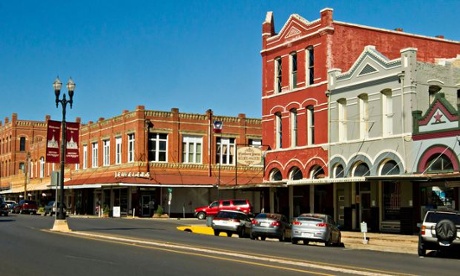
One of the things I always did as an elected officials was conduct Main Street tours in my community so that I could become familiar with what’s happening in the community. Obviously small businesses are the life blood of so many of the communities across the country and certainly that was true in Maine, which is a small business state. And what I discovered was so many talented, innovative, creative women who were running their own businesses on Main Street and they were transforming Main Street. So many Main Streets across America have been devastated by past economic downturn, migration to suburbs, malls. Now, people are returning to the Main Street and rebuilding and rejuvenating their whole lifeline, in these communities at the main intersections.
It’s fascinating. I love what these women business owners were doing and I was so impressed. They were natural entrepreneurs. So many have done it because they have lost their jobs. They didn’t want their face tied to a large company anymore.
They lost their jobs and they decided to create and forge their own destiny. Often times, that requires a lot of hard work and perseverance and determination, I know that these are all characteristics of all these women who I have met. They had a great idea and they knew how to translate it into a strong business model and were successful.