TAKAMATSU -- An increasing number of former school buildings in Kagawa Prefecture are being converted to such facilities as a caviar production center, a strawberry farm, a research site for rare sugar and a guesthouse.
There have been reports nationwide of school buildings where young people used to study being reworked. Many local governments are seeking to transform such buildings into places that benefit local residents.
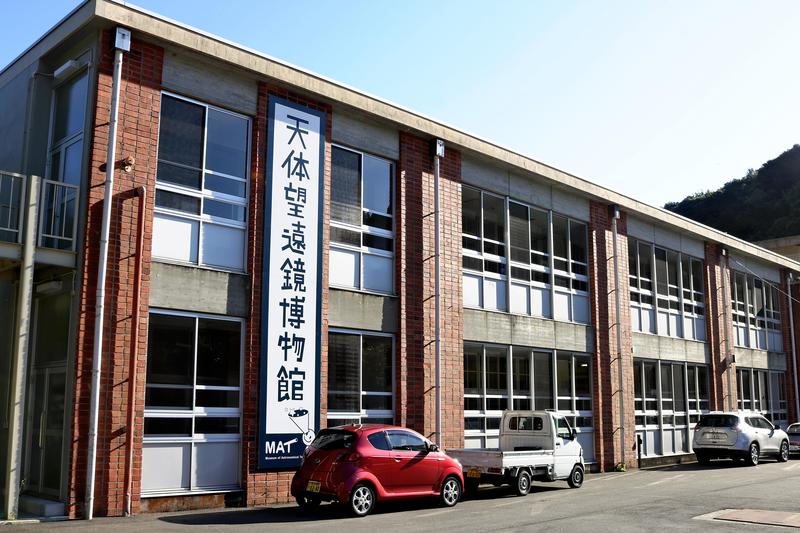
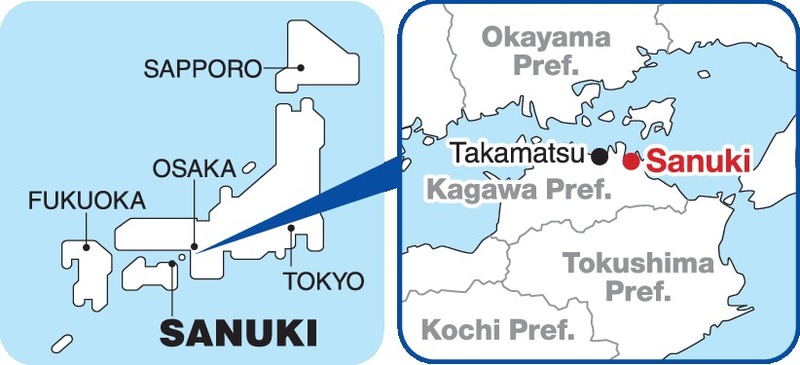
In the Tawa district of Sanuki, Kagawa Prefecture, the Museum of Astronomical Telescopes stands along a mountain road leading to Okuboji temple, which is Temple No. 88 on the Shikoku 88 temple pilgrimage. The museum opened in March 2016 in the former building of Tawa Elementary School and displays more than 300 telescopes provided by companies and individuals.
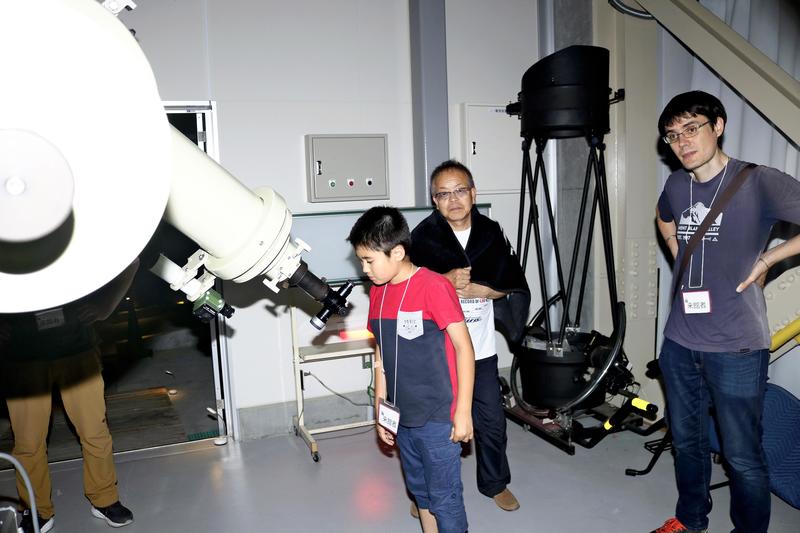
On the day I visited the museum, it was holding a workshop on how to handcraft a telescope mount.
The former Tawa Elementary School had 249 students in 1957, but the number decreased to four in 2012 before the school was closed. The area caught the eye of 68-year-old Shosaku Murayama, a former general manager of the Bank of Japan's Takamatsu branch -- city lights do not reach the area and Murayama was looking for a place where he could convey the fascination of astronomical observation.
At a meeting with local residents, Murayama promised to leave the building as it was, saying the school is the alma mater for residents of Tawa.
"I trusted him, as I believed he would run the project properly," said Yasuhiro Manabe, 68, a member of a local organization studying how to use the school building.
Together with this project, a market that sells direct-from-the-farm vegetables and fruits was also opened.
"Our goal is not to make money. We just wanted to make [the school building] a forum for exchange among local residents," Manabe said.
Planning is required
According to a survey conducted by the Education, Culture, Sports, Science and Technology Ministry, the number of elementary and junior high schools peaked at 41,522 in 1948, and had decreased to 30,420 in 2017.
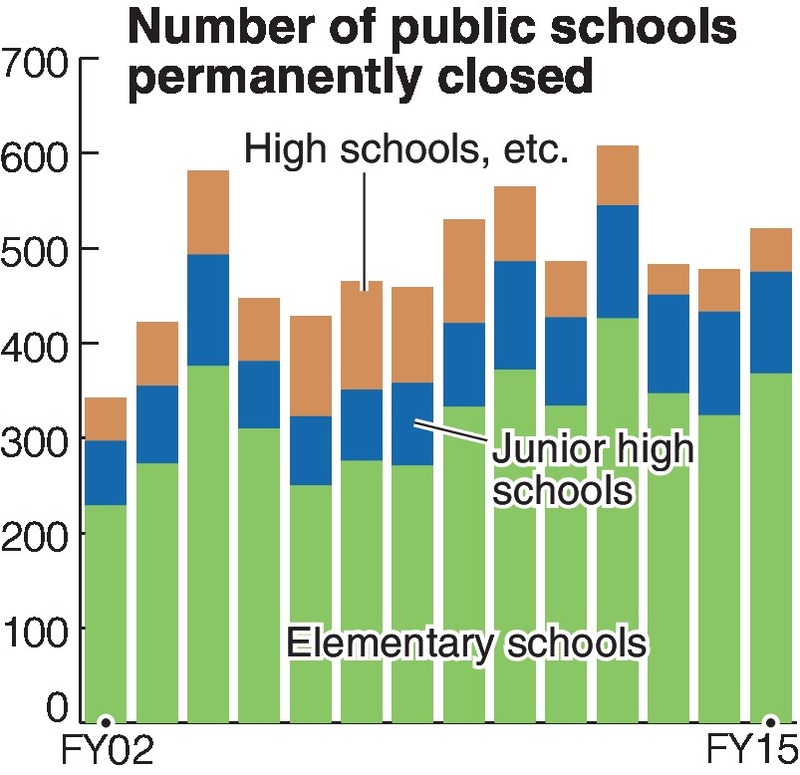
A total of 6,811 public elementary, junior high and high schools were closed from fiscal 2002 to fiscal 2015.
In autumn 2010, the ministry embarked on a project to promote closed school buildings available for other uses, while showing examples of how to utilize such facilities.
The project introduces 14 shuttered school buildings in Miyoshi, Tokushima Prefecture, that have not yet been used for any new project. When four towns and two villages were merged to form the city of Miyoshi in 2006, many schools were integrated, and the utilization of closed school buildings did not progress.
In 2012, the municipal government assigned official Akihiro Ando, 52, to solve this issue, entrusting him with the reuse of 28 closed schools.
"The city didn't announce how to rent closed school buildings, and it had no scheme for leasing them," he recalled.
Reflecting residents' opinions, Ando gave top priority to utilizing school buildings while also maintaining functions that are necessary for local residents -- such as a polling station and an evacuation center.
He solicited ideas about the effective use of the buildings on the city's website, and held meetings in Tokyo and Osaka with possible firms to undertake a project. When a promising plan was suggested, he set up a meeting between local residents and the operator to deepen their understanding.
Seven school buildings were successfully utilized for new purposes during his three-year term.
"If local governments aim to utilize multiple school buildings, they need to have firm policies and schemes," Ando said.
Creating jobs
In Yabu, Hyogo Prefecture, drawing companies to the city is an important measure for creating jobs and securing residents, as the city faces a dwindling population.
Forests cover 86 percent of the city's land, so the municipal government -- which hoped to make use of 12 closed school buildings -- decided to give away the buildings for free to applicant firms, and exempt them from property tax for the land. It also established a system to provide subsidies in accordance with the number of employees.
The city attracted six companies, including the Tajima Jozosho vinegar maker, which started manufacturing products at the former Nishitani Elementary School. Of 20 employees of the company, 16 were hired locally.
"I can't believe that vinegar is being made at my old school building," said Miharu Nakao, 55.
Orix Agriculture Corp. renovated a former Minamidani Elementary School building, and is growing lettuce there using fluorescent light.
"The continuing depopulation and aging problem in Yabu will be an issue for the whole country 10 years from now," said the head of the lettuce plant, Hiroki Yoshida, 42. "I was attracted when a city official told me, 'If such measures are implemented here, this place will be at the cutting edge in Japan.'"
Read more from The Japan News at https://japannews.yomiuri.co.jp/