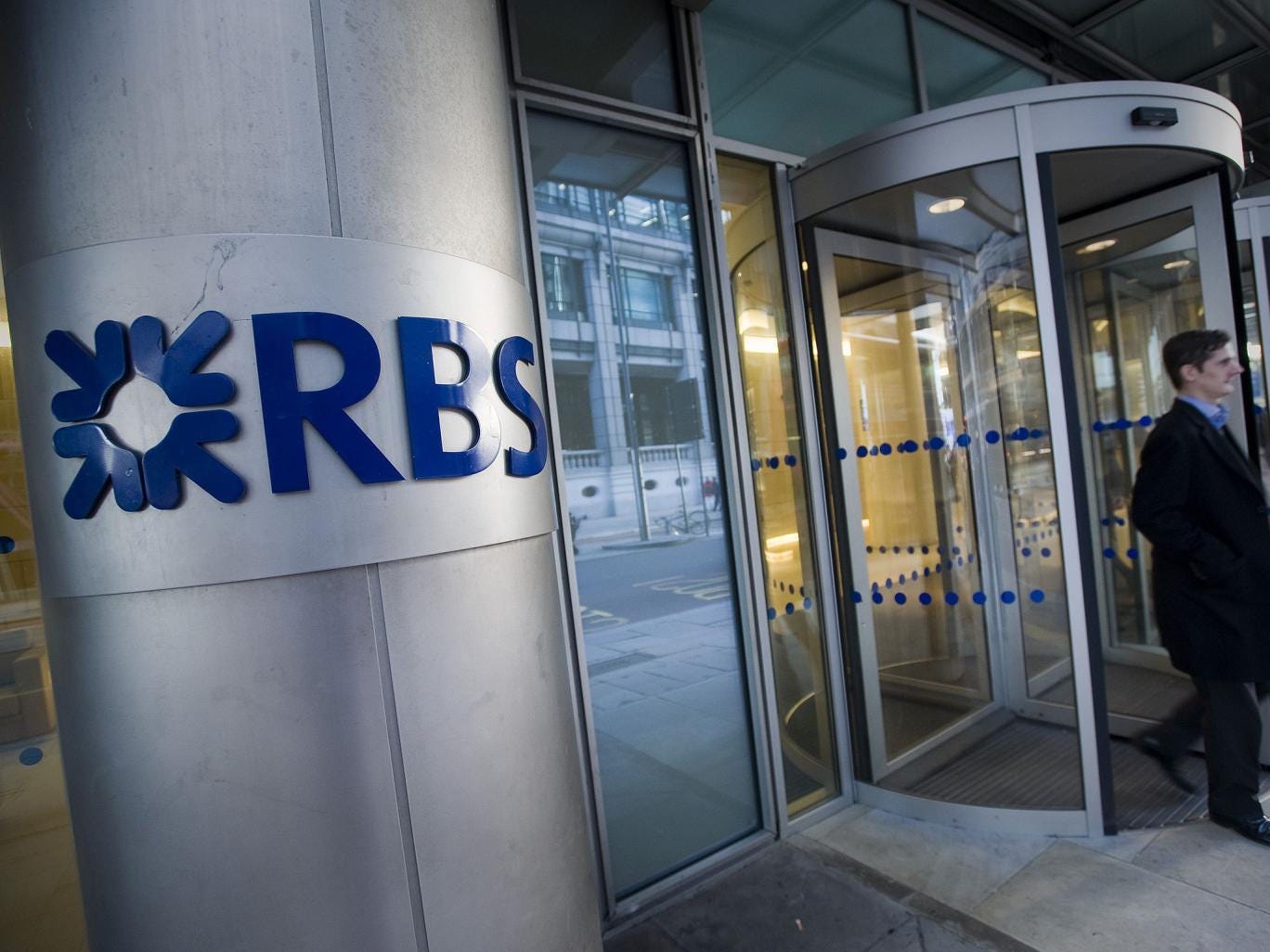
Five of the “challenger banks” ministers hope will rehabilitate Britain’s finance industry after the 2008 crash are run by former executives of RBS who were serving under Fred Goodwin in the run-up to its collapse. Senior figures in the market have told The Independent that the former RBS coterie – who together run half of all the “challengers” – carry disproportionate weight in the sector’s dealings with the Government.
The five are Virgin Money’s Jayne-Anne Gadhia, Tesco Bank’s Benny Higgins, Steven Pateman at Shawbrook, Craig Donaldson of Metro Bank, and Paul Lynam of Secure Trust. Of the other challenger banks, former staff of the Big Four are represented no more than once each among their bosses.
The dominance of Mr Goodwin’s former lieutenants risks undermining Treasury moves to boost competition and reduce the heavy influence of the traditional big hitters – RBS, Lloyds, Barclays and HSBC – and raises questions over how much the leadership of Britain’s banking market has changed.
The revelation has been called “disturbing” by banking reform campaigners, who said taxpayers would have to hope the mistakes that have drained the Exchequer of billions of pounds of public funds in bailout money would not be repeated. None of the challenger bosses has faced any disciplinary action from regulators, and there is no suggestion of any wrongdoing by any of them during their time at RBS.
But Joel Benjamin, financial reform campaigner at Move Your Money UK, said the dominance of Mr Goodwin’s former executives was “disturbing” and said that it “raises serious questions about the lack of accountability in bank management”.
“The UK banking sector urgently needs a diversity of banks, and different banking models,” he said. “What we don’t need is smaller versions of the same toxic banking culture, which refuses to be reformed or to act in the interests of society.” He urged the Financial Conduct Authority to “pause for reflection” over its decision to drop a landmark inquiry into banking culture.
The problems experienced by RBS during the banking crisis – involving a string of scandals emerging across a range of RBS’s businesses – have made cleaning up its operations a mammoth task. Last month the management of RBS, which had to be bailed out by the Government in 2008, was forced to issue another profit warning.
RBS, still 73 per cent owned by the taxpayer, took a hit of £2.5bn, including an extra £500m to top up provisions for payment protection insurance mis-selling by the retail bank to more than £4bn. The retail side of the institution was also fined £56m after its creaky IT systems locked millions of customers out of their accounts.
Meanwhile, the business banking operation is on tenterhooks as regulators complete a report into the activities of RBS’s Global Restructuring Group, which dealt with financially strained clients and was accused by the former government adviser Lawrence Tomlinson of forcing viable business to the wall. The bank’s treatment of small businesses was the subject of a critical report by the former Bank of England deputy governor Sir Andrew Large which said it had “failed” to lend.
The investment banking unit was heavily fined for both Libor and foreign exchange rate-fixing, while the latest profit warning contained £1.5bn of provisions to cover litigation relating to its sale of toxic US mortgages.
Costs such as these have contributed to the bank’s reporting an annual loss every year since the crisis of 2007-08, including for last year.
David Hillman, spokesperson for the Robin Hood Tax campaign, which presses for a tax on banks’ financial transactions, said of the ex-RBS dominance of the challengers: “It’s disturbing that so many bankers who were in senior roles when the sector crashed are still in top jobs today. We must hope that the mistakes of the past are not repeated.
“It’s down to the Government to ensure the financial sector is fit for purpose. Our concern is that ministers are rowing back on a series of much-needed reforms.”
Unison’s general secretary Dave Prentis said: “Nurses, teaching assistants, town hall workers and other public servants will be angry that senior executives from a bank whose irresponsible lending resulted in millions being taken from the public purse are now part of the new vanguard of banking on the high street.
“Were it not for the reckless behaviour of their and other City institutions, the UK’s public services might have been spared such severe spending cuts, and public sector workers might have avoided years of wage freezes.”
Responding to the concerns, Ms Gadhia said: “Failure will give you as many lessons as you’re willing to learn”. She has previously said she called Sir Richard Branson after executives were being pushed harder and harder for more profit and to back up and sell risky sub-prime mortgages.
Mr Lynam said he became an RBS employee through its acquisition of NatWest. “RBS was the biggest bank in the world and by far the biggest in the UK, with for example nearly one in three UK businesses banking with it at one stage. Given its former scale and the number of acquisitions it made, it is not really surprising that there are lots of former RBS employees working for lots of different banks, including some in CEO roles,” he said.
Neither, Tesco Bank, Metro Bank nor Shawbrook was prepared to comment.