Afternoon summary
- Theresa May and Donald Tusk, president of the European council, have agreed to “lower tensions” in Brexit talks when issues like Gibraltar create difficulties. (See 3.56pm.) At a meeting in Downing Street, May also said that the sovereignty of Gibraltar was not up for negotiation in the negotiations.
- Mark Reckless, the former Conservative MP who defected to Ukip, has quit the party to support the Conservative group in the Welsh assembly, where he now sits. Ukip have said that he should resign his seat in the assembly. Reckless said that he would “love” to be able to fight a byelection, as he did when he was an MP in 2014 and defected, but that the proportional representation list system used in the Welsh assembly make this impossible. He explained:
Unfortunately, the proportional representation system we have in Wales doesn’t allow that [fighting a byelection].
I would say many of the people who voted Ukip in South East Wales last year, now the Conservatives are delivering Brexit and we are the main opposition in the assembly, I think are, like me, leaving Ukip and coming over to the Conservatives now we have achieved what we wanted in Ukip, which was a successful referendum to leave the EU.
That’s all from me for today.
Thanks for the comments.
And this is what the Press Association has filed on the meeting.
Theresa May has warned European Council president Donald Tusk that the sovereignty of Gibraltar is not up for negotiation in the Brexit talks.
At a meeting in Downing Street, the prime minister insisted there could be no change to the status of the Rock without the consent of its people.
“The PM made clear that, on the subject of Gibraltar, the UK’s position had not changed: the UK would seek the best possible deal for Gibraltar as the UK exits the EU and there would be no negotiation on the sovereignty of Gibraltar without the consent of its people,” a No 10 spokesman said.
Here is Donald Tusk leaving Downing Street after his talks with Theresa May.

Here are two blogs on Labour’s free school meals plan that are worth reading.
As far as good opposition policy goes it ticks a lot of boxes: it will irritate the private school lobby so it may provoke a fight, meaning there’s a half-decent chance that ordinary voters may hear about it. It has the support of at least one high-profile Conservative in the shape of Michael Gove, giving Labour a measure of cover on the right. It’s a bung for middle-class voters and no-one ever got elected without doing a bit of that. And as applications to private education has been shown to be largely inelastic to price increases, the revenue raise won’t kill the golden goose.
Bush is referring to a column that Gove, the Conservative former education secretary, wrote earlier this year headed: “Put VAT on school fees and soak the rich.”
Private schools might moan and groan, yet they have invited an attack on their charitable status by shamelessly pitching their product at the children of very wealthy parents – an increasing number of them from abroad. By jacking up their fees relentlessly they have priced many middle-class parents out of the market.
May and Tusk agree to “lower tensions” in Brexit talks when issues like Gibraltar create difficulties
The read-out from the Theresa May/Donald Tusk talks from the EU side is more interesting than the Downing Street version. (See 3.52pm.) This is from ITV’s Carl Dinnen.
EU source; May/Tusk "to keep a constructive approach and seek to lower tensions that may arise.."
— Carl Dinnen (@carldinnen) April 6, 2017
EU source; May/Tusk also agree to lower tensions "when talks on some issues like Gibraltar inevitably will become difficult."
— Carl Dinnen (@carldinnen) April 6, 2017
- May and Tusk agree to “lower tensions” in Brexit talks when issues like Gibraltar create difficulties.
Updated
Downing Street has issued a read-out of Theresa May’s talks with Donald Tusk, president of the European council. A Number 10 spokesperson said:
The prime minister and president of the European council Donald Tusk had talks this afternoon in Downing Street following last week’s article 50 notification.
The PM reiterated the UK’s desire to ensure a deep and special partnership with the European Union following its exit, and noted the constructive approach set out by the council in its draft guidelines published last week.
She said the UK looked forward to formally beginning negotiations once the 27 Member States agreed guidelines. Both leaders agreed that the tone of discussions had been positive on both sides, and agreed that they would seek to remain in close touch as the negotiations progressed.
The PM also made clear that on the subject of Gibraltar, the UK’s position had not changed: the UK would seek the best possible deal for Gibraltar as the UK exits the EU and there would be no negotiation on the sovereignty of Gibraltar without the consent of its people.
With the UK also remaining a full and engaged member of the EU for the next two years, the PM and Donald Tusk also discussed the agenda for the next EU Council meeting.
Mark Reckless has lost his post as chair of the Welsh assembly’s environment committee, the ITV’s Owain Phillips reports.
Mark Reckless confirms he's lost his job as chair of Environment Committee automatically as he's left UKIP.
— Owain Phillips (@Owain_Phillips) April 6, 2017
In his capacity as chair of the committee he recently declared that access to the single market was “critical” for Welsh farmers, leading to accusations of hypocrisy.
This morning Lorraine Dearden from the Institute for Fiscal Studies was on the Today programme talking about IFS research she carried out five years ago into the case for giving free school meals to all primary school pupils. She said that it had been piloted in two relatively deprived areas and had been a success. Asked what the research proved, she replied:
It proved the case that in relatively disadvantaged areas providing universal free school meals improved attainment by around two to four months.
But she also said the pilots had not made the case for rolling out the programme nationally, not least because of the expense.
The IFS has tweeted a link to the original research.
This is the 2012 evaluation of free school meals IFS Lorraine Dearden talked about on #r4today: https://t.co/p7MuHdNeqI … #r4today pic.twitter.com/He1EXIUhx2
— IFS (@TheIFS) April 6, 2017
Jeremy Corbyn was doing a school visit today to promote the free school meals policy. My colleague Frances Perraudin was there to check up on his cake-making skills.
Corbyn is at a community centre in Leyland to announce his school dinners policy. He is about to make fairy cakes with a group of lucky kids pic.twitter.com/vQVJfNp3TG
— Frances Perraudin (@fperraudin) April 6, 2017
Corbyn getting stuck in with the baking pic.twitter.com/86ftlDNDdL
— Frances Perraudin (@fperraudin) April 6, 2017
Now the cake mix goes in the cases. Careful now pic.twitter.com/Zo0Qb1rYGI
— Frances Perraudin (@fperraudin) April 6, 2017
Cakes out of oven. Now time for icing. And chocolate egg. pic.twitter.com/u42hlJcIw7
— Frances Perraudin (@fperraudin) April 6, 2017
This is from BBC Wales’s political editor Nick Servini.
Just interviewed Mark Reckless. First impression: didn't seem like a decision he had agonised over. Honest about old bad blood with Tories.
— Nick Servini (@NickServini) April 6, 2017
And Huw Edwards is interviewing Mark Reckless on the BBC at 5pm.
Donald Tusk, the president of the European council, has left Downing Street after his meeting with Theresa May. But he did not speak to reporters on his way out, beyond saying “as always” when asked if the talks had been successful.
Brokenshire sets Easter Tuesday as deadline for Northern Ireland parties to reach deal
Northern Ireland Secretary James Brokenshire has given the parties locked in negotiations at Stormont an extended deadline of Easter Tuesday to reach a deal which would restore power sharing government to the region.
The parties have until 18 April to secure an agreement on issues ranging from creating a mechanism to deal with the past legacy of the Troubles to the role of the Irish language in Northern Irish society.
After that dates passes Brokenshire could use the return of parliament in Westminster to trigger legislation that would transfer powers to run devolved government back to London. Alternatively, the secretary of state could call another election to yet another assembly.
The Easter deadline will bring back memories of Holy Week 1998 when the then majority Ulster Unionists and all the nationalist parties reached the Good Friday agreement just hours before that deadline was about to be missed.
Speaking at Antrim Area Hospital, Brokenshire warned that “public services will suffer if there continues to be political stalemate.” The Northern Ireland Secretary said:
That is why I am urging the political parties to continue to talk and find a way through the outstanding issues. It remains important that an agreement is reached which enables the restoration of devolved government - this is absolutely critical for Northern Ireland and its people.
Whilst I recognise some of the issues are difficult, they are not insurmountable. The window in which this can happen is narrow, but it is my hope that the politicians will do all in their power to help to bring about the resumption of secure devolved government, an objective supported by the majority of the people in Northern Ireland, is our shared aim.
We owe it to the entire community to deliver the best outcome for Northern Ireland - strong devolved government with locally accountable ministers.
The late Martin McGuinness’ last public political act was to resign as deputy first minister of Northern Ireland in January. He did so in protest at first minister and Democratic Unionist leader Arlene Foster’s refusal to stand aside temporarily from her post while a public inquiry was held into a costly botched green energy scheme.
The Renewal Heating Initiative which the DUP championed ended up costing the public purse an estimated £500m. Once McGuinness resigned over the controversy under the rules of power sharing the cross-community government in Belfast collapsed prompting elections to a new assembly.

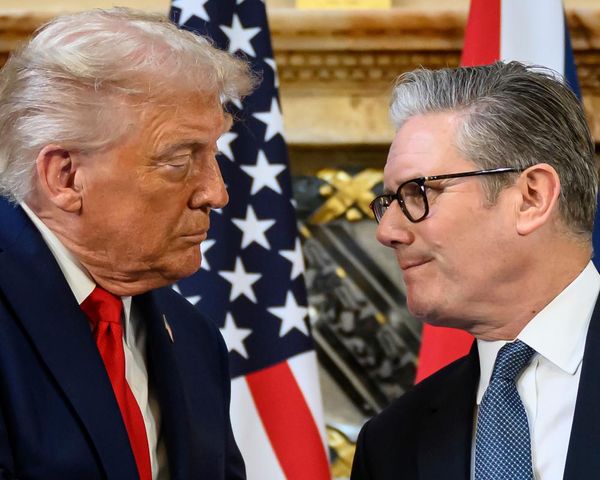
Theresa May is talking to Donald Tusk, president of the European council, in Downing Street now. Here they are posing for a picture as he arrived.

And here they are inside Number 10.

Updated
Owen Bennett, who has written good books about Ukip and about the leave campaign, has published a scathing assessment of Mark Reckless at Huffington Post, calling him “a pound shop Douglas Carswell who deserves to be forgotten”. Here’s an extract:
Reckless would, of course, have you believe he is different, but he is merely another graduate from the Douglas Carswell School of Politics, where pupils live by the mantra espoused by Marx (Groucho): “Those are my principles, and if you don’t like them... well, I have others.”
He has today followed Carswell out of the party that he followed him into in 2014.
And in the same way as Carswell won’t be triggering a by-election in his seat in Clacton, Reckless won’t be standing down from the Welsh assembly, despite being elected on a list system which means he literally only got his seat because he was in Ukip.
Here is the former Green party leader Natalie Bennett on Mark Reckless’s defection.
Now even clearer that what was the Conservative and Unionist Party is now the Conservative and Ukip Party https://t.co/NjJepQwLE3
— Natalie Bennett (@natalieben) April 6, 2017
Here is Arron Banks, the former Ukip donor, responding to Mark Reckless’s tweet about his defection from the party.
Did Douglas & Dan write this ! Good luck though I appreciate you were a reluctant follower of those two. https://t.co/rooH0Y7Pxf
— Arron Banks (@Arron_banks) April 6, 2017
He is referring to Douglas Carswell and Daniel Hannan, another friend of Reckless’s. In another tweet, referring to those three, he said Reckless was “the best of a bad bunch”.
And here is the letter from the presiding officer in the Welsh assembly, Elin Jones, to the Conservative leader in the Assembly, Andrew RT Davies, confirming that Mark Reckless can count as a member of Davies’s group for procedural purposes.
Here is the Llywydd's decision regarding Mark Reckless joining Welsh Conservative group. pic.twitter.com/I5n1s2GC3t
— Owain Phillips (@Owain_Phillips) April 6, 2017
Ukip's Neil Hamilton says Reckless can 'never be trusted again'
Here is Neil Hamilton, leader of the Ukip group in the Welsh assembly, on Mark Reckless’s defection.
So #Reckless ratted on Tories & now ratted on UKIP. Never be trusted again. Gone into hiding & refused to face press.
— Neil Hamilton AC/AM (@NeilUKIP) April 6, 2017
Mark Reckless has not applied to join the Conservative party nationally, sources say. Whether or not the party would have him back if he wanted to rejoin nationally is not clear.
Mark Reckless is joining the Conservative group in the Welsh assembly, but he is not rejoining the party nationally. A spokesman at Conservative HQ in London said:
Decisions about who sits with the Conservative group in the Welsh assembly are a matter for the group in the Welsh assembly.
Apparently, as Reckless is not now a member of a political party, the presiding officer in the Welsh assembly has ruled that he can be treated as a member of the Conservative group in relation to assembly procedure.
Ukip says Reckless should stand aside for next Ukip candidate on regional list
Paul Oakden, the Ukip chairman, has put out a statement about Mark Reckless’s defection. He says that that he is “disappointed” by Reckless’s decision but wants Reckless to stand down, so that his seat in the assembly can go to the next Ukip person on the list.
We are disappointed to hear that Mark Reckless has decided to leave Ukip in order to join the Conservatives in the Welsh assembly.
When Mark joined Ukip in 2014 we admired his long-term commitment to Brexit and his decision to put his country first.
Having been elected as a Conservative in Rochester and Strood, Mark didn’t think it right to sit as an MP for another party without asking the electorate for their endorsement in a by-election. A position that was right as it was honourable. In the campaign that followed, our membership worked incredibly hard to ensure that Mark retained his seat.
After losing his seat at the general election, Mark was a popular colleague and a diligent head of policy for the party, before being awarded a top position in the Ukip list for the Welsh assembly elections in 2016. Those elections gave voters in Wales the opportunity to support a party rather than a particular candidate and one in eight voters backed Ukip. As a result, Mark was one of two Ukip candidates from South Wales East elected to the Senedd.
It is now incumbent on Mark Reckless to relinquish a position he has only by virtue of a Ukip mandate. The position should go to the next Ukip candidate on the regional list.
The Ukip group in the Welsh assembly is saying Mark Reckless should resign his seat, BBC Wales’s Nick Servini reports.
UKIP Group at assembly calling on Mark Reckless to resign as an assembly member.
— Nick Servini (@NickServini) April 6, 2017
Mark Reckless and Douglas Carswell are friends. They effectively joined Ukip together, and they have left together.
Carswell announced his defection from the Conservative party to Ukip on 28 August 2014. A month later, on 27 September, Reckless also announced his defection. They both fought byelections, which they both won, giving Ukip its first two seats in the Commons.
Carswell held his seat in the general election, unlike Reckless, but last month he announced he was leaving Ukip to sit as an independent. Giving his reasons, he declared “job done”, meaning that the UK is now leaving the EU. Reckless has used exactly the same phrase in his resignation statement. (See 1.09pm.)
Last night there were suggestions that Reckless would sit as an independent in the Welsh assembly. But today he has announced he will join the Conservative group, ensuring that the Conservatives, not Plaid Cymru, are the main opposition group.
Reckless and Carswell were both on the liberal wing of Ukip, opposed by Nigel Farage and his allies. But the Faragists never hated Reckless in the way they despise Carswell. Farage this morning said he hoped Reckless would stay. (See 9.33am.)
But in the Welsh assembly Reckless also had to contend with Neil Hamilton, the former Tory minister who resigned over “cash for questions” and who has now revived his career as leader of the Ukip group in the assembly. Hamilton is a divisive figure, and Reckless’s decision to walk may in part have been motivated by that.
Former Ukip MP Mark Reckless quits party to join Conservatives in Welsh assembly
Mark Reckless has confirmed that he is leaving Ukip and joining the Conservative group in the Welsh assembly. He was a Conservative MP until he defected to Ukip in 2014 and fought a byelection, which he won. But at the 2015 general election he was defeated by the Conservatives.
Job done: Why I am joining the Conservative Group in the Welsh Assembly pic.twitter.com/7TFh9JD6zE
— Mark Reckless AM (@MarkReckless) April 6, 2017
Updated
The Child Poverty Action Group has welcomed Labour’s free school meals policy. This is from its chief executive, Alison Garnham.
This is a welcome move which we have long campaigned for. The evidence on the benefits for children of extending school meals is very strong. It shows children’s school results are boosted, their diet improves and parents in food poverty have more to spend on nutritious breakfast and dinners for their kids. What’s more, free school meals save families much-needed money and strengthen work incentives, helping parents get better off through work.
The minority of children currently on free school meals tell us they feel stigmatised; extending entitlement should reduce, if not eliminate, that problem. If the concern is the well-being of children in just-managing families, the case for extending entitlement is a compelling one.
Tories refuse to criticise Labour's free school meals policy
The Conservatives are still refusing to criticise Labour’s free school meals proposal. After Theresa May sidestepped a question on this at her Q&A (see 11.20am), I asked Conservative HQ if the party was in favour or against. In response, I was sent this statement from a party spokesman:
Labour would wreck the economy if they ever got back into government – meaning there would be less money to spend on our schools, not more. Their economic incompetence means this promise isn’t worth the paper it’s written on.
Labour figures have continued to criticise the decision not to expel Ken Livingstone from the party.
Speaking on the Today programme, Angela Rayner, the shadow education secretary, said she was “shocked” by the decision of Labour’s disciplinary panel just to suspend Livingstone from the party for another year. She said:
The Jewish community are really upset, and quite rightly so. We all know the history behind what happened with the Holocaust, and I’ve been to Auschwitz a couple of times, and, quite frankly, it sickens me that the upset and the trauma that has been caused, that’s been felt by the Jewish community, hasn’t been recognised, actually, by Ken Livingstone and his remarks.
It’s not an academic issue. I want to see the sanction to be zero tolerance, and if that means that he is excluded form the party then that should be it. There shouldn’t be any excuse for it in our Labour Party.
Rayner is one of the 100 Labour MPs who have signed an open letter saying Livingstone’s punishment “betrayed [Labour] values” because it was too lenient.
Sadiq Khan, the Labour mayor of London, also told LBC this morning during his phone-in that there was no place for Livingstone in Labour. Khan said:
I think some of his views were anti-Semitic. Whether he is or not is a different issue.

Andrew Gwynne, Labour’s elections co-chair, has put out this response to Theresa May’s speech.
The Tories cannot give Britain the change we need. Theresa May talks of a country that works for everyone, but for the last seven years the Tories have failed ordinary working people and plunged our public services into crisis.
When Theresa May says she has a plan for Britain, what she means is a plan to run the NHS into the ground, squeeze people’s living standards, reintroduce unfair selection in our schools and drive us towards a risky Brexit which threatens jobs, growth and workers’ rights.
Gwynne also claimed that May’s council tax figures (see 10.10am) were misleading. In council areas run by Labour, households pay on average £336 a year less than households in council areas run by the Conservatives, he said. The average council tax per dwelling in a Labour council area is £1,042, while the average for a Conservative council areas is £1,378, he said.
(But the Labour figure is arguably even more misleading that Theresa May’s. May was quoting average band D council tax bills. Gwynne is quoting overall average bills, which are almost always lower in Labour-run council areas because bills are based on property values, and areas with cheaper housing are more likely to vote Labour.)
Elmar Brok, a German MEP and a former chair of the European parliament’s foreign affairs committee, has said an independent Scotland could rejoin the EU fairly quickly. “There is not a queue,” said Brok, who is a member of Angela Merkel’s CDU party. He told BBC Scotland:
Scotland fulfils already now the conditions. There would be not much obstacles because all the laws already apply and are implemented in Scotland.
So a lot of things which we have to negotiate with the candidate countries we have not to negotiate with Scotland because Scotland has already done it.
If the political agreement would be there, then the process would be relatively speedy.

Donald Tusk, the European council president, will be arriving in Downing Street at about 1pm. He and Theresa May will not be holding a press conference after their meeting, and No 10 sources are playing down the significance of their talks. It is “not a major event”, one said.
Theresa May's speech and Q&A - Summary and analysis
Here are the main points from Theresa May’s speech and Q&A.
- May claimed that Labour’s decision not to expel Ken Livingstone showed that it had abandoned the centre ground of British politics.
A Labour party totally out of touch with the concerns of the British people, which ignores the priorities of local communities and instead indulges its own ideological obsessions.
A Labour party which just this week revealed the depths to which it has now sunk, betraying the Jewish community in our country by letting Ken Livingstone off the hook.
It could not be clearer that the Labour party is now a long way away from the common, centre ground of British politics today.
- May refused to criticise Labour’s new free school meals policy. Asked to comment on it, she claimed that Labour would be bad for schools because its economic policies would “bankrupt Britain”. But she refused to comment on the merits either of extending free school meals, or of putting VAT on private school fees to fund the measure. Matt Zarb-Cousin, who until very recently worked as Jeremy Corbyn’s press officer, said on Twitter last night that he thinks the Tories will adopt a version of the policy.
Theresa May will now introduce a variation of the free school meals policy. Have no doubt about that.
— Matt Zarb-Cousin (@mattzarb) April 5, 2017
- She urged Russia to intervene with Syria to stop President Bashar al-Assad using chemical weapons. But she sidestepped a question about whether she would back the Americans if they decided to intervene militarily in the light of this week’s attack. Asked about this, she said:
If it is the case that it has been conducted by the Assad regime, it shows the barbarism of that regime. And what I would say is all those who are backing that regime, including Russia, need to use their influence to stop Assad from bombarding and dealing with his people in such a horrific way.
- She suggested that referendums can be better agents of democracy than general elections. This came in a passage in the speech where she welcomed the fact that the referendum got more people voting than a general election. She also seemed to be saying the referendum was good because it lead to the resignation of David Cameron, and his replacement by someone who “will do things differently”. Here is the key passage:
We all saw clearly in the referendum last year that individual voters in communities up and down the country really can change the course of events.
By going out and voting, by making your voice heard through the democratic process, you can make a difference.
Those in power can be forced to listen and to take action.
Indeed, they can be removed from office all together, and replaced by others who will do things differently.
Such is the power of the ballot box.
Last year, there were those who voted for the first time in years. Others did so for the first time ever.
All of us who believe in representative democracy can take heart from that fact.
It shows the potential of our democracy to reach out and engage new people.
It presents us with an opportunity which we should seize.
It is worth pointing out that some people who believe in representative democracy drew precisely the opposite conclusion from last year’s referendum. The Conservative MP Gary Streeter told the Commons in February: “I will never vote for another referendum while I’m in this house, given what we experienced last year.” Scotland’s first minister Nicola Sturgeon has also discovered that May’s enthusiasm for referendums does not extend to having another one on Scottish independence.
- May dismissed claims that government cuts are making it impossible for councils to deliver decent services. Labour was to blame for the need to cut spending, she said. And she said that Conservative councils showed how costs could be cut without services suffering.
[Conservative councils] have been able to keep council taxes down and they have been able to deliver good quality, and improving in many areas, local services as well.
- She said that the Conservatives were the party of low council tax.
Under Labour, council tax doubled.
Under the Conservatives council tax in England has fallen by 9 per cent in real terms.
That headline national figure is a result of Conservative action.
Locally and nationally, we helped freeze council tax in the last parliament, and we have given local residents a veto over excessive tax rises.
May’s claim was probably more accurate in the past than it is now. Nine out of ten authorities in England are expected to increase council tax this year, and in some areas council tax is going up by as much as 5%, as councils use new powers they have been given to raise revenue to cope with the social care crisis.

Updated
Q: What do you say to people who think putting VAT on private school fees to extend free school meals is a good idea?
May says if Labour got into power, they would bankrupt Britain. Schools would be in a parlous condition. They would borrow £500bn. The government is already getting more pupils into good and outstanding schools. Labour want to level everything down.
Q: Could the UK support military action against Assad in the light of the chemical attack?
May it was a despicable attack. All those backing Assad, including Russia, need to stop him acting in this way.
And that’s it. The Q&A is over.
I will post a summary shortly.
Q: What do you hope to achieve from your talks with Donald Tusk?
May says she will be talking about the start of the Brexit negotiations, and how they go forward. She has said she wants a “deep and special partnership”. That has been reciprocated. They will talk about how to deliver a deal within the timetable.
May's Q&A
May is now taking questions.
Q: A question from a Jeremy in Newark. He says 40% cuts have led to services being run down.
May says it was Labour that left the country with the deficit, and its finances being in a parlous state. But if you look around the country, you will see the opposite of what Jeremy from Newark was saying. You will see Conservative councils managing their finances well. They have been able to keep council taxes down. If you look at what happened when the Tories were in control in Nottinghamshire, they froze council tax. Then Labour put it up.
And she turns to other parties.
Then we have the Liberal Democrats – whose only interest seems to be in trying to re-run the referendum.
And UKIP, who are too divided to stand up for ordinary people.
And in Scotland and Wales, the divisive, tunnel-vision nationalisms of the SNP and Plaid Cymru.
Parties devoted to talking our United Kingdom down, whose focus is far removed from the real priorities of working people.
All of these parties put their own political interests ahead of the national and local interest.
May claims the decision not to expel Ken Livingstone shows Labour has left centre ground of politics
May claims the decision not to expel Ken Livingstone shows Labour has left the centre ground of politics.
A Labour party which just this week revealed the depths to which it has now sunk, betraying the Jewish community in our country by letting Ken Livingstone off the hook.
It could not be clearer that the Labour party is now a long way away from the common, centre ground of British politics today.
May accuses Labour of being spendthrift and out of touch.
Now to be fair, Labour and the other parties do have their strengths too.
They’re exceptionally good at wasting your money, they excel at imposing new red tape, and they are world-class at hiking your taxes.
In fact, when you look at it closely, these local elections present a clear and informative choice.
The competence of a strong Conservative council, focused on the priorities of local people, keeping local taxes down and delivering high quality local services.
Or the chaos and disarray of the rest – political parties motivated not by what is best for local areas, but what is best for their own partisan political interest, and without a plan for our country or our local communities – just a recipe for chaos and failure.
A Labour party totally out of touch with the concerns of the British people, which ignores the priorities of local communities and instead indulges its own ideological obsessions.
May says she knows the value of councillors.
Having served as a local councillor myself, I know first hand the complexity of the issues, and the difference which good local representation can make.
That’s why we need effective local councillors elected on 4 May.
We need competent, credible teams who have a plan to improve their local areas.
Public-spirited men and women, with the right experience, who are prepared to roll up their sleeves and get on with the job.
Councillors who will do the difficult, painstaking work to improve local services, keep council tax down for working people, and reduce waste so that the front-line is protected.
May says the Conservatives care about working people.
Don’t let anyone tell you that Conservatives don’t care about working people.
We are the party of people who work hard and play by the rules.
And for that reason, we must and will ensure that hard work is decently rewarded, and that the rules are properly adhered to by everyone, without fear or favour.
May says claim that Tories do not believe in power of government a false 'stereotype'
May says she believes in the power of central and local government.
Spreading jobs and prosperity isn’t a job for central government alone.
We want ambitious local councils, in collaboration with other important local institutions, to step up to the plate as well, and work with us to deliver a better future for their areas.
This new approach is full of potential and it should be something which as Conservatives we can all take pride in.
Because contrary to the stereotype which is sometimes promoted, we believe in the good that government can do – locally and nationally.
That has always been our Party’s belief, and it is why many of us got into politics in the first place; to serve our local communities and to help improve the lives of our neighbours.
That principle informs everything we will do to build a stronger economy.
- May says claim that Tories do not believe in power of government a false “stereotype”.
May says the Conservatives have cut council tax.
Under Labour, council tax doubled.
Under the Conservatives council tax in England has fallen by 9 per cent in real terms.
That headline national figure is a result of Conservative action.
Locally and nationally, we helped freeze council tax in the last Parliament, and we have given local residents a veto over excessive tax rises.
And across the country, Conservative councils have been leading the way.
In 2017-18, Conservative councils across England typically charge £102 a year less on a Band D bill than Labour councils, and £124 a year less than Liberal Democrats councils.
Income tax cut for working people and council tax bills kept down.
The plain fact is that the Conservatives cost you less.
May says councils have had to play their part in tackling the deficit.
With local government accounting for a quarter of all public spending, our councils have had to do their bit to tackle Labour’s deficit.
Yet in spite of that, local government in England still spends £120bn every year, and public satisfaction with their local services has been maintained.
And just as Conservatives nationally have worked to a plan to bring down the deficit, while at the same time cutting taxes for working people…
Conservatives locally have also found room for sensible savings while keeping council tax bills down.
May says Brexit creates an opportunity to create “a stronger, fairer, better Britain”.
She says she wants “a Britain which is truly global and outward-looking, and which embraces the world.”
May claims the Conservative party is the only party with a plan for Britain.
There is only one party in our country today which has a plan for a better future.
One party with a plan for our country, and a plan for your local community.
One party which has put itself unashamedly at the service of ordinary, working people.
That party is the Conservative party.
May says voting can force politicians to listen.
By going out and voting, by making your voice heard through the democratic process, you can make a difference.
Those in power can be forced to listen and to take action.
Indeed, they can be removed from office all together, and replaced by others who will do things differently.
Such is the power of the ballot box.
Last year, there were those who voted for the first time in years. Others did so for the first time ever.
All of us who believe in representative democracy can take heart from that fact.
It shows the potential of our democracy to reach out and engage new people.
It presents us with an opportunity which we should seize.
May urges people not to be cynical about voting
May urges people not to be cynical about voting.
On 4 May, people across Great Britain will vote in local elections which will have a big impact, both on the local areas themselves, and on our country as a whole.
Some people are cynical about voting and about the democratic process in general.
Too often, the issues at stake can seem removed from the reality of people’s lives.
Some wonder if it matters, and what difference it will make.
But we all saw clearly in the referendum last year that individual voters in communities up and down the country really can change the course of events.
May starts by talking about who varied the UK is.
This a county of contrasts and variety, of rural and suburban villages, of market towns and manufacturing towns, of agriculture and industry, with one of our great cities at its commercial and cultural heart.
With a rich history, and a promising future, it is like so many counties and areas across our United Kingdom.
It has faced challenges and risen to them. It has seen change and adapted to it.
Theresa May launches Conservative local election campaign
Theresa May is launching the Conservative local election campaign in Nottinghamshire.
There should be a live feed at the top of this blog.
Supreme court backs council, not parent, in term-time holiday case
The supreme court has just delivered its ruling in the term-time holidays case. And the Press Association has snapped this.
Jon Platt has lost a supreme court battle over taking his daughter on holiday to Disney World during school term-time.
The press summary of the judgement is here (pdf).
And the full judgment is here (pdf).
Donald Tusk, the president of the European council, will meet Theresa May in Downing Street later today, his spokesman has said.
It will be their first meeting since May sent her article 50 letter, triggering the Brexit process.
At a Q&A at Stanford University on Tuesday Nicola Sturgeon, Scotland’s first minister, said that the rule saying Westminster has to authorise an independence referendum had never been tested in court, prompting speculation that the Scottish government could be planning a legal challenge on this issue.
This morning Sturgeon ruled this out. She told BBC Scotland:
It is absolutely essential that if the will of the Scottish parliament is for a referendum then that should be respected. I don’t think there is any need, nor is there any intention, to see a matter that should be settled politically end up in the courts.

Mark Reckless, the former Ukip MP who now sits in the Welsh assembly, is expected to announce today that he is leaving the party. Apparently he will sit as an independent but vote with the Conservatives, the party Reckless used to represent in parliament until he defected to Ukip in 2014.
Nigel Farage, the former Ukip leader, this morning told the Press Association that he hoped Reckless would decide to stay. Farage said:
I have always liked Mark Reckless, but if he thinks he can just leave after being elected on a list system that is very dishonourable behaviour ...
He is clearly close to Douglas Carswell, I guess some kind of pressure’s been put on him.
Reckless and Carswell are friends and they both defected from the Tories to Ukip in 2014. Carswell quit Ukip last month.

Former Ofsted chief backs Labour over VAT on private school fees, but not over extending free school meals
Jeremy Corbyn has made a significant policy announcement today. He says Labour would extend free school meals to all primary school children (which would cost between £700m and £900m, the party says) by putting VAT on private school fees (which would raise around £1.5bn, the party says).
Predictably, the Headmasters’ and Headmistresses’ Conference, which represents private school leaders, has criticised the proposal. On the Today programme Mike Buchanan, its chief executive, claimed the policy would create a “net cost to the state” because higher fees would lead to parents taking their children out of private schools, putting extra costs on the state sector.
But there was a more interesting reaction on the same programme from Sir Michael Wilshaw, who ran Ofsted from 2012 until last year. Wilshaw criticised the proposal to spend money extending free school meals on the grounds that it would benefit families who did not need the help.
I don’t see why we should subsidise rich and prosperous parents who can well afford to pay for their children. I would rather see any extra cash that is available being given to poor parents.
Extra school spending should go on initiatives like the pupil premium, he said.
I think giving more money to those parents who need to be supported is a good idea. What we have seen over the last few years is that the pupil premium has worked. It has worked particularly in primary schools where the attainment gap between free school meal children and non free school meal children has narrowed, and narrowed quite considerably.
But Wilshaw also said he had no objection to putting VAT on private school fees. Asked about this element of the Labour plan, he said:
I have no objection to that because the independent sector need to do a lot more. I think I have described their efforts so far as being crumbs off their table. And it is crumbs off their table. They should start sponsoring more schools in this country and doing much more.
So, Today’s Nick Robinson asked, how would he rate the plan overall? Wilshaw said he would give it a “six out of 10”.
I will post more reaction to the plan as the day goes on.
Here is the agenda for the day.
10am: Theresa May launches the Conservative party’s local election campaign in Nottinghamshire.
10am: Sadiq Khan, the mayor of London, hosts an LBC phone-in.
And at an event in Lancashire Corbyn will formally be launching the free school meals policy.
As usual, I will be covering breaking political news as it happens, as well as bringing you the best reaction, comment and analysis from the web. I plan to post a summary at lunchtime and another in the afternoon.
You can read all today’s Guardian politics stories here.
If you want to follow me or contact me on Twitter, I’m on @AndrewSparrow.
I try to monitor the comments BTL but normally I find it impossible to read them all. If you have a direct question, do include “Andrew” in it somewhere and I’m more likely to find it. I do try to answer direct questions, although sometimes I miss them or don’t have time. Alternatively you could post a question to me on Twitter.
Updated