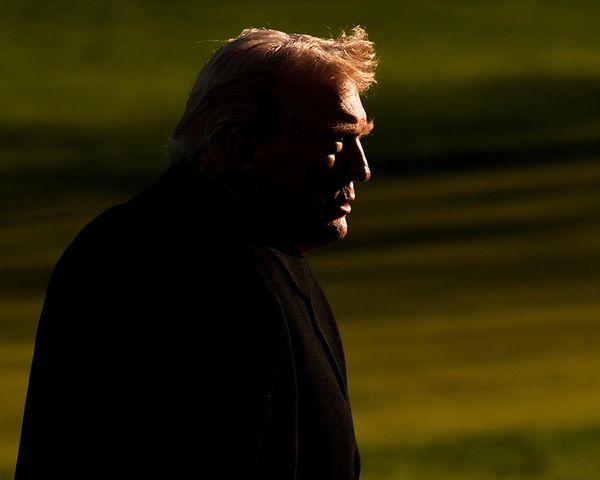
The NSW Nationals are moving to rule out new coalmines in more of the state, with former deputy premier John Barilaro revealing he was planning to ditch three major regions set aside for new coalmines.
The former NSW Nationals leader resigned from politics last month, but his successor has indicated he is likely to follow through on Barilaro’s plans.
Barilaro told Guardian Australia he had asked the Advisory Body for Strategic Release about how to remove the areas – each abutting the Wollemi national park to the west and the east – from the government’s long-term plan for coal.
He said there was little chance they would be developed.
His intention was to announce in December that the Hawkins-Rumker, Ganguddy-Kelgoola and Wollombi areas would be excised as prospective new coalmine sites.
However, Barilaro brought forward his own exit after the abrupt resignation of premier Gladys Berejiklian ahead of her attendance at the Independent Commission against Corruption hearings.
Barilaro’s disclosure comes after his successor Paul Toole declared he was planning to make changes to the areas earmarked for coalmines at NSW estimates this week. When asked about the Hawkins-Rumker region, he replied that he intended to take “a proposal to my colleagues to rule it out”.
Guardian Australia approached Toole’s office about whether he also planned to rule out mines at Ganguddy-Kelgoola and near the historic town of Wollombi but did not get a direct response.
“The reports considered by the ABSR will be publicly released once a government decision is made, in line with the Guidelines for the Strategic Release Framework,” a spokesperson said.
This Hawkins-Rumker decision, which would have brought a big mine close to the town of Rylstone on the Wollemi’s western edge, was “consistent with the Future of Coal Statement which sets out the NSW government’s proactive and balanced approach to the future of coal mining in the state”, the spokesperson said.
Barilaro said it was important to end the “mental anguish” imposed on communities near mine proposals that would never proceed.
“We know, pragmatically that for these industries, there is just no way in the world a standalone greenfield coalmine will actually start in this state in five or seven years’ time,” he said. “You might as well just end that anxiety today, and that’s what I was doing.”
“I don’t want to leave politics with people just thinking I was a coal baron and anti the environment,” he said. “I wanted to kill off any standalone greenfield coalmines, and the only ones that we would consider would be the extensions to existing mines and only because that infrastructure was in place.”
The news that Barilaro was preparing to ditch all three big areas came as a surprise to the Minerals Council.
“In terms of the other areas [than Hawkins-Rumker] we’re not aware of any changes planned for the Strategic Statement on Coal that was released last year,” chief executive Stephen Galilee said. “However, as I’ve said previously, we’re not aware of any companies seeking to explore in the Wollombi area.”
Georgina Woods of the Lock the Gate alliance welcomed comments that Wollombi and Ganguddy-Kelgoola were earmarked to be removed from the “threat list”.
“It seems unlikely there will be new greenfield coal exploitation in NSW at this point, but we are very concerned about the expansion of coal exploration and mining by Peabody near Wollar and by Whitehaven Coal in one of the remaining areas on John Barilaro’s Strategic Release process list, an area south of Narrabri known as Gorman North,” she said.
“Putting any rural community in the path of new coal exploration at this point creates distress and inhibits investment in the energy and industry of the future.”
Greens spokeswoman Cate Faehrmann said: “The deputy premier [Toole] cited economic and social concerns as to why he intends to rule out opening up [Hawkins-Rumker] for coal. He needs to apply his same logic to all coal and gas projects in the planning pipeline including the Ganguddy-Kelgoola release area.”
“Opening up new coal areas is incompatible with the Paris commitment of limiting warming to 1.5 degrees,” she said.
Barilaro’s intervention comes as the NSW Labor party steps into campaigning mode, announcing on Saturday it will introduce a private member’s bill seeking to legislate a net zero emissions target by 2050.
Announced in Bega, one of five NSW seats due to hold byelections in the next few months, by opposition leader Chris Minns, the plan will seek to put pressure on a Coalition government which has trumpeted its own ambitious emissions targets.
The Coalition government in NSW has already committed to halving its emissions by 2030, a target underpinned by clean energy legislation passed with multi-party support last year which will see the state build 12 gigawatts of clean energy and 2GW of energy storage in the next decade.