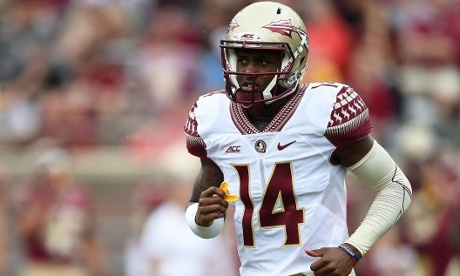
On Tuesday, former Florida State quarterback De’Andre Johnson said he was sorry.
This was, of course, more than two weeks after he punched a woman in a Tallahassee bar, after his attorney tried to spin surveillance camera evidence of this punch by saying he was the target of a racial epithet, and after he was charged with misdemeanor battery and was kicked off the team. Left without a school, a place to play football and facing the scorn of a nation, Johnson took the only refuge left: he went on TV and apologized.
“I totally should have walked away,” he told ABC’s Good Morning America when asked by former NFL star Michael Strahan why he lingered in an argument that obviously had agitated him.
“There’s no explanation for that,” Johnson also said.
Johnson’s dismissal from the team and the swift reaction to condemn him shows a significant change in the way football teams are handling cases of violence against women. FSU was heavily criticized for not doing more to pursue rape allegations against former star quarterback Jameis Winston. Just last year, public pressure forced NFL commissioner Roger Goodell to toughen penalties against former Baltimore Ravens running back Ray Rice after surveillance video emerged showing him punching his fiancée.
Unlike Winston, a Heisman Trophy winner, and Rice – an established NFL star – Florida State could afford to lose Johnson. A redshirt freshman, he was in line to compete for the starting position opened up by Winston’s move to the NFL, but he was not a favorite to win the job. This made him expendable when the video of the punch emerged and raised the question: would FSU have been as swift in kicking Johnson off the team had he been a starter?
Still, a message has been delivered. On Monday, the school’s president, John Thrasher, released a statement that read in part:
“In light of recent off-field incidents, I reiterated to our players that they simply cannot put themselves in situations that reflect poor behavior or cause harm to others. They must remember that playing football for FSU is a privilege, not a right. The actions of a few have the capacity to do serious damage to the reputation of our entire university. I told them their coaches, the athletics administration and I will do all we can to support them and help them learn the values we expect them to uphold. But they will be held accountable for their actions.”
By Tuesday morning, Johnson seemed to understand that the climate for athlete violence against women has changed. He said he did not challenge the team’s decision to cut him. He hoped for a second chance. Tuesday’s television appearance was a first step toward seeking that next school – though it might take several months to find one that will take him.