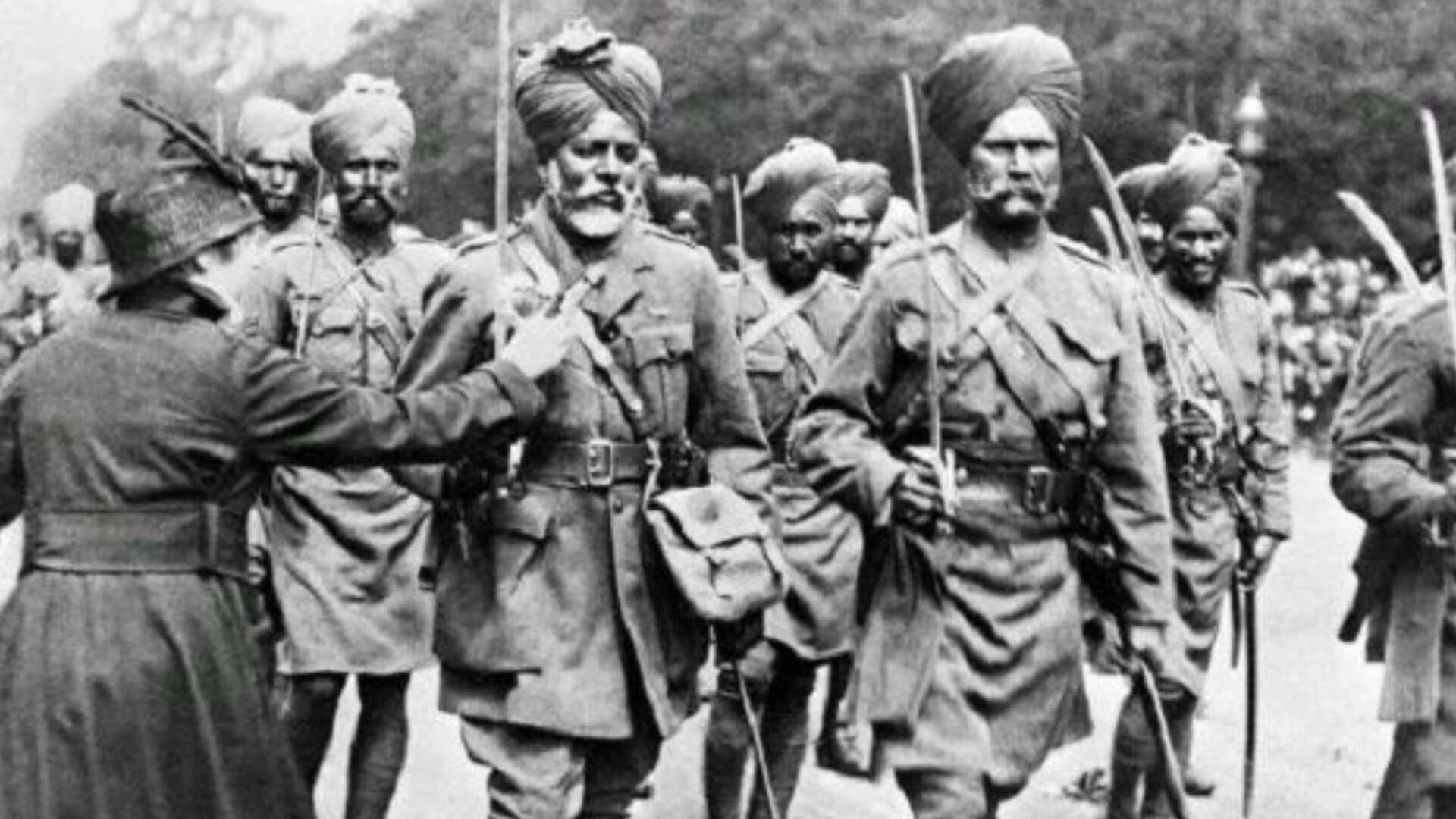
More than a century after the First World War, nearly 10,000 forgotten soldiers of the British Indian Army, many of them Punjabis, have finally been officially recognised for their wartime sacrifice.
Get breaking news anytime, anywhere. Download the TOI app now!
According to the BBC, The Commonwealth War Graves Commission (CWGC) has added the names of 9,909 previously omitted British Indian Army servicemen to its casualty database in the biggest revision of its records in more than 80 years.
The update follows years of research by volunteers who uncovered their names in rare village registers preserved at Lahore Museum in present-day Pakistan.
The recognition shines a spotlight on Punjab's enormous contribution to the war effort. Around 300,000 Punjabi men from undivided Punjab left their homes to fight for the British Indian Army across battlefields in France, Gallipoli, Mesopotamia, East Africa, Egypt, Palestine, Persia and Salonika.
Official records show that nearly 13,000 Punjabis lost their lives during the conflict.
Researchers from the UK-based Punjab Heritage Association spent several years digitising and analysing fragile handwritten registers compiled shortly after the war.
The records documented the service and fate of soldiers from villages across undivided Punjab, which was split between India and Pakistan after Partition in 1947.
The newly recognised soldiers were largely casualties who died of injuries away from the battlefield and had been excluded from official war graves records because of policies followed by the British Indian government at the time. Those decisions have now been reversed.
Among those whose names have finally been acknowledged is Kesar Singh, the great-grandfather of Leicester-based dentist Sunney Palahey, who had spent years searching for details about his ancestor.
"It's been recognised by an authority, which it never was before. He is now an entry in the Commonwealth War Graves Commission. All the sacrifices seem to have been worth it," Palahey was quoted as saying by BBC.
For researcher Jasmin Basra, a PhD student at the University of Greenwich, the project became personal after she discovered the names of her own great-great-grandfather and his brother in the registers.
She described the discovery as an emotional link connecting her Punjabi roots with British wartime history.
Around 1.4 million men from the Indian subcontinent — present-day India, Pakistan and Bangladesh — served in the British Indian Army during World War I.
In Punjab alone, officials had compiled records of nearly 320,000 servicemen by visiting towns and villages after the war.
According to the CWGC, around 25 per cent of the newly recognised soldiers were Sikhs, another 25 per cent Hindus, while about 40 per cent were Muslims.
The Commission said the update is part of a broader effort to ensure that the remembrance of World War I reflects the contributions and sacrifices of soldiers from across the former British Empire, rather than presenting a predominantly Eurocentric narrative.