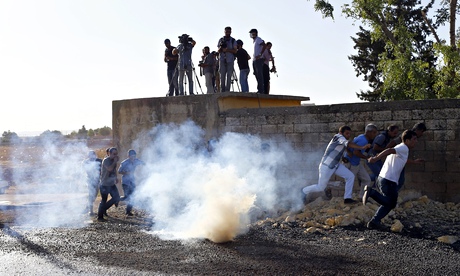
Jamie Angus, the editor of Today, saw 300,000 or so of his weekly listeners switch off in the latest bout of audience research; and he thinks he knows why. We’re all used to Compassion Fatigue, a drear deluge of natural and human disasters producing more apathy than generosity. Now try Carnage Overload, morning after morning of Gaza, Syria, Iraq, the Ukraine. “People think ‘I can’t take this any more’ … and they turn over to Radio 2.”
It’s an obvious, long-standing human condition. Too much unrelenting bad news, too many horrors we seem impotent to address – prompting withdrawal, not engagement. Newspaper editors know the problem of old. Lead, day after day, on Northern Ireland through the worst of the Troubles and you could, absolutely predictably, watch 10,000 or so readers give that paper a miss. What was the most important story of the morning then? Terrorist murders or abortive peace talks. And now? Ebola, Kobani, profound gloom. Enter Huw Edwards in full misery mode.
You’re supposed to need to know what’s going on, to understand how bloody awful things can happen. Editors aren’t there to drop blankets of bland reassurance. But what if you don’t want to know, if you shrug, frown and walk on by?
“We’ve got to think about how we do our storytelling, how we do the interviews,” says Angus. It’s both a sensible and a revealing answer: something less than signing up for the Washington Post’s new custom-built blog service, The Optimist; something more than grumping on regardless. And something, too, that at least bows half a knee to the new imperatives of the digital world.
Mathew Ingram, lead analyst at Gigaom, defined one essential difference the other day when he talked about the success of news sites such as Quartz and Gawker. “Journalists often seem to believe that their job is to tell the reader what they think is important or relevant, rather than thinking of journalism as a service they are providing – one in which the reader’s needs or desires are paramount, rather than the journalistic instincts of the author. Approaching news as a service or, even worse, as a product, is somehow beneath them.”Which is one terse way of explaining prevailing digital theory, full of individual empowerment and iteration. You are the master now. Journalists and readers were created equal. No one knows best. But come back to Carnage Central for a moment. Is Angus (or any serious editor for that matter) right to think that we need to register the grisly threat of Ebola or the grotesque savagery of the caliphate? That we need to know – or at least be given a rigorous opportunity to find out? That, therefore, someone has to try to steer and shape our concerns?
He’s certainly correct to want to find better ways of telling a compelling story. Stock Q&A won’t do the job. There has to be measured insistence on what matters as well. Of course journalists often get things wrong. Of course readers and listeners can blot them out if they wish – or devise an alternative version. But disasters, man-made or natural, are part of our world. They’re a challenge to us, a challenge to get involved.
It’s facile to look at the latest radio ratings and take fright, just as it’s foolish to see Panorama audiences slip on BBC1 and decide that too many investigations, by their nature, concentrate on complex detail, which turns viewers away. Goodbye to too much digging; hello to more “analysis”, which explains rather than reveals. But the news isn’t some giant smorgasbord you can graze at your leisure.
All part of the service? Yes: and something rather more than that. For this service includes the sometimes sentient shedding of viewers, listeners and readers because what’s been said, what needs highlighting, has to be out there, come what may. You may not want to too much carnage before breakfast. But that’s your decision: and editors, top down, give you the tools to make it.