
Winter gardens are often celebrated for their quiet elegance; the pared-back beauty of structure, silhouette and subtle color that emerges once flowers have faded and leaves have fallen.
Yet many gardeners rely on the same familiar plants to create that interest, most notably the popular red twig dogwood, whose striking crimson stems have become a signature of cold-season landscapes. While it’s a classic for good reason, it represents only a small slice of the dramatic, unusual and richly textured possibilities available for winter bark and stems. Look a little further, and a world of unexpected color and form begins to unfold.
If you’re ready to move beyond the predictable and embrace the winter garden’s more adventurous planting palette, the following eight selections will introduce you to a remarkable range of color and texture that deserve a place in any garden designed for year-round interest.
1. Acer Negundo ‘Winter Lightening’ (Box Elder)
USDA growing zone: 3-9
Height: 2-30 feet
Spread: 15-25 feet
The deciduous, hardy Acer takes the form of a tree or large shrub with attractive, palmately shaped leaves, typically with five or seven pointed lobes.
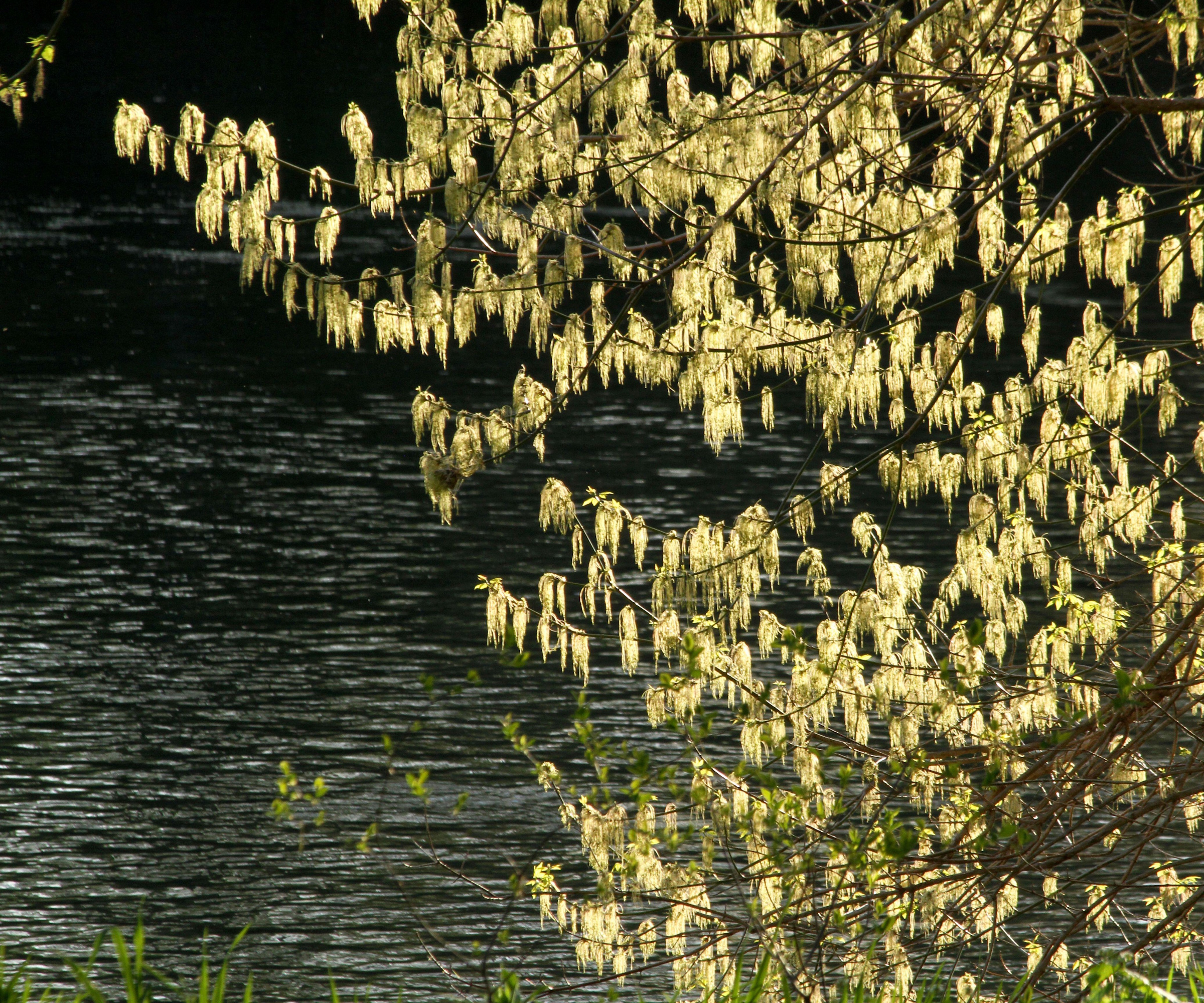
Well known as one of the best trees for a Japanese garden, acers are prized for their fall color, especially this one whose green leaves turn bright buttery yellow. However, it is only once the leaves have dropped that this variety, Acer negundo ‘Winter Lightening’, reveals its vibrant saffron yellow bark and stems.
It can be pruned back hard in spring to encourage new stem growth, making for a bright addition to your winter garden. It’s also suitable to grow in a container and thrives well in a loamy soil.
2. Rubus Cockburnianus (White-Stemmed or ‘Ghost’ Bramble)
USDA growing zone: 5
Height: 4-6 feet
Spread: 6 feet
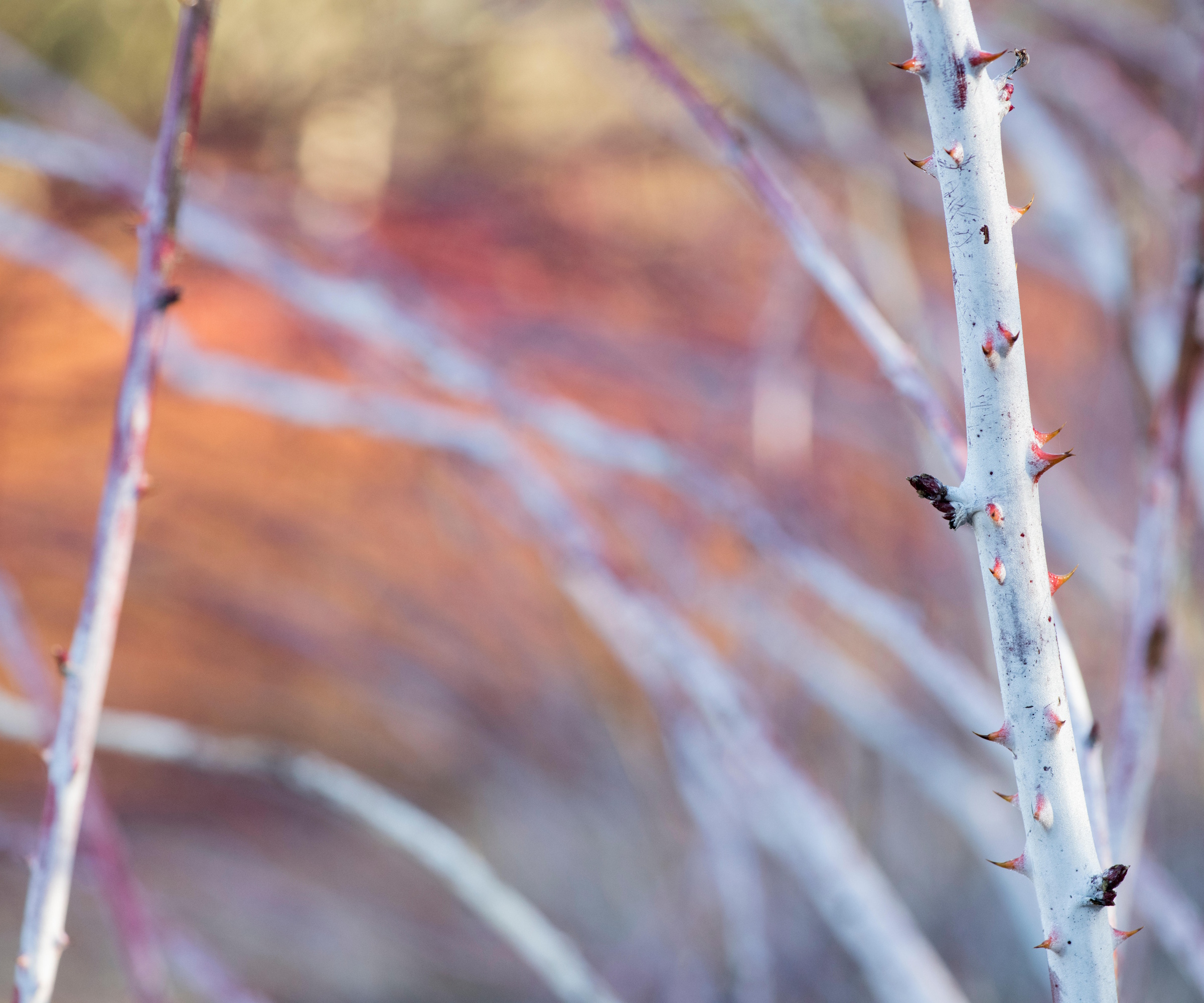
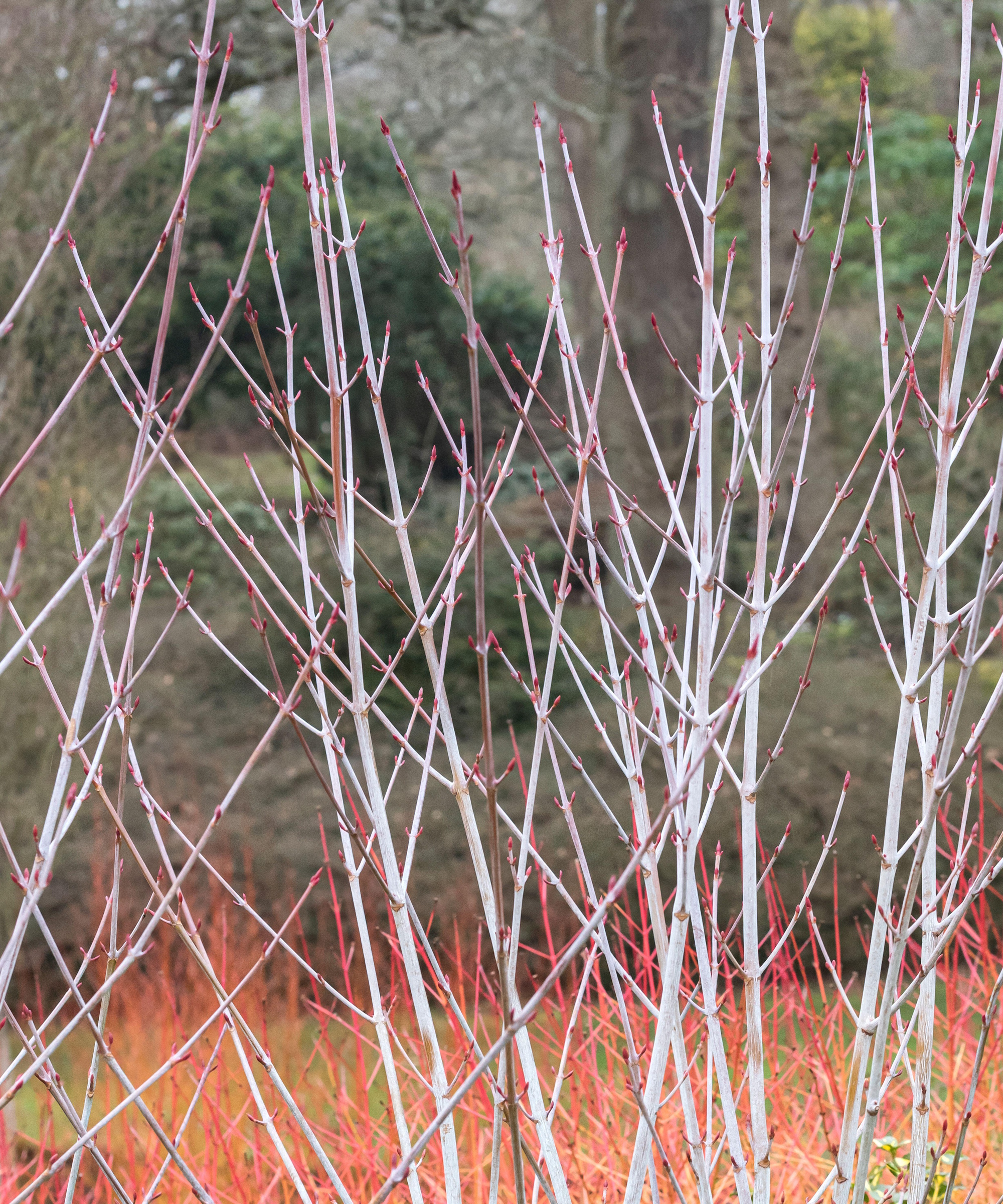
The arching, thorny stems of the Rubus Cockburnianus, also known as the white-stemmed or ‘ghost’ bramble) add an unusual focal point to your garden.
It prefers a sandy, well-drained soil and is perfect for a woodland-edge site. In summer it blooms with purple ornamental flowers followed by inedible fruits.
The deep red stems take on a spectacular white bloom in winter. In spring, cut back hard to ensure it doesn’t get invasive.
3. Edgeworthia Chrysantha (Paperbush)
USDA growing zone: 7-10
Height: 4-6 feet
Spread: 4-6 feet
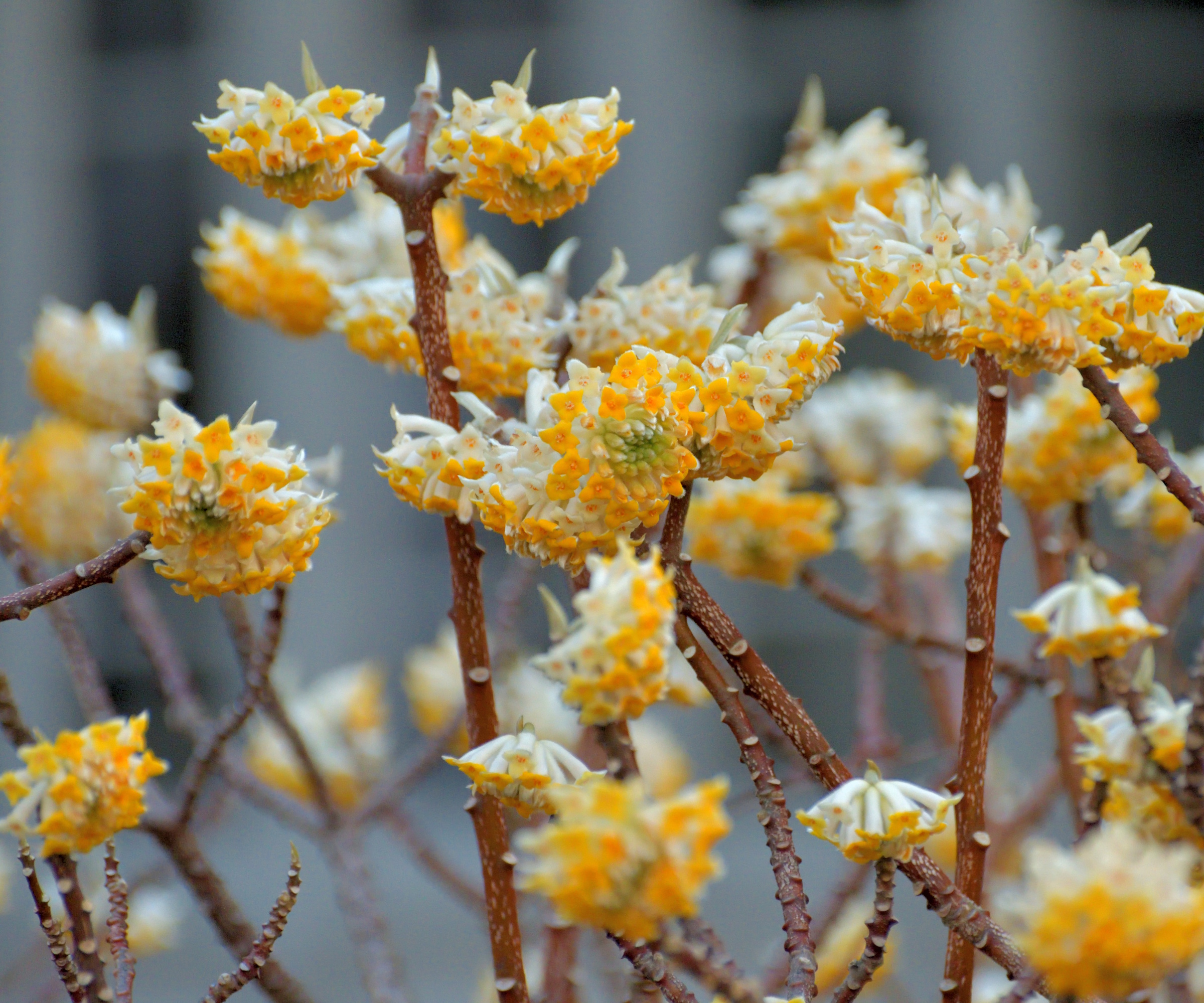
This architectural, deciduous shrub looks striking in early winter when the papery, cinnamon colored bark and fuzzy silvery flower buds give a strong exotic appearance to the plant.
You can find live Edgeworthia plants available at Amazon.
An added bonus comes with the exquisite, lightly fragranced yellow flowers that appear in late winter before the oval-shaped leaves emerge.
Grows well in a container offering flexibility to be moved to a sheltered spot in extreme cold.
4. Acer x Conspicuum ‘Phoenix’ (Snakebark Maple ‘Phoenix’)
USDA growing zone: 5-7
Height: 8-12 feet
Spread: 4 feet
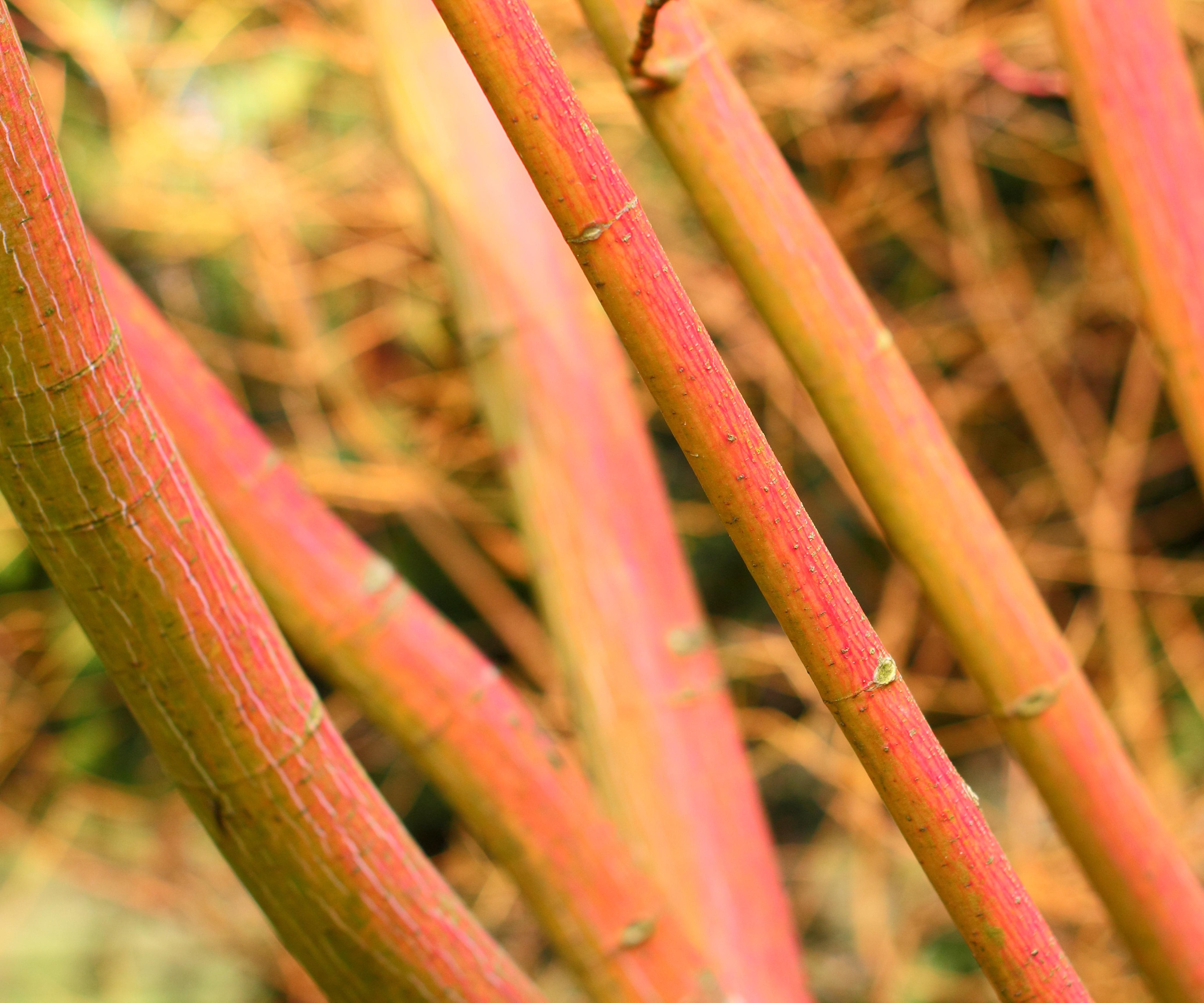
This acer boasts unusual striped bark in orange-pink and silvery-white in traces that resemble a snakeskin, hence the given name.
New shoots are a striking bright red. In fall, the large green leaves turn golden-yellow and in spring, you can expect yellow-green flowers.
The tree is a vigorous grower with an upright spreading form. As a tree to grow in a pot, it will grow to around 6 feet tall.
5. Hamamelis Mollis (Chinese Witch Hazel)
USDA growing zone: 5-8
Height: 8-13 feet
Spread: 8-10 feet.
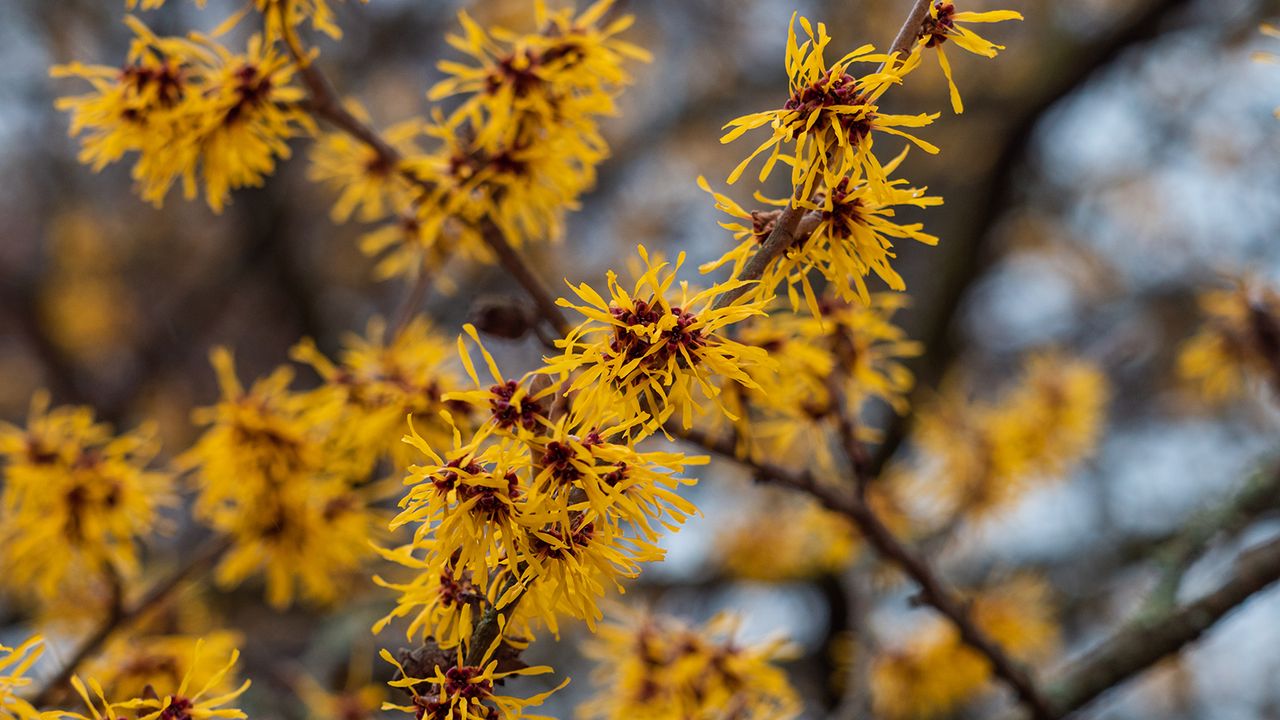
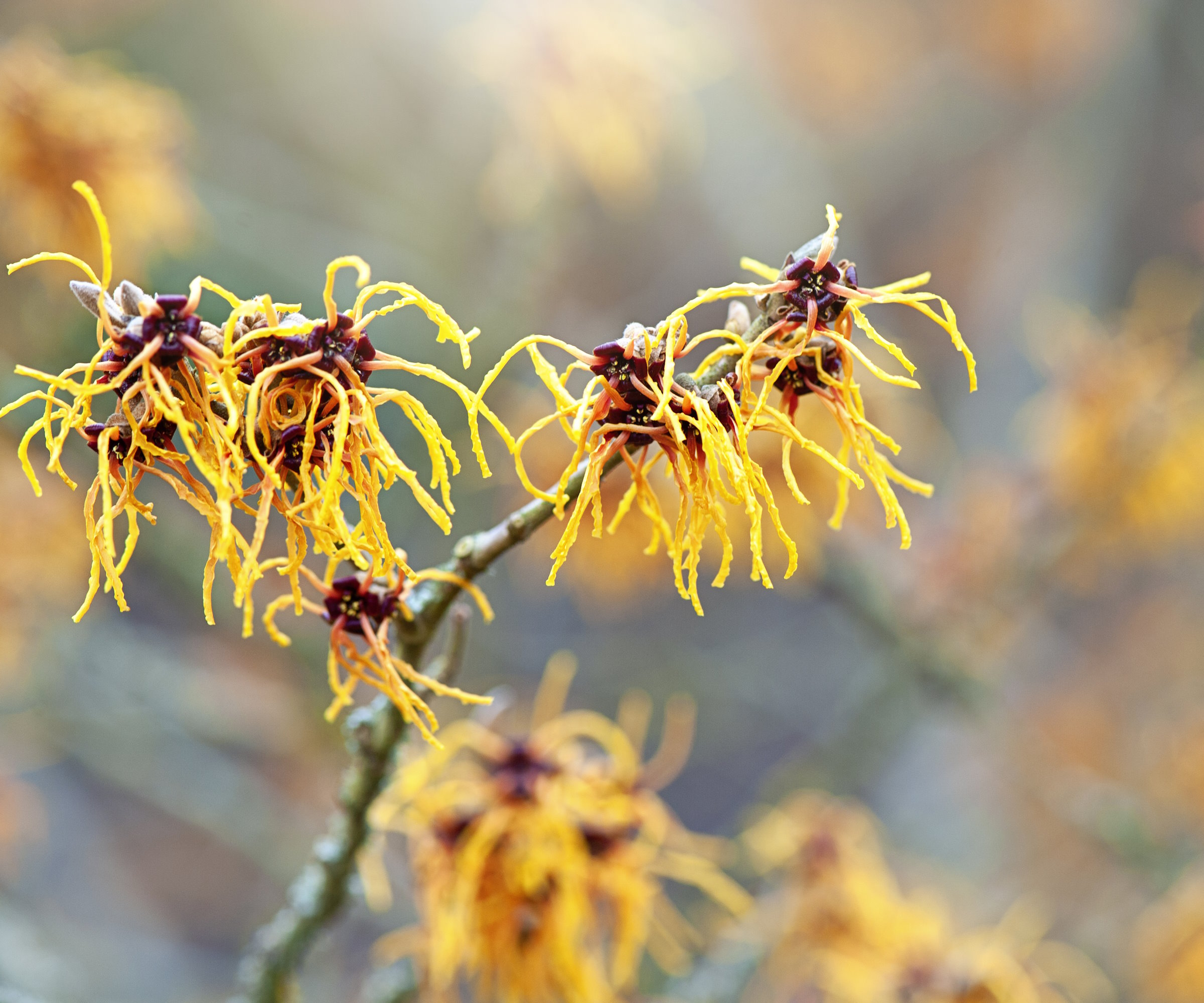
A deciduous, ornamental shrub originating in China. The gray-brown branches of witch hazel bear lightly scented, spidery-shaped yellow flowers with a reddish-brown center in late winter.
In spring, the tassel-like flowers give way to oval shaped green leaves. The trunk is relatively short, with branches reaching out in a V shape.
An attractive and colorful addition to the winter garden, you can find live witch hazel shrubs available to order from Amazon.
6. Salix Gracilistyla ‘Mount Aso’ (Willow Mount Aso)
USDA growing zone: 4-9
Height: up to 10 feet
Spread: 5-10 feet
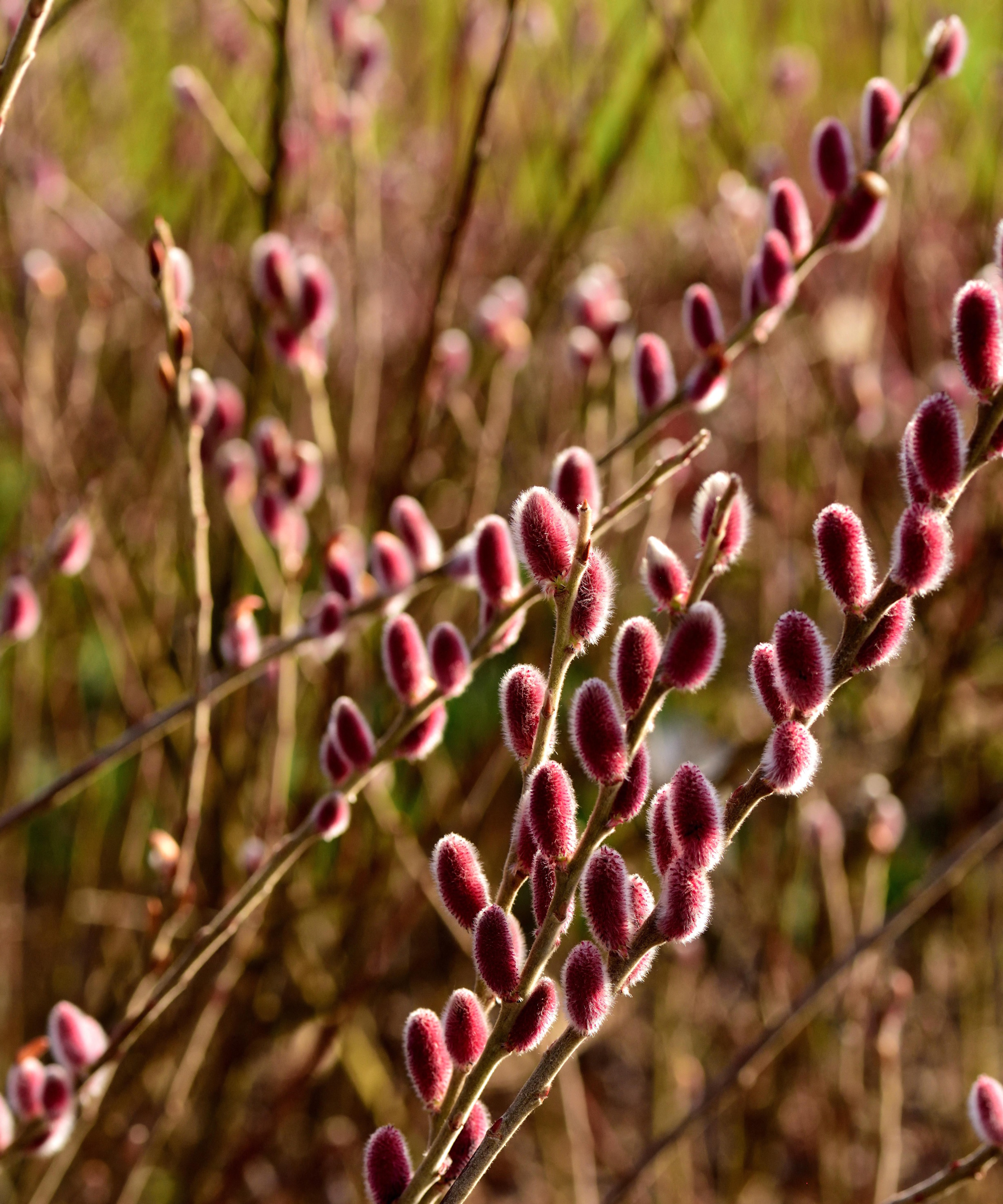
Soft, fuzzy pink catkins are the stars of this willow, which can also be grown in a container if kept pruned.
Although this willow likes a lot of moisture, it will tolerate most soils making it an easy shrub to grow for winter color in the garden.
The catkins are a great early source of pollen for bees as well as being a popular choice for flower arrangers.
7. Salix Myrsinifolia (Dark-Leaved Willow or Black-Skin Willow)
USDA growing zone: 4-8
Height: 6-10 feet
Spread: 4-8 feet
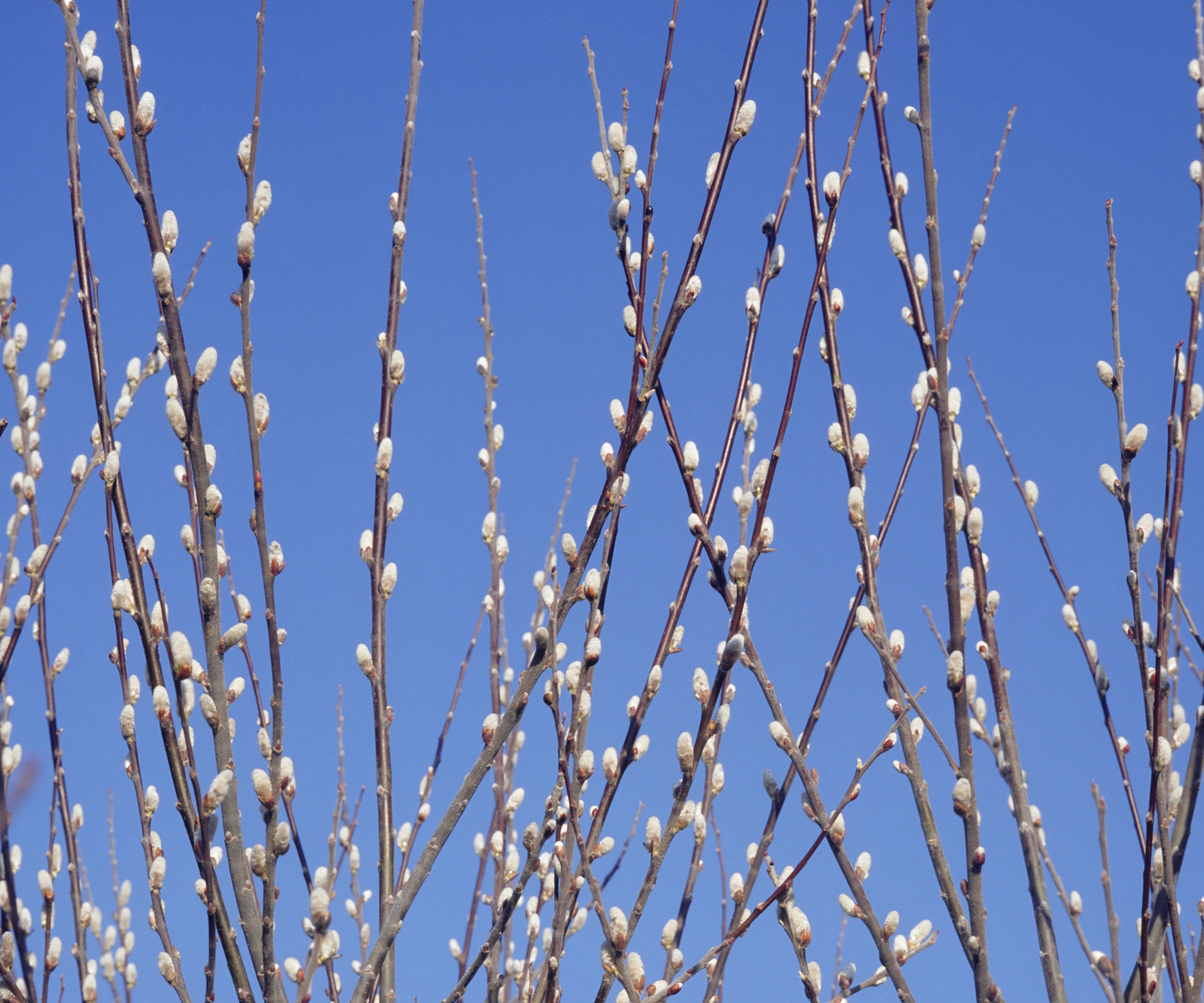
A multi-branched shrub ideal for containers or planting out. The striking chocolate-brown stems really stand out when planted amongst other colored shrubs in the winter border.
The great thing about Salix is that they respond well to pruning and coppicing and the stems can be used for basket weaving. Live willow plants can be found at Amazon.
In spring, it produces greeny-yellow catkins in spring alongside new foliage.
8. Acer Tegmentosum ‘Valley Phantom’ (Manchurian Striped Maple ‘Valley Phantom’)
USDA growing zone: 6
Height: up to 25 feet
Spread: 8-13 feet
This small deciduous tree originated in Royal Windsor Great Park, England and has longitudinal stripes in silvery-white that mature to green and white.
It likes well-drained soil and a sunny spot and can be coppiced to promote bright winter stems.
John Massey of Ashwood Garden Nursery, Birmingham, England says: 'This amazing tree was named by the late, great plantsman Mark Flannigan who used to be the curator of Windsor Great Park.
'It originated as a seedling in the valley gardens of Windsor and although it’s quite difficult to get hold of, it’s a lovely contrast in the autumn/winter bed against colored stems such as Cornus. The tree originates from China and North Korea and is very hardy.'
The eight shrubs and trees listed above will allow your garden to step confidently into the spotlight when the days grow short. Some dazzle with intensely hued stems that glow against frost and snow; others offer intricate pattern, texture and silhouette with architectural plant interest when garden borders are otherwise dormant.
These plants not only extend the visual life of the garden in the coldest months but also enrich it, adding layers of character and unexpected colour.