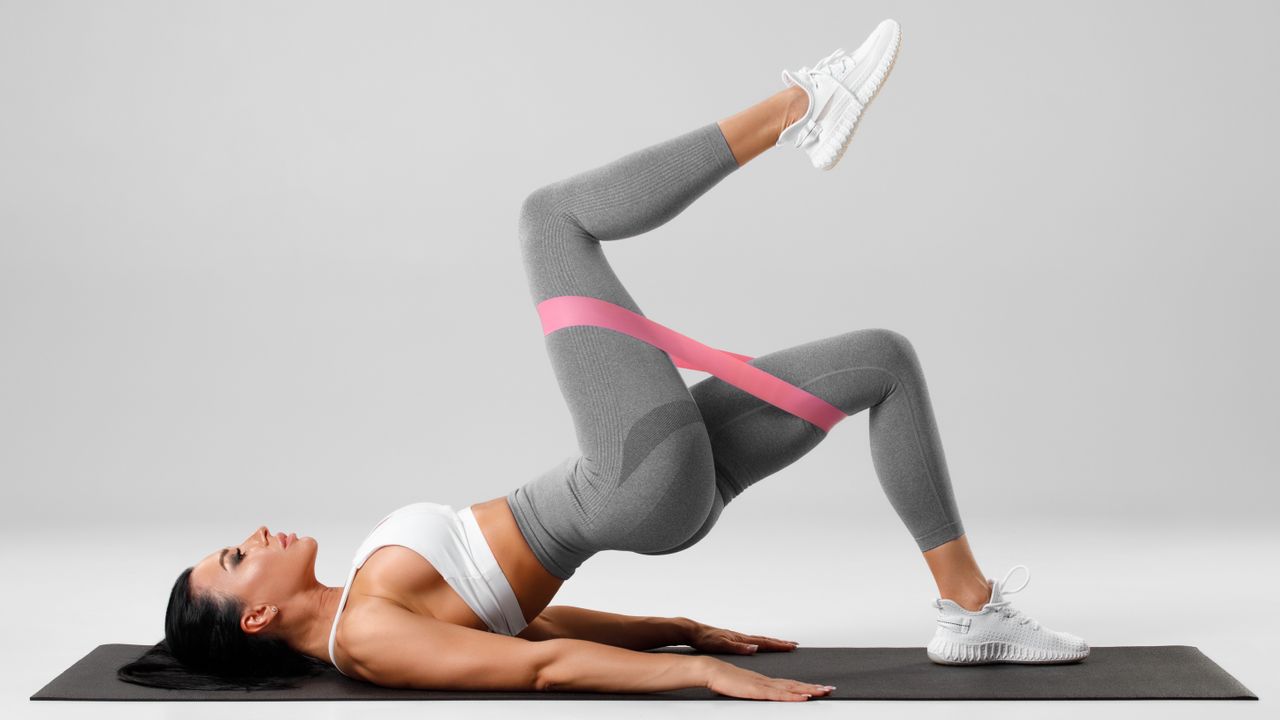
I’ve been practicing Pilates for the past 15 years and one move that crops up in just about every lower body workout is the humble glute bridge. Sure, squats and lunges will target your glutes, but this Pilates exercise is a fantastic way to work your posterior chain (the muscles that run along the back of your body), without putting any stress on your spine. Unroll your yoga mat, and read on to find the exact variation I use to really work my glutes, as well as my deep abdominal muscles and pelvic floor.
As a reminder, what works for me might not be right for you and your body. If you’re a complete beginner, you’re pregnant or postpartum, or you’re recovering from a specific injury, it’s always best to seek personalized advice.
What is the exercise?
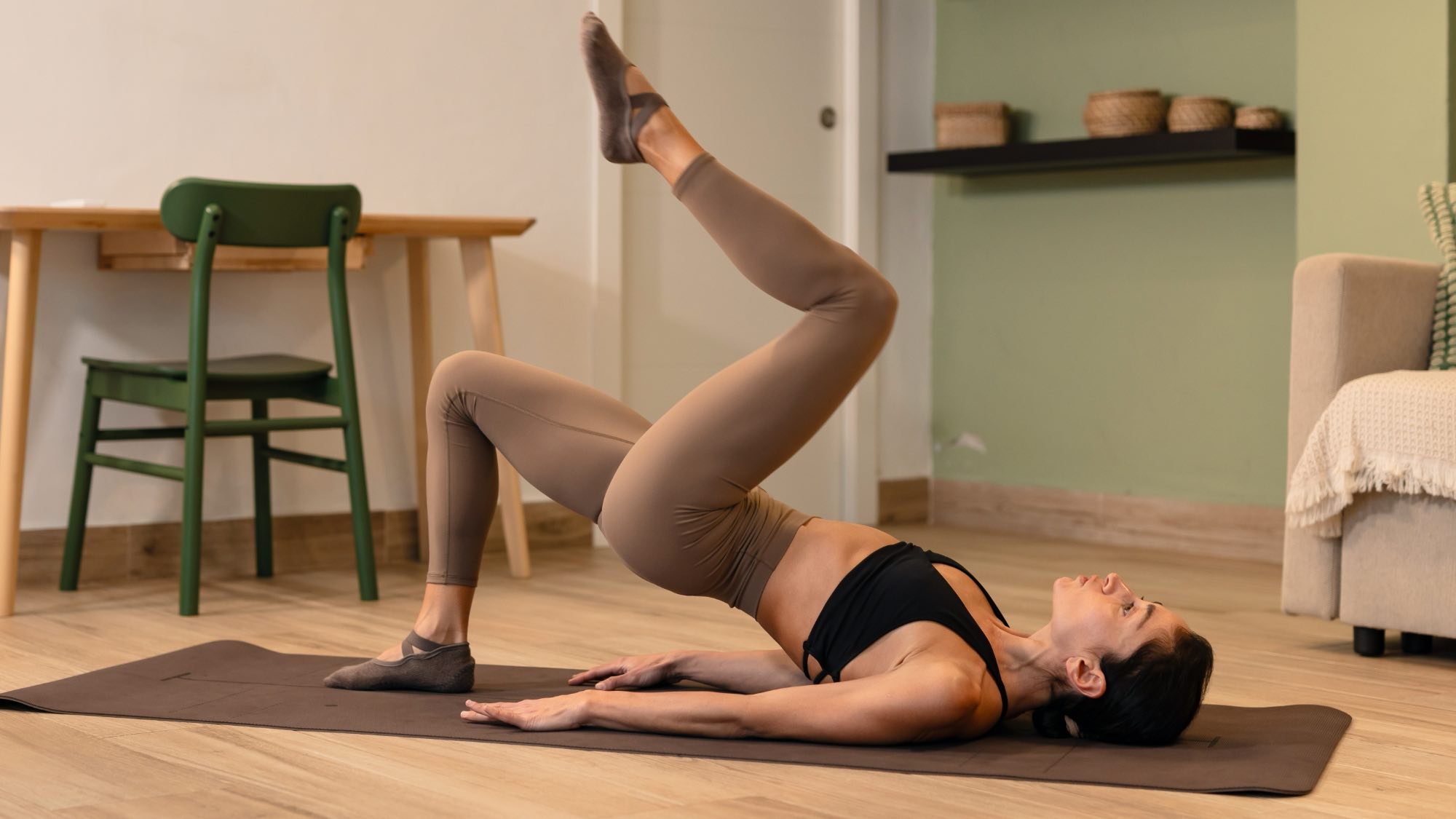
My go-to exercise to add some intensity to the glute bridge is a glute bridge march. This exercise requires you to keep your abs and glutes engaged throughout, keeping both muscles under tension for longer. Here’s how to do a glute bridge march:
- Start by lying on your back on your exercise mat, with your knees bent and your feet pressed into the floor.
- Engage your core, thinking about sucking your belly button into your spine, and push through your feet to raise into a glute bridge. Squeeze your glutes here. There should be a straight line from your shoulders to your knees. Keeping your hips steady (imagine you have two headlights on your hip bones — these lights must stay pointed at the ceiling throughout the exercise), lift one foot off the floor, and keeping a bend in your knee, lift your leg into tabletop position.
- Return to your starting position and repeat on the opposite side.
Remember, the key to this move is to keep your hips steady throughout. To do this, you’ll need to focus on squeezing your glutes and keeping your hips lifted.
What are the benefits?
Challenging your deep core
The deepest muscles in your midsection have to work hard to stabilize your torso during this exercise and protect your lower back from injury. In a standard glute bridge, you’ll have to knit your abs together and engage your deep abs to prevent your back from arching during the exercise. With the addition of the march, your obliques, which run along the sides of your torso, will have to fire to keep your hips level. This builds functional core strength you’ll need for exercises like running or walking, where your body needs to stay stable while balancing on one leg.
Strengthening your glutes
Of course, another big benefit of this exercise is that your glutes will remain under tension throughout, especially the glute medius, which runs along the side of the hip. The glute medius is responsible for keeping your pelvis stable, so it has to work hard during this exercise to keep your hips aligned as you march. This is crucial for exercises like running and walking, as unstable hips can lead to injuries.
Working your pelvic floor
Finally, this move is a fantastic exercise to really help you understand what it means to engage your pelvic floor muscles. As you raise into a glute bridge, think about zipping your abs up and in and really squeezing. As you lift one leg, then the other, keep this hold and you’ll be engaging your pelvic floor and lower abs.
What are the variations to try?
Before trying a glute bridge march, start by mastering the bodyweight glute bridge — lifting your glutes towards the ceiling, then pausing for a few seconds before lowering them back down to the mat. Keep your glutes engaged, and don’t push them so high that you arch your lower back. To add intensity, place a looped resistance band around your thighs and push out into the band as you hold the glute bridge. Alternatively, lie one of the best adjustable dumbbells across your hips to add weight to the exercise.
Another glute bridge variation to master is the single-leg glute bridge. This can help correct muscle imbalances, as most people will typically have one stronger side. To do a single-leg glute bridge, extend one leg straight up towards the ceiling and hold it steady as you perform a glute bridge.
More from Tom's Guide
- Not sit-ups, planks, or crunches: I do this simple Pilates exercise every single day to build a strong and stable core and work on my hip flexor mobility
- Not sit-ups or lunges — I use this simple Pilates exercise to sculpt strong obliques, inner thighs and hip stabilizers
- 'I’m a Pilates instructor, and I recommend these 5 core exercises to help older clients build strength and improve posture'