The article below is an excerpt from Steve Fowler’s DriveSmart newsletter. To get the email delivered straight to your inbox every Monday, simply enter your email address in the box above.
There’s been plenty of excitement recently about the interior of Ferrari’s forthcoming Luce – and rightly so. Designed by former Apple design boss Jony Ive, the man behind the original iPhone, the Luce’s dash looks absolutely stunning.
But I couldn’t help feeling a little disappointed. Not because the Ferrari interior isn’t impressive – it clearly is – but because it’s destined for a car that only a tiny number of people will ever experience. Ive’s minimalist, beautifully resolved thinking deserves to be seen and used by far more drivers than the handful who can afford a Ferrari.
That’s why I left the Car Design Event in Munich last week feeling quietly delighted after climbing into Volkswagen’s new ID. Polo. Because if you’re looking for thoughtful, intelligent interior design that genuinely improves the everyday driving experience, you don’t need to spend Ferrari money. Volkswagen has already done it.
The ID. Polo is still technically a near-production concept, but the car’s interior has been confirmed and gives a very clear picture of the next generation of Volkswagen cabins. After spending time poking around inside it, talking to the people who created it and pressing every button I could find, I genuinely think it’s one of the nicest interiors I’ve ever seen in a small car.
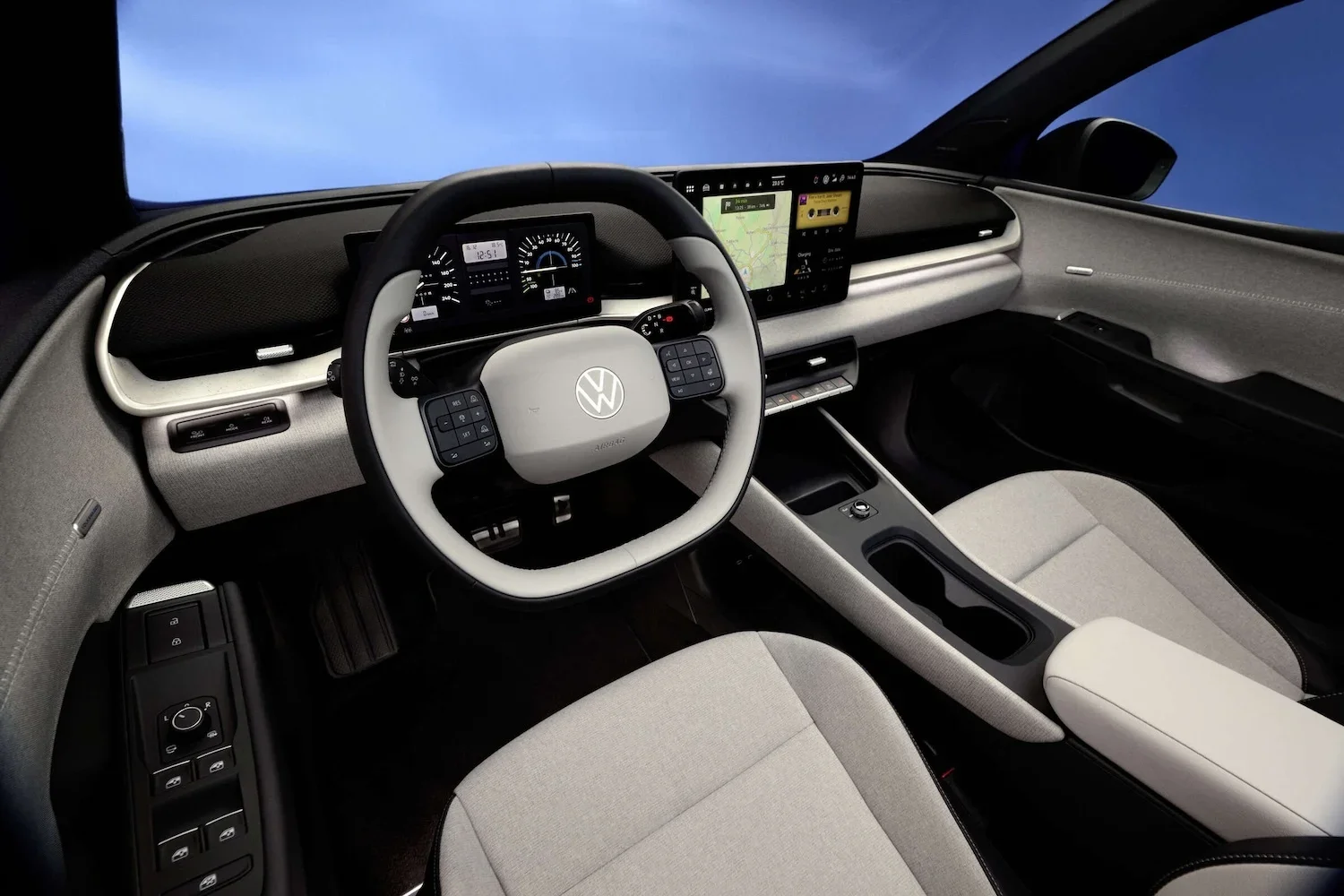
The clever thing is that it doesn’t try to reinvent the car interior entirely. In fact, structurally it’s pretty familiar: two screens, a steering wheel, cupholders and storage spaces. The basic architecture is similar to what you’ll find in most modern cars.
That was something I cheekily pointed out to the Volkswagen design team when we sat inside the car. After all, if you wanted to sketch a generic modern EV interior – as I proved last week – you could probably do it in about ten seconds.
“The filling here is different!” Volkswagen senior interior designer Jeremy Bras told me with a smile when I raised the point. “What we achieved here in the ID. Polo, it’s a simplicity. Actually, you have a really clear message.”
That message comes through the moment you sit inside. The dashboard has a wonderfully clean horizontal design that stretches across the cabin, emphasising width and space. On top sits what Bras calls a “floating object” – the main dashboard structure – finished in textile materials inspired by furniture rather than the usual hard plastics.
“We have a really nice material,” he explained. “We used textile – a new recycled material. So you can imagine that it’s kind of like a Bluetooth speaker you have under your TV.”
The result is subtle but effective. Instead of the usual shiny or squidgy plastic dash, the surfaces feel warmer and more domestic – almost like something you’d expect to find in a well-designed living room rather than a small hatchback.
“Good design isn’t just a flash in the pan,” explained Philine Seydell, colour, materials and finish designer for the ID. Polo. “For Volkswagen, it's really important that the car stays valuable over years.
“That’s what we achieve with our selection of the materials and also in the details. When you have a look at the door you have the special stitching. It’s also in the seats – you will find it here on the edges, but we won’t have it on the middle part of the seat because we want to keep it as a detail; we don’t want to overload the car.
“I think that’s the secret of our material concept – that we really pay attention to little details where we put the high value in, and by this we are creating a really valuable interior.”
Crucially, the smartest touches aren’t reserved only for expensive models. Seydell told me that even the base versions will still feature textile-covered dashboard and door surfaces, reinforcing the idea that good design shouldn’t be limited to high-end cars. That philosophy runs through the entire interior.
Volkswagen has also listened carefully to customers who complained about overly complex touchscreens in recent models. The ID. Polo brings back more physical controls, including a proper rotary volume knob positioned between the cupholders and smartphone tray.
According to Volkswagen’s head of user interface, Andro Kleen, that decision was very deliberate. “What you see here is the interaction concept that brings together digital and hardware elements,” he explained. “This is now a well-balanced interaction.”
In other words: technology where it helps, physical buttons where they make driving easier.
“We put a lot of attention into making the whole thing really for driving,” Kleen added. “Because… it’s a car that’s built for driving.”
The digital side of the cabin has also been carefully thought through. The main infotainment screen measures almost 13 inches, while a new 10.25-inch display sits behind the steering wheel for the driver.
But the graphics are deliberately simple and easy to read, with fewer colours and fewer layers of menus than before. “We simplified the whole interaction concept,” Kleen told me. “So, in fact, you do not have, like, ten sub-menus anywhere… you do not need all that.”
In other words, Volkswagen has rediscovered something that should never have been forgotten in the first place: usability.
Then there’s what the design team affectionately calls the “secret sauce”. These are the little details scattered throughout the cabin that simply make you smile.
One of my favourites is hidden right at the edge of the dashboard where it meets the door. Open the door and you’ll find a small etched graphic showing the silhouette of the car – slightly different depending on whether you’re sitting in the driver’s seat or the passenger seat. It’s the kind of tiny detail you might never notice at first, but once you spot it you can’t help showing it to anyone else who gets in the car.
Even better is the retro instrument display. At the touch of a button, the digital dashboard transforms into graphics inspired by the original Golf from the 1980s. The speedometer and rev counter suddenly look like classic analogue dials, the navigation screen resembles an old television set, and the music display mimics a cassette tape deck – complete with spinning tape spools. It’s wonderfully playful.
“We had a lot of fun working on this,” Kleen told me. “And not only we like this, but everybody – it just makes people smile.”
That sense of humour is something Volkswagen’s design boss Andy Mindt has encouraged since joining the brand. Mindt, who previously worked at Bentley and even owns one of the British cars himself, has been quietly reshaping Volkswagen’s design culture. The result is a brand that still feels unmistakably Volkswagen – solid, clear and well thought-out – but now has a little more personality.
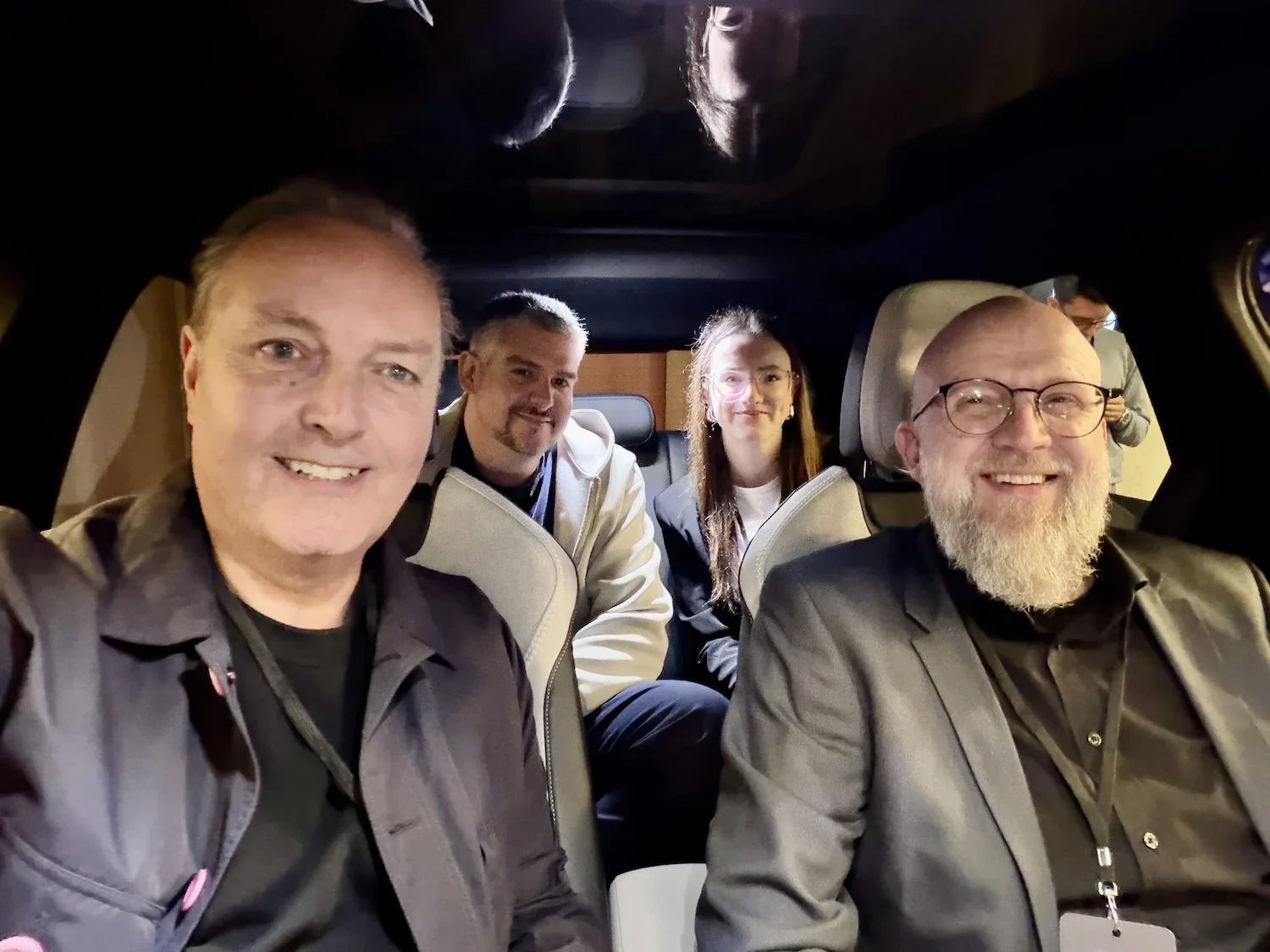
The designers themselves openly admit they’re enjoying the process. “You can see that… we enjoy it,” Kleen said. “And we like to introduce features into the cars which provide you some emotional context.”
And that’s really the point. Cars aren’t just machines for getting from A to B – they’re products people live with every day. The more thoughtful, intuitive and enjoyable they are to use, the better the experience becomes.
Which brings me back to Jony Ive and Ferrari. I’ve no doubt the Luce interior will be extraordinary. Ive is one of the most influential designers of the past half-century, and his work at Apple changed the way we interact with technology.
But perhaps the real challenge for great design isn’t creating something beautiful in a six-figure supercar. Perhaps it’s creating something beautiful in a small car that millions of people can afford.
After spending time inside the ID. Polo, I’m not convinced Volkswagen needs Jony Ive to show them how it’s done – they’ve gone and done it themselves.
Sign up for the DriveSmart newsletter
To get the latest motoring insights from EV editor Steve Fowler delivered straight to your inbox, simply enter your email address in the box at the top of this page.
Each edition of DriveSmart offers clear, expert guidance on the fast-moving world of electric vehicles and modern motoring, from trusted reviews and practical tips to the biggest industry news of the week.
You can also head to our newsletter preference centre to sign up for the email.
DriveSmart newsletter: Get motoring news, reviews and advice from EVs editor Steve Fowler
From autonomous vehicles to flying cars – this is what the future of driving looks like
What Elon Musk’s next moves could mean for Tesla and EVs
The hidden way potholes could influence your next car purchase
Chinese cars are on the rise – and yes, as an EV editor, I’d buy one