Dozens of workers have been killed in the forestry supply chain in the past seven years. A two-day inquest in Gisborne last week focused on the avoidable death of just one.
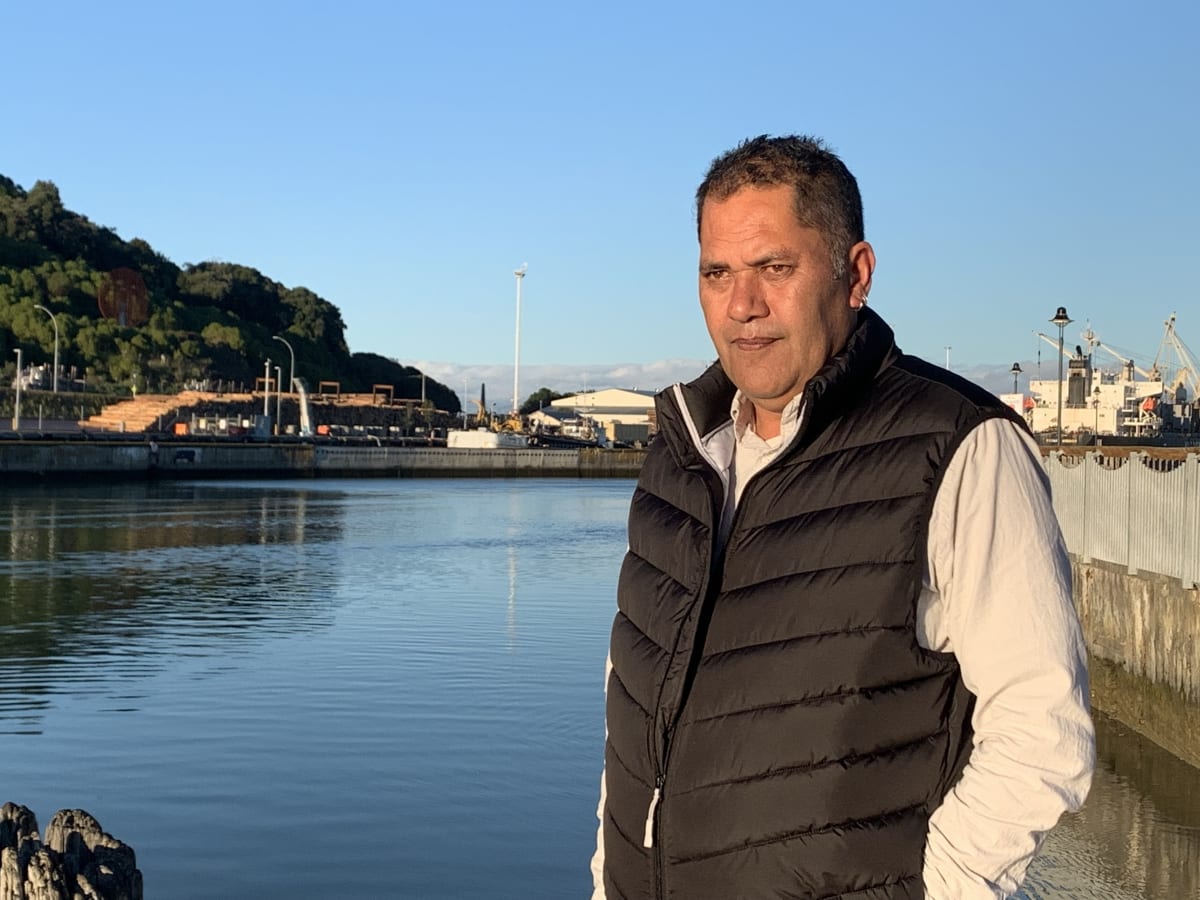
Richard Brooking has waited five years for the opportunity to stand in a court room and speak for his 24-year-old son and best friend, Niko Brooking-Hodgson.
Niko was a skilled worker and a much-loved member of his Ngāti Porou whānau, Brooking told Coroner Donna Llewell last week. He grew up in the small East Coast township of Te Araroa, where he was related to half the community. He was devoted to his daughter Madison and fiancé Cheyene. He was a talented rugby player, and had been selected for the Poverty Bay representative side.
He could speak te reo, having been a founding pupil at Te Araroa’s kura kaupapa. At 16 he left school and went to work in the forestry industry, first in the Gisborne area and then in 2015 moving with his partner and daughter down to Napier to play rugby for Clive and work for logging contractor DG Glenn.

On August 22, 2016 he was awake, as usual, at 4am. He and his crew mates were on site in a Pan Pac Forest block northwest of Napier at 6.15am. Brooking-Hodgson was the crew’s head breaker-out, responsible for attaching felled logs to a steel haulage rope to be mechanically dragged back to the landing. Breaking out is one of the most hazardous jobs in a dangerous industry.
They finished breaking out the last logs, and began the process of retrieving the ropes and equipment so that the hauler could be moved to its next site.
A 9kg shackle was attached to the end of the rope.
As the rope was being winched in, the shackle snagged on something, possibly a discarded log. Tension built on the line, and when the shackle broke through the obstruction it hurled forward with force.
The rope and shackle became a “loaded gun”, the inquest heard.
It fired into Brooking-Hodgson’s head and torso and glanced his co-worker, who dived out of the way.
The young man died in the arms of his foreman at the scene 40 minutes later, at about 11.20am. He was the second DG Glenn logging worker to die that year; 53-year-old foreman Blair Palmer was killed felling trees in the same Pan Pac forest five months earlier.
There were no regulations governing line retrieval at the time of Brooking-Hodgson’s death, although a “best practice” guide has since been developed by WorkSafe.
A WorkSafe investigation concluded that Brooking-Hodgson had the experience and qualifications to know what to do during the task, and that there was nothing more that DG Glenn could have done to avoid his death. There was no prosecution. Nor was there over Blair Palmer’s death.
Richard Brooking and his whānau were devastated that their son’s death was so treated so casually, and fought hard for an inquest. But Coroner Llewell set strict limits to what could be discussed – including ruling out any commentary on WorkSafe’s decision not to prosecute. Much of the two days of evidence revolved around legal and technical questions of whether the use of a ‘straw line’ would have saved Brooking-Hodgson’s life, and whether retrieval of haulage lines should be regulated through the industry’s Approved Code of Practice – a document referred to as the “bush bible”, even though it was regarded by some as inadequate almost from the moment it was gazetted in 2012.
Despite the tight scope of the inquest, the small courtroom was crowded with whānau and heavy with the grief of the families of other dead forestry workers.
Richard Brooking took the opportunity to speak for them. “The amount of young men who are being killed in forestry accidents should be alarming to all New Zealanders. Not only do we feel sorrow, we feel anger. These deaths in forestry are avoidable.”
The Brooking-Hodgson inquest comes a decade after the death of Gisborne forestry worker Ken Callow, whose parents worked with the late Council of Trade Unions’ leader Helen Kelly to launch a massive campaign against industry’s terrible health and safety record. That forced the sector to set up an independent review, which in late 2014 delivered a damning report and led to the establishment of the Forestry Industry Safety Council. In 2015 the Health and Safety at Work Act was passed, following on from the Pike River mine tragedy in 2010. The new law brought in tougher obligations on companies and directors, and stiffer penalties.
However, none of this appears to have made any difference for forestry workers.
“Our people are still dying,” Brooking told the inquest.
Across the industry supply chain, including logging trucks and on the wharves, over 50 workers have been killed since 2015, according to expert witness Hazel Armstrong, who was a member of the 2014 forestry health and safety review.
In the Gisborne area alone, seven workers have been killed since the Health and Safety at Work Act came into effect. Among them was Richard Brooking’s nephew, 23-year-old Piripi Bartlett, a father of one who died almost exactly a year after his cousin Niko.
Bartlett, who also grew up in Te Araroa, was working for Black Stump Logging when he fell from a hauler in a Hikurangi Forest Farms block. Ken Callow, killed in 2011 while felling a rotten pine tree, also worked for Black Stump in a Hikurangi block.
“The focus is on doing work quickly and cheaply,” Brooking told the inquest. There was not enough regulation and what does exist isn’t adequately enforced. Many forestry workers are from rural Māori communities and have few other employment options. “People are under pressure to keep their jobs and keep their employers happy.”
He told the inquest something must come of his son’s needless death so that other whānau are spared his family’s pain. “So that our children do not lose their parents, that their parents do not lose their sons, and so that we begin to feel that society values the lives of the predominantly rural and Māori communities of forestry workers as much as the lives of all other communities in Aotearoa.”

As Niko Brooking-Hodgson’s inquest drew towards a close, a picket of grieving families gathered outside the court with signs and a megaphone. One placard listed the names of other local workers killed in the last few years: Dallas Hickey, Hone Whaanga, Jay Campbell, Piri Bartlett, Shannon Rangihanga, Nate Miller, Boo Collier.
Logging trucks rumbled past the protest on their way to a port choked with export logs. After a spell of bad weather and downtime for port maintenance, 12 logging ships are queued offshore waiting to dock at Eastland Port.
Brooking, who now works for WorkSafe in a family liaison role, says that out on the forestry sites log stacks are building up because of the backlog at the port. Some workers are only getting three days work a week. Depending on the contractor, some have to take the enforced time off as annual leave or without pay.
Willy Waitoa is related to, or friends with, several workers killed in the forestry industry. He is an uncle of both Niko Brooking-Hodgson and Piripi Bartlett; one of his uncles, Hori Crawford, was killed by a falling log in 2012; Shannon Rangihuna, a port worker killed by a log falling from a shuttle truck in 2018, was a relative; Jay Campbell, crushed by a falling tree in 2017, was a childhood friend; he was at high school with Ken Callow.
The interconnections run deep throughout the community, says Waitoa, a Gisborne fisheries officer. He can’t fathom why readily-available technology is not used by the industry to help protect workers’ lives. On the day of Brooking-Hodgson’s death he was mentoring a new worker who had only been on the job four days. Of the two men, only Brooking-Hodgson was provided with a radio telephone to communicate back to the hauler driver, about 350 metres away across the steep site. Waitoa says every worker should have an RT.
No-one knows exactly where Brooking-Hodgson was standing when he was struck by the flying rigging. Yet Waitoa says if every worker was issued with a wearable GPS much like those used by athletes, such basic information would be available. Similarly, cameras such as GoPros could document what’s going on in the bush when workers are often out of sight of the landing.
It’s not as if the forestry industry doesn’t know it has a problem with worker safety. It was told, again, in 2018 in a review of the Forest Industry Safety Council, that fatigue among workers was serious and widespread, and that parts of the industry remained “in denial” about health and safety leadership, risk management and worker engagement. A 2017 audit showed 90% of forestry contractors were flouting employment standards. Forestry, agriculture and fishing had the highest incidence of ACC work-related injury claims last year.

A few days before the inquest, in the same courthouse, Judge Warren Cathcart handed down an excoriating sentencing decision that those still in denial may find a bracing read.
Pakiri Logging and Ernslaw One had pleaded guilty to health and safety charges relating to the death of forestry worker Nathan Miller, who was struck by a log while breaking out in a Tolaga Bay block in 2019.
Miller’s crew had a reputation for breaching critical safety rules, and Pakiri and Ernslaw knew it. There had been two audits that told them so, and yet – as Judge Cathcart put it – the “alarm bells were placed on silent”. Nothing was done.
Both had the opportunity to prevent this “wholly avoidable death” but “failed miserably”. Both turned a “blind eye”. The response of Ernslaw – the fourth biggest forest owner in the country - was “toothless”; Pakiri, a small outfit owned by Mark Nyhoff, was “nonchalant” and “apathetic”.
Miller had methamphetamine and alcohol in his system, and he was standing too close to the logs being hauled. The two companies thought this ought to count in their favour when it came to sentencing and reparations. However, Judge Cathcart wasn’t having a bar of that. It was for the employer to establish safe systems of work, including a safe retreat distance. If that had happened, Miller was unlikely to have been injured or killed.
He ordered reparations and consequential loss payments to whānau of $256,000. Ernslaw was fined $288,000 and Pakiri $468,000. There is little chance of the latter meeting its obligations, however. Pakiri went into liquidation last August, and owes $2.4 million to secured creditors. A month before it went under, Nyhoff registered a new company, Trax Logging. This leaves Ernslaw with the bill – Judge Cathcart ruled that it and Pakiri were jointly and severally liable for the “sum total” of the awards.