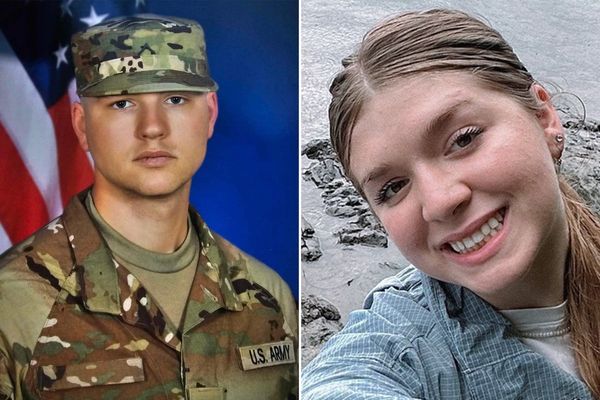
CHARLOTTE, N.C. _ A forensic expert said Friday that a rubber bullet did not kill Justin Carr, a Charlotte man fatally shot during the Sept. 21 demonstrations over the police killing of Keith Lamont Scott.
An autopsy report released to the Observer earlier in the day said Carr, 26, died from a gunshot from a handgun that entered behind his left ear and exited through the right side of his forehead, causing a "severe brain injury" that killed him instantly.
Carr's death remains the subject of a highly charged debate. Charlotte-Mecklenburg police say Carr was shot and killed by Raquan Borum, who has been charged with first-degree murder.
Borum's attorney says his client is innocent, and some protesters continue to argue that Carr died from a volley of rubber bullets that they claim CMPD fired at bystanders that night.
The autopsy doesn't say if the bullet that killed Carr has ever been found.
Jay Jarvis, a forensics expert who formerly worked for the Georgia State Crime Lab, said the nature of Carr's wound largely rules out that the fatal bullet was rubber.
"It went through the skull in two places. It caused radiating fractures. I would not expect to see those types of injuries with a rubber projectile," said Jarvis, who has 35 years experience as a forensics and ballistics expert.
Carr was hit while standing near the corner of Trade and College streets. Some protesters at the scene immediately blamed police. A 911 caller reported that Carr was shot by another man. So did a reporter from the Daily Beast, who said he was standing a few yards away. In court filings, police and prosecutors say that surveillance videos appear to show Borum firing a shot, then fleeing while still carrying a handgun. He is scheduled to be back in court in January.
Contacted about the autopsy, Borum's prosecutor, Assistant District Attorney Clayton Jones, declined comment.
Corine Mack, president of the Charlotte chapter of the NAACP, said despite the autopsy results many will continue to question how Carr died.
Mack said she arrived uptown only moments after the shooting and everyone who spoke with her gave an account that conflicted with law enforcement's version of events.
The fact that the autopsy gives no indication a bullet was recovered, she said, likely will intensify speculation.
"It causes more questions to rise," Mack said. "This is disturbing since I am trying to rebuild trust with the police."
The autopsy report, however, notes the presence of a single, tiny "radiopaque" fragment along the track of Carr's wound. Radiopaque means that X-rays are reflected by the material rather than allowed to pass through. Jarvis said it's likely the fragment is metallic.
"That would lead me to believe that it's a fragment of the bullet," he said.
Asked if a rubber bullet would enter and exit Carr's head and leave a fragment similar to what is described in the autopsy, Jarvis said:
"Not in my opinion, no."