With more foreign workers in Japan, moves to expand opportunities for their high-school age children to go to school appear to be accelerating.
A survey by The Yomiuri Shimbun found that a majority of prefectures have created special quotas for foreign students in this spring's public high school entrance examinations.
The Education, Culture, Sports, Science and Technology Ministry urges prefectural boards of education to take foreign students into consideration in high school entrance examinations. How to accommodate these students after enrollment is becoming an issue.
Testing burden
Prefectural governments, ordinance-designated cities and others create special quotas in high school entrance examinations for foreign students who have lived in Japan for three to six years. Some prefectures have special screenings with no limit on the number of people accepted. Many reduce the number of examination subjects or select students through interviews and essays.
The Multicultural Center Tokyo, a nonprofit organization based in Arakawa Ward, Tokyo, provides support with high school entrance exams to foreign children who came to Japan with their families.
The center works with many students from countries such as China, the Philippines and Thailand. Most start learning Japanese from the basics.
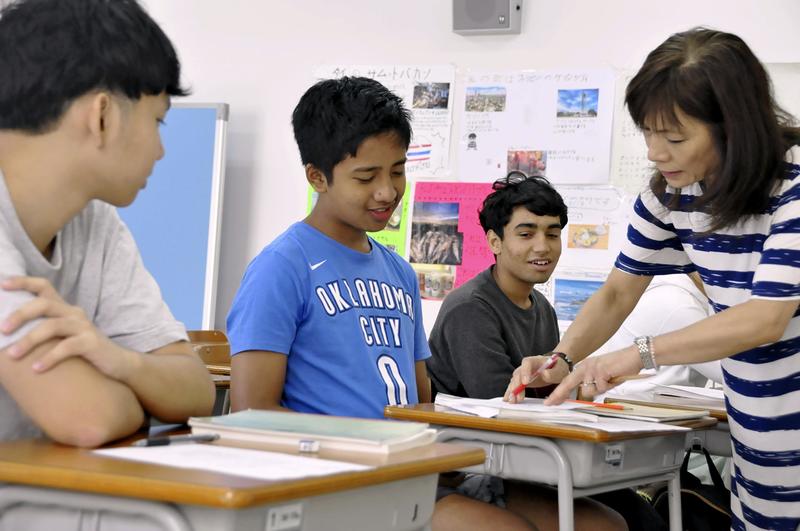
Zenith Purja was brought to Japan from Nepal last year by his father, who works in a restaurant. The 17-year-old attended classes at the center and this spring took the Tokyo metropolitan high school entrance exams.
Initially, he wanted to attend a regular high school near his home. He took the essay and interview exam under the special quota for foreigners, but the school had a 1.7 ratio of applicants to slots available and he was not accepted.
Next, he tried the general entrance examination and was accepted to a high school one hour away by train.
The metropolitan government is expanding its special quota, but there were 217 candidates for 150 slots at eight schools this spring.
In the general exam, foreign children who have lived in Japan three years or less are given special considerations, such as being allowed to bring dictionaries to the test and given more time. But the five-subject exam is the same one Japanese students take, which can be a heavy burden.
Zenith said he struggled because science and social studies were different from what he learned in Nepal, but he made up points in the English section.
His goal is to attend a Japanese university to study design or management.
Regional disparities
According to the education ministry, more than 50,000 children need Japanese instruction at public elementary, junior high and high schools, a 50% increase in 10 years.
The number of foreigners working in Japan is expected to increase further under the revised Immigration Control and Refugee Recognition Law, which went into force in April last year. Improving the education system to serve their children is an urgent need.
Efforts to encourage foreign students to attend high school are spreading throughout the country. A Yomiuri Shimbun survey found that 26 prefectures had special quotas or screenings for foreign students in the public high school entrance examinations this spring.
Thirty-five prefectures gave special treatment to foreign students in general entrance examinations, such as extending test times and providing the readings to kanji characters in questions.
Fukui and Hiroshima prefectures created new quotas this year, while Tokyo, Saitama, Aichi, Osaka and Nara expanded theirs from the previous year.
In some prefectures only a few pass even though all schools have quotas, and there are large disparities between municipalities.
While some prefectures have relatively few foreign residents, there has been a tendency to cut back on the number of slots even in prefectures with larger communities.
"If we get more students who have not learned Japanese, after enrollment they won't be able to keep up with the instruction," a board of education member from a Chubu region prefecture said.
There is a program to assign more teachers to elementary and junior high schools according to the number of foreign students, but in high schools it is basically up to the prefectural governments, which increases their financial burden.
10% drop out
Kanagawa Prefecture, which has been a leader in these initiatives, provides robust support to high schools with many foreign students, such as by assigning them more teachers as well as support staff who speak the students' native languages.
The prefectural Kawasaki High School, which has about 50 students who need Japanese language instruction, provides instruction according to each student's Japanese ability, even in subjects such as geography, history, civics, science and home economics.
"Funding is needed to increase the number of foreign students we can accept. Cooperation with NPOs is essential for improving support after enrollment," a prefectural board of education member said.
The prefecture works with the NPO Multicultural Education Network Kanagawa to send multicultural education coordinators to about 20 schools. They provide a variety of consultations to ensure foreign students have a smooth high school experience, as well as after-school opportunities to interact with other students.
The education ministry plans to urge the prefectures to take actions such as creating special quotas in public high school entrance examinations. Training of current teachers and staff who teach Japanese will also be encouraged.
The dropout rate of high school students who need Japanese instruction is nearly 10 percent. Municipalities will need to work closely with companies and NPOs to respond to local situations.
Opening pathways
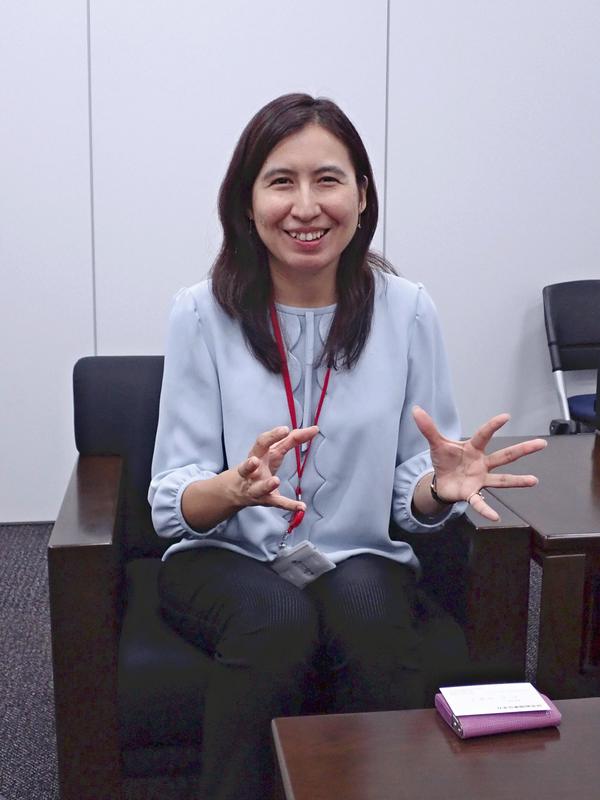
Rosa Mercedes Ochante Murai is a fourth-generation Peruvian of Japanese descent whose parents came to Japan to work with her when she was 15 years old. The 38-year-old has served on an education ministry expert panel on education for foreigners and was appointed an associate professor at St. Andrew's University of Education in Sakai on April 1.
When she first arrived in Japan, she did not speak any Japanese and learned hiragana at a public junior high school in Mie Prefecture. After graduation, many young people in her community took jobs in the automobile-related factories where their parents worked, but Ochante took the general entrance examination and was admitted to a prefectural evening high school.
She recalled that during the interview for the school, she expressed her desire to study in Japanese.
"The principal understood me, and set aside time for my brother and I, who enrolled with me, to study Japanese," she said.
She was accepted to a private university in Kyoto and went on to graduate school at Mie University where her studies included education for foreign children.
She was employed at the Mie prefectural board of education and has been involved with supporting foreign children at elementary and junior high schools.
"For students who want to live and work in Japan in the future, it is very important to go to high school and graduate. I hope municipalities provide better support for expanding foreign students' avenues after enrollment," she said.
"Foreign children can become global professionals who understand multiple languages and cultures," said Shizuoka University of Art and Culture Prof. Shigehiro Ikegami, an expert in multiculturalism. "The achievements of members of the next generation who go on to university and find jobs in Japanese companies stand out. On the other hand, there are many 'double limited' young people who never fully master neither their native language nor Japanese."
Ikegami added, "High schools lag behind elementary and junior high schools, so they need to be better prepared to accept foreign students and prevent them from dropping out."
Read more from The Japan News at https://japannews.yomiuri.co.jp/