Foreclosure rates shot up at the start of 2026 but experts say the trend isn’t worrisome… yet.
Some 118,727 properties were in foreclosure nationwide during the first three months of 2026 - up 26 percent from a year ago and the highest number since 2020, a recent report from housing data and analytics firm ATTOM revealed.
States with the highest foreclosure rate - number of homes in foreclosure versus total number of homes - were Indiana (1 in 739), followed by South Carolina (1 in 743), Florida (1 in 750), Delaware (1 in 757) and Illinois (1 in 833), according to the report.
For cities with at least 200,000 people, the South was hit hardest. Two Florida cities, Lakeland and Punta Gorda, had the two highest foreclosure rates in the country, followed by Columbia, South Carolina; Fayetteville, North Carolina; and Macon, Georgia, ATTOM reported.
Foreclosure starts - the number of homes that began the process at a given time, were up 20 percent from a year ago.
Responses to the data were mixed. Some - like ATTOM CEO Rob Barber - believe that the numbers indicate that Americans are feeling the pressure of higher prices across the board and may struggle to pay their mortgages.
There’s certainly evidence for that in the current economy. Mortgage rates have remained above 6 percent since September 2022 after staying under 6 percent for around 13 years. Inflation has driven up the cost of goods past the Federal Reserve’s 2-percent target rate for just over five years. Average housing prices remain near historic highs, according to data from the Federal Reserve.
These factors and others have put tremendous strain on consumer finances, so much so that Americans are more fearful for their finances now than they were during the 2008 Great Recession.
However, others say the spike is more of a return to normal foreclosure rates after five years of suppressed figures thanks to pandemic-era homeowner protections.
That was the opinion of Donna Schmidt, CEO of DLS Servicing, a company that helps mortgage lenders make the foreclosure and repossession process more efficient. Schmidt told housing market publication HousingWire that five years of putting off foreclosures could result in a rush in the next two years.
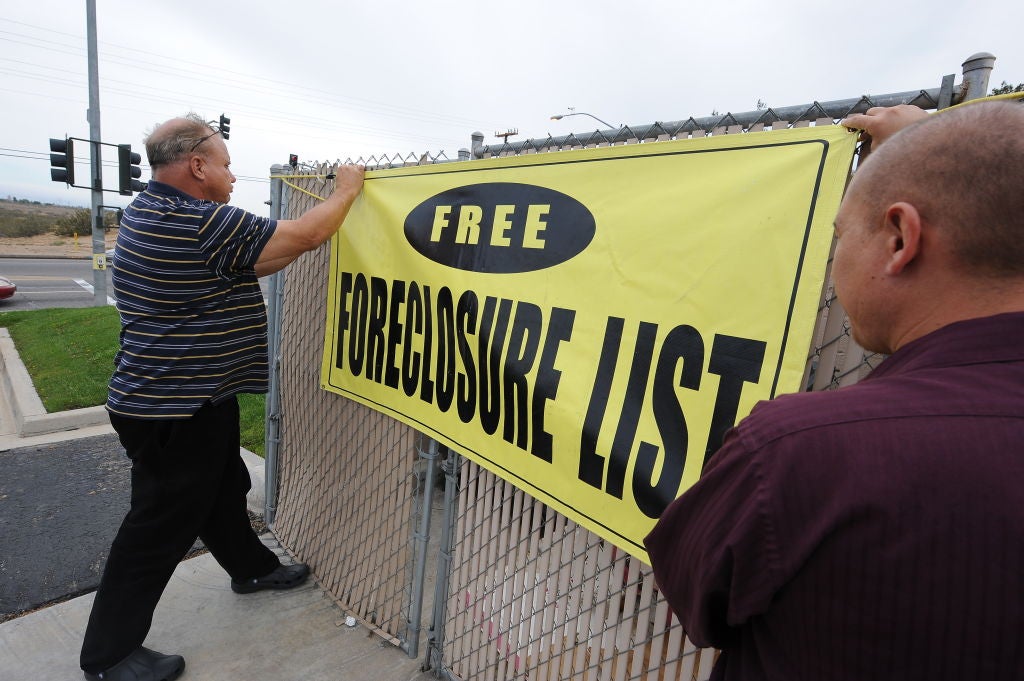
If foreclosure rates remain the same through the first half of the year, there would be roughly 60,000 fewer than the first six months of 2019, according to data from ATTOM.
As Americans have struggled to make ends meet, President Donald Trump has suggested two ways to make homeownership more affordable.
Trump floated the idea of a 50-year mortgage, which would lower monthly payments. He also signed an executive order banning Wall Street investors from buying single family homes, a move that was meant to free up inventory and, in theory, lower home prices. In both cases, experts expressed skepticism over their long-term effectiveness.
Why becoming a millionaire is easier than you think
Americans are back to pregaming as $20 drinks become the norm at bars and venues
Housing market panic subsides as new listings rise 8.7 percent month-on-month
Berkshire Hathaway’s meeting draws light crowds as new CEO works to win shareholders
Spirit Airlines to shutter as soon as Saturday after Trump bailout falls through
There’s been no World Cup windfall for Airbnb – and hosts are surprised