Forty names, games, teams and minutiae making news in college football (tiebreakers sold separately in the Mountain West Conference, where it took them until Sunday to figure out who is playing in its championship game). First Quarter: Shame On Everyone. Third Quarter: Where the Playoff Tension Lies. Fourth Quarter: And Now for Something Completely Different.
Second Quarter: The SEC Makeover is Nearly Complete
Black Sunday was a blur, with hirings and firings all over the place, plus an acrimonious parting of ways in which everyone blamed everyone else.
The biggest moves were made in the Southeastern Conference. After zero turnover in 2024, this shake-up was expected before the season. Half of the 16 coaches came into the season on the hot seat, and there will be (at least) six new sideline bosses in ’26. The rundown, starting with the freshest firing:
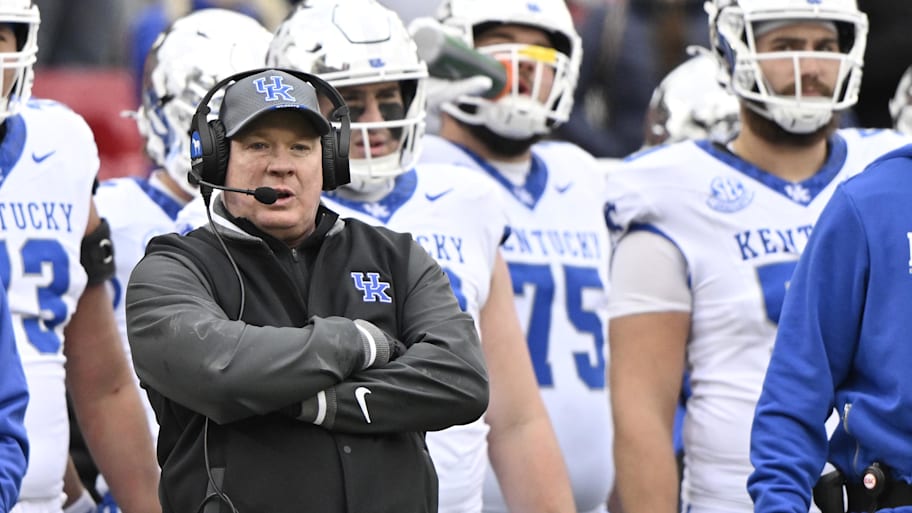
Kentucky (11) was a late addition to the carousel, firing Mark Stoops (12) on Sunday night. After scraping together three consecutive wins to reach 5–5, Stoops might well have kept his job by winning either of the Wildcats’ last two games, against ranked Vanderbilt or rival Louisville. Instead, he lost them both by a combined score of 86–17.
With the balance of power shifting dramatically in Kentucky’s backyard—SEC peer Vandy is a breakthrough program, and Louisville is a consistent winner with Jeff Brohm—continuing the declining Stoops era was untenable. The longest-tenured and winningest coach in school history won 10 games in 2018 and ’21, but over the past four seasons his record slumped to 23–27.
Not that the decision came cheap. Stoops’s buyout is between $35 million and $40 million, with a reported negotiated arrangement to spread the payments out over a longer period of time than the contractually obligated 60 days.
This is an SEC job, so there will be plenty of interested candidates. But it’s also a basketball school that is believed to have the highest NIL payroll in that sport in the country this season—the donor priorities skew toward hoops in Lexington, Ky.
Some of the strongest candidates come with ties to the school. Oregon offensive coordinator Will Stein played at Louisville, but his father played at Kentucky, and he grew up a Wildcats fan. Ohio State offensive coordinator Brian Hartline’s brother, Mike, played quarterback at Kentucky and was on this season’s staff in a quality control role. Troy head coach Gerad Parker, who went 8–4 this season and has the Trojans in the Sun Belt championship game, played at Kentucky during the Hal Mumme era.
Further removed, Liberty coach Jamey Chadwell could get a look. He had a disappointing third season with the Flames, going 4–8, but his record over the previous five years at Liberty and Coastal Carolina was a spectacular 52–11.
There is some consternation within the fan base about whether being slow into the hiring market cost Kentucky a shot at alum Jon Sumrall, who we will get to in a moment. If athletic director Mitch Barnhart had a strong indication that he could have gotten Sumrall, he probably would have acted sooner.
Auburn (13)
Out: Hugh Freeze. In: Alex Golesh.
He broke through in his third year at South Florida, going 9–3 with wins over Florida and Boise State, not to mention a rout of North Texas. A pair of three-point losses in American Conference play kept the Bulls out of playoff contention.
Golesh has SEC experience as Josh Heupel’s former offensive coordinator at Tennessee. He’s had success with dual-threat quarterbacks, both Hendon Hooker with the Volunteers and the under-appreciated Byrum Brown at USF (more than 4,000 yards total offense and 42 total touchdowns this season).
Auburn’s loss in the Iron Bowl derailed a segment of the fan base’s preoccupation with promoting interim coaches—D.J. Durkin this time, with Cadillac Williams, Kevin Steele and Bill “Brother” Oliver in past years.
Arkansas (14)
Out: Sam Pittman. In: Ryan Silverfield.
Memphis’s 32–31 win over the Razorbacks in September was a compelling job audition for Silverfield, who inherited a strong program from Mike Norvell and Justin Fuente and kept it going. The knock: no American Conference titles and no appearances in the title game.
Silverfield proved his offensive adaptability this season by transitioning from a pass-first attack under four-year starter Seth Henigan to a ground-based approach with transfer QB Brendon Lewis. His work recruiting the Memphis area and the South in general will translate well to Arkansas.
Florida
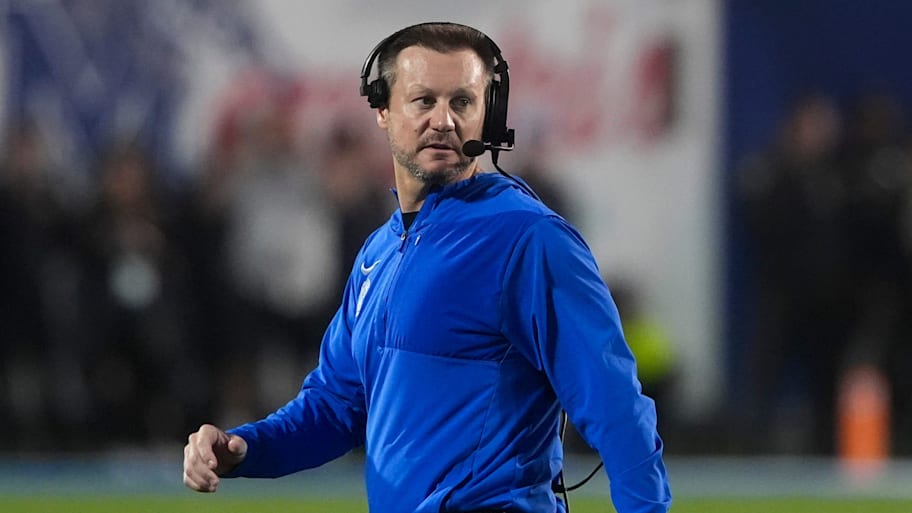
Out: Billy Napier. In: Sumrall.
After whiffing on Kiffin, some Gators fans decided to hate this hire from the outset. Then they hated it more upon hearing that Sumrall will coach the rest of Tulane’s season, which might end up in the College Football Playoff. The Dash view: Nothing ever ends well with Kiffin, so that might be a mess best avoided; and letting Sumrall finish the job with the Green Wave is the proper thing to do. (Hiring a general manager will help with some of the transition duties while Sumrall attends to business in New Orleans.)
In the college sports hiring world, it’s considered bad form to repeat a failed hiring formula. Napier, plucked from the Group of 5 conference ranks in Louisiana, was a failure. Sumrall fits the same formula, but isn’t the same guy. He was coveted around the SEC and beyond—feel free to ask North Carolina how it feels about passing on him to hire Bill Belichick. Let the cake bake on this one.
LSU
Out: Brian Kelly. In: Lane Kiffin.
You may have heard about this. In a chef’s kiss topper to this travesty of a situation, The Advocate reported Monday that LSU is paying Kiffin’s playoff bonuses for Ole Miss making the playoff. Has anyone gotten the deep thoughts of Gov. Jeff Landry, the situational shouting voice of fiscal sanity in college sports, on this shameless executive perk?
Mississippi
Out: Kiffin. In: Pete Golding.
This continues the state’s tradition of rash promotions in trying times: Mississippi State did it with Zach Arnett after the death of Mike Leach and wound up firing him a year later; and Ole Miss removed the interim tag on Matt Luke 12 games after he replaced the disgraced Freeze, only to fire him two years later.
Golding is a former Nick Saban assistant at Alabama with roots in the Magnolia State, which are attributes. He also was wanted as a head coach at the SEC level by approximately nobody. Maybe he turns out to be Marcus Freeman 2.0 in terms of hiring quickly from within to win the divorce. We’ll see.
Big Ten Gets Busy
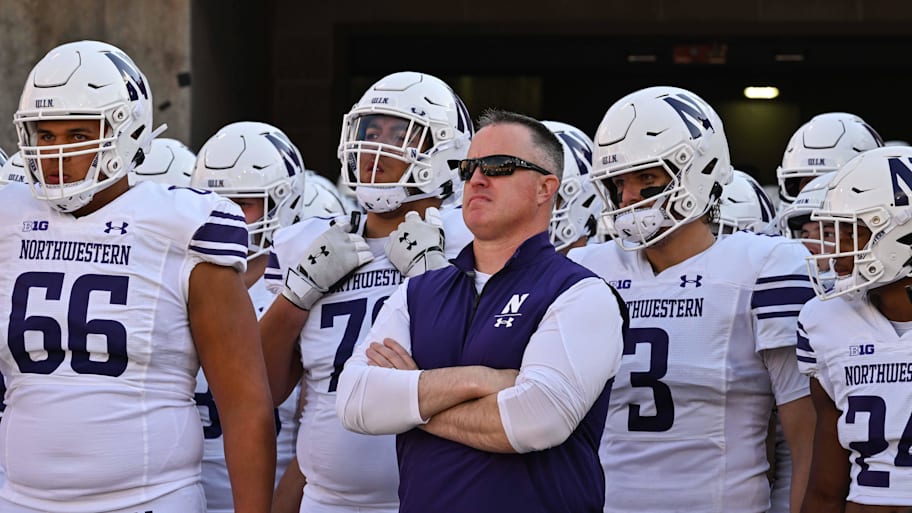
Meanwhile, Michigan State (15) jettisoned Jonathan Smith after two joyless seasons. As tends to happen in college football, Smith was fired after breaking an eight-game losing streak with a victory over Maryland, while Terrapins coach Mike Locksley is being retained after finishing the season with eight straight losses.
Next man up appears to be Pat Fitzgerald, the former Northwestern coach who serves as an appropriate spiritual heir to Mark Dantonio. Fitz spent 17 years successfully punching up within the Big Ten, building teams around defensive toughness. If this deal gets done, he will relish the Dantonio-esque role of pugnaciously taking on Michigan.
At UCLA (16), the Bruins on Monday landed Bob Chesney from James Madison. This has the makings of a great hire, despite the absence of any geographic fit. (That can be overrated in many places, and Los Angeles is one of them.) Chesney is very much out of the Curt Cignetti mold, winning at the Division III, II and FCS levels before succeeding Cignetti at James Madison and continuing the winning.
The caveat is this: While everyone is looking for the next Cignetti, that person may not exist. If the bar is set at going 23–2 in your first 25 games after taking over a losing program, nobody is reaching that bar. But the Bruins would gladly take Cignetti Lite. Improving over consecutive 12th-place finishes in the Big Ten doesn’t seem like too much to ask.
The Pain of Brain Drain in the American
The American Conference has been easily the best Group of 5 league this season, but it’s paying the price for success with the poaching of its coaches. Then again, it’s better to lose coaches than entire schools—the departures of SMU, Houston, Cincinnati and Central Florida in recent years have hurt the league more than anything.
South Florida (17), arguably the league’s biggest historical underachiever, lost Golesh after the program’s first run of three straight winning seasons since 2007–09. The average Bulls head coach tenure since ’09 is 3.2 years—some coaches have been too successful to keep, others have been too unsuccessful. It’s hard to hit the sweet spot with a winner who wants to be there. Offensive coordinator Joel Gordon could be an attractive call-up.
Memphis (18) hasn’t had a losing season since 2013, and it has enjoyed more coach stability than USF. Promoting Silverfield from within to replace Norvell turned out to be a big win for the Tigers. Memphis has traditionally hired for offense, which is a good way to keep the fan base engaged. Could Navy offensive coordinator Drew Cronic be of interest? He’s done great work in two seasons there, and prior to that was 75–23 as a head coach at the FCS, Division II and NAIA levels.
North Texas (19) is losing Eric Morris to Oklahoma State but remains an attractive job, located amid a gold mine of talent at a place that wants to win and has a big enrollment (future alums and NIL donors). Keeping freshmen offensive talents Drew Mestemaker and Caleb Hawkins will be harder than finding a qualified coach.
Tulane is on a four-year heater, going 42–12 with two different coaches who have left for power-conference jobs. The local talent is abundant and the job will be coveted, both by power-conference coordinators and risers from other G5 leagues. Southern Mississippi’s Charles Huff, previously at Marshall and before then a Saban assistant, could be an attractive candidate.
Notably, the league’s service academy coaches (20) are crushing it on the field but getting little run as power-conference candidates. Jeff Monken won the American last season at Army and Brian Newberry has won 19 games the past two seasons at Navy. Their option-based offenses must be a deterrent to their upward mobility, but that probably sells both of them short.
More College Football from Sports Illustrated
Listen to SI’s new college sports podcast, Others Receiving Votes, below or on Apple and Spotify. Watch the show on SI’s YouTube channel.
This article was originally published on www.si.com as Forde-Yard Dash: SEC’s Messy Coaching Makeover Hits Overdrive.