Ford self-driving test van 'talks' to pedestrians via light signals
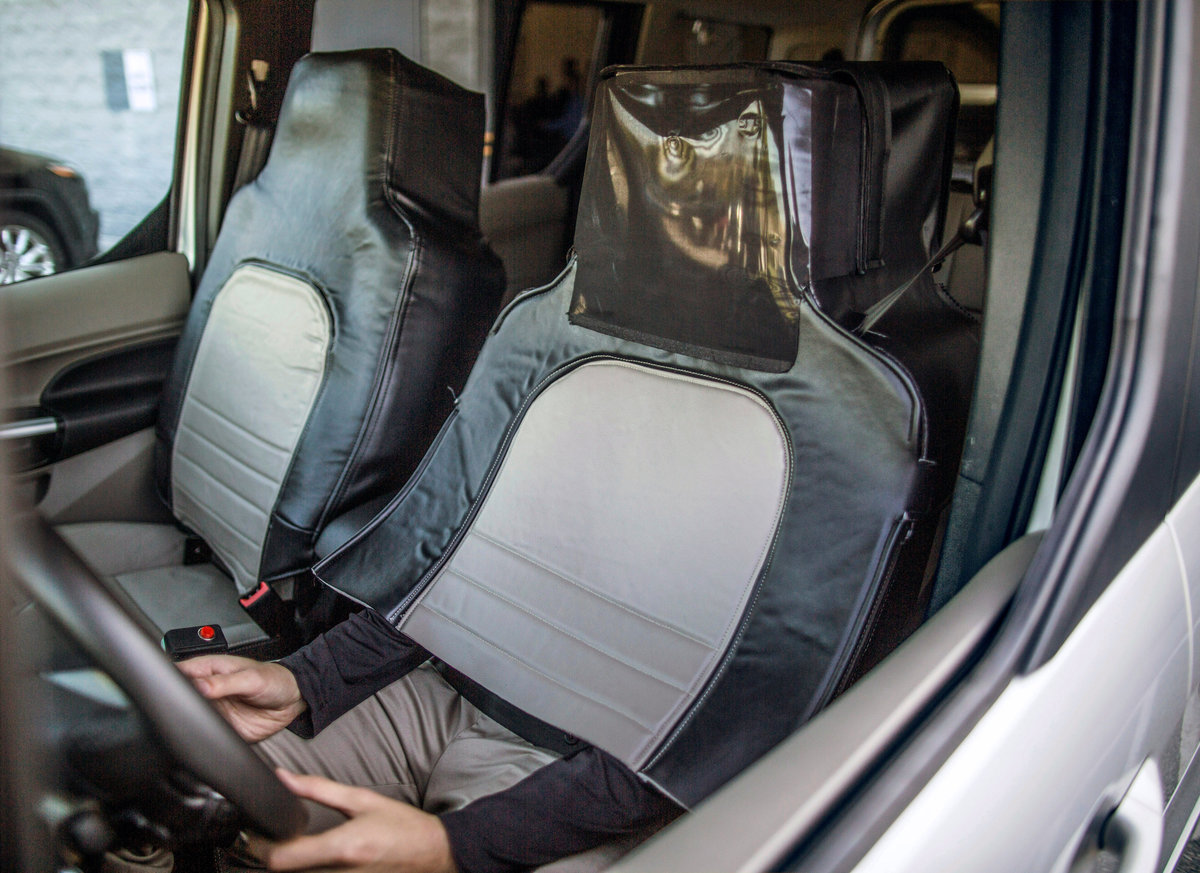
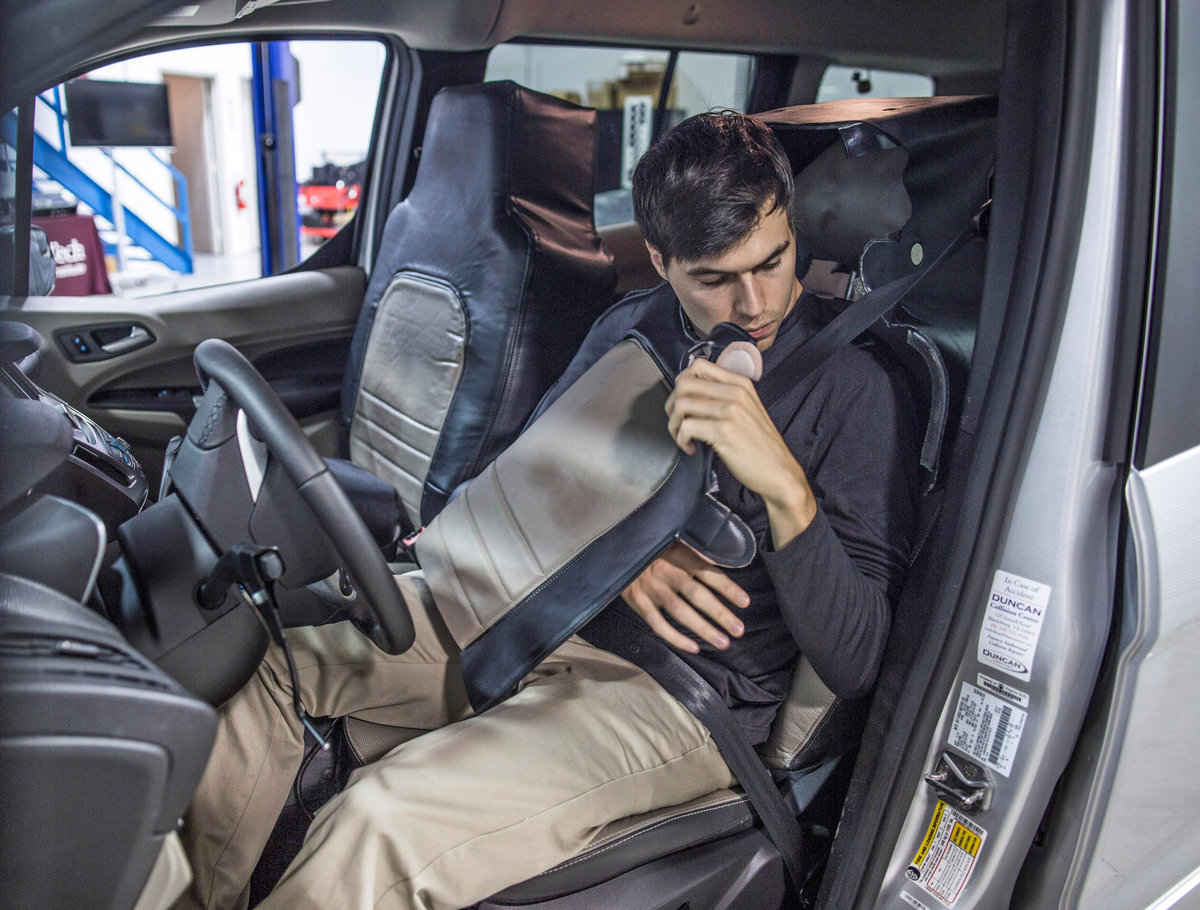
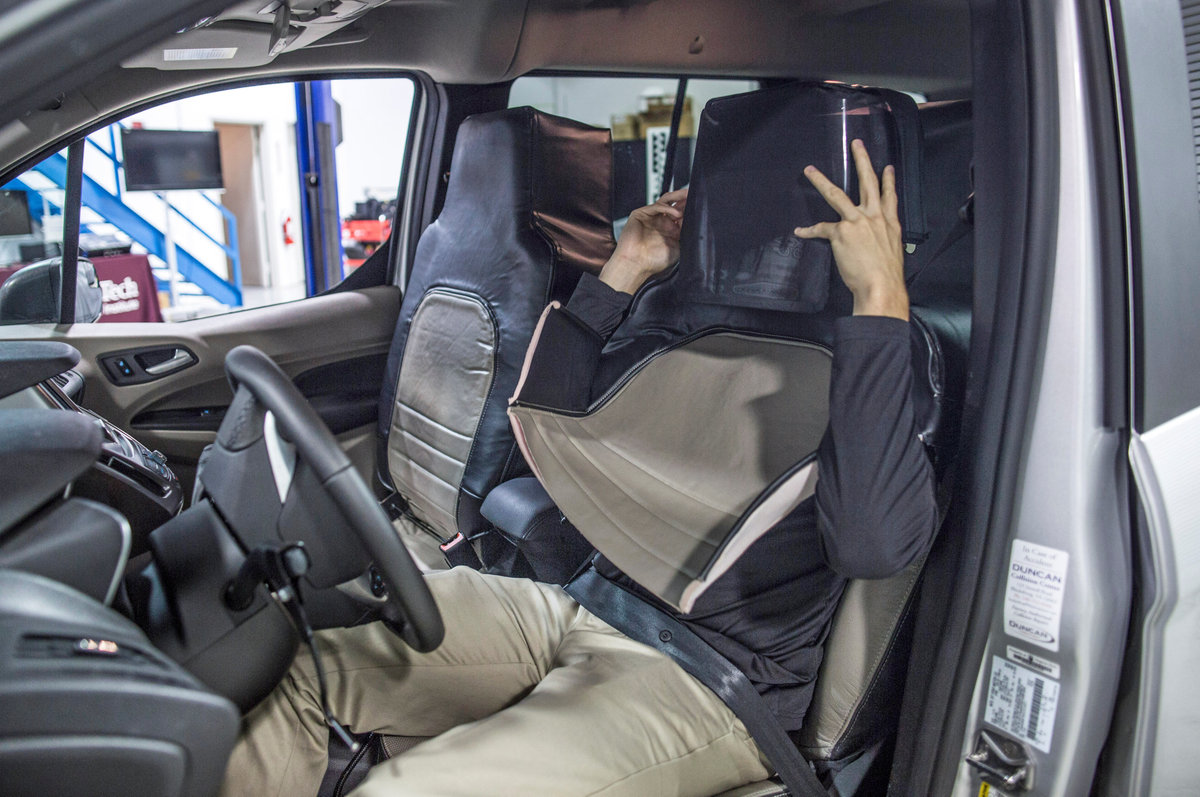
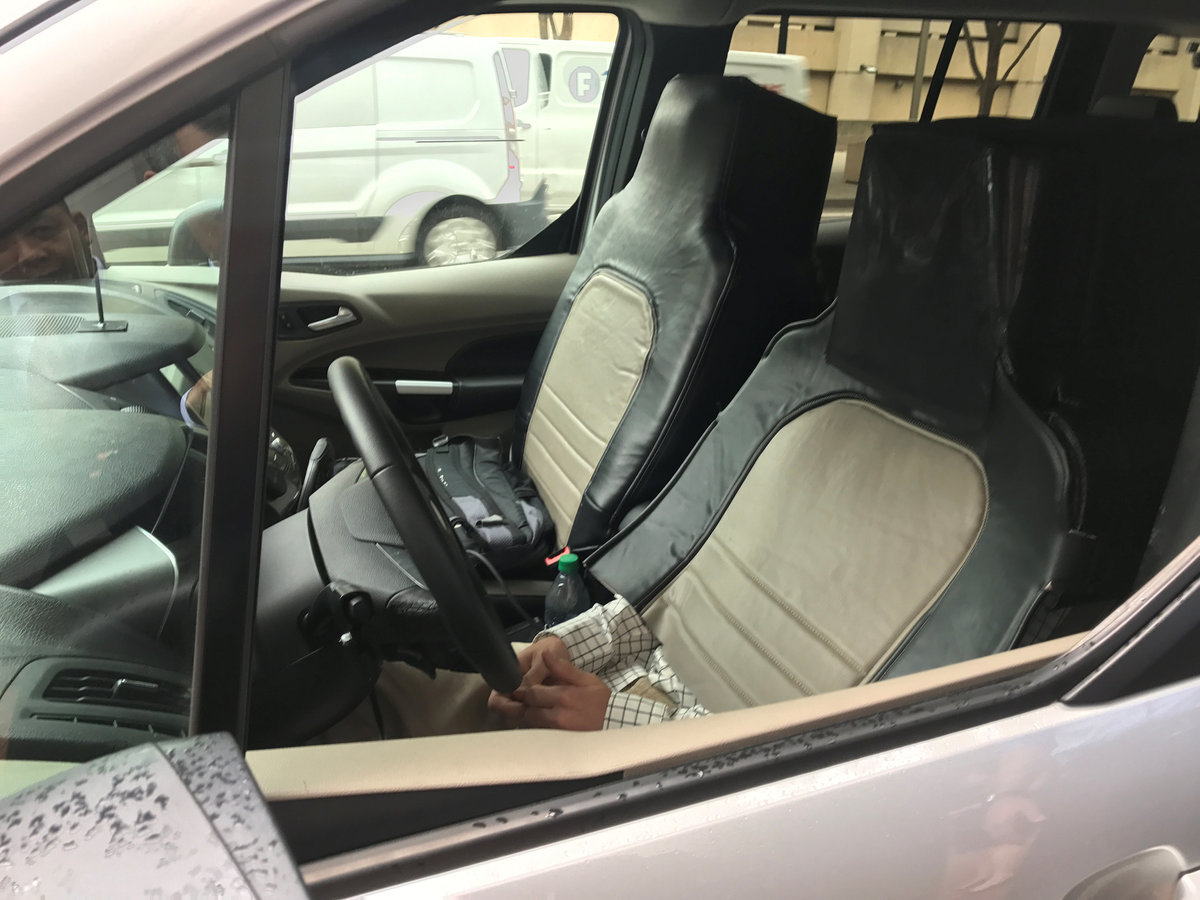
The Ford and Virginia Tech research simulated a self-driving vehicle using a “seat suit” to conceal the human driver. This was done to explore pedestrian reaction to external lighting signals that indicate when the vehicle is driving, yielding or accelerating from a stop in Arlington, Virginia, in this handout photo obtained by Reuters September 13, 2017. Ford Motor Company/Handout via Reuters
WASHINGTON (Reuters) - Ford Motor Co and Virginia Tech Transportation Institute are testing a way to enable self-driving vehicles to communicate their movements visually to pedestrians, cyclists and to human drivers, the researchers said on Wednesday.
The new communications method, which uses simple light signals to depict whether a self-driving vehicle is slowing or accelerating, has the potential to become a universal industry standard in all countries, Ford and institute researchers said.
The automaker set out to find "a way to replace the head nod or hand wave" to convey to pedestrians the intent of a driverless vehicle, according to John Shutko, Ford's human factors technical specialist.
The Ford and Virginia Tech research simulated a self-driving vehicle using a “seat suit” to conceal the human driver. This was done to explore pedestrian reaction to external lighting signals that indicate when the vehicle is driving, yielding or accelerating from a stop in Arlington, Virginia, in this handout photo obtained by Reuters September 13, 2017. Ford Motor Company/Handout via Reuters
Researchers rejected the use of displayed text because of potential language barriers, and symbols because of their low recognition.
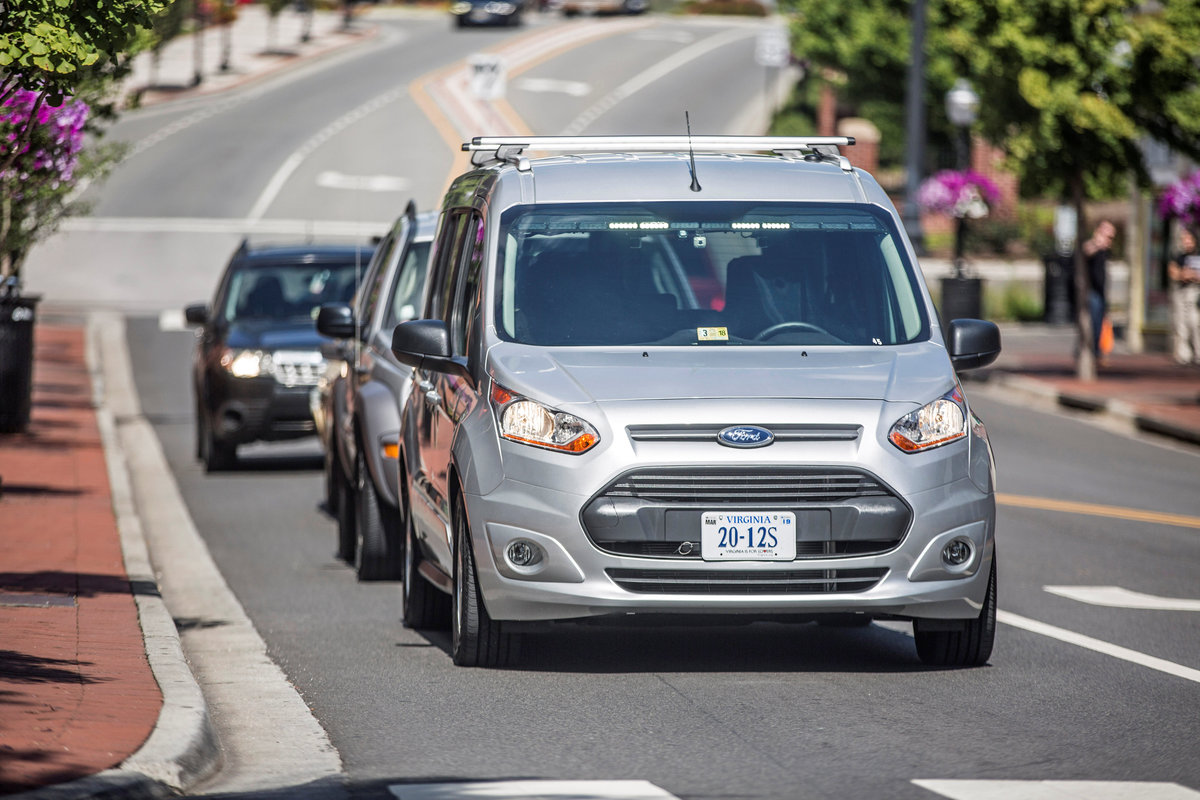
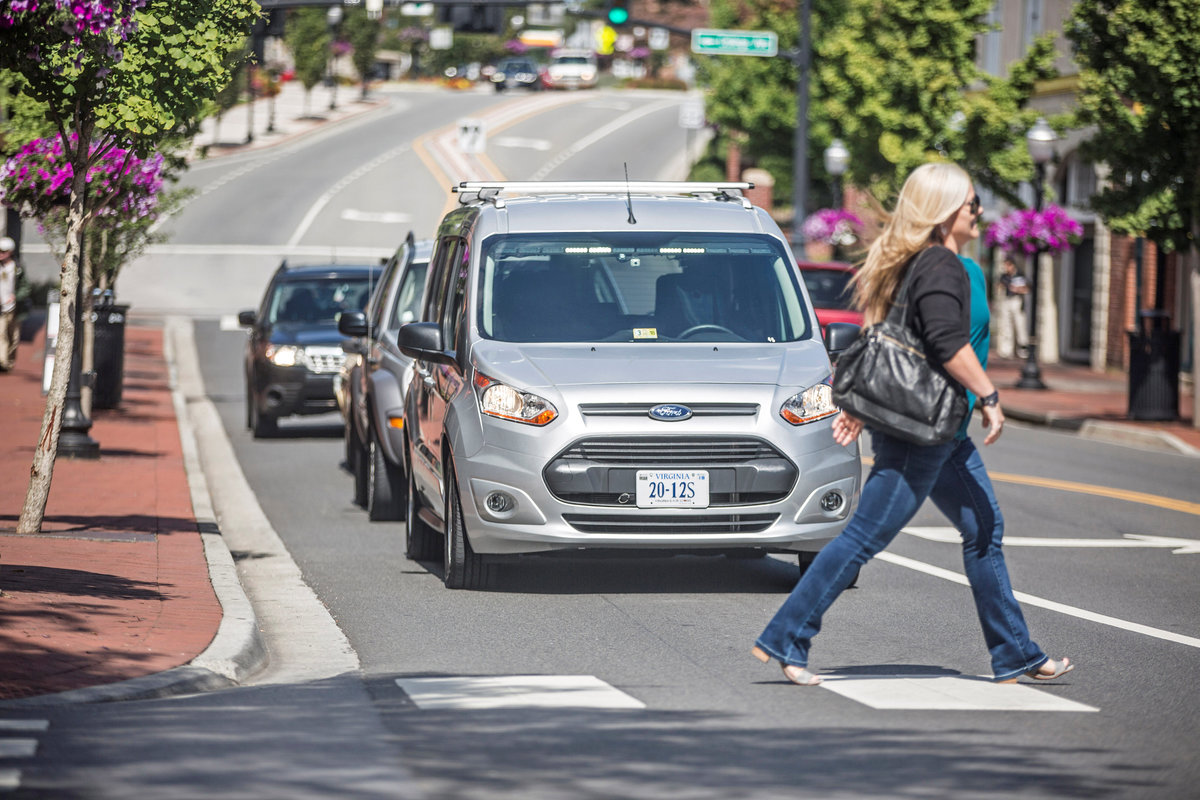
Instead, they settled on visual signals from a light bar placed on the windshield of a Ford Transit Van. A solid white light shows the vehicle is in full autonomous mode, a blinking white light indicates acceleration and a pair of white lights moving side to side signals slowing and stopping.
The specially outfitted Transit Van logged 1,800 miles (2,900 km) in August, much of it in and around Arlington, Virginia, including urban intersections, parking lots and garages.
Ford and Virginia Tech Transportation Institute are testing a Ford-designed method for self-driving vehicles to communicate their intent to pedestrians, human drivers and bicyclists in an effort to create a standard visual language people can easily understand. Here, the two white lights on top of the windshield of the Ford Transit Connect move side to side, indicating vehicle is about to yield to a full stop in Arlington, Virginia, U.S. in this handout photo obtained by Reuters September 13, 2017. Ford Motor Company/Handout via Reuters
The aim of the exercise was to capture on video human reactions to both a self-driving vehicle and to the light signals from the windshield.
The van was piloted by a human driver, who wore a camouflaged "seat suit" to simulate a driverless vehicle. The vehicles drew some attention on social and local news media reports.
The research effort supports vehicle manufacturers and users, but also "anyone who walks, rides or drives alongside autonomous vehicles in the future," said Andy Schaudt, project director at the institute's Center for Automated Vehicle Systems.
The Ford and Virginia Tech research simulated a self-driving vehicle using a “seat suit” to conceal the human driver. This was done to explore pedestrian reaction to external lighting signals that indicate when the vehicle is driving, yielding or accelerating from a stop in Arlington, Virginia, in this handout photo obtained by Reuters September 13, 2017. Ford Motor Company/Handout via Reuters
Shutko said "the biggest failure mode" would be if every automaker had a different way of alerting pedestrians of driverless vehicles. The company is working with an industry group and other automakers "to try to gain global consensus."
Shutko said the company is conscious of the potential backlash to fully self-driving cars.
Ford has set a target of putting a self-driving shuttle into commercial ride-sharing fleets by 2021.
Ford Motor Company shows a test vehicle designed to study consumer reaction to "driverless" cars with a hidden human driver at the Ford offices in Washington, D.C. U.S., September 13, 2017. REUTERS/David Shepardson
(Reporting by Paul Lienert in Detroit and David Shepardson in Washington; Editing by Bernadette Baum and Jonathan Oatis)
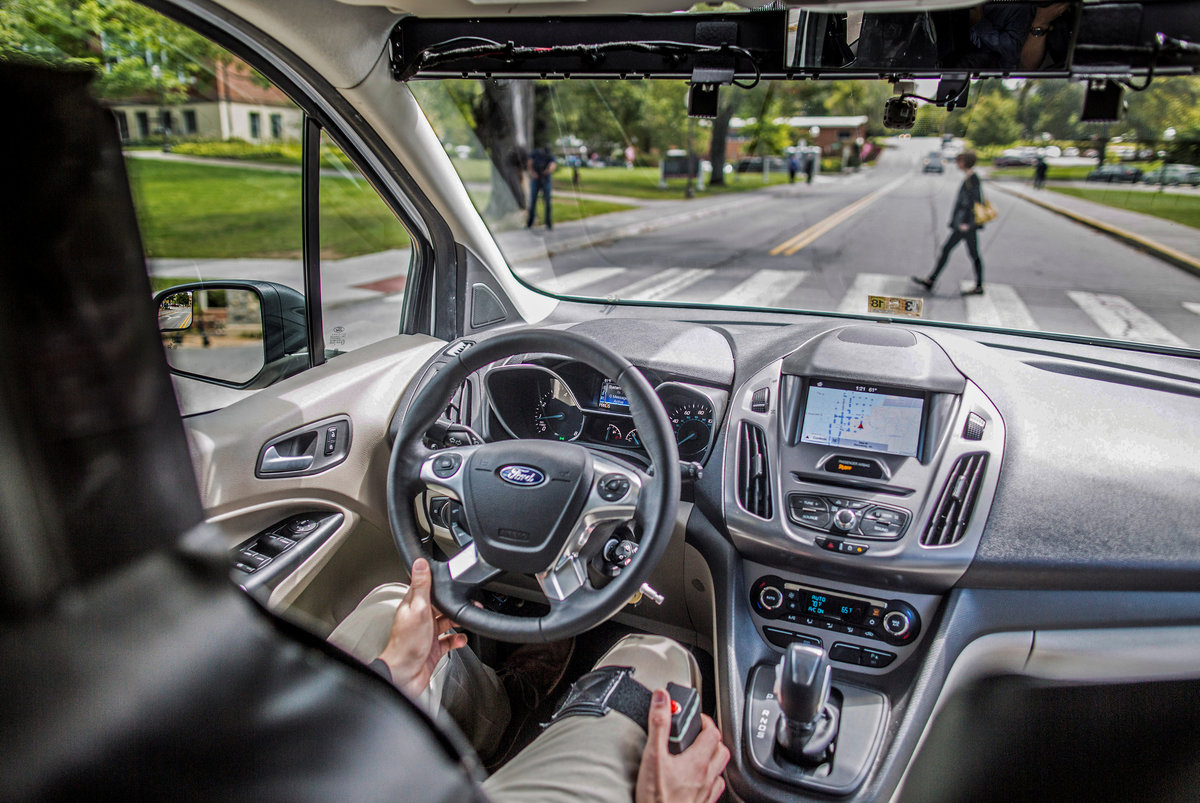
Numerous high-definition cameras mounted in this study vehicle provide a 360-degree view of surrounding areas and captures the behavior of other road users. This data will be valuable to understanding if other road users change their behaviors in response to self-driving vehicles and the signals they employ in this handout photo obtained by Reuters September 13, 2017. Ford Motor Company/Handout via Reuters Ford and Virginia Tech Transportation Institute are testing a Ford-designed method for self-driving vehicles to communicate their intent to pedestrians, human drivers and bicyclists in an effort to create a standard visual language people can easily understand. Here, the two white lights on top of the windshield of the Ford Transit Connect move side to side, indicating vehicle is about to yield to a full stop in Arlington, Virginia, U.S. in this handout photo obtained by Reuters September 13, 2017. Ford Motor Company/Handout via Reuters FILE PHOTO: The logo of Ford is seen during the 87th International Motor Show at Palexpo in Geneva, Switzerland March 8, 2017. REUTERS/Arnd Wiegmann/File Photo
Sign up to read this article
Read news from 100’s of titles, curated specifically for you.