
Ford is replacing its all-electric F-150 Lightning truck with a new range extender model that can do up to 700 miles.
To paraphrase Mark Twain, reports of the death of the Ford F-150 Lightning are greatly exaggerated. Yes, the all-electric pick-up truck as we know it is no more, consigned to the big scrapyard in the sky just three years after it arrived. But instead of disappearing without a trace, the EV will be back with a small, significant modification.
Ford says the next generation of F-150 Lightning will be an EREV. That stands for Extended Range Electric Vehicle, but instead of being the result of a solid-state battery breakthrough – for which we’re all somewhat tired of waiting – it means the electric pickup will have an onboard generator.
This is an engine, but not as we know it. It’ll run on petrol that is ignited in a combustion chamber just like every engine you’ve ever known, but it isn’t connected to the wheels. Instead, it’ll act as a generator, feeding energy into a battery that then powers electric motors in the usual EV way. If this all sounds familiar, you’re probably thinking of the BMW i3, which was briefly offered as a ‘REX’ variant with a similar setup.
You might also be familiar with the Mazda MX-30, which as a standalone EV was quite poor, offering a range of a little over 100 miles. But in its new MX-30 R-EV form, a little, 0.8-litre generator helps it achieve four times that.
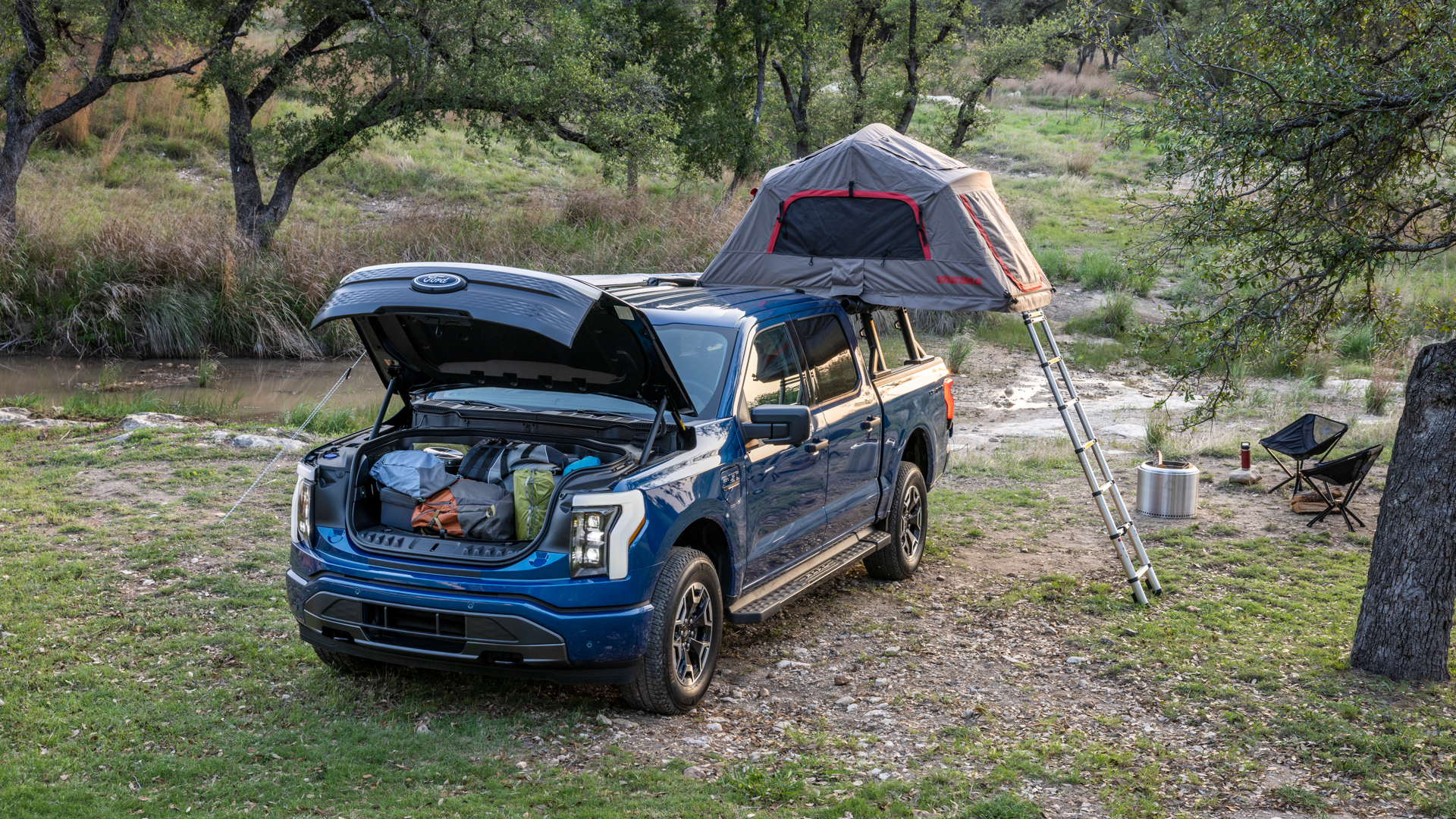
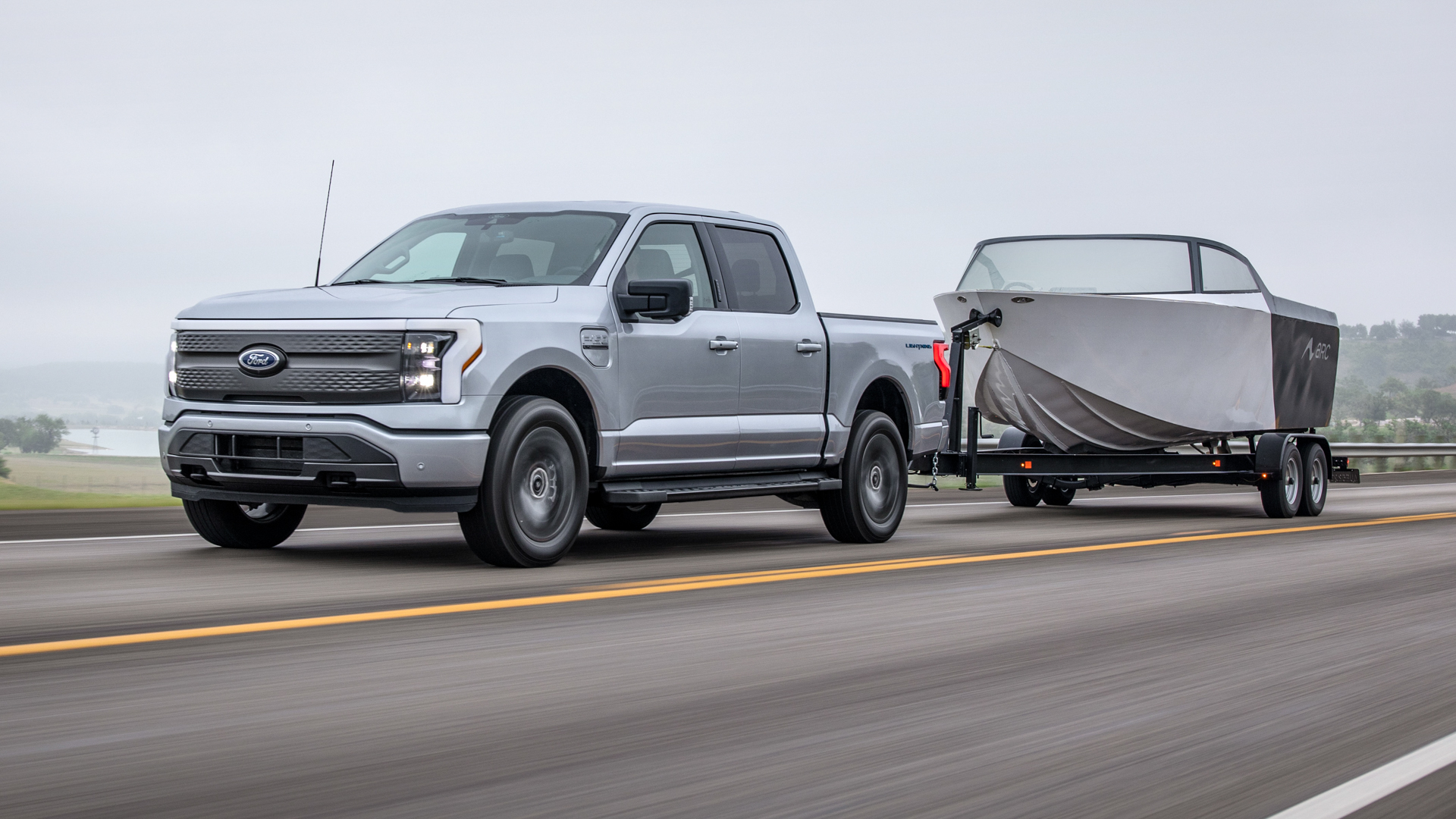
Ford doesn’t say when the new F-150 Lightning will arrive, but it already knows how to promote the benefits of an electric truck with a generator. It said this week: “Unlike a traditional hybrid, the F-150 Lightning EREV is propelled 100 percent by electric motors. This ensures owners get the pure EV driving experience they love – including rapid acceleration and quiet operation – while eliminating the need to stop and charge during long-distance towing.”
Ford also says the new truck will offer the same clever charging and power tech as the current model. This means a bed full of sockets for powering tools, camping gear, compressors and just about anything else, from the F-150’s massive battery. It’ll even keep your house online during a power cut.
The killer feature is its projected range. Ford reckons the new Lightning will manage over 700 miles, while being able to tow “like a locomotive”. That’s a considerable improvement over the 200-300 miles of the pure-electric Lighting. For a US market that buys more F-150s than any other type of vehicle – and likes to tow big things long distances – this is likely to go down very well indeed.
I’m glad to see Ford rethink this one, instead of chucking its EV truck in the bin. I drove the F-150 Lighting in Texas back in 2022 and loved how effortless it was to drive. I drove through town, on freeways, across the countryside; I took the Lighting off-roading, chucked it around a makeshift dirt rally stage and even towed a boat. Because America. Lunch was provided by a campsite and barbecue powered entirely by an F-150 Lightning.
All of that should translate into the new truck, but with the generator bringing masses of range in a more affordable and efficient way than simply swapping the electric motors for a V8 engine. I wouldn't be surprised if Ford finds space for the generator inside the Lightning's enormous 400-litre frunk – y'know, where engines used to go.
And while the F-150 won’t be coming anywhere near our shores, the spotlight Ford has cast on range-extending tech has the potential to benefit drivers everywhere.
With the EU now scaling back its 2035 internal-combustion ban, car companies should look again at EREV, REX, R-EV, or whatever they want to call their own range-extending EV technology. Because right now it feels like the best solution; one that produces efficient EVs, but without any range anxiety. Now that many plug-in hybrids can manage the average daily commute without turning on their engines, range-extended EVs are the next logical step.
If only we’d paid more attention to the BMW i3, whose range-extender version was discontinued all the way back in 2018.