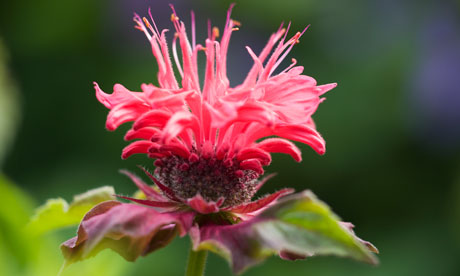
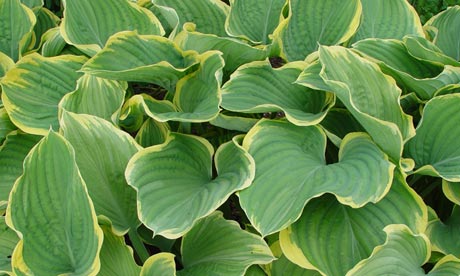
Monarda didyma is a native North American perennial with a long history as a tea. The plant, also known as bee balm, grows to 1.5m tall and thrives in fertile, moist soil in full sun. The flowers come in everything from bright red to pale pink. You can use the young leaves in salads and the mature leaves for tea. Bergamot makes a highly aromatic tea, a sort of Earl Grey of the herbal world. The flowers attract lots of bees.Photograph: Gerald Majumdar/GettyGolden garlic (Allium moly) is a long-forgotten cottage garden favourite. This small, ornamental onion has cheery, yellow flowers and grey-green, strap-like foliage. It’s native to the Mediterranean and has long been foraged in Spain and southern France. All parts are edible: the small (up to 25mm) bulbs can be eaten raw or cooked and have a mild garlic flavour; the leaves can be used much like chives, and are a worthy addition to any salad. The bulbs are drought-tolerant and do best in a free-draining, sunny position. You’ll often find bulbs in pound stores – plant them in the autumn, and flowers will appear in summer; bulbs can be dug up the next autumn. Photograph: Steffen Hauser/botanikfoto /AlamyThere is a reason slugs love hostas – they taste great. The asparagus-like, unfurled spikes can be eaten raw or steamed, and once the leaves have emerged they can be steamed or boiled. But eat them young: once the leaves mature, they become bitter and unpalatable. Hostas thrive in moist, fertile soils in shady conditions. Although all hostas are probably edible Hosta montana, H. sieboldiana var elegans and H. ‘Sagae’ (pictured here) are the ones regularly eaten. Be wary of eating a hosta straight from the garden centre, though – growers may use chemicals that are not suitable for human consumption.Photograph: Plantography/Alamy
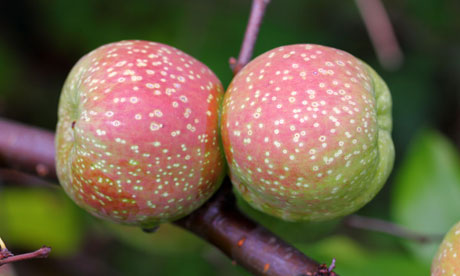
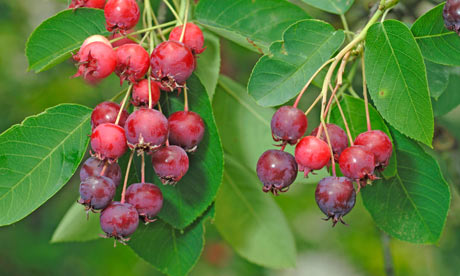
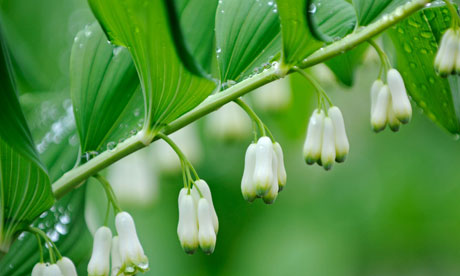
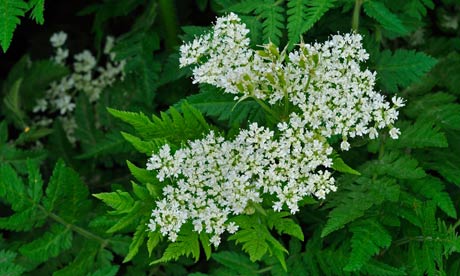
Chaenomeles or Japanese quince don’t mind shade or atmospheric pollution and so are a favourite for front gardens. Their pretty, saucer-shaped flowers are followed by round fruits that ripen to yellow or blush pink in autumn. Think of it much like true quince. I use mine in membrillos, tagines, jellies and jam. Grows to 3m high and 5m wide, and will survive in rubbishy soils as long as they don’t flood. It’s low maintenance and fruits from a young age. Photograph: shapencolour/AlamyJuneberry (Amelanchier lamarckii) produces small berries that are somewhere between a blackcurrant, a blackberry and a blueberry, and super sweet. They work best used fresh in muffins, pies and cakes, although they can be dried for winter use. Photograph: WILDLIFE GmbH/AlamyHolly grapes Mahonia aquifolium, M. japonica and M. x media are evergreen shrubs with holly-like spiky foliage and sweet-smelling yellow flowers. They are often planted as low-maintenance shrubs. After the flowers appear dusky, dark purple small grape-like fruits. They are too tart to eat raw, but cooked with sugar make an intense sweet, sharp jelly. Mahonias prefer shady conditions but will tolerate sun if the soil is moist. They are frost hardy.Photograph: Holmes Garden Photos /AlamySolomon’s seal is a common foraged food in North America. All species are edible, but you are most likely to be growing P. x hybridum. This old cottage garden staple is a spring-flowering, slow-spreading perennial that likes moist, fertile soil in dappled shade. The 10-20cm tall unfurled shoots are delicious cooked – perhaps even better than asparagus – but once the leaves appear, it becomes bitter, so then it’s best to allow it to flower, so bees can enjoy it. Sawflies and slugs think it tastes good, too. Photograph: Adrian Davies/AlamyStag’s horn sumac (Rhus typhina) is a large, tree-like shrub with leaves that blaze orange-red in autumn. The female plants are crowned with flame-shaped, winter-persistent clusters of red fruit that, when dried, make a passable substitute for sumac, the lemon-flavoured spice used in Lebanese and Turkish cuisine. Native Americans soaked the fruit to make pink lemonade. It does best in full sun and doesn’t mind poor, free-draining soils. Do not confuse with the toxic R. verniciflua. Photograph: Mark Phillips/AlamySweet cicely (Myrrhis odorata) has fern-like leaves and pretty white flowers. All parts are edible. Native Americans considered it a snack – the bright green seeds taste like aniseed balls, the foliage can be used in salads or in cooked dishes to impart a sweet anise flavour, and the roots can be roasted much like parsnip. Thrives in semi-shade in rich soils and grows to 1.5m by 1.5m.Photograph: Arterra Picture Library /Alamy
Sign up to read this article
Read news from 100’s of titles, curated specifically for you.