
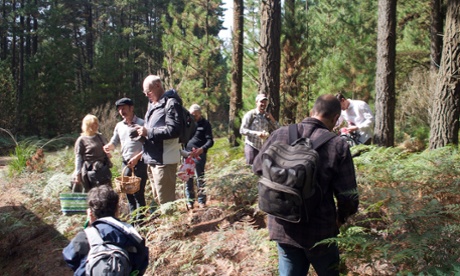
It’s 7am on a Sunday morning and I’m standing bleary-eyed by the side of the road in inner-Sydney Redfern, waiting for a bus armed only with a bottle of water, a pen knife and a basket.
We are heading south to a nearby state forest to engage in a distinctly northern hemisphere custom: picking mushrooms in a pine forest.
“What I teach is a distinctly imported practice, for an imported mushroom,” says our group’s moustachioed leader, Diego Bonetto, who’s learnt how to read both field and forest for food since his childhood in northern Italy.
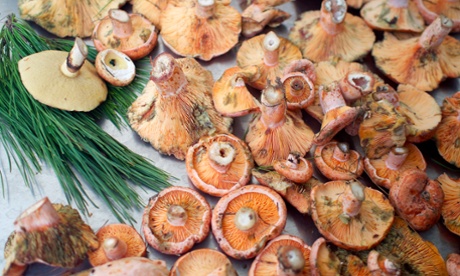
In spring and summer, Diego hunts down greens like tender dandelion, fennel and a myriad of herbs, while autumn brings a bounty of saffron milk caps and slippery jacks, the two main types of mushrooms found in Australia’s pine plantations.
Come autumn, summer’s mountain-bike riders and bushwalkers here are replaced by Polish and central European families, who arrive with barbecues, baskets and an eye for fungi. As with Diego, the motivation is not only a chance to score mushrooms for nothing, but also a chance to relive old traditions and most importantly, cook the old dishes.
“I love how out here you can be in the middle of nowhere and then you can hear Polish speaking, or German, or Croatian,” he says. “When you’re in the forest and hunting mushrooms everything you say is in your language.”
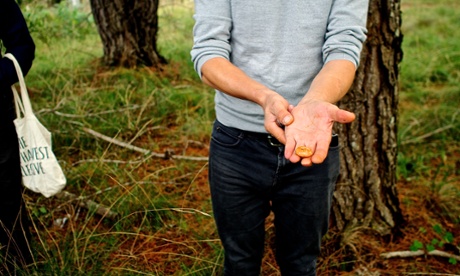
While finding pine mushrooms can be as easy as following your ears, the one surprising thing about a pine forest is just how quiet it is. Snakes apparently don’t like to slither on sharp pine needles, along with most of our native fauna. Your best bet then is to look for a decent stand of pine trees and, if there’s been rain about a week before, magic can happen.
Pine mushrooms have a symbiotic relationship with their host trees, and spend most of a decade developing underground before emerging to reproduce as a flower – what we know as a mushroom. This means you’ll likely find them growing anywhere where pines are at least a decade old, and losing their lower limbs to reveal bare trunks. Mushroom picking and identification tours like the ones Diego runs are a good way to learn what you should and shouldn’t pick, and how deadly mushrooms can mimic edible ones when they’re old or sun-bleached.
“The mushroom pickers mantra is when in doubt, leave it out,” Diego adds.
And what to do with them? A small haul makes a perfect wild mushroom ragu, slowly braised with red wine, aromatics and parmesan served over pasta or soft polenta. More than a few? Why not try making a Japanese-inspired pine mushroom rice to serve with yakitori or tempura? Too many to cook at once? Preserve them by making a mushroom confit and savour their flavour all season.
But the best use of pine mushrooms is infinitely simple – roughly chop then saute gently in plenty of good butter with garlic and a little white wine. Once the wine evaporates, season to taste and add a little chopped parsley, maybe some Tabasco sauce or even Worcestershire. Serve on hot toast.
• There are many deadly species of wild mushrooms and other fungi and some can appear similar to edible species. Mushroom picking should not be attempted by anyone unskilled in identifying wild species. If you are interested in foraging for mushrooms, join a guided tour such as one of the ones below:
Diego Bonetto wild mushroom foraging workshop: next available date is 10 May, cost: $99 or two people for $180.
Similar tours in Melbourne include:
http://autumnharvest.com.au/tours/
http://mushroomtours.com/













