ATLANTA _ Jefferson Beauregard Sessions III stood atop the Edmund Pettus Bridge in Selma, waiting to march toward Montgomery.
Sessions grasped the hand of the closest man on the front line: the civil rights activist John Lewis. Behind them, hundreds more demonstrators formed a mighty stream of righteousness.
This, however, was not Bloody Sunday, when Alabama state troopers beat and gassed Lewis and others for asserting their right to vote.
It was March 8, 2015, at a commemoration safely separated by 50 years and a lifetime of history. U.S. Sen. Jeff Sessions, Republican of Alabama, was one of dozens of elected officials who positioned themselves on the bridge to express solidarity with the cause that powered the original march. Also among them: Barack Obama, the first black president of the United States.
Sessions' journey to Selma reflects the complicated role of race in his life _ and in the South. He is the progeny of the place and time that necessitated legislation guaranteeing basic rights for black Americans. But as President-elect Donald Trump's choice for attorney general, Sessions would be charged with enforcing those very laws.
To evaluate the factors shaping Sessions' approach to the office, The Atlanta Journal-Constitution interviewed more than 20 of his acquaintances in a review of his early years, his legal and political careers and a failed judicial nomination. The portrait that emerges is of a Southern man who stayed on the sidelines during the region's upheaval in the 1960s and beyond, who expressed little discomfort with the segregated society in which he grew up and who affected a willful ignorance of his proximity to an epic struggle over civil rights.
In 1965, when Americans witnessed Bloody Sunday on television, Sessions was a high school senior in a small town 30 miles away. The Rev. Martin Luther King Jr. came to Sessions' hometown twice that spring, inspiring voting rights protests that the police quashed with tear gas, smoke bombs and night sticks. Yet, Sessions has claimed to have been unaware of both the demonstrations and the violence.
That fall, he enrolled in a Montgomery college untouched by protests for civil rights or against the Vietnam War. "We ... march on the dining hall," the campus newspaper declared during his junior year.
Later, as a federal prosecutor, Sessions jokingly praised the Ku Klux Klan, disparaged the NAACP and allegedly addressed a black assistant as "boy." (Sessions has always denied the latter claim.) He also prosecuted one of the leaders of the original Selma march on vote-fraud charges; the trial ended with a quick acquittal.
Even after two decades in the Senate, Sessions provokes a visceral reaction from his political opponents. They hear echoes of the Confederacy in his full name (much as some think Obama's conjures the Muslim world), and Sessions' courtly manners and soft drawl bring to mind an antebellum era he has never fully repudiated.
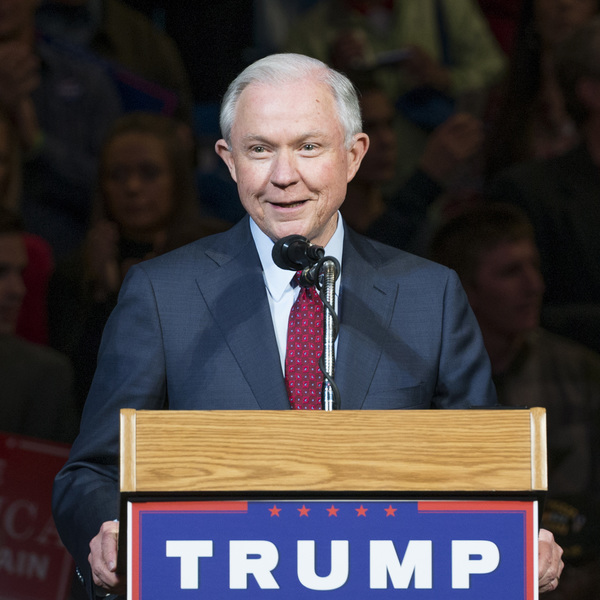
Sessions has granted no interviews and has said little in public since Trump nominated him in November. On stage with the president-elect last month in Mobile, he promised to "serve everybody with equality and justice" as attorney general. He wore a white hat displaying Trump's campaign slogan: "Make America Great Again."
Sessions' attitudes about race loom large for his Senate confirmation hearing Tuesday and Wednesday. Civil rights groups have criticized his nomination, and several were arrested during a sit-in at his office in Mobile. Supporters, however, have tried to moderate Sessions' image by distributing photographs from the 2015 Selma commemoration _ particularly those in which he appeared with Lewis, the congressman from Atlanta.
Sessions marched that day "because he knew how meaningful his presence and participation were," U.S. Rep. Martha Roby, a Republican from Alabama, wrote on Facebook, where she posted the pictures. "These are the photos that Senator Sessions' critics don't want you to see."
Other images give different impressions: police in riot gear, a young woman gasping for breath in a cloud of tear gas, a police officer beating a civil rights worker to the ground. All come from 1965 in Camden, Ala., population 1,100: Jeff Sessions' hometown.
Camden was "idyllic," Sessions said last year in an interview with Politico. He went to school barefoot until junior high. Parents and teachers instilled traditional values.
"I guess it's not really very complicated," Sessions said in 1996. "When you come down to it, we were taught a couple of things first and foremost, such as the value of hard work and being honest."
At Wilcox County High School, Sessions graduated in the class of 1965. He had never attended school with a black child.
The county's black students attended Camden Academy, sometimes in classrooms of 80 or more. In the mid-1960s, the county was so determined to keep its schools segregated that it forfeited federal education funding _ equivalent to almost $5 million today _ rather than accept an integration plan.
Sessions, born on Christmas Eve 1946 in Selma, lived with his family in Hybart, a farming community 14 miles outside Camden. He was an only child, known as "Buddy" to distinguish him from his father. Jeff Sessions Jr. ran the community's general store.
"That's where we'd go get our Coca-Colas," said Neoda McArthur Strickland, Sessions' childhood neighbor and playmate. "Everything was close by. You could see the store from our houses."
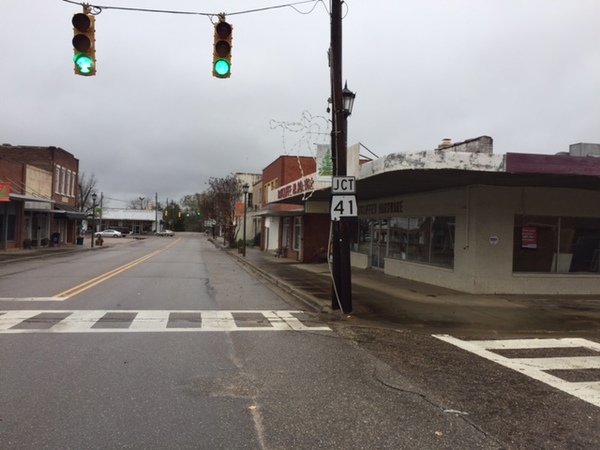
Strickland recalled days spent outdoors, the children restrained only by admonitions to stay out of nearby Tallatchee Creek. Both of their mothers employed a succession of black maids, Strickland said, and one brought her children to work on Saturdays. They were the only black playmates for either Sessions or Strickland.
By the early 1960s, when Sessions entered high school, relationships between black and white residents of Camden were fraying.
"You knew your place and you stayed in that place," said Sim Pettway, who attended Camden Academy at the same time Sessions attended the county schools. "You were like one of the animals. You were told what to do, where to go, where not to go. God, did we have a rough time."
Even in the best of times, white residents regarded their black neighbors with a mixture of condescension and contempt.
"I don't know what has happened to the nigras in Wilcox County," the local tax assessor told the journalist Gene Roberts of The New York Times in 1966. "You never hear them sing any more."
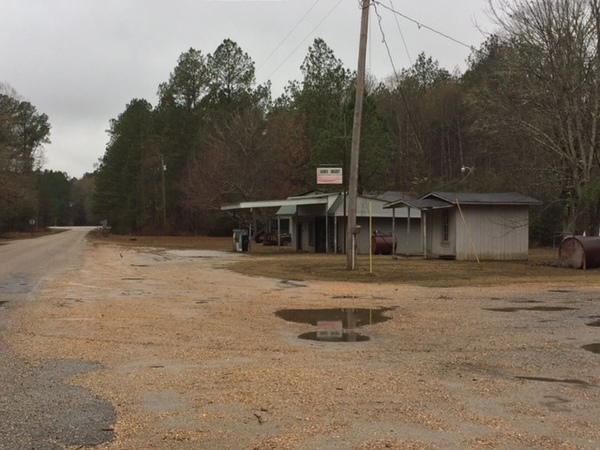
Before black residents could cash checks at the time, they had to see the sheriff, P.C. (Lum) Jenkins _ "Lummie" to whites, "Mister Lummie" to blacks. Jenkins' initials on a check told bankers he considered that particular black person to be trustworthy.
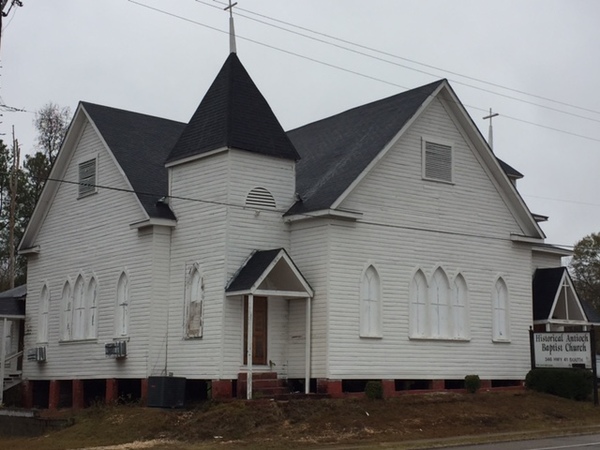
King came to Camden twice in April 1965 and delivered sermons at Antioch Baptist Church on the edge of town. At the time, blacks made up three-fourths of Wilcox County's population. None, however, were registered to vote.
The day after King's first sermon, 600 people marched toward the white-columned Wilcox County Courthouse on Camden's town square, hoping to open voter registration to black residents. The police, however, blocked the way. A news photo widely published in the North showed an officer beating a white civil rights worker with a night stick. Other pictures captured images of young black demonstrators crying and retching amid the clouds of smoke and tear gas.
Maria Gitin was a white college student from San Francisco who came to Camden in 1965 through a program sponsored by the Southern Christian Leadership Conference. In an interview, she described Wilcox County as the scene of intense violence. A white man shot a black man to death outside Antioch Baptist Church, ostensibly over a minor traffic accident. Activists like Sim Pettway, who was organizing protests as a teenager, left town for fear of being assaulted. Gitin went to jail after one protest.
Almost 51 years later, Gitin met Sessions at an event in Washington. He was a veteran senator by then, and she had published a memoir of her experience in his hometown.
Sessions listened as she recalled the Camden of 1965, Gitin said. Then he told her, "Oh, you know, I was a teenager then and I didn't know anything about it."