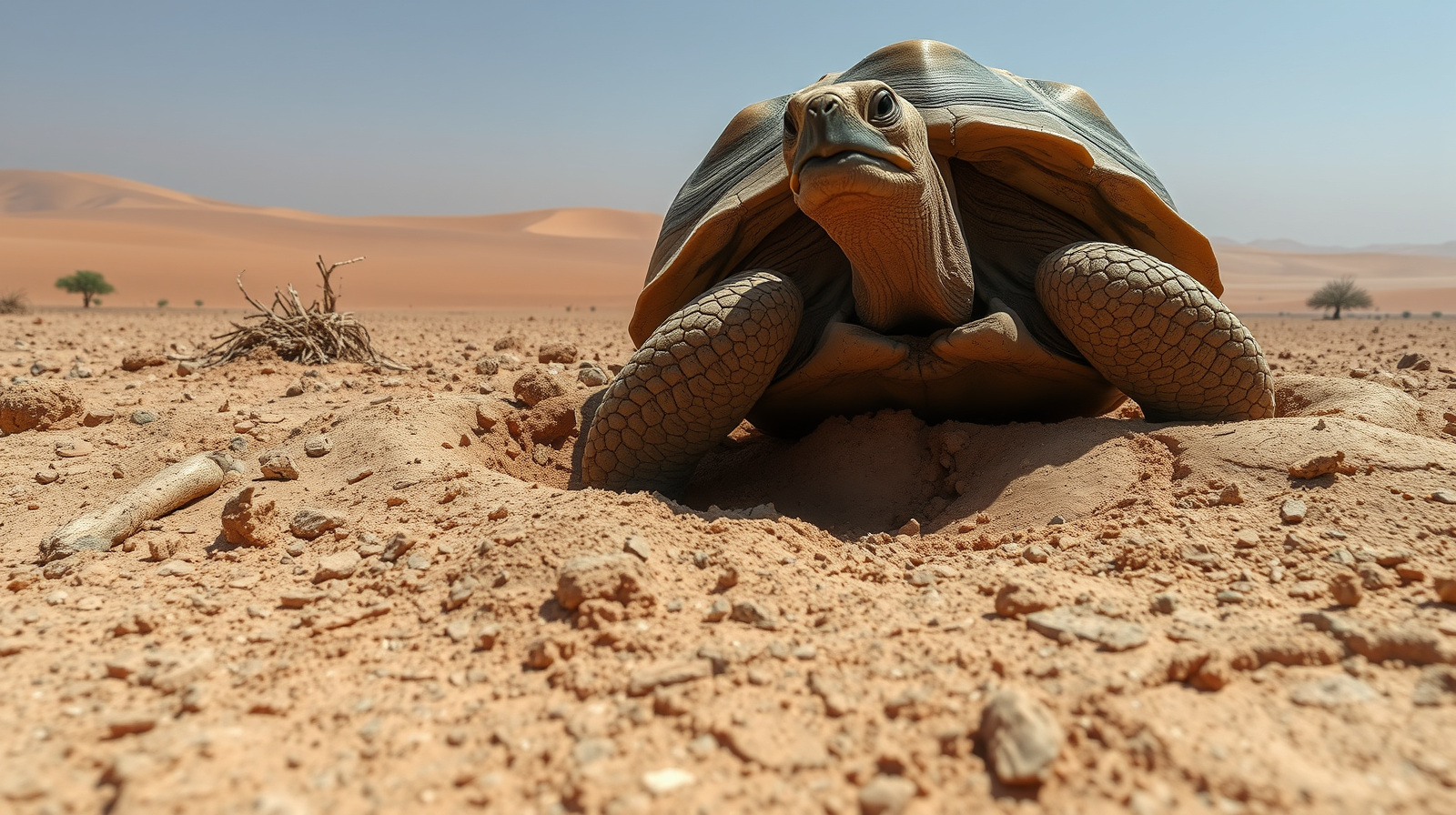
Across the harsh, sun-scorched edges of the Sahara and the Sahel, one of Africa's largest reptiles has been quietly doing something that scientists are only now beginning to properly study, digging burrows so extensive that they may be reshaping the very soil around it. The African spurred tortoise, known scientifically as Centrochelys sulcata, is the largest tortoise species found on mainland Africa and the third largest in the world, with adult males sometimes weighing more than a hundred kilograms. Its habit of digging deep burrows to escape the region's brutal heat has led researchers to flag it as a possible ecosystem engineer, a species whose physical behaviour can meaningfully alter the environment around it. At the same time, this same tortoise is now listed as Endangered, raising a genuine concern about losing a species that may be more ecologically important than it first appears.
Get breaking news anytime, anywhere. Download the TOI app now!
Why the African spurred tortoise digs burrows in the first place
The African spurred tortoise lives across some of the hottest, driest terrain on the planet, where daytime temperatures can climb to extreme levels and nights can turn surprisingly cold. According to the official species account maintained by the IUCN Tortoise and Freshwater Turtle Specialist Group , these tortoises regularly dig extensive burrows, sometimes reaching up to fifteen metres in length, primarily to escape this extreme heat and cold, with burrowing activity concentrated especially during the early morning hours and the wet season. This is simply normal, instinctive behaviour for the species rather than anything deliberately engineered, the tortoise digs because its survival depends on finding shelter from conditions that would otherwise be lethal.
Why researchers think this digging matters beyond the tortoise itself
What makes this burrowing habit scientifically interesting is the sheer scale of ground it disturbs. A 2018 study published in the journal Oryx , examining threats facing the species across the West African Sahel, documented burrows created by this tortoise reaching depths of ten to fifteen metres, and the researchers noted that disturbances of this scale could meaningfully alter soil structure and moisture retention in the arid habitats the species occupies. In heavily degraded landscapes where surface soil has been compacted by drought and overgrazing into a hard, water resistant crust, this kind of deep physical disturbance is exactly the sort of process that could, in principle, help loosen the ground and improve its ability to hold rainwater, though the Oryx study itself was focused on documenting threats to the tortoise rather than testing or confirming any specific land restoration outcome.
Why this species is disappearing even as its ecological value becomes clearer
The same tortoise now drawing scientific interest for its burrowing behaviour is simultaneously in serious decline across most of its range. According to the IUCN Red List assessment for the species , expert evaluation attributes roughly sixty percent of the overall threat facing the tortoise to habitat loss, with climate change accounting for a further quarter, while hunting for meat, use in traditional medicine and collection for the international pet trade make up most of the remaining pressure. The species is already believed extinct in several countries within its historical range, including Cameroon, Djibouti and Togo, a decline driven by many of the same broad forces, habitat destruction and a warming climate, that have degraded soil quality across the wider Sahel.
What is genuinely established, and what still needs more evidence
It is worth being clear about where the science currently stands. Peer reviewed research has documented the depth and extent of this tortoise's burrowing behaviour, and researchers studying the species have reasonably suggested that disturbance on this scale could influence soil structure and moisture retention in the arid habitats where it lives. What has not yet been established through rigorous, published research is a direct, measured link between tortoise burrowing and large scale land greening or vegetation recovery across degraded Sahelian terrain, that remains a hypothesis worth testing rather than a demonstrated outcome. Claims describing a specific large scale reintroduction project turning visibly green from space should be treated with caution until they are backed by a properly published, peer reviewed study rather than repeated secondhand reporting.
Why this still matters for conservation and restoration science
Even without a confirmed large scale case study, the underlying biology here is genuine and worth taking seriously. A species capable of digging burrows ten to fifteen metres deep is undeniably capable of disturbing soil at a scale most animals cannot match, and researchers have reasonable scientific grounds for suspecting this could benefit degraded arid ecosystems if properly studied. That possibility, combined with the tortoise's own rapidly declining conservation status, makes a strong case for protecting remaining wild populations regardless of whether their soil engineering potential is ever fully confirmed, since a species already this endangered could disappear long before science has the chance to properly test what role it may have been playing in its ecosystem all along.