For South Korea's youngest 'sea women', warming seas mean smaller catches
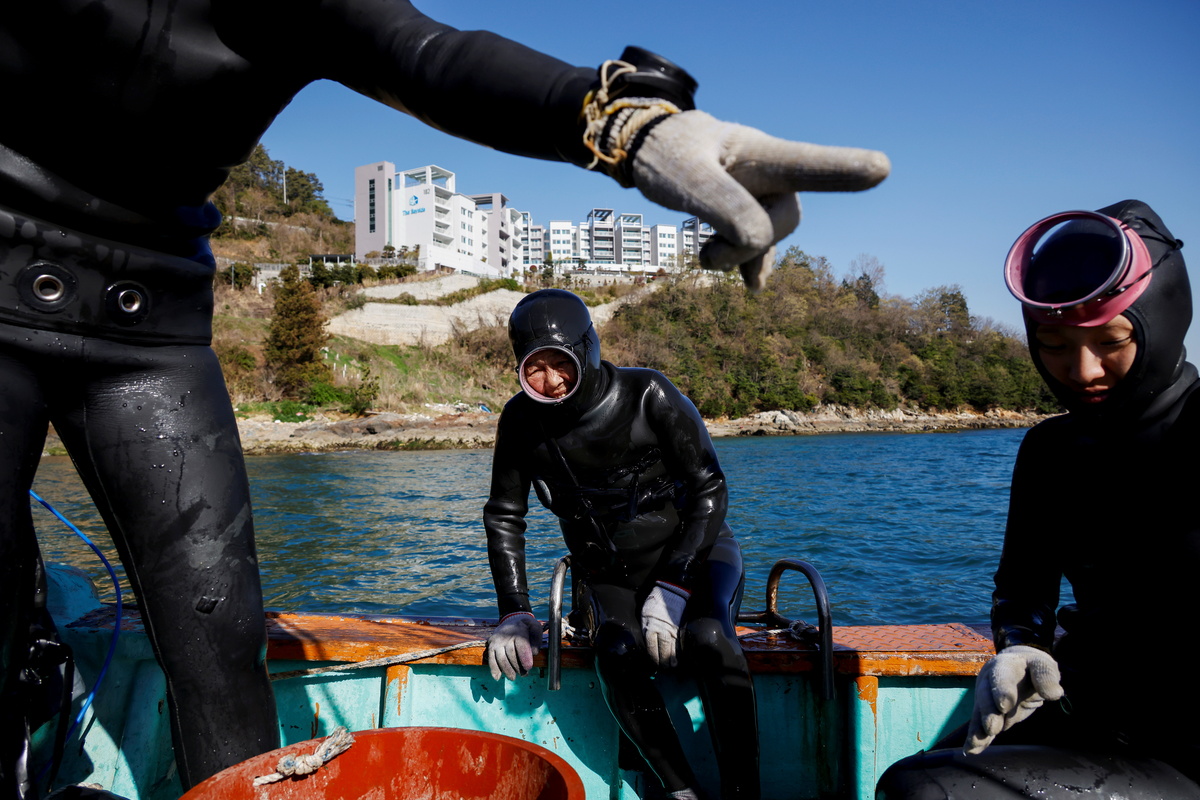
Haenyeo, also known as "sea women" Woo Jung-min, Ko Sun-a and Jin So-hee (R), 28, are seen on a fishing boat after diving in the sea off Geoje, South Korea, March 30, 2021. REUTERS/Kim Hong-Ji
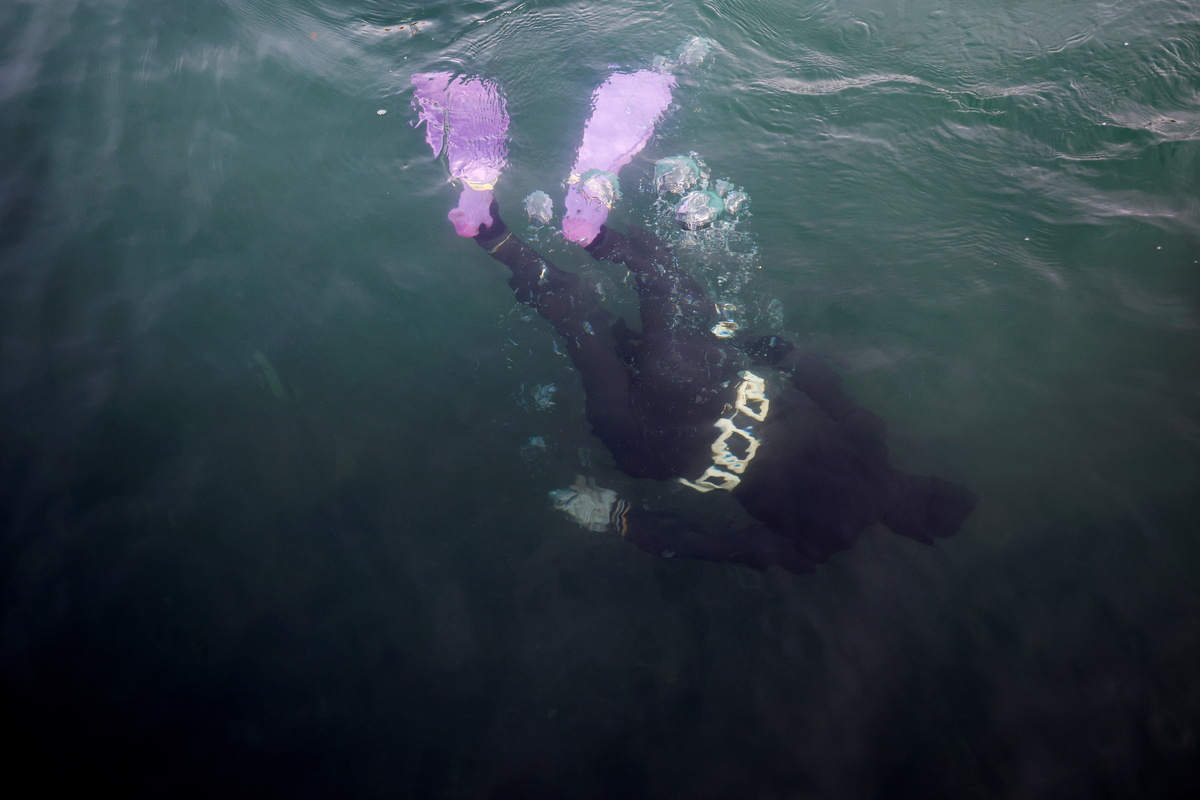
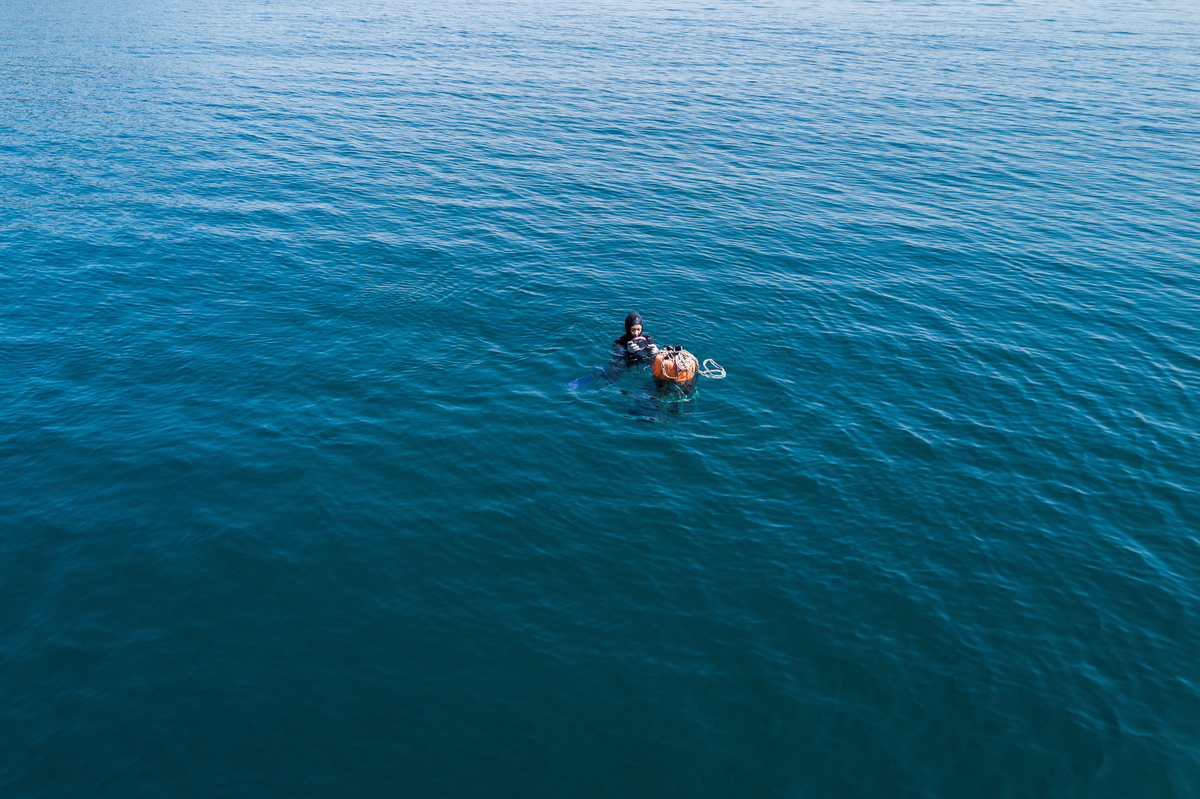
Clad in a black wet suit and pink face mask, Jin So-hee's figure cleanly parts the green-blue water until she abruptly dives below the surface, her purple fins disappearing into the deep.
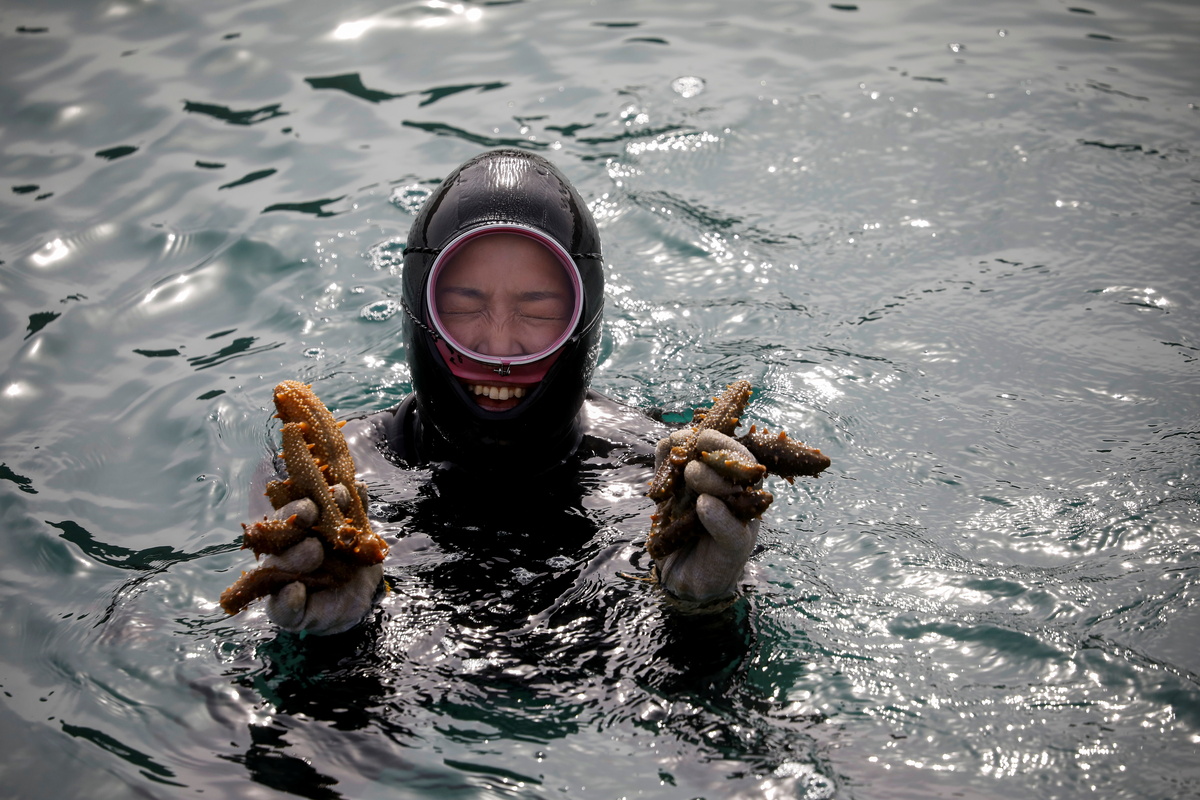
When she resurfaces a minute and a half later, her gloved hands grip six or seven sea cucumbers, their spiked backs glistening in the sun.
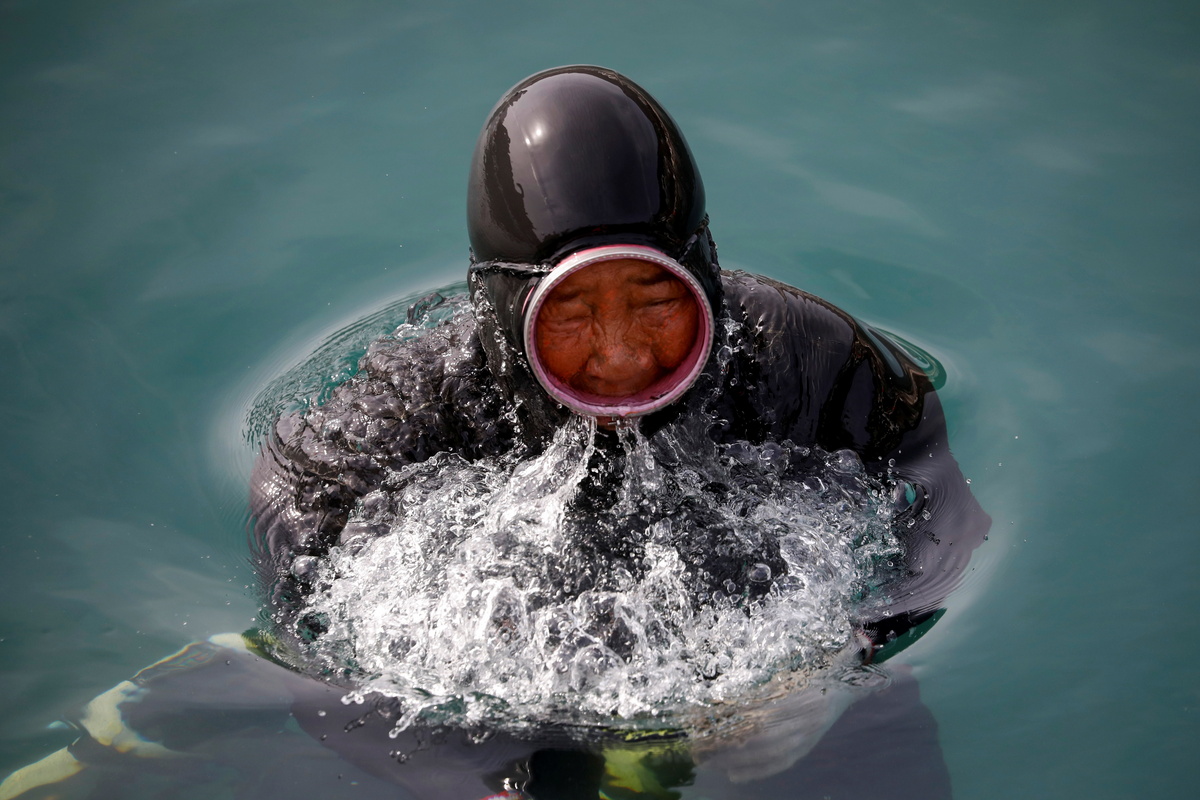
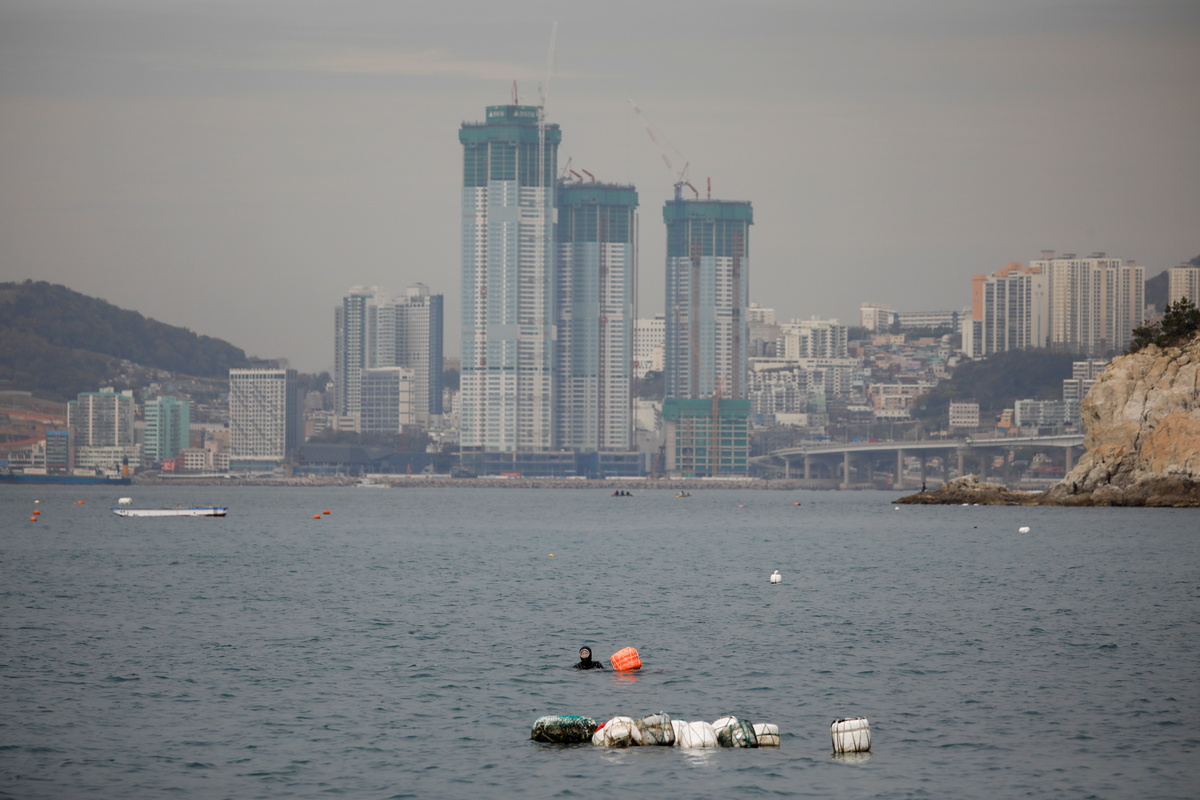
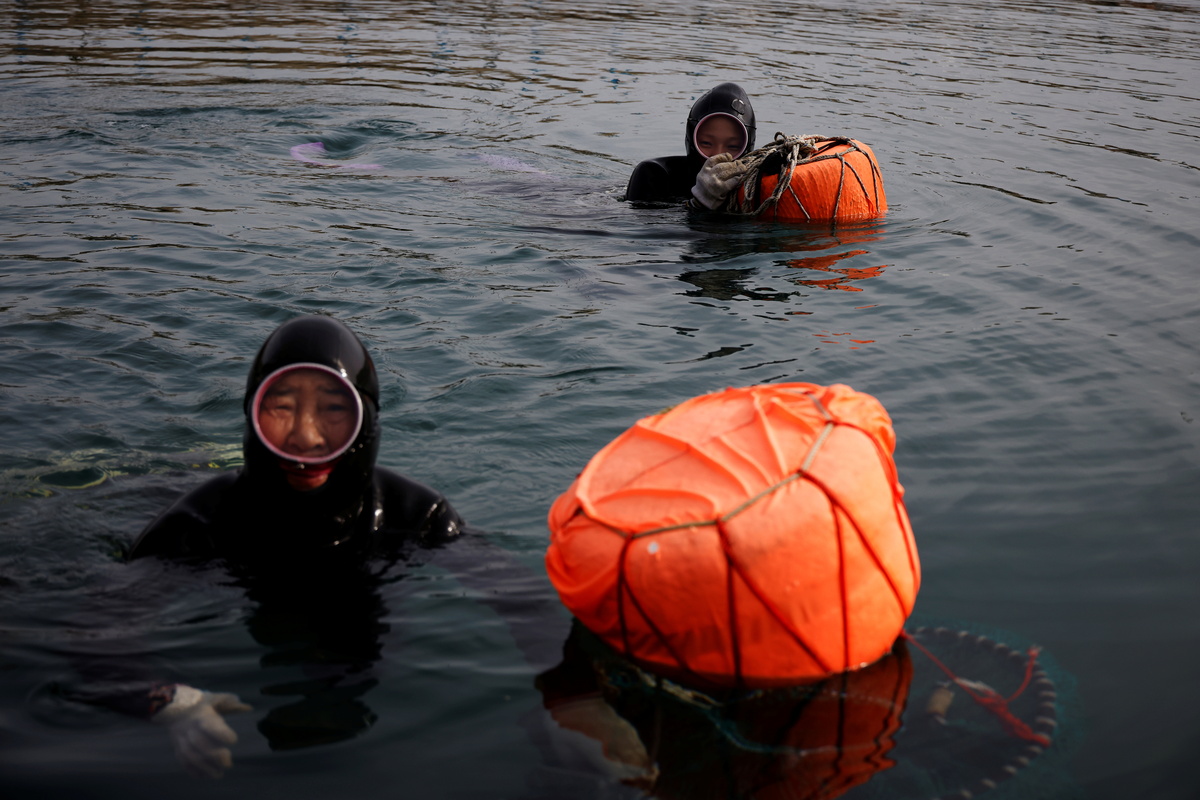
Kim Myung-soon, a haenyeo, also known as a "sea woman", comes up for air as she dives in the sea off Geoje, South Korea, March 31, 2021. REUTERS/Kim Hong-Ji
"This is the biggest one, what do we do?" she asks her partner, Woo Jung-min. "The boss is going to be mad. He told us to bring in the really big ones today."
Climate change and environmental pollution have made finding enough sea life to harvest more difficult for Jin, Woo, and other South Korean haenyeo, or "sea women".
For six years, Jin, 28, has dived the icy seas off the rocky shore of Geoje Island, gathering abalone, conches, seaweed and other marine life by hand to be sold in local markets.
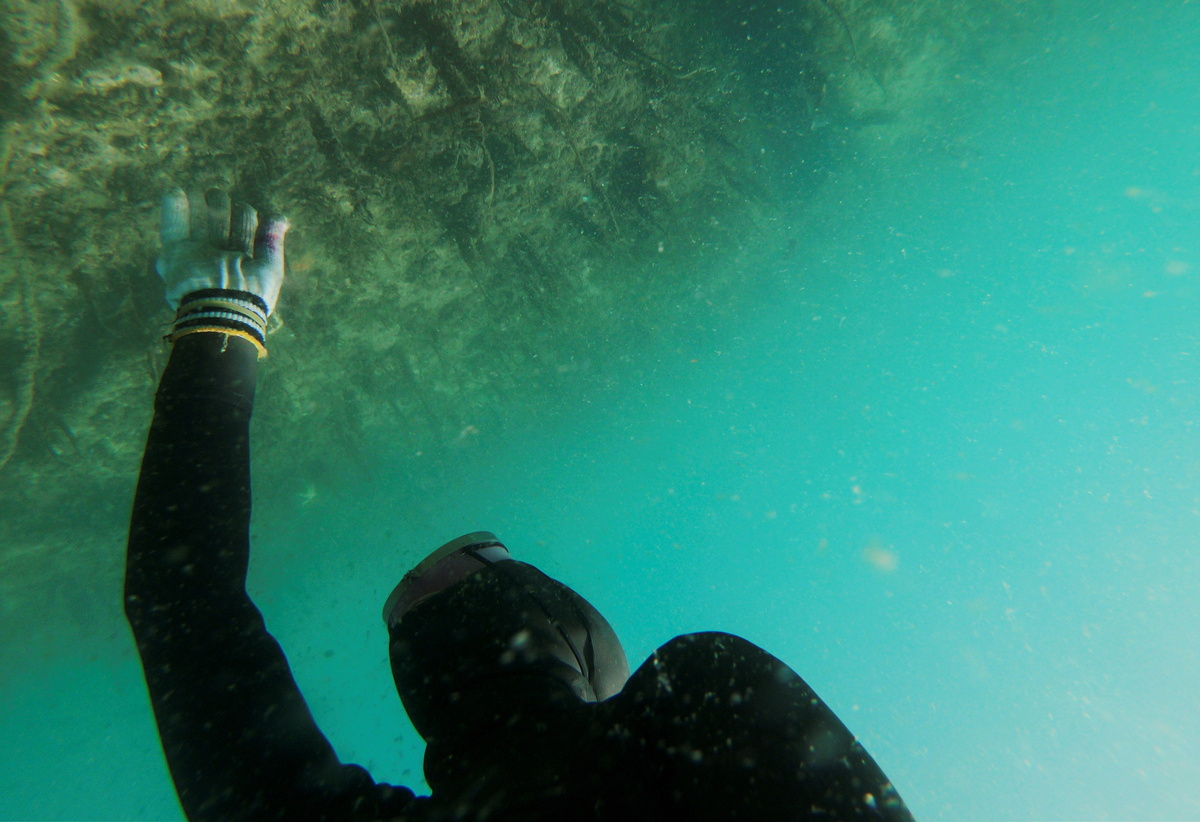
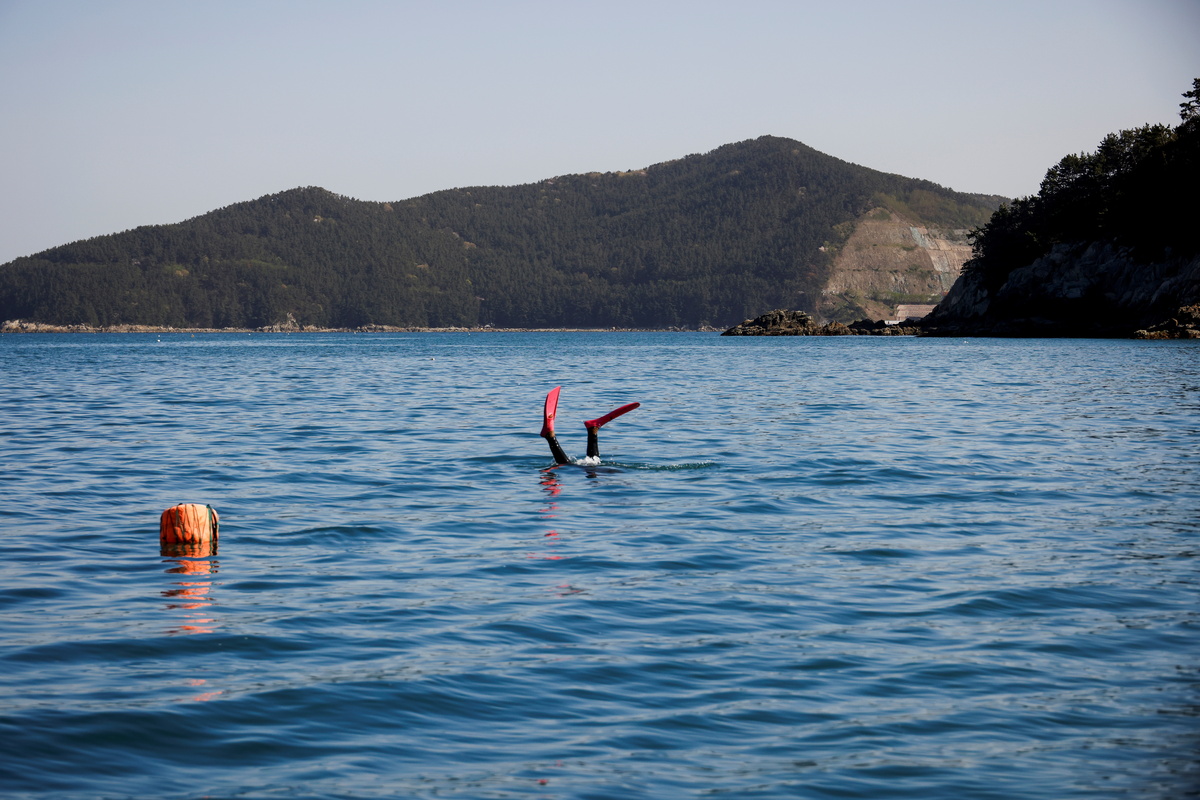
Jin So-hee, 28, a haenyeo, also known as a "sea woman", dives into the water to harvest sea cucumbers in the sea off Geoje, South Korea, March 30, 2021. Jin So-hee/Handout via REUTERS
Every year the waters are a little less icy - warming as much as 2.6 times more than the world average - changing the undersea habitat and casting doubt on the future of the haenyeo.
Jin and Woo, 35, are some of the youngest women following a centuries-old tradition of free-dive fishing without oxygen that has already faced massive upheaval in the face of advances in fishing practices and altered village life in the high-tech world of modern South Korea.
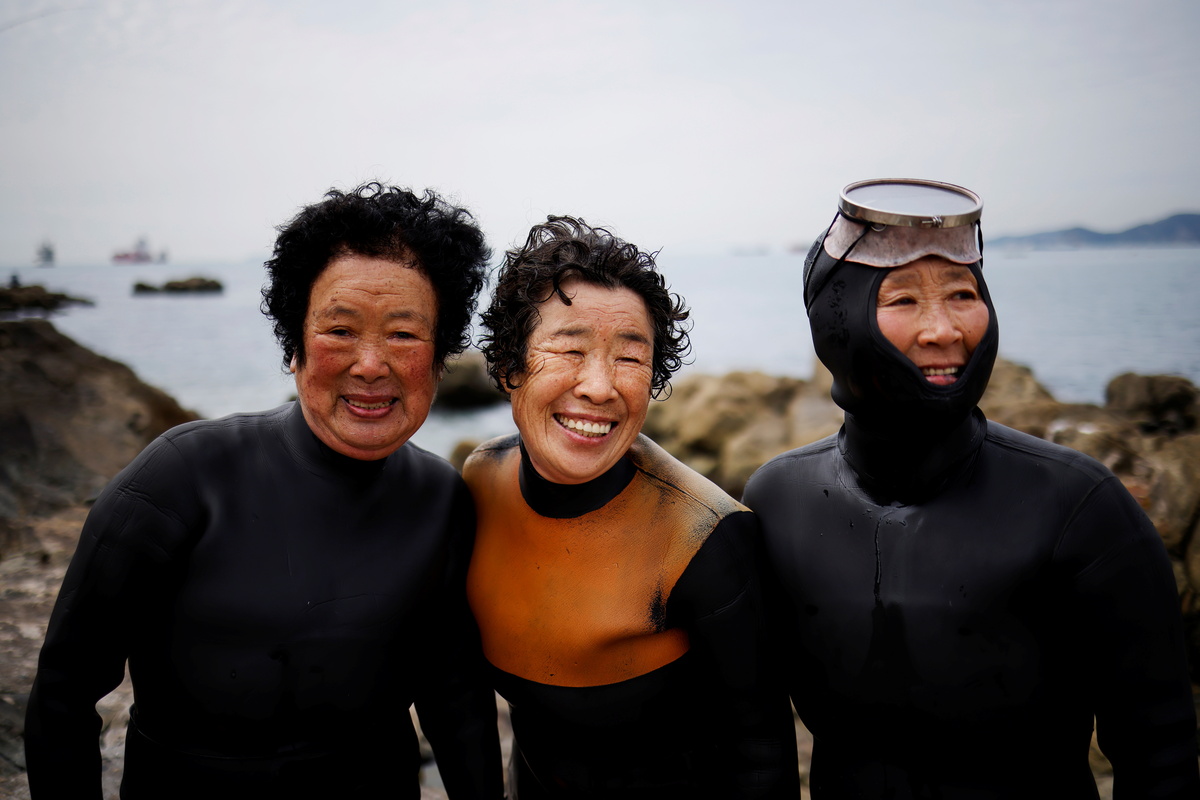
The vast majority of living haenyeo are now over the age of 70, and in neighbouring Busan, veteran divers told Reuters catches are now a fraction of what was harvested decades ago.
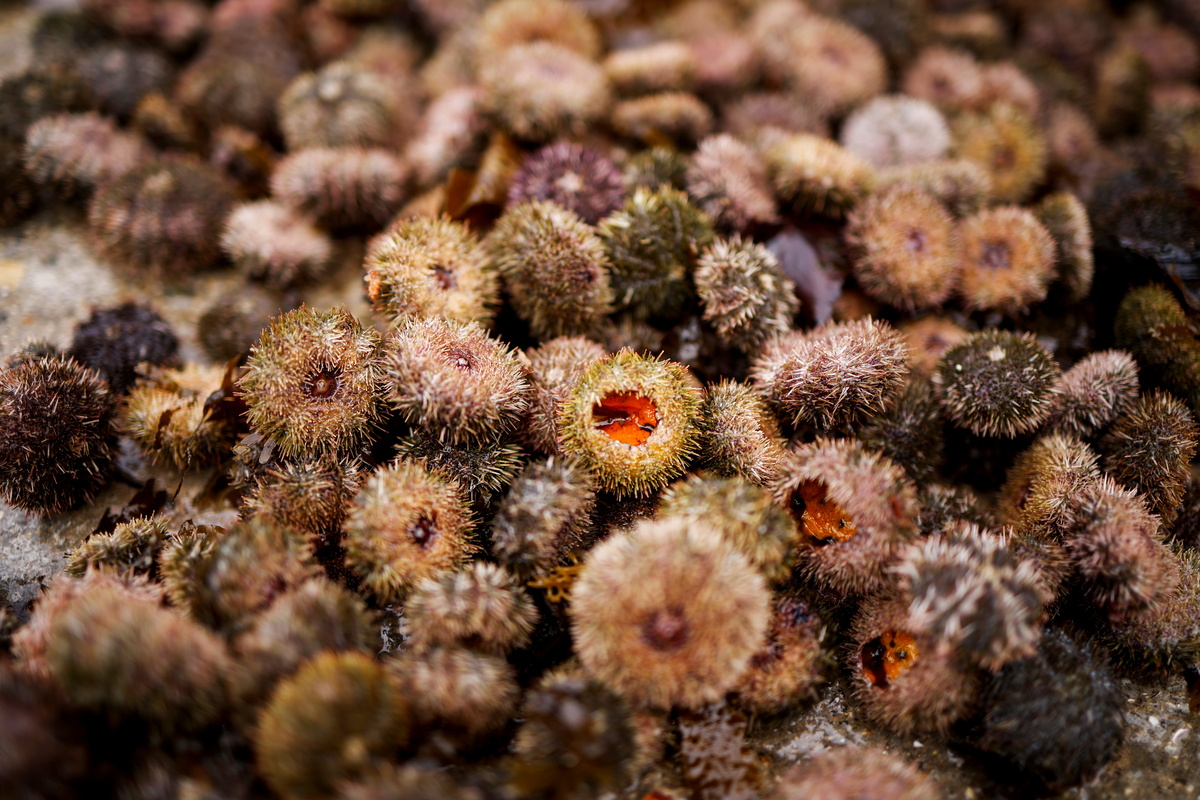
Sea urchins that were harvested by senior haenyeo, also known as "sea women", are pictured in Busan, South Korea, April 6, 2021. REUTERS/Kim Hong-Ji
"I’ll continue unless I’m sick, and my wish is this seafood can live until then so that I can continue this work," said 86-year-old Ko Bok-hwa, who has been a diver since she was 13.
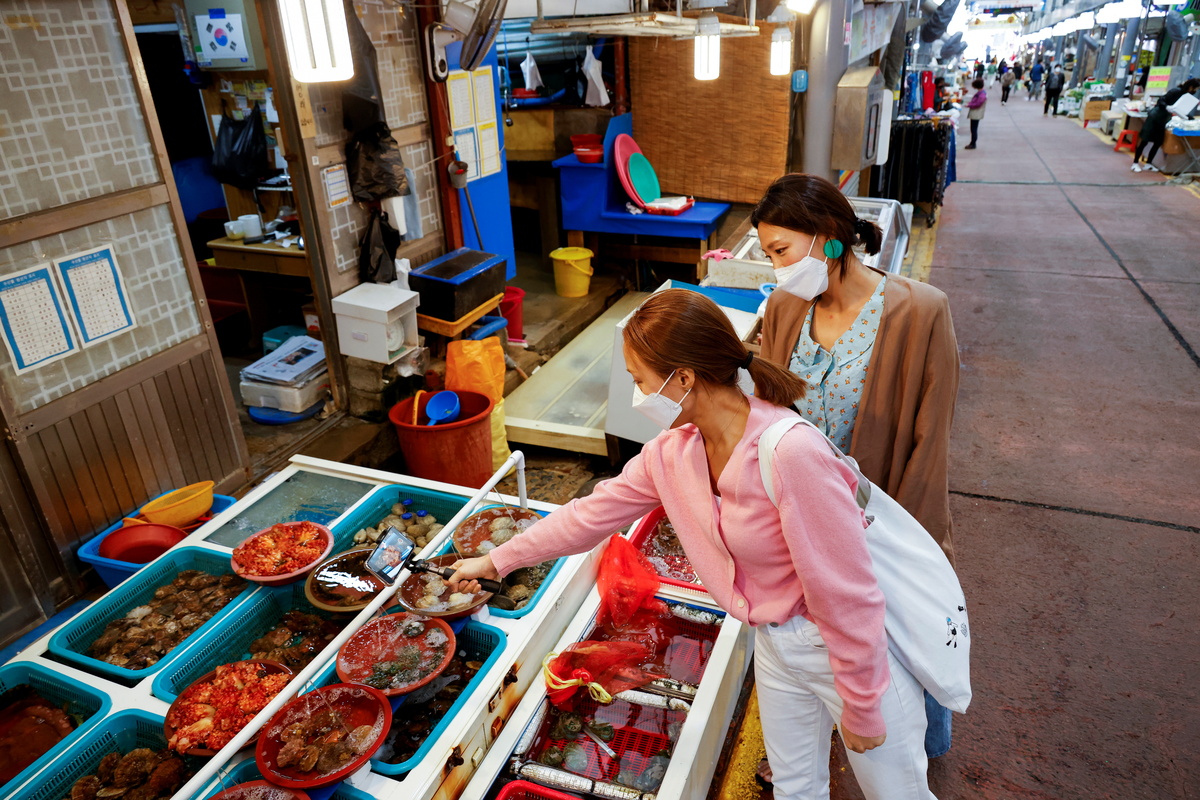
Jin and Woo have tried to adapt, running a YouTube channel called "Yozum Haenyeo" (Modern Sea Women) to chronicle their lives and work, with their most popular video garnering more than 600,000 views.
But climate change may permanently dash their hopes of spending their lives working as free divers.
Senior haenyeo, also known as "sea women" Jung Sun-ja, 84, Yoon Yeon-ok, 74 and Ko Keum-sun, 69, pose for a photograph after working in the sea in Busan, South Korea, April 6, 2021. REUTERS/Kim Hong-Ji
"I thought that as long as my body is healthy, I could have been the oldest haenyeo when I'm 90 or 100," Jin told Reuters.
"Now that I think about it, my health is not the only concern. I’m worried this job will change drastically or even disappear because of climate change."
INVASIVE SPECIES, VANISHING SEAWEED
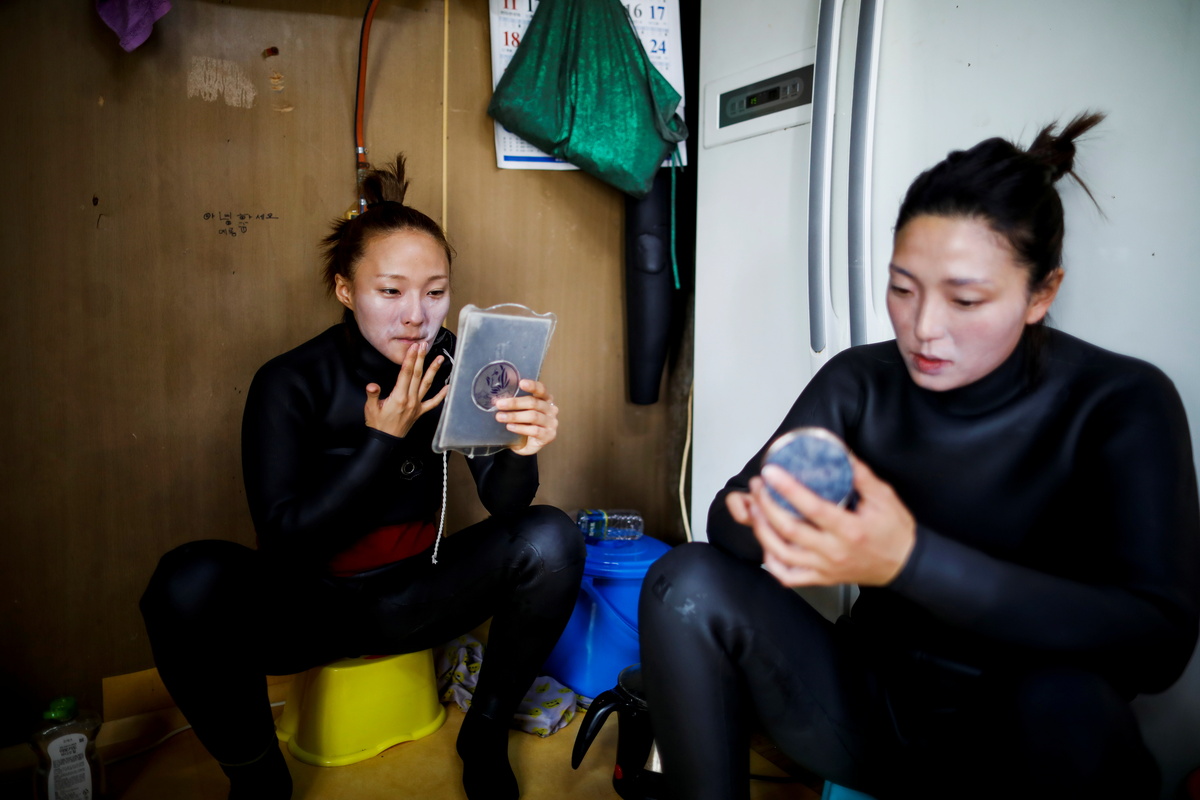
Haenyeo, also known as "sea women" Jin So-hee, 28, and Woo Jung-min, 35, apply eco-friendly sun screen on their faces as they prepare to work in the sea off Geoje, South Korea, March 31, 2021. REUTERS/Kim Hong-Ji
Anecdotal evidence observed by haenyeo on the front lines of the changing environment is confirmed by South Korean scientists seeking to study and protect the country's fisheries.
"Climate change caused the change of habitat of sea life and the influx of non-native species," said Ko Jun-cheol, a researcher at the National Institute of Fisheries Science.
Between 1968 and 2017, the sea surface temperature around Korea rose 1.2 Celsius (2.2 Fahrenheit) degrees, compared to a world average of 0.48 Celsius degrees, he said.
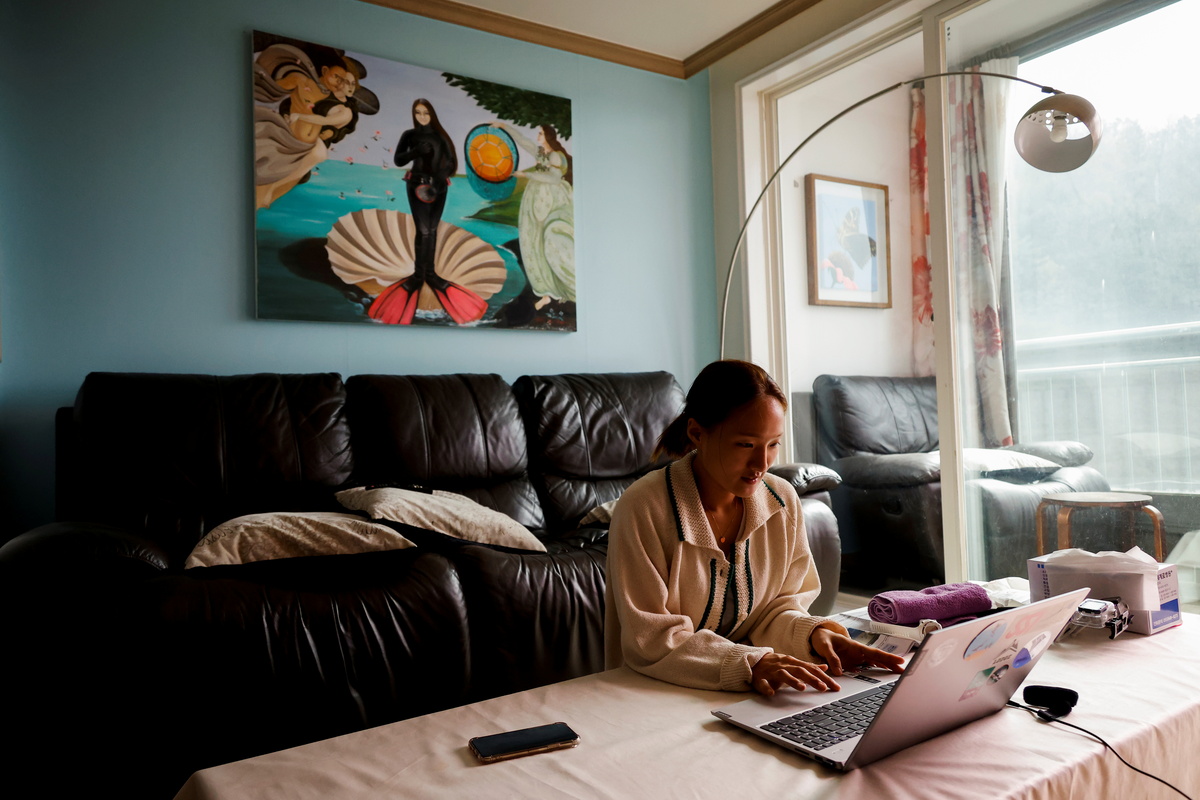
Jin So-hee, 28, a haenyeo, also known as a "sea woman", checks the weather forecast at her home in Geoje, South Korea, March 30, 2021. REUTERS/Kim Hong-Ji
Warmer waters have brought new, subtropical species that have displaced the haenyeo's traditional catch, and changed the sea floor habitat by introducing more stony coral and killing off seaweed forests. Large beds of seaweed have disappeared, replaced by rock-like coralline algae and resulting in the decrease of marine resources.
As recently as the 1990s, scientists would see one or two subtropical species around the islands of Korea's south coast, but a study covering the years 2012-2020 found 85 kinds of subtropical species, accounting for more than half of all sea life in some places, Ko said.
Since 2011 the government has also been working to reverse the ocean desertification caused by climate change.
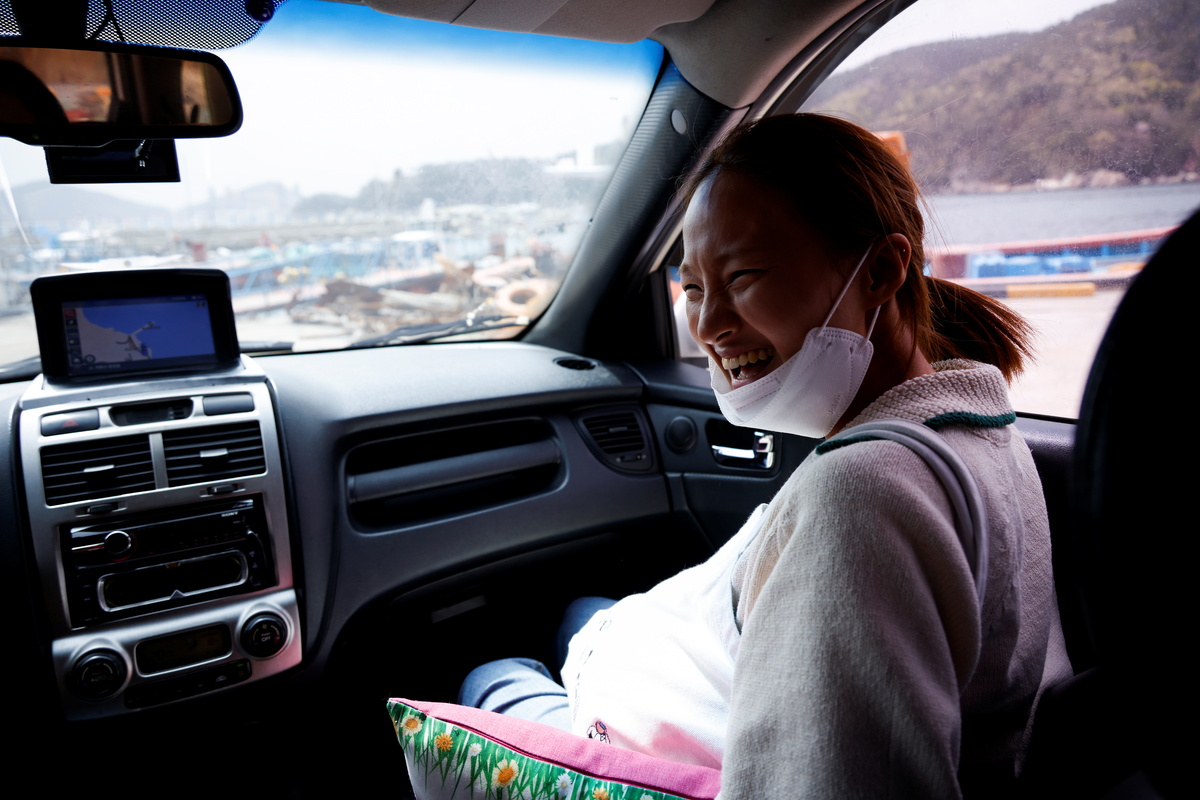
Jin So-hee, 28, a haenyeo, also known as a "sea woman", talks to her colleague Woo Jung-min (not pictured) on the way to work in Geoje, South Korea, March 30, 2021. REUTERS/Kim Hong-Ji
The Marine Forest Creation Project involves planting new seaweed, which helps absorb carbon dioxide from the water, and removing the invasive sea urchins that eat the marine plant, said Jeon Byung-hee, an official with the Korea Fisheries Resources Agency's Ecological Restoration Division.
"If seaweeds disappear, it takes away a source of food for animals, spawning grounds, and habitats," he said.
'REALLY SERIOUS'
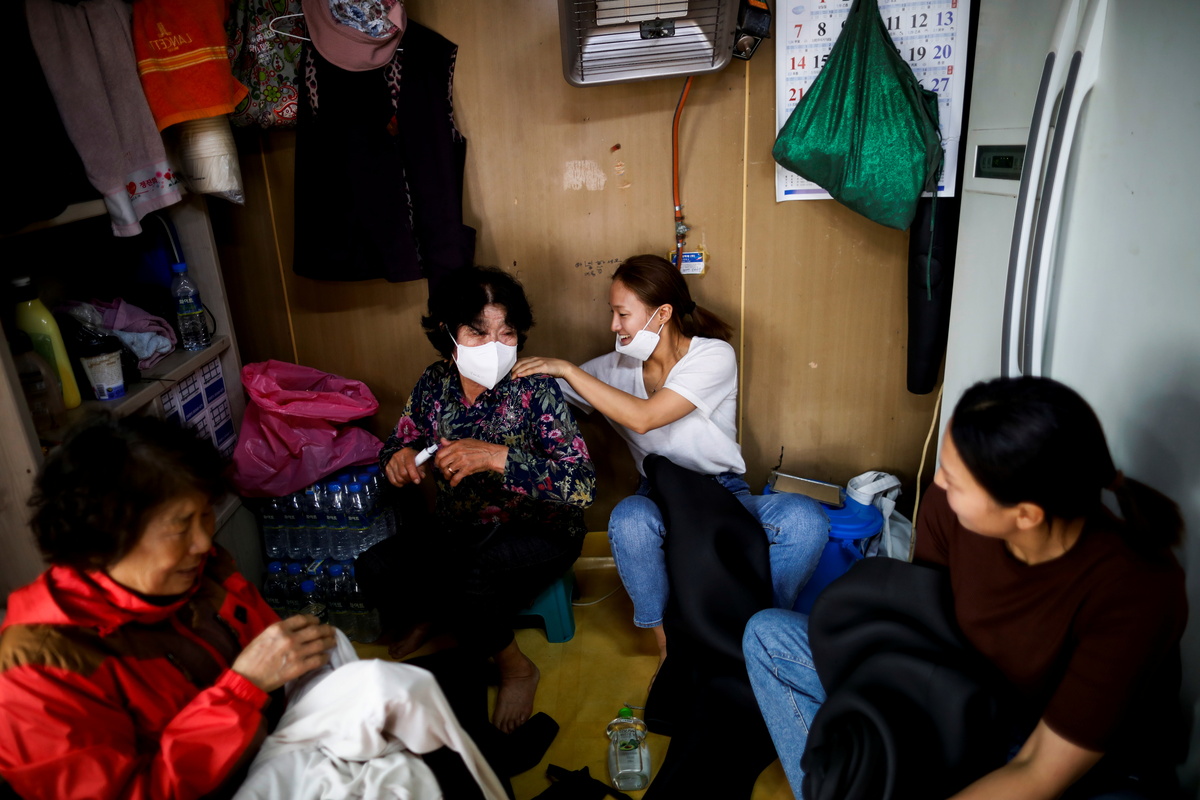
Jin So-hee, 28, a haenyeo, also known as a "sea woman", gives a shoulder massage to Ko Sun-a, a senior haenyeo, before going out to the water to work in the sea, in Geoje, South Korea, March 30, 2021. REUTERS/Kim Hong-Ji
With less seaweed, which the haenyeo also harvest as food, the women increasingly have to dive deeper, Jin said.
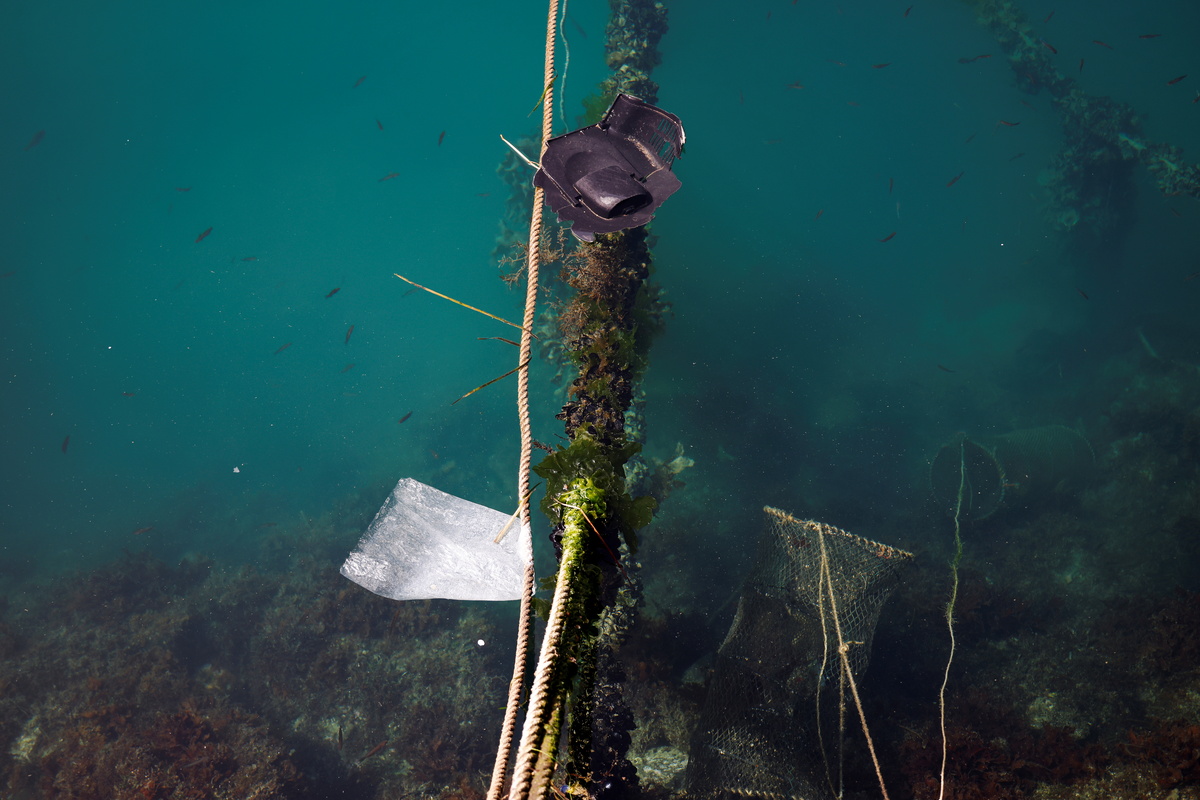
That's more physically challenging, and the women say they have to deal with more pollution as well, further complicating their already dangerous jobs.
"I’m finding more golf balls than sea cucumbers now," Jin said.
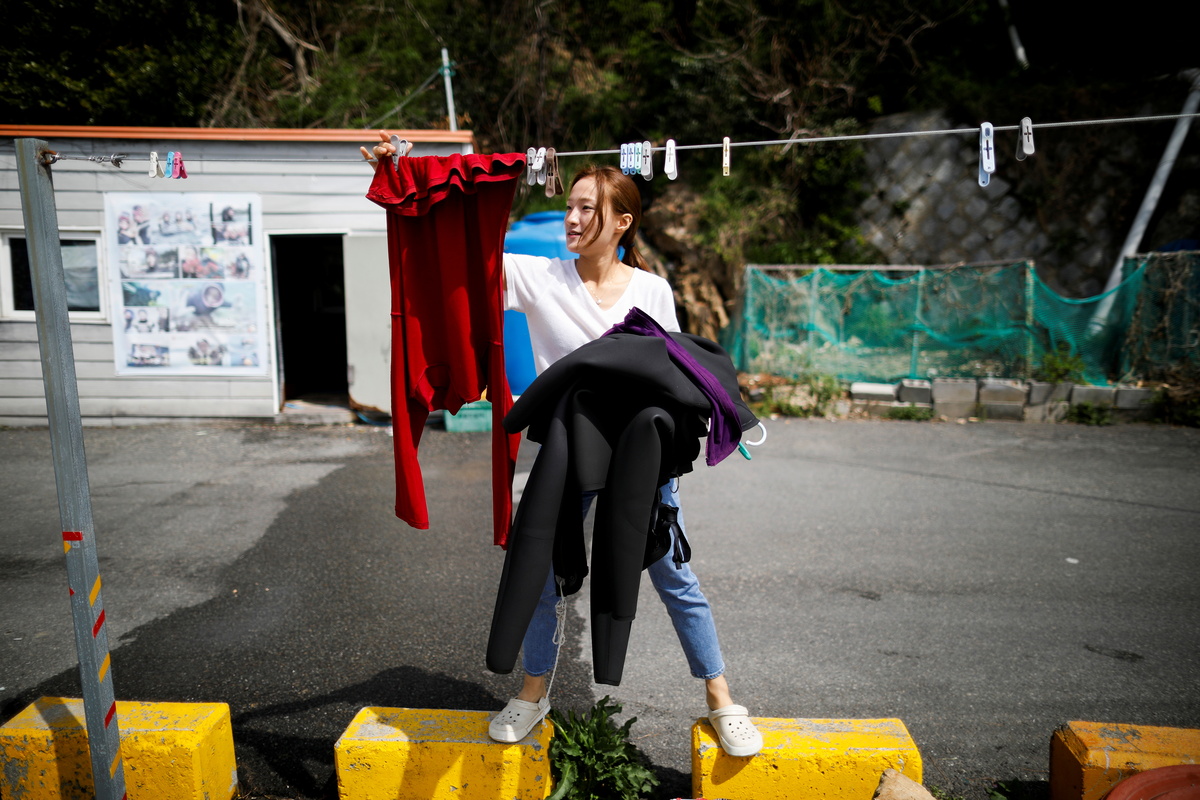
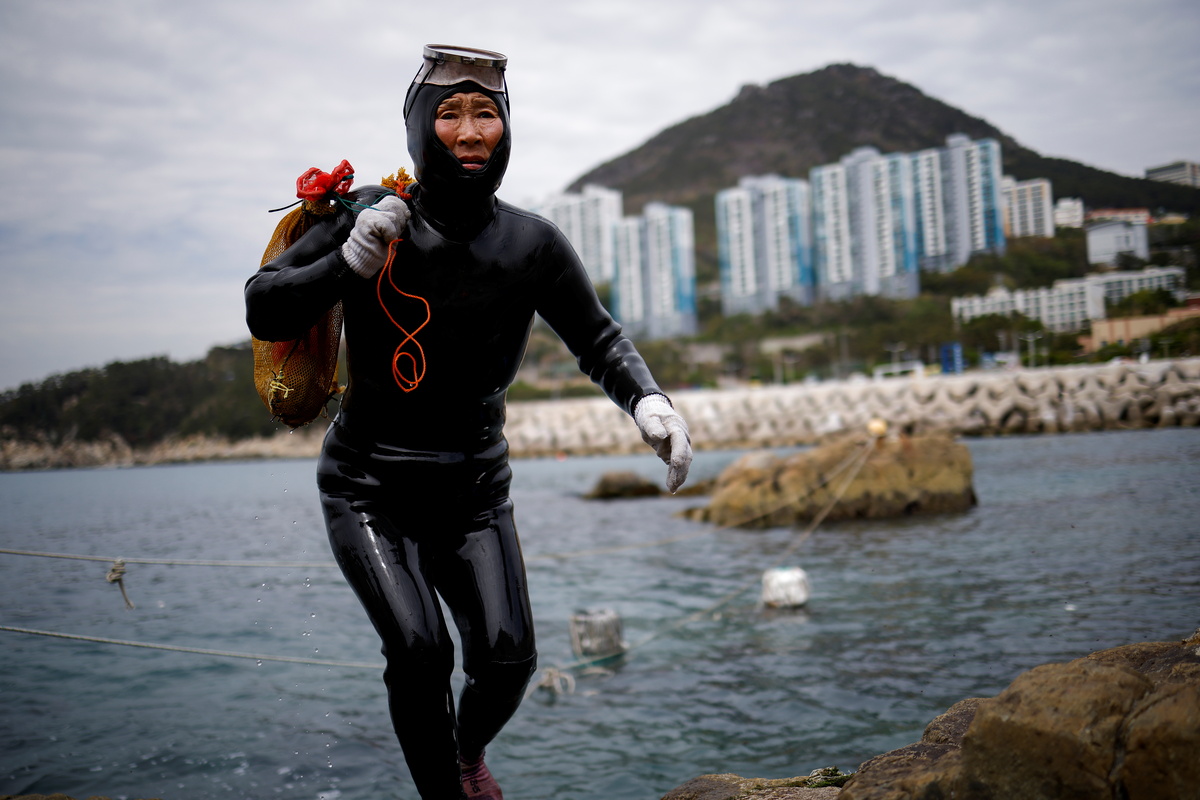
Jin So-hee, 28, a haenyeo, also known as a "sea woman", collects diving suits from a washing line as she prepares to work in the sea, at a port in Geoje, South Korea, March 31, 2021. REUTERS/Kim Hong-Ji
The haenyeo say the changes are becoming more pronounced every year, which is of particular concern for the dwindling number of young divers hoping to keep the tradition alive - and make enough to keep food on their own tables.
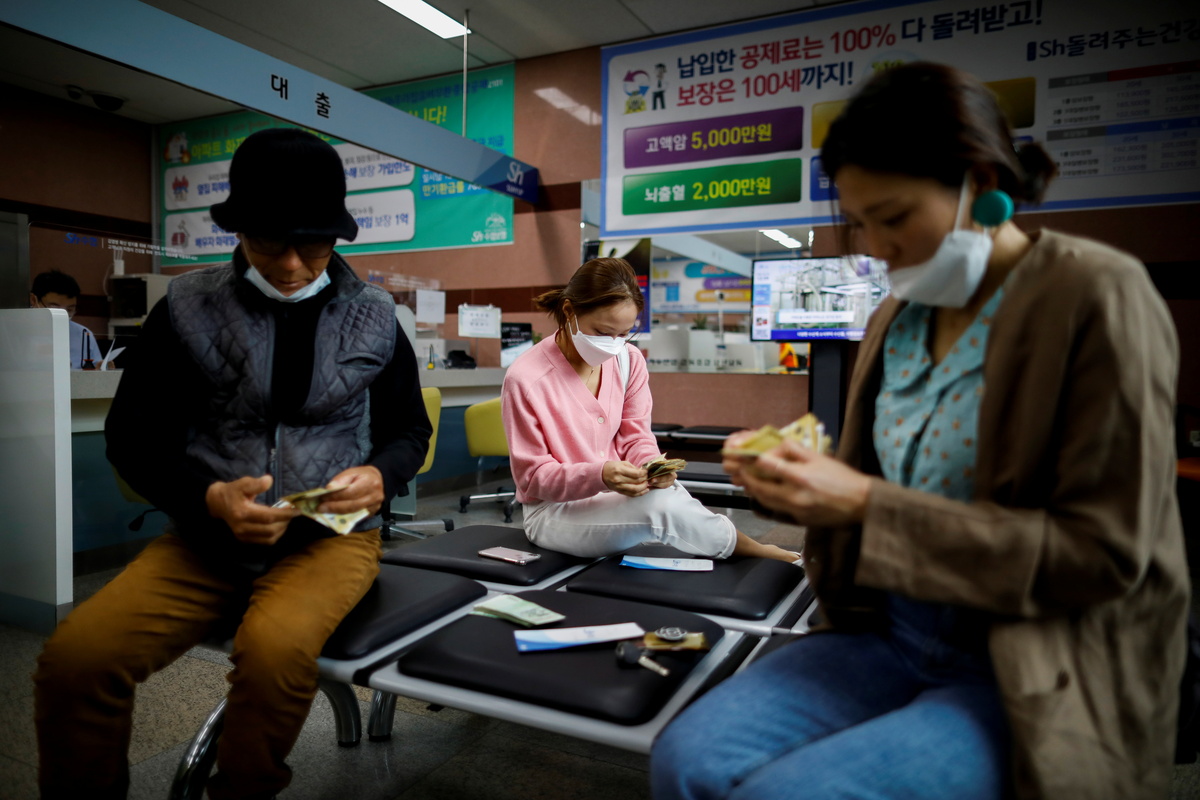
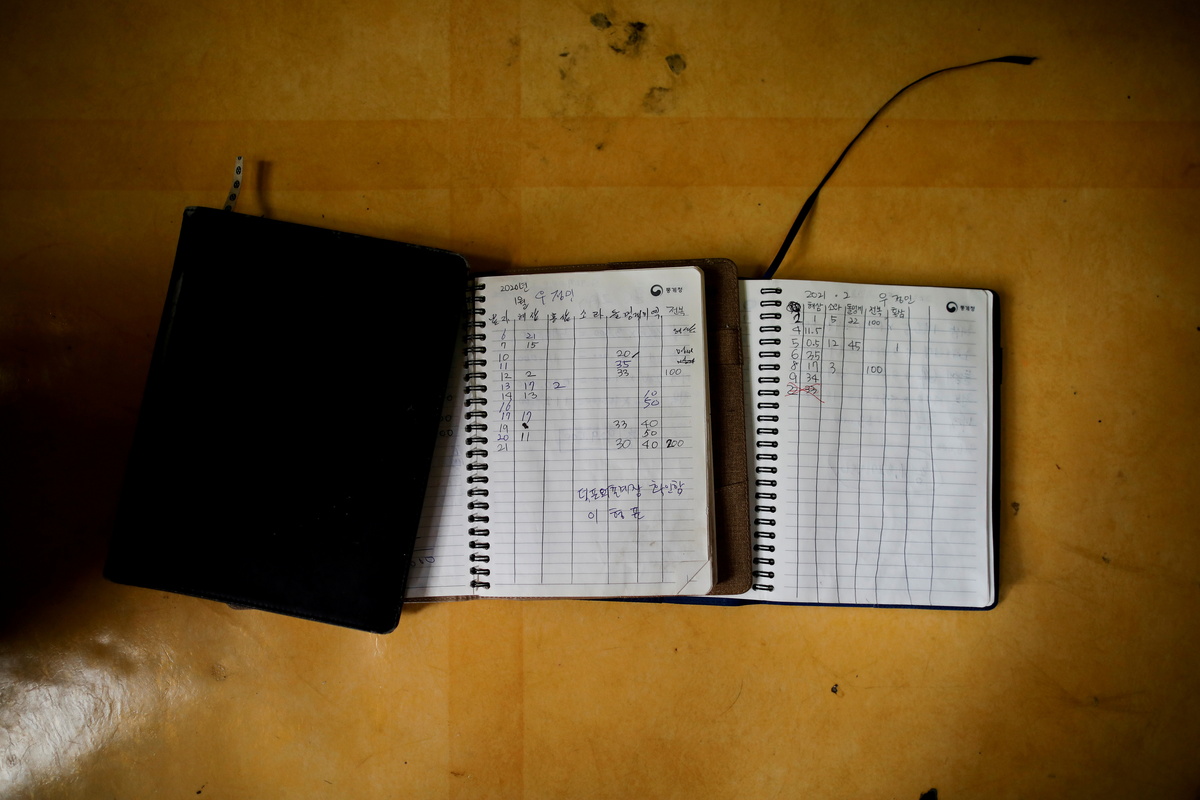
"The problems seem very real to us," Woo said after evaluating her diminished catches and tallying up her totals for a recent pay day.
"Today, I'm thinking once again, 'This is really serious.'"
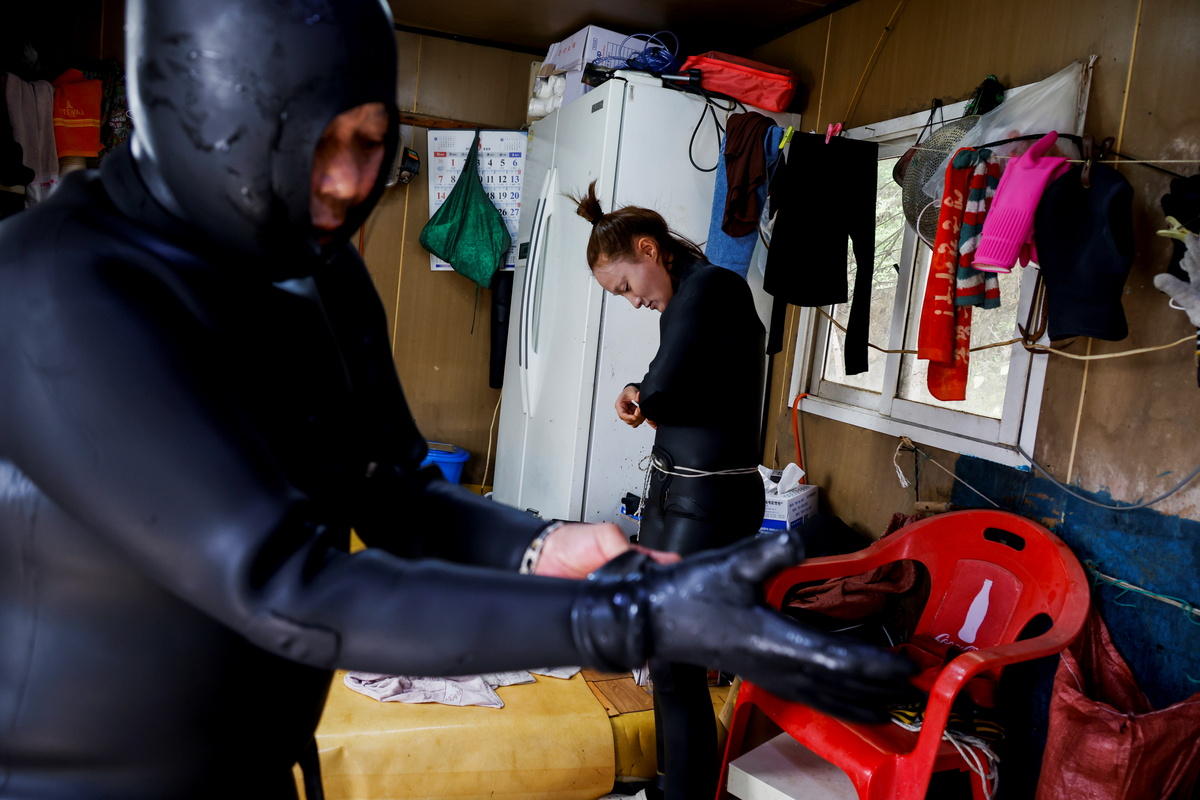
Haenyeo, also known as "sea women" Jin So-hee, 28, and Ko Sun-a, put on wet suits as they prepare to work in the sea, in Geoje, South Korea, March 30, 2021. REUTERS/Kim Hong-Ji
(Reporting by Hongji Kim and Hyun Young Yi in Geoje, and Josh Smith in Seoul; Editing by Tom Hogue)
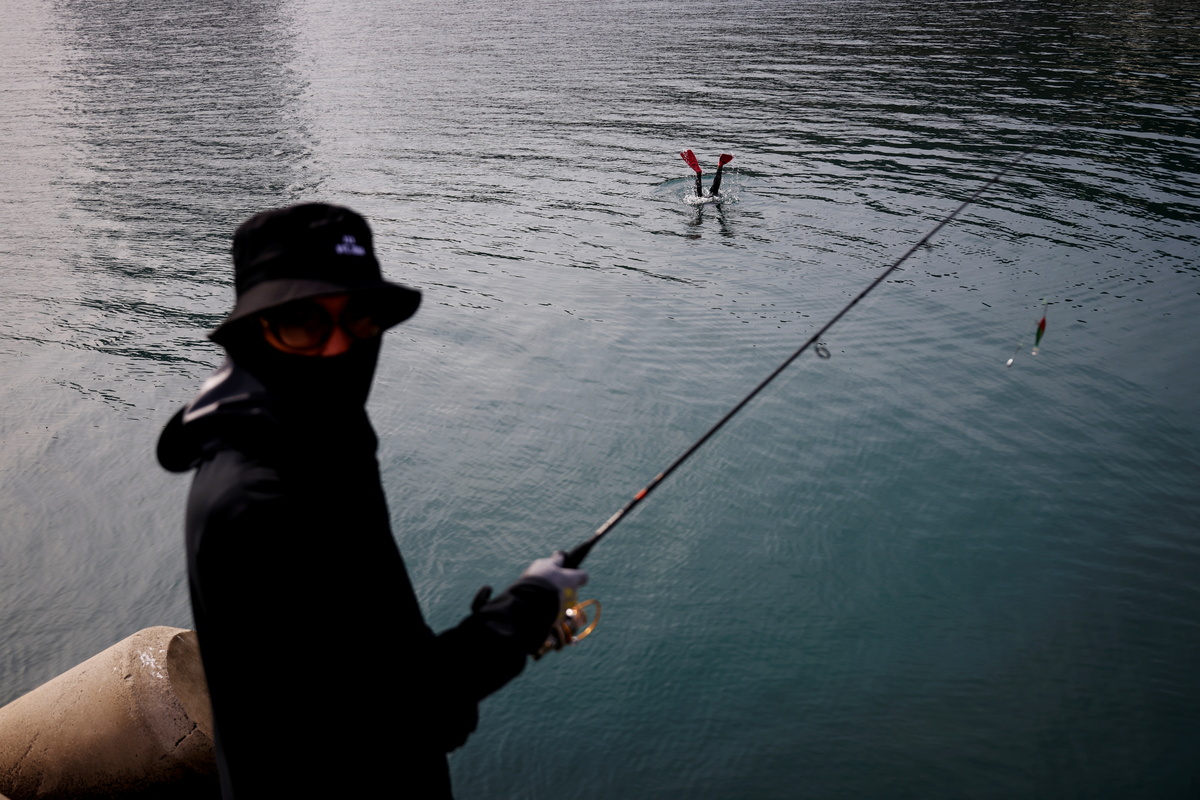
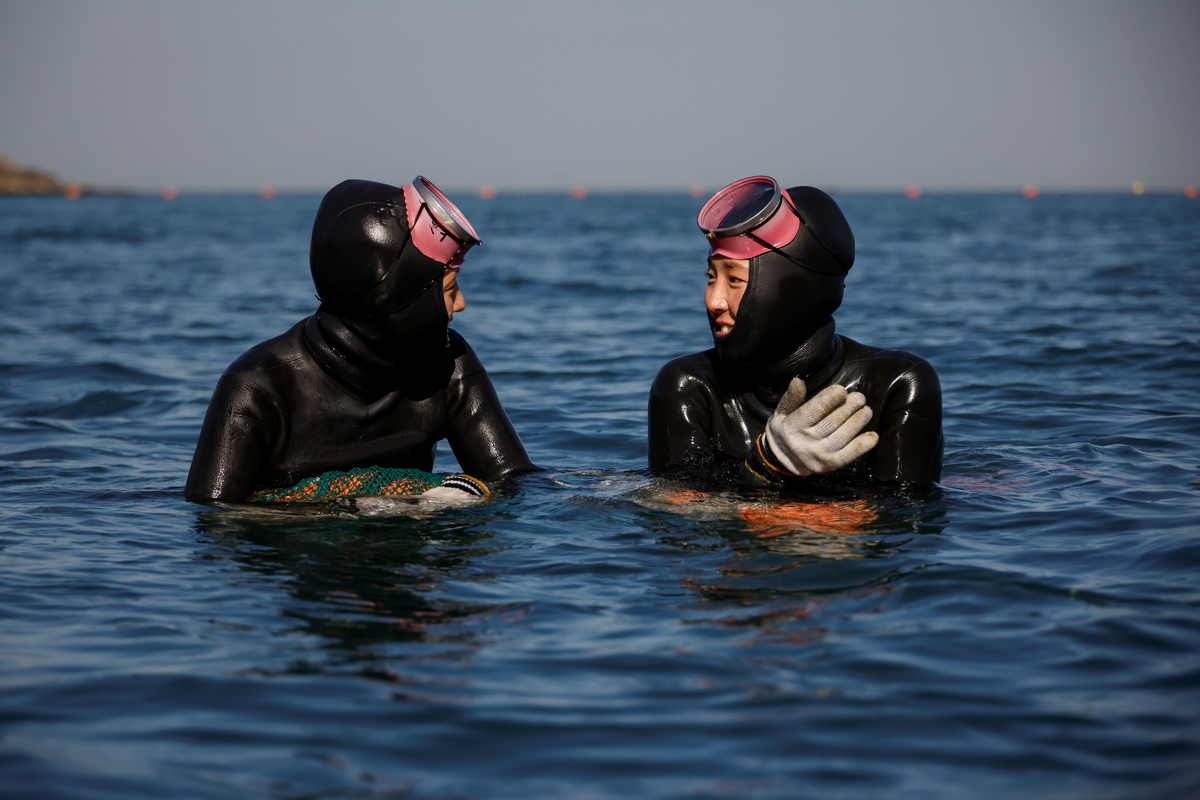
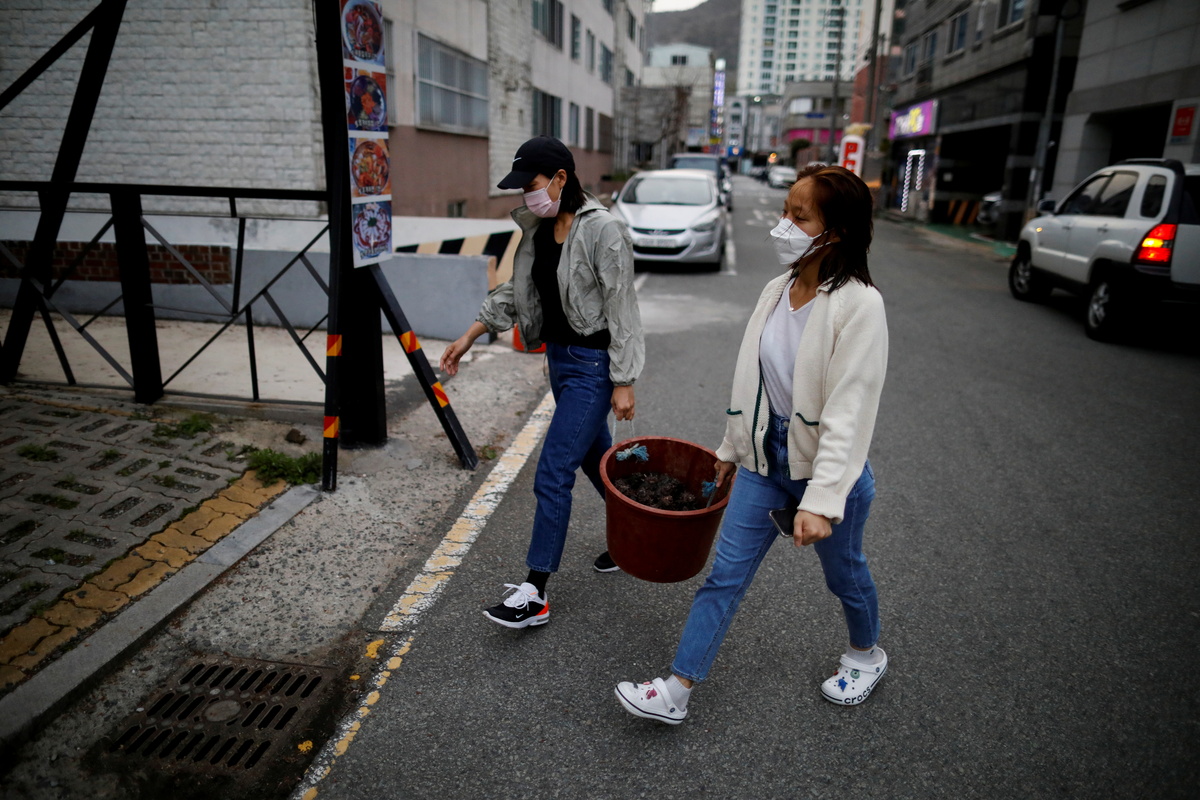
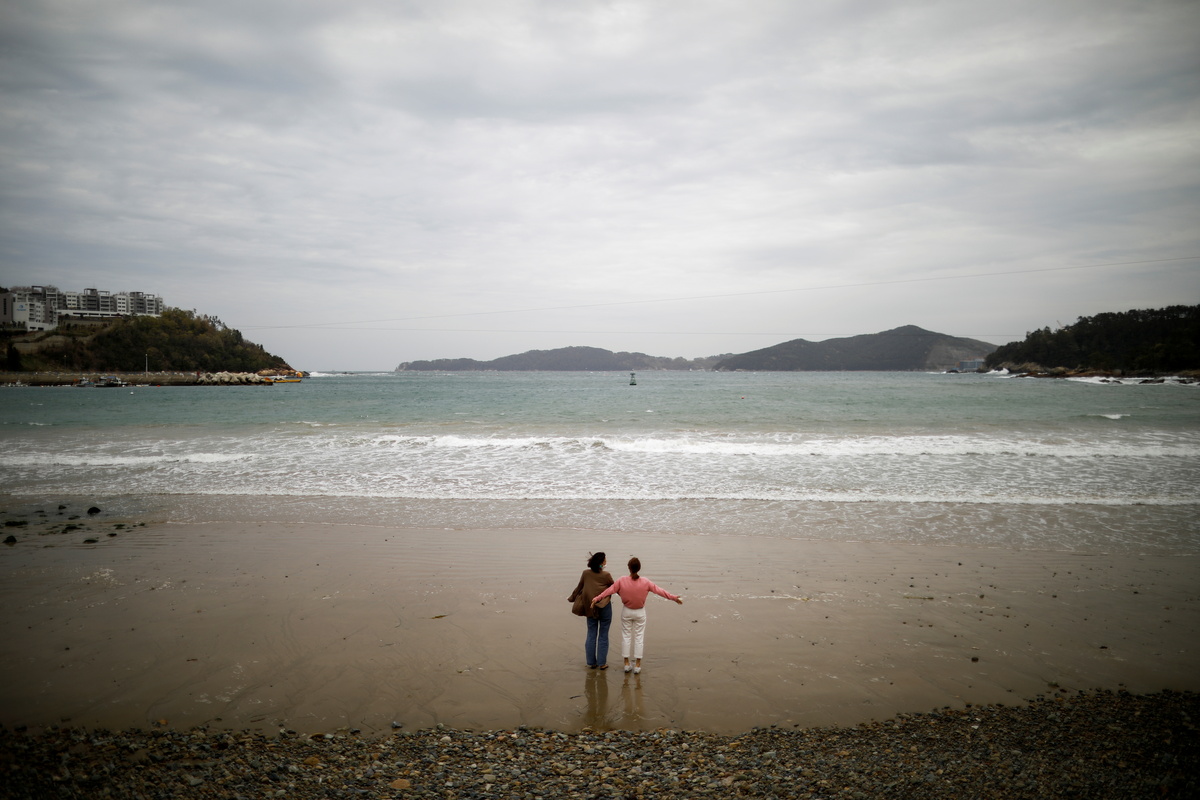
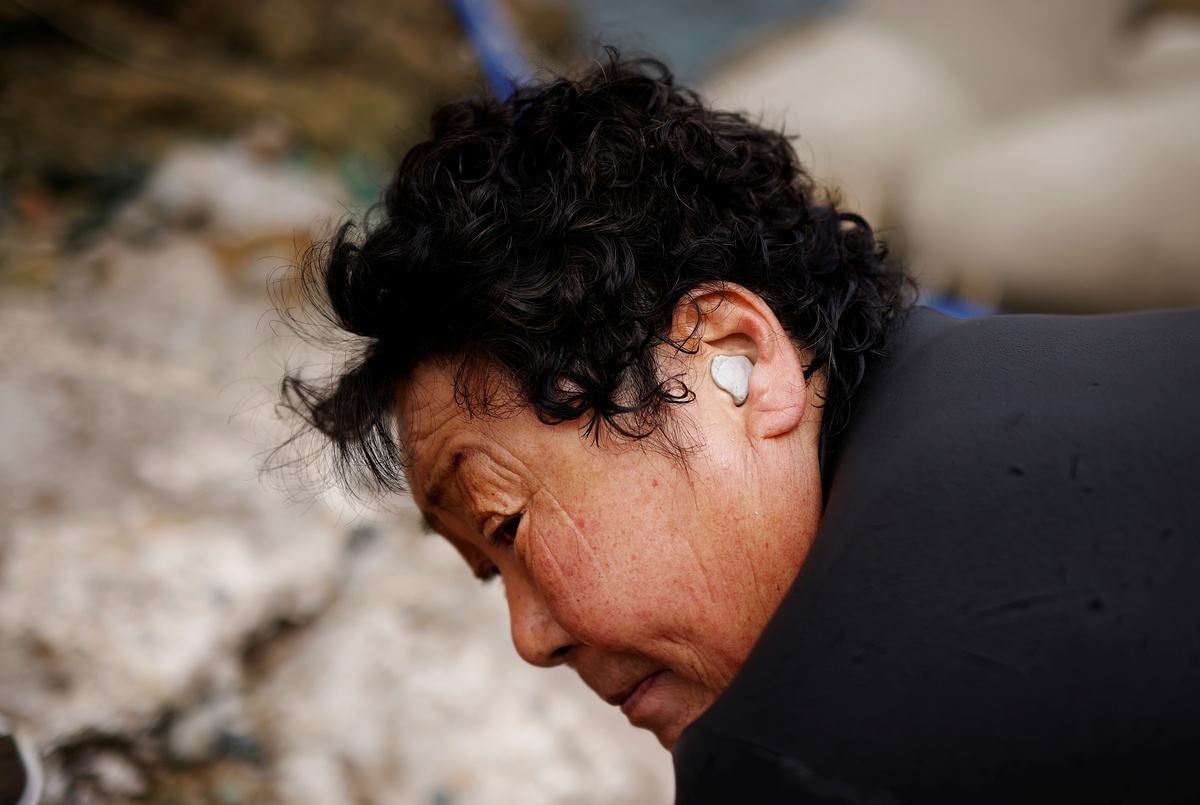
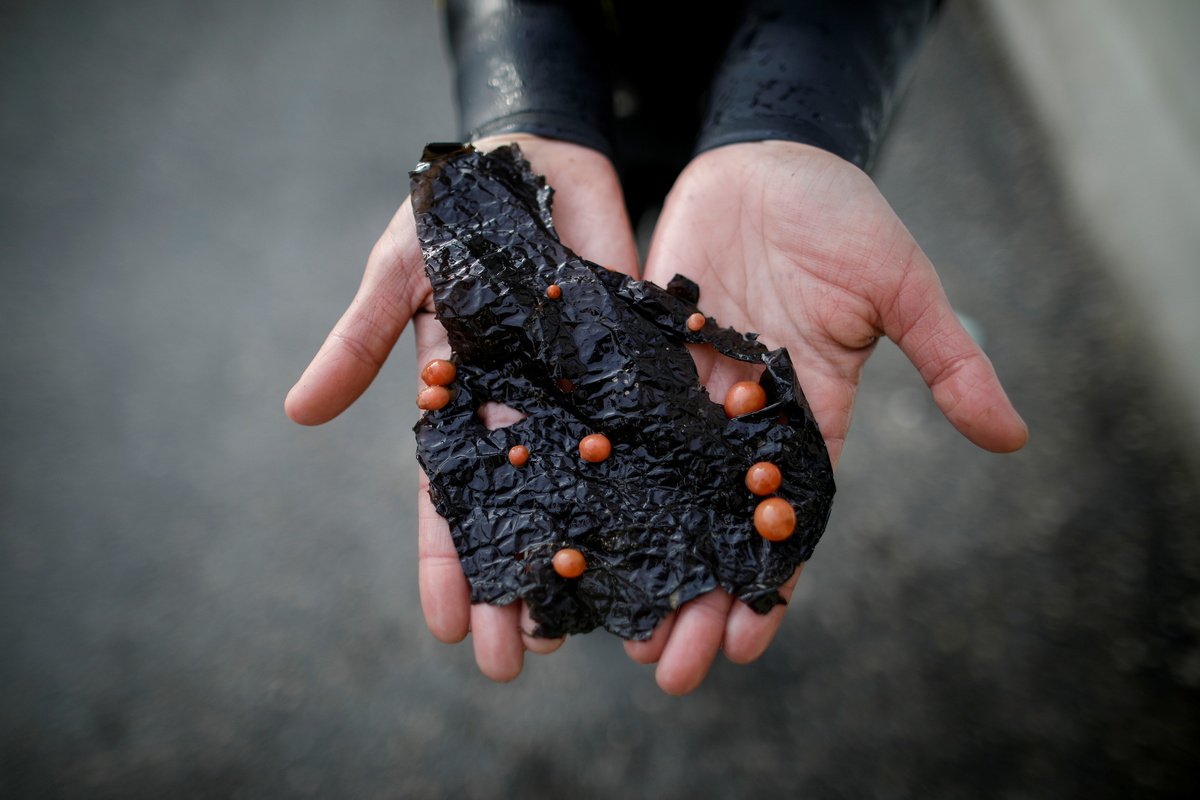
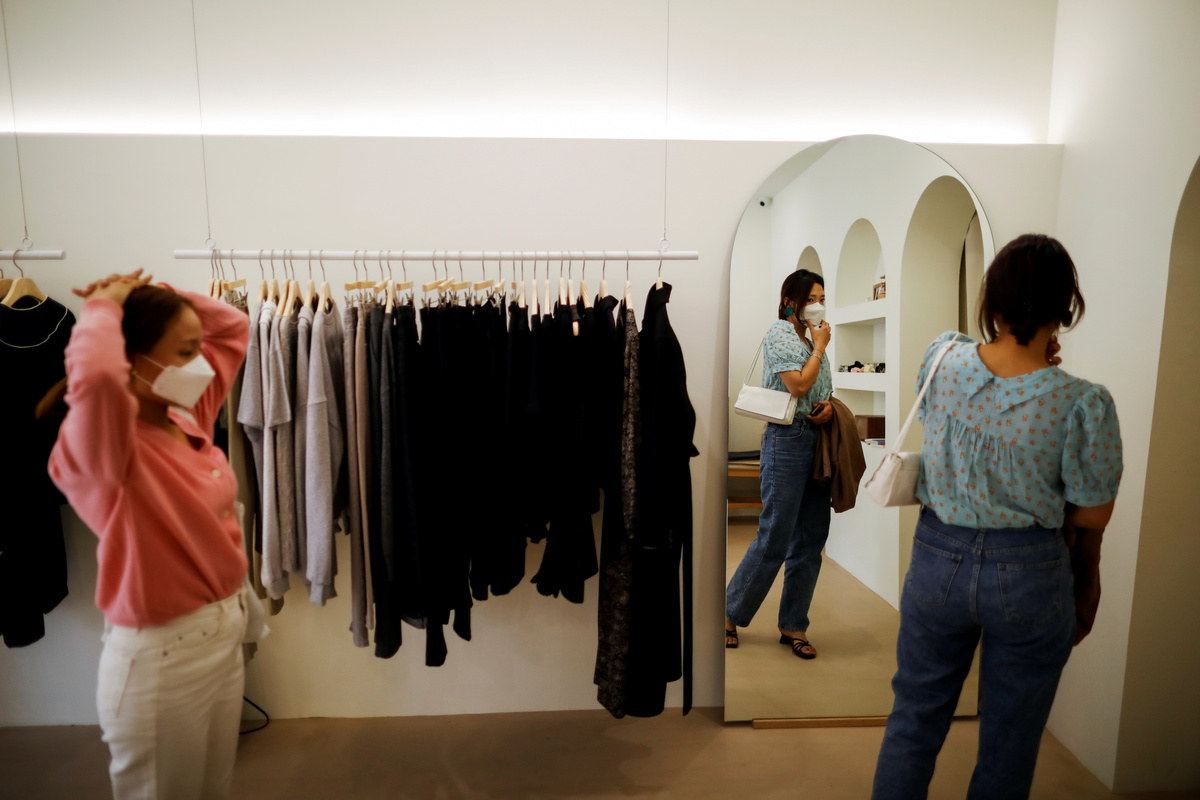
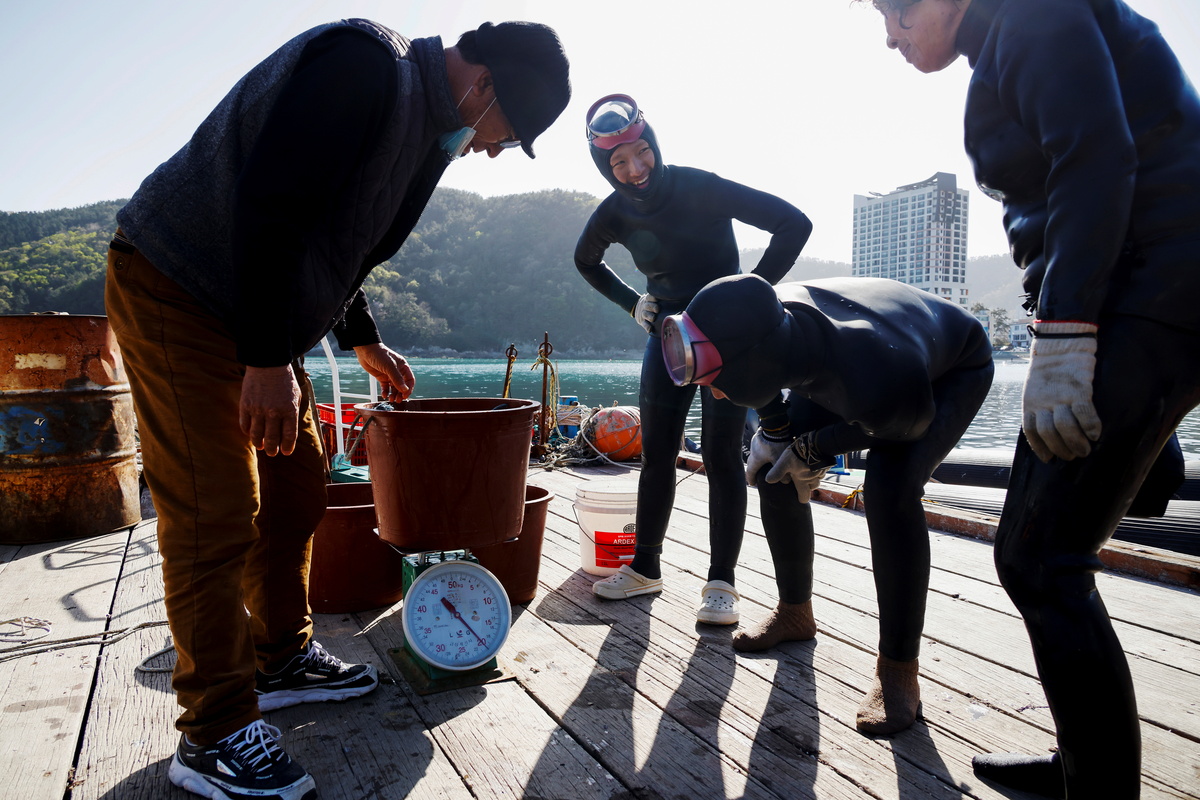
Woo Jung-min, 35, a haenyeo, also known as a "sea woman", dives into the water as she works in the sea off Geoje, South Korea, March 30, 2021. REUTERS/Kim Hong-Ji Discarded plastic waste floats in the sea off Geoje, South Korea, March 30, 2021. REUTERS/Kim Hong-Ji Woo Jung-min, 35, a haenyeo, also known as a "sea woman", poses for a photograph with sea cucumbers that she harvested in the sea off Geoje, South Korea, March 31, 2021. REUTERS/Kim Hong-Ji Jin So-hee, 28, a haenyeo, also known as a "sea woman", dives into the water to harvest sea cucumbers in the sea off Geoje in South Korea, March 31, 2021. REUTERS/Kim Hong-Ji Woo Jung-min, 35, a haenyeo, also known as a "sea woman", dives into the water near a man fishing, as she works in the sea off Geoje, South Korea, March 31, 2021. REUTERS/Kim Hong-Ji Haenyeo, also known as "sea women" Jin So-hee, 28, and Woo Jung-min, 35, talk to each other in the sea off Geoje, South Korea, March 30, 2021. REUTERS/Kim Hong-Ji Haenyeo, also known as "sea women" Woo Jung-min, 35, and Jin So-hee, 28, carry a bucket of conch to a seafood restaurant in Geoje, South Korea, March 31, 2021. REUTERS/Kim Hong-Ji Haenyeo, also known as "sea women" Jin So-hee, 28, and Woo Jung-min, 35, count money on their payday in Geoje, South Korea, April 1, 2021. REUTERS/Kim Hong-Ji Jin So-hee, 28, a haenyeo, also known as a "sea woman", works in the sea off Geoje, South Korea, March 30, 2021. REUTERS/Kim Hong-Ji A notebook belonging to Woo Jung-min, a haenyeo, also known as a "sea woman", shows a page with days written down which she was available to go diving in the sea and the amounts of seafood that was harvested in early 2020 and early 2021, pictured near the port in Geoje, South Korea, April 1, 2021. REUTERS/Kim Hong-Jiv A senior haenyeo, also known as a "sea woman", comes up for air while diving in the sea off Busan, South Korea, April 6, 2021. REUTERS/Kim Hong-Ji Haenyeo, also known as "sea women" Jin So-hee, 28, and Woo Jung-min, 35, look towards the sea as work for the day was cancelled due to strong wind, in Geoje, South Korea, April 1, 2021.REUTERS/Kim Hong-Ji Haenyeo, also known as "sea women" Jin So-hee, 28, and Woo Jung-min, 35, film a seafood stall as they work on content for their YouTube channel during their day off in Geoje, South Korea, April 1, 2021. REUTERS/Kim Hong-Ji Ko Keum-sun, 69, a senior haenyeo, also known as a "sea woman", carries sea food that she harvested in the sea, as she walks out of the water in Busan, South Korea, April 6, 2021. REUTERS/Kim Hong-Ji Ko Seung-yo, 72, a senior haenyeo, also known as a "sea woman", wears rubber clay in her ears as she walks back to the port after working in the sea in Busan, South Korea, April 6, 2021. REUTERS/Kim Hong-Ji Woo Jung-min, 35, a haenyeo, also known as a "sea woman", displays sea squirts living on a discarded plastic bag that she found under the water while diving in the sea off Geoje, South Korea, March 31, 2021. REUTERS/Kim Hong-Ji Haenyeo, also known as "sea women", Jin So-hee, 28, and Woo Jung-min, 35, go shopping as work for the day was canceled due to a strong wind, in Geoje, South Korea, April 1, 2021. REUTERS/Kim Hong-Ji Haenyeo, also known as "sea women", Jin So-hee, 28, Woo Jung-min, 35, and Kim Myung-soon, measure the weight of sea cucumbers that they harvested, at a port in Geoje, South Korea, March 30, 2021. REUTERS/Kim Hong-Ji Haenyeo, also known as "sea women", Jin So-hee, 28, and Kim Myung-soon, float in the water as they work in the sea off Geoje, South Korea, March 31, 2021. REUTERS/Kim Hong-Ji
Sign up to read this article
Read news from 100’s of titles, curated specifically for you.