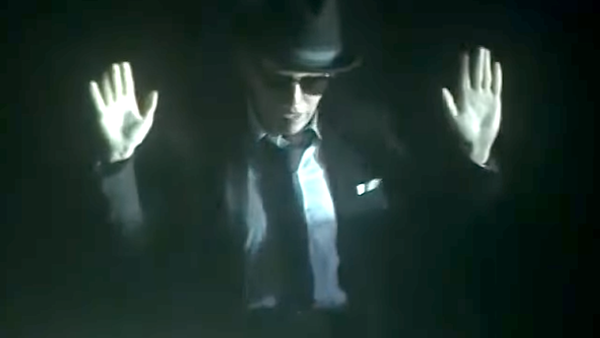
In May 2020, Robert De Niro, in conversation with BBC TV’s Newsnight, seemed at a loss to describe American politics. Finally, he exclaimed, “It’s like Shakespearean, the whole thing,” to summarise the crisis as he saw it. “So Shakespearean”, an unexamined cultural shorthand, has now become a strangely comforting assurance that says, “You are not alone.” For some contemporary readers, the work collected in Shakespeare’s First Folio does indeed become such “a book of life”.
Shakespeare revels in the dramatic present. No fewer than three of his plays begin with “Now”. He will always confront the most overwhelming questions, and come to our rescue in many guises, but imminence is his default position. This is Elizabethan: Shakespeare’s age lived in the “now”, from sunrise to sunset. “The readiness is all,” says Hamlet. All or nothing is a challenge the playwright celebrates in his resonant antitheses. “To be, or not to be”, his most famous dramatic opposite, is at once Anglo-Saxon, existential and direct.
Was it the accident of his birth in Elizabethan Warwickshire that awoke him to the drama of everyday life? Was it here that he learned to extract many nuances of meaning from the quotidian detail of the turning world? At some point, growing up in Stratford, or moving to London, he discovered the wellspring of great drama: imminent peril. In his imagination, this would blossom into a lifelong dialogue between risk and originality, a creative exchange the writer seems to have kept to himself. We will never know. In the words of Jorge Luis Borges, the man remains an enigma, being simultaneously “many, and no one”.
What was he like? This question, so important in the 21st, has little traction in the 17th century. Yet, despite the paucity of evidence, there is a striking unanimity among contemporary witnesses. Almost all the references to “the man Shakespeare” concur on his decency, plain dealing, discretion and politeness, none of which hint at the kind of dark side that might assist in our understanding of plays such as Richard III, Macbeth or King Lear.
We can, nonetheless, place this elusive figure in a historical landscape. The Shakespeare who came of age during decades of crisis, dread and disorder speaks to every generation that finds itself in extremis. What is the secret of his strange, uncanny empathy, and where is the key to his insights? How and why is his work so evergreen?
According to the British theatre director Adrian Noble, one clue to understanding Shakespeare is that he’s not only “a great visionary” but also a “practical man of the theatre”. He wrote plays to be performed “to an audience that consisted of a broad cross-section of society: from the highly educated and well read to the illiterate”. Noble goes on, “The protean audience that crammed inside the walls of the Globe theatre was hard to please and pretty volatile. Shakespeare had to grab their attention and keep it.” Cut off a hand, gouge out an eye, bring on a wild bear, uproot a forest, slit an artery: Shakespeare will do anything to seize the attention of the playhouse. Four centuries later, the British rapper Stormzy, a champion of disadvantaged black students, used a Shakespearean echo in his chart-topping 2019 album, Heavy Is the Head, a nod to Henry IV (3.1.31). In this vein, the actor Andrew Scott sees his job as “electrifying” an audience. He also says he found his own way into the text of Hamlet through rap music. “I just hate the idea of Shakespeare being put in a glass box, like something that’s dead.”

From my own personal history I know that, in states of psychological need or distress, Shakespeare’s can become the voice to which we listen. In July 1995, I was poleaxed in my sleep by something the doctors would call “a right hemisphere haemorrhagic infarct” – in plain English, a stroke – and pitched into an acute left-sided paralysis. At first, in the aftermath of this massive disruption, my writing arm happily unimpaired, I completed a worm’s-eye view of this experience, My Year Off, “rediscovering life after a stroke”. During convalescence, the Complete Works became my book of life. Almost the only words that made sense were snatches of Shakespeare, and next – as I began to recover – longer passages from King Lear, The Winter’s Tale, and especially Hamlet, the play that rarely fails to supply a kind of running commentary to the inner dialogue of the self. In retrospect, I rediscovered Shakespeare through ill health, and the slow return to wellness, to the point where, reflecting on Prospero’s haunting valediction – “every third thought shall be my grave”, one of many strange and memorable lines from The Tempest – I found the title for a sequel to My Year Off.
Just as Every Third Thought sponsored a reconciliation with issues of life and death, so the rediscovery Shakespeare can be a revelation. In any rereading, some of his most direct and powerful lines come in simple old English monosyllables. “To be, or not to be” is equalled by King Lear’s “Let me not be mad”, and Iras’s sign-off (in Antony and Cleopatra): “we are for the dark”. I, too, had become familiar with “the dark”. The human animal lives at the epicentre of its own life, especially when it falls ill.
In this condition, Shakespeare’s eerie intuition is deeply consoling. When, as a long-term convalescent, each day becomes a reminder of human frailty, Shakespeare’s extraordinary power to connect with his audience’s perplexity, and to evoke a thrilling sense of mystery in the human predicament, inspires a mixture of reverence, awe and fascination. For me, this became a prolonged internal dialogue. If I could no longer travel, or move at will, as before, then at least I could make journeys of the mind, within Shakespeare’s “book of life”. The buzzword of my recovery was “plasticity”. One definition of “plasticity” describes the phenomenon as “the capacity for continuous alteration of the neural pathways and synapses of the living brain and nervous system in response to experience or injury”. Putting it another way, “plasticity” is about cerebral adaptability, the kind of unconscious responsiveness that occurs in any rereading of Shakespeare. I now have three editions of the Complete Works, and each bears the impressions of much study: coffee and wine stains, torn folios, ghostly pencil marks and turned-down corners.
During 20 years of recovery, I slowly transformed a knowledge of the plays I had read at school into a wider acquaintance with the Shakespeare canon, and joined the “Shakespeare Club”, a dedicated play-going circle. That’s what we call it – sometimes, casually “the Club” – which might suggest oak panelling, library chairs, a dress code and a discreet entryphone somewhere in the West End, an association that might turn out to be either furtive or seedy. Actually, it’s neither; we are natural herbivores. If you spotted us in the theatre bar of the Donmar or the National, you might decide we were civil servants in mufti, or off-duty English teachers from the shires, or possibly journalists, which is approximately half right. Three of the seven who make up the Shakespeare Club – now guzzling peanuts and cheap red wine – have worked for newspapers. And yes – oh dear, yes – we are, until quite recently, an all-male, English fraternity. As middle-class metropolitans, we occupy a variety of roles: novelist, journalist, academic, publisher, actor, scriptwriter, and finally our archivist.
This club was established through the persistence of a former venture capitalist who used to go to Shakespeare plays with his college friends. When it became the tradition to have a pizza afterwards, to hash over what they’d just seen, the “Shakespeare Club” began. Today, we are a quintessentially English mix of stage-struck, self-improving playgoers with Eng Lit degrees. Occasionally, rash intruders who should know better will ask about our “favourite Shakespeare”. For the Club, this is an absurdly intimate inquiry. Any one of these plays, in a great production, can find a special place in our affections. Yes, we love Lear, Much Ado, and The Tempest, but we also cherish an independence of taste that delights in Love’s Labour’s Lost, any of the Henry plays, or Measure for Measure. Indeed, the only Shakespeare we’ve never seen, because it’s so rarely staged, is The Two Noble Kinsmen.
If there’s one unspoken club rule, it’s that when we meet, we only discuss the play in question: no gossip; no politics; no families; and no football. As an association, we demonstrate near-Olympic sang-froid. As I write, the gods are smiling upon us, but in the past decade – not to mince words – two of our number have got divorced, one of us checked into rehab, and all of us have had distressful troubles with teenage kids. But did any of us ever so much as mention, or even allude to, these torments? Did we hell! No, we are here to see the show. It might sound dull, but it’s surprisingly addictive. We argue, we quote, we tease, admonish, reminisce, and protest (too much); on a good night, we might even get swept away by what we see. We are, no doubt, typical of English audiences through the ages, hommes moyens sensuels.
In Britain and America, devotion to the poet’s memory finds various kinds of expression, from the cult TV comedy Upstart Crow to Kenneth Branagh’s gloomy quatercentenary tribute, All Is True (2018). At the turn of the millennium, for example, a BBC hit parade of Great Britons made Shakespeare its fifth choice (ahead of Queen Elizabeth I and Isaac Newton, but behind Diana, Princess of Wales and Sir Winston Churchill, who topped the poll). Simultaneously, another unlikely survey declared Hamlet superior to Beethoven’s Ninth Symphony, Michelangelo’s Sistine Chapel, the King James Bible – and the Taj Mahal. Such 21st-century accolades provoke some hoary arguments about Shakespeare’s fame and influence. Does that, some ask, correlate to the qualities of his work itself, or is it just another example of high-cultural hype, the perpetuation of a myth by swivel-eyed bardolators with an axe to grind – the Stratford tourist board, actors, directors, schoolteachers, publishers, and even Prince Charles? In November 2018, on his 70th birthday, the Prince of Wales provoked a flutter of Shakespearean comment when describing his ambitions as a future king: “You can’t be the same as the sovereign if you’re the Prince of Wales or the heir,” Charles told the BBC. “You only have to look at Shakespeare plays,” he went on, “Henry V or Henry IV Parts I and II, to see the change that can take place.” Sometimes, writes the critic Peter Conrad, it can seem “as if Shakespeare created us all”.

Occasionally, the liberated voltage of a Shakespearean narrative creates a surge of rhetorical power that can invert reason, defy logic and transcend meaning.
In 2012, the opening of the London Olympics became, for the New York Times, “A five-ring opening circus, weirdly and unabashedly British”, where millions of television viewers from across the world were transported through a mad carousel of sentimental and post-imperial English symbolism – cricketers at the wicket; massed choirs singing Jerusalem; James Bond parachuting in, with Her Majesty, Queen Elizabeth II as a kind of stoic accomplice – into a weird new world. This production, declared the New York Times, giddy with the moment, “somehow managed to feature a flock of sheep, the Sex Pistols, Lord Voldemort, the engineer Isambard Kingdom Brunel… and, in a paean to the National Health Service, a zany bunch of dancing nurses and bouncing sick children on huge hospital beds, a bold vision of a brave new future”. At some point in the proceedings, Brunel (played by Kenneth Branagh, in a stovepipe hat) stepped forward to deliver lines from The Tempest: “Be not afeard. The isle is full of noises, Sounds, and sweet airs, that give delight and hurt not.” (3.2.138–9) Improbably, those words belong to the magician’s slave, Caliban, whose hateful dividend from the English language, he bitterly observes, is that he should “know how to curse”.
For this Olympic mashup, Caliban’s weird, unearthly torment was no longer to do with the terrible cost of empire but had become a strangely uplifting celebration of Englishness for an English-speaking world. Many British readers and theatregoers might want to identify with such a sentiment, and claim it as a national treasure. They might even go further to assert that, as Britons, they have a unique line of communication to Shakespeare. They will be surprised to discover that the earliest evidence of Shakespeare’s uncanny command of our imaginations is more often to be found in America than in his homeland. In a twist Shakespeare himself might have relished, he has become as much America’s – or even Germany’s – as Britain’s national poet. Here, he’s an icon; there, in a crisis, his poetry and plays can become a touchstone. On one side of some seething culture wars, the challenge of Hamlet, “Who goes there?” is also a call to arms, a question to rally anyone preoccupied with the defence of global culture understood in the broadest sense. This is possibly why, in the “general woe” (Shakespeare’s words) that broke out during and after the presidential election of 2016, it was to Shakespeare that many Americans turned in their distress.
This is an edited extract from Shakespearean: On Life & Language in Times of Disruption, published by Picador on 3 September (£14.99). To order a copy go to guardianbookshop.com. Free UK p&p over £15